Fillable Music Release Document

Fillable Music Release Document

The Music Release form is a legal document that grants permission for the use of a musical work, ensuring that the rights of the creator are protected while allowing others to utilize the music. This form is essential for artists, producers, and anyone involved in the music industry to formalize agreements regarding the distribution and performance of their work. To ensure your music is used appropriately, consider filling out the form by clicking the button below.

Article Guide

The Music Release form is a crucial document in the music industry, ensuring that artists and producers have clear agreements regarding the use of musical works. This form typically outlines the rights granted to a producer or a company, specifying how the music can be used, distributed, and monetized. It serves to protect the interests of the creator while also providing legal clarity for all parties involved. Key aspects often included in the form are the scope of the rights being transferred, any compensation details, and the duration of the agreement. Additionally, the form may address issues related to copyright ownership and the responsibilities of each party. By utilizing a Music Release form, artists can safeguard their creative output and avoid potential disputes over their work in the future.

Music Release Preview

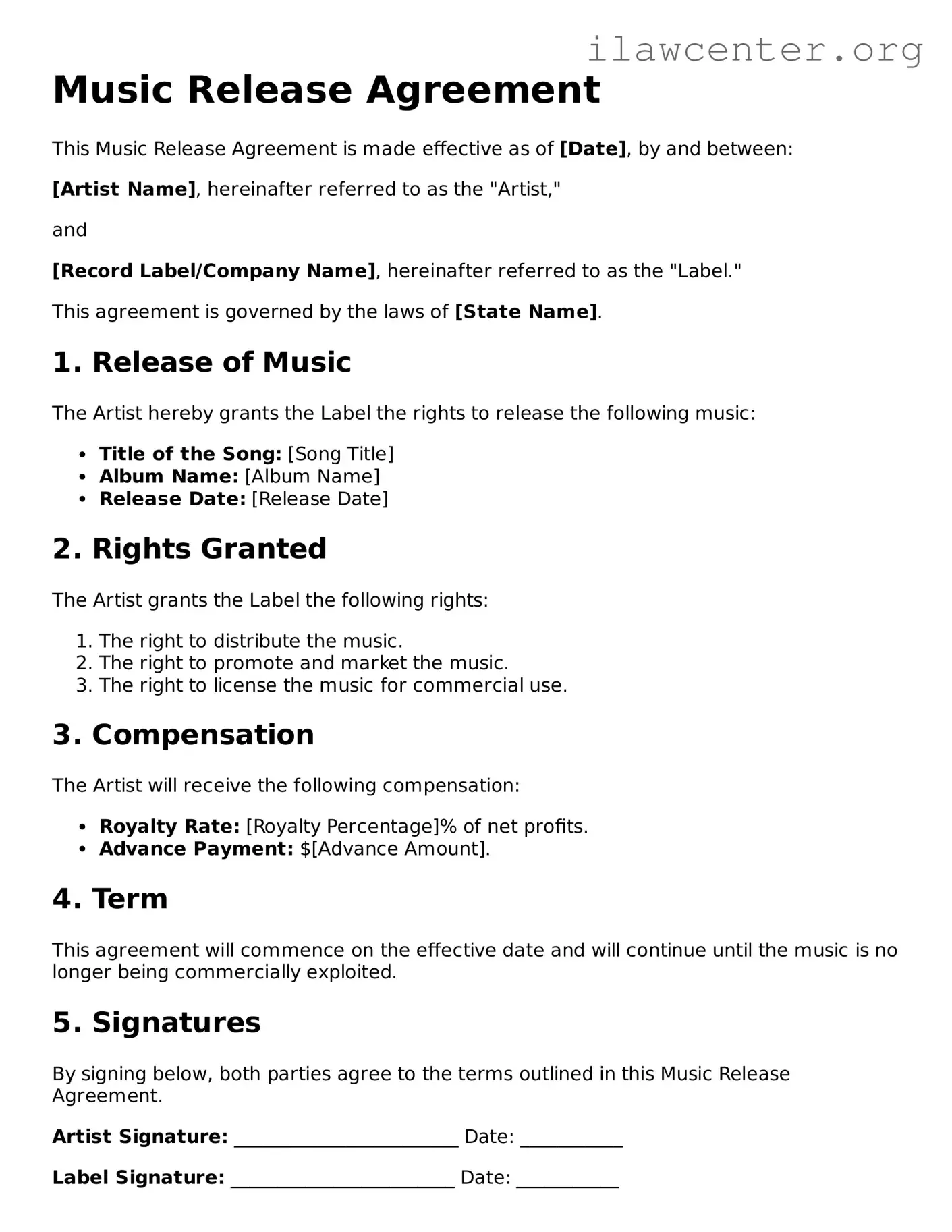
Music Release Agreement

This Music Release Agreement is made effective as of [Date], by and between:

[Artist Name], hereinafter referred to as the "Artist,"

and

[Record Label/Company Name], hereinafter referred to as the "Label."

This agreement is governed by the laws of [State Name].

1. Release of Music

The Artist hereby grants the Label the rights to release the following music:

  • Title of the Song: [Song Title]
  • Album Name: [Album Name]
  • Release Date: [Release Date]

2. Rights Granted

The Artist grants the Label the following rights:

  1. The right to distribute the music.
  2. The right to promote and market the music.
  3. The right to license the music for commercial use.

3. Compensation

The Artist will receive the following compensation:

  • Royalty Rate: [Royalty Percentage]% of net profits.
  • Advance Payment: $[Advance Amount].

4. Term

This agreement will commence on the effective date and will continue until the music is no longer being commercially exploited.

5. Signatures

By signing below, both parties agree to the terms outlined in this Music Release Agreement.

Artist Signature: ________________________ Date: ___________

Label Signature: ________________________ Date: ___________

For any questions regarding this agreement, please consult with a legal professional.

PDF Form Characteristics

Fact Name Description
Purpose The Music Release form allows artists to grant permission for their music to be used by others.
Parties Involved This form typically involves the artist and the party seeking to use the music, such as a producer or a company.
Governing Law The laws governing the Music Release form can vary by state. For example, in California, it follows the California Civil Code.
Rights Granted The form specifies the rights being granted, which may include reproduction, distribution, and public performance.
Compensation It often outlines any compensation or royalties the artist will receive for the use of their music.
Duration The duration of the rights granted is typically defined, stating how long the other party can use the music.
Exclusivity Some forms may specify whether the agreement is exclusive or non-exclusive, affecting the artist's ability to license the music to others.
Signatures Both parties must sign the form for it to be legally binding, ensuring mutual agreement on the terms.
Amendments The form may include provisions for amendments, allowing changes to be made with the consent of both parties.

Instructions on Utilizing Music Release

Once you have the Music Release form ready, it’s important to ensure that all sections are completed accurately. This will help streamline the process and make sure that your music can be distributed without any delays. Follow the steps below to fill out the form correctly.

  1. Begin by entering your artist name in the designated field at the top of the form.
  2. Provide your contact information, including your email address and phone number.
  3. In the section for song title, clearly write the title of the music piece you are releasing.
  4. Next, indicate the release date you have planned for your music.
  5. Fill in the record label name if applicable; if you are self-releasing, you can leave this blank.
  6. List any collaborators or featured artists involved in the project.
  7. Review the terms and conditions section carefully, ensuring you understand the rights you are granting.
  8. Sign and date the form at the bottom to confirm your agreement.

After completing the form, you will be ready to submit it according to the specified instructions. This will set the stage for your music to reach a wider audience.

Important Facts about Music Release

What is a Music Release form?

A Music Release form is a legal document that grants permission for the use of a musical work. This form is typically used by artists, producers, or record labels to ensure that they have the right to distribute, perform, or reproduce a song. By signing this form, the artist relinquishes certain rights, allowing others to use their music under specified conditions.

Why is it important to have a Music Release form?

Having a Music Release form is crucial for protecting the rights of both the artist and the entity using the music. It helps prevent legal disputes by clearly outlining who owns the rights to the music and how it can be used. Without this form, misunderstandings can arise, potentially leading to costly legal battles. It provides peace of mind for all parties involved.

Who needs to sign a Music Release form?

Typically, the artist or composer of the music needs to sign the form. Additionally, anyone else who has contributed to the creation of the music, such as producers or co-writers, may also need to sign. This ensures that all parties agree on how the music can be used and that their rights are respected.

What details are included in a Music Release form?

A Music Release form usually includes several key details. These may consist of the names of the parties involved, a description of the music being released, the specific rights being granted, and any limitations on the use of the music. It may also outline compensation, if applicable, and the duration of the agreement. Clear terms help avoid confusion later on.

Can a Music Release form be revoked?

In general, a Music Release form cannot be revoked once it has been signed, especially if the rights have already been transferred or the music has been used as agreed. However, specific terms regarding termination may be included in the form. It’s important to read the document carefully and understand its implications before signing.

Common mistakes

When filling out a Music Release form, many individuals overlook crucial details that can lead to complications down the line. One common mistake is failing to provide complete information about the song or composition. This includes not only the title but also the names of all contributing artists and songwriters. Incomplete details can create confusion and may even result in disputes over ownership or rights later on.

Another frequent error involves neglecting to read the terms and conditions thoroughly. Many people skim through the fine print, missing important clauses that outline how the music can be used. Understanding these terms is essential, as they dictate the extent of the rights granted to others. Without this knowledge, an artist might inadvertently agree to terms that limit their control over their own work.

Additionally, some individuals forget to sign the form or provide the necessary signatures from all parties involved. A signature is not just a formality; it signifies agreement and consent. Without proper signatures, the release may be deemed invalid, leaving the music unprotected and open to unauthorized use. It’s crucial to ensure that everyone who has a stake in the music is on board and has signed off on the release.

Lastly, failing to keep a copy of the completed Music Release form is a mistake that can lead to headaches in the future. Once the form is submitted, having a personal copy can serve as a reference point. This can be especially helpful if questions arise about rights or permissions later. Keeping track of all documentation related to your music ensures that you have the necessary information at your fingertips when you need it.

Documents used along the form

When dealing with music projects, several important documents complement the Music Release form. Each of these forms serves a specific purpose, ensuring that all parties involved have a clear understanding of their rights and responsibilities. Here’s a list of commonly used documents:

  • Artist Agreement: This document outlines the relationship between the artist and the producer or label. It typically covers payment terms, rights to the music, and obligations of both parties.
  • Producer Agreement: Similar to the artist agreement, this form details the terms of the relationship between the producer and the artist. It may include compensation, creative control, and rights to royalties.
  • Synchronization License: This license is required when music is used in visual media, such as films or commercials. It grants permission to sync the music with the visual content.
  • Mechanical License: This document is necessary when a song is reproduced in physical formats, like CDs or vinyl. It allows the reproduction of the music and outlines payment for royalties.
  • Performance License: This license is needed for public performances of a song, whether live or recorded. It ensures that the songwriters and publishers receive compensation for the performance.
  • Copyright Registration: While not a contract, registering a song with the U.S. Copyright Office provides legal protection for the music. It establishes ownership and can be crucial in case of disputes.
  • Work for Hire Agreement: This document is used when hiring someone to create music or lyrics. It clarifies that the hiring party owns the rights to the work produced.
  • Non-Disclosure Agreement (NDA): An NDA protects sensitive information shared between parties during the music creation process. It prevents unauthorized sharing of ideas or materials.

Having these documents in place can help prevent misunderstandings and protect the interests of everyone involved in a music project. Properly managing these agreements ensures a smoother creative process and a more successful outcome.

Similar forms

  • Model Release Form: This document allows photographers and videographers to obtain permission from individuals to use their likeness in promotional materials or publications.
  • Talent Release Form: Similar to a music release, this form secures the rights to use an actor's or performer’s image and performance in a film or video production.
  • Location Release Form: This document grants permission from property owners to use their location for filming or photography, ensuring that the production can proceed without legal issues.
  • Copyright Assignment Agreement: This agreement transfers ownership of creative works, like music or art, from the creator to another party, ensuring clear rights to use the work.
  • Licensing Agreement: A licensing agreement allows one party to use another party's intellectual property, such as music or artwork, under specified conditions.
  • Distribution Agreement: This document outlines the terms under which a product, such as music, will be distributed, including rights and responsibilities of each party.
  • Collaboration Agreement: This form details the terms of collaboration between artists, including how rights to the resulting work will be shared and managed.
  • Work for Hire Agreement: This document establishes that a creator is being paid for their work, and the rights to that work belong to the employer or client upon completion.

Dos and Don'ts

When filling out the Music Release form, it's important to follow certain guidelines. Here are some things you should and shouldn't do:

  • Do read the entire form carefully before starting.
  • Do provide accurate information about yourself and the music.
  • Do sign and date the form where required.
  • Do keep a copy of the completed form for your records.
  • Don't leave any required fields blank.
  • Don't use slang or informal language in your responses.
  • Don't rush through the process; take your time to ensure accuracy.
  • Don't forget to review the terms and conditions before signing.

By following these guidelines, you can ensure that your Music Release form is filled out correctly and efficiently.

Misconceptions

Misconceptions about the Music Release form can lead to confusion and potential legal issues for artists and producers alike. Below are ten common misunderstandings that often arise regarding this important document.

  1. All music release forms are the same.

    This is not true. Different forms may serve various purposes, such as granting permission for specific uses or covering different rights. It is essential to understand the specific terms of each form.

  2. Once signed, I cannot change my mind.

    While a signed form is a binding agreement, there may be circumstances under which you can negotiate changes or withdraw consent, depending on the terms outlined in the release.

  3. Only professional musicians need a music release form.

    Amateurs and hobbyists should also use a release form. Protecting your rights is important, regardless of your level of expertise.

  4. A music release form only protects the producer.

    This is a misconception. A well-drafted release form can protect the rights of both the artist and the producer, ensuring that all parties understand their rights and obligations.

  5. I can use a verbal agreement instead of a written form.

    While verbal agreements may hold some weight, they are often difficult to enforce. A written release form provides clear documentation of the terms agreed upon.

  6. Music release forms are only necessary for commercial projects.

    Even non-commercial projects can benefit from a music release form. It clarifies rights and responsibilities, reducing the risk of disputes later on.

  7. Signing a music release means I lose all my rights.

    This is misleading. A release form typically specifies which rights are being transferred and which are retained. Artists can negotiate to keep certain rights.

  8. Once I sign, I cannot negotiate terms.

    Negotiation is often possible before signing. If you have concerns about certain terms, it is advisable to discuss them with the other party prior to finalizing the agreement.

  9. Music release forms are only for recordings.

    These forms can also apply to performances, videos, and other media. Any situation where music is used in a way that requires permission should be covered by a release form.

  10. Legal advice is unnecessary for music release forms.

    While some may feel comfortable handling their own agreements, seeking legal advice can provide valuable insights and ensure that your rights are fully protected.

Understanding these misconceptions is vital for anyone involved in music creation and distribution. Taking the time to clarify these points can lead to better protection of your artistic rights and smoother collaborations.

Key takeaways

When filling out and using the Music Release form, keep these key takeaways in mind:

  • Ensure all information is accurate. Double-check names, dates, and any specific details related to the music.
  • The form grants permission for the use of your music. Understand what rights you are giving up and what you retain.
  • Read the terms carefully. Know how your music will be used and for how long.
  • Consider consulting a legal expert if you have questions. It’s important to understand the implications of the release.
  • Keep a copy of the signed form for your records. This can be helpful in case of any disputes.
  • Be aware of any deadlines. Submit the form promptly to avoid delays in your project.