Navpers 1616 25 PDF Template

Navpers 1616 25 PDF Template

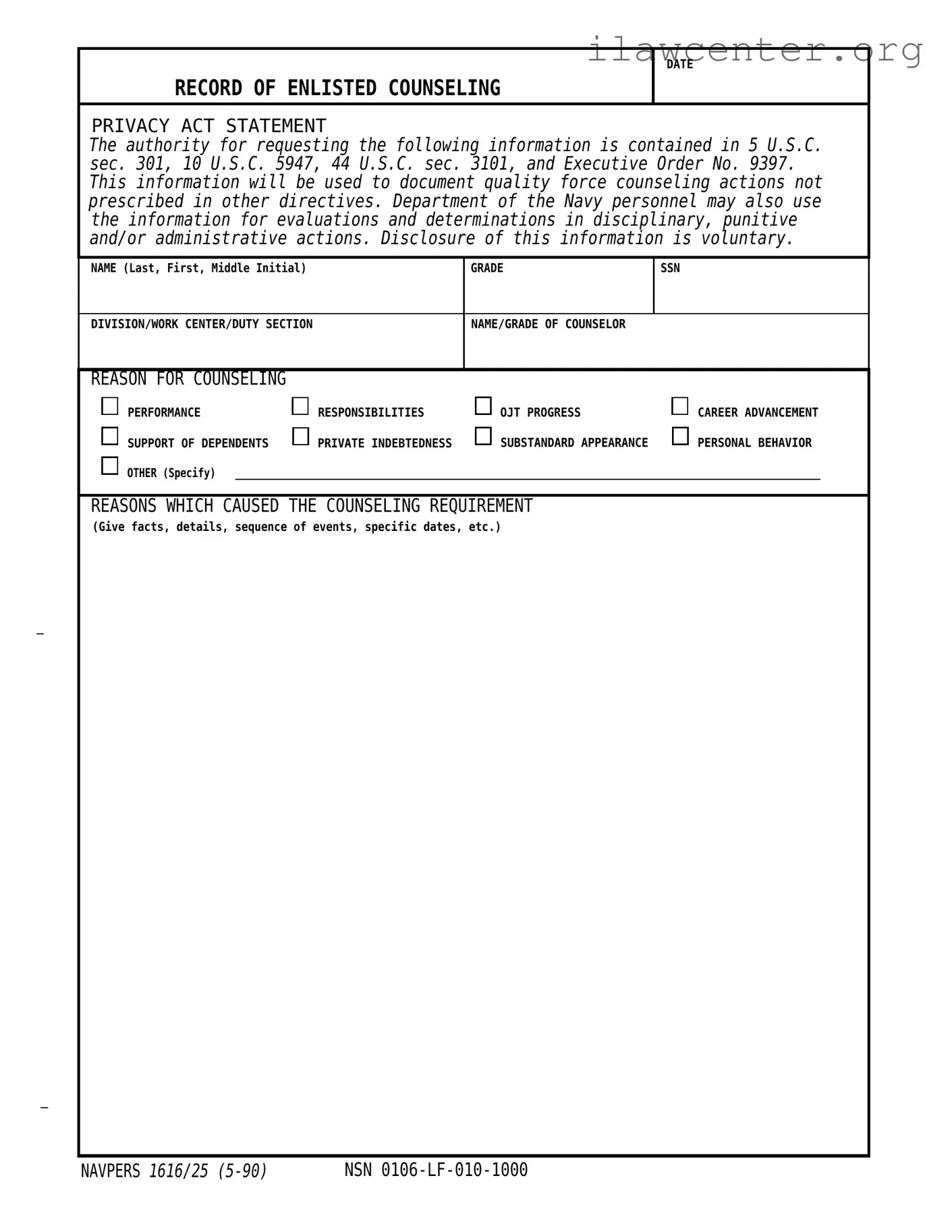
The Navpers 1616 25 form is a record of enlisted counseling used by the Department of the Navy. This form documents counseling sessions that address various performance and personal issues, ensuring that service members receive the support they need. It is important to fill out this form accurately to facilitate effective communication and resolution of any concerns.

To get started, please fill out the form by clicking the button below.

Article Guide

The NAVPERS 1616/25 form serves as a vital tool for documenting counseling sessions within the Department of the Navy. This form is essential for ensuring that enlisted personnel receive the guidance and support they need to succeed in their roles. It captures important details such as the date of the counseling session, the names and ranks of both the member and the counselor, and the specific reasons for the counseling. Various performance-related issues can be addressed, including job responsibilities, on-the-job training progress, and career advancement opportunities. The form also allows for the documentation of personal matters, such as financial obligations and behavioral concerns, ensuring a comprehensive approach to the member's development. Importantly, the NAVPERS 1616/25 includes a section for outlining a plan to either maintain superior performance or to address and overcome identified problems. This collaborative plan is developed by both the member and the counselor, emphasizing a commitment to improvement and future success. The information collected is governed by privacy regulations, and while disclosure is voluntary, it plays a crucial role in evaluations and administrative actions. Overall, the NAVPERS 1616/25 form is a key component in fostering a supportive environment for Navy personnel.

DATE
RECORD OF ENLISTED COUNSELING
PRIVACY ACT STATEMENT
The authority for requesting the following information is contained in 5 U.S.C.
sec. 301, 10 U.S.C. 5947, 44 U.S.C. sec. 3101, and Executive Order No. 9397.
This information will be used to document quality force counseling actions not
prescribed in other directives. Department of the Navy personnel may also use
the information for evaluations and determinations in disciplinary, punitive
and/or administrative actions. Disclosure of this information is voluntary.
GRADE
SSN
NAME (Last, First, Middle Initial)
NAME/GRADE OF COUNSELOR
DIVISION/WORK CENTER/DUTY SECTION
REASON FOR COUNSELING
PERFORMANCE RESPONSIBILITIES
OJT PROGRESS CAREER ADVANCEMENT
SUBSTANDARD APPEARANCE PERSONAL BEHAVIOR
SUPPORT OF DEPENDENTS PRIVATE INDEBTEDNESS
OTHER (Specify)
REASONS WHICH CAUSED THE COUNSELING REQUIREMENT
(Give facts, details, sequence of events, specific dates, etc.)
-
-
NSN 0106-LF-010-1000
NAVPERS 1616/25 (5-90)
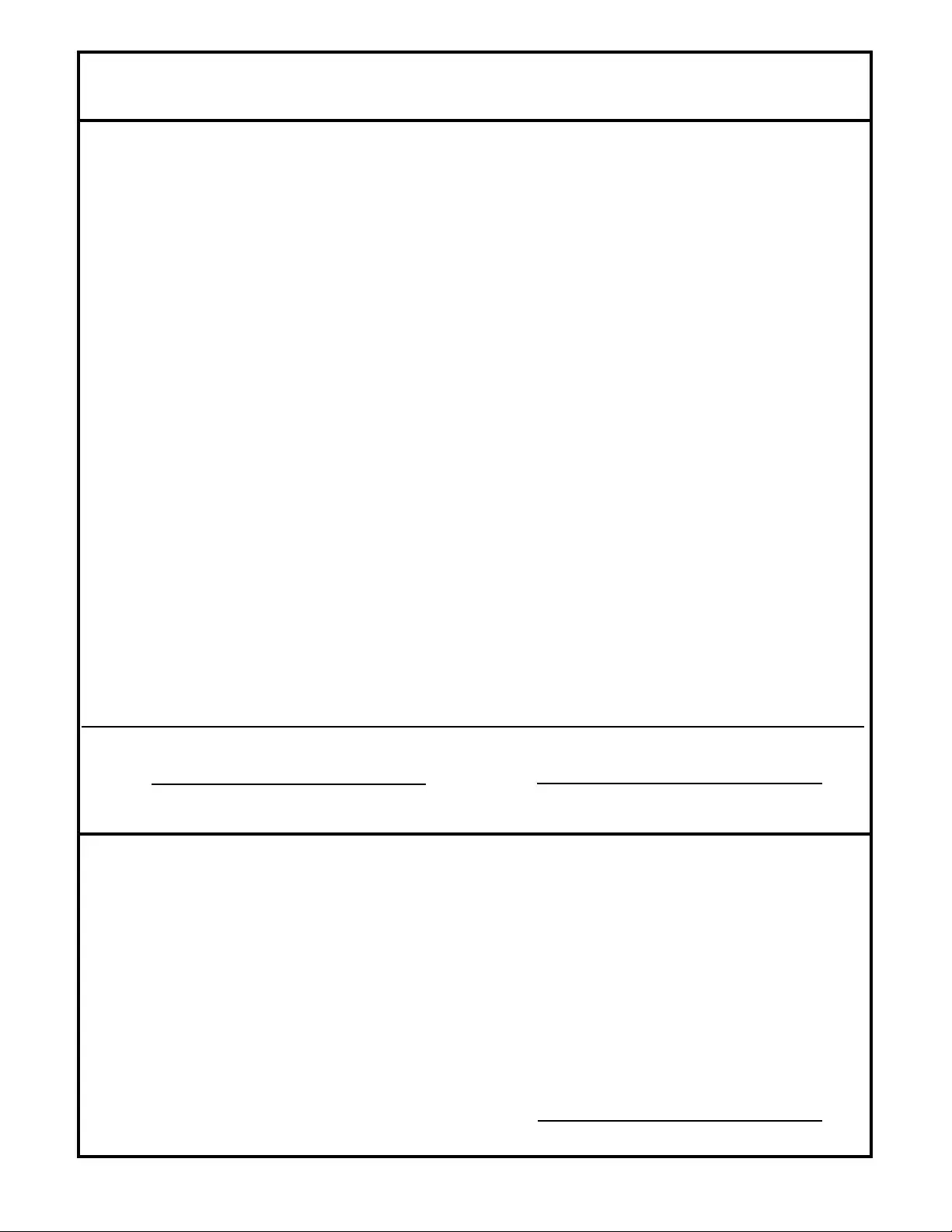
PLAN (DEVELOPED BY THE MEMBER AND COUNSELOR) TO CONTINUE SUPERIOR PERFORMANCE OR
TO OVERCOME PROBLEM(S) AND PRECLUDE FUTURE INVOLVEMENT
(Outline all resolutions discussed and indicate which actions the member has personally elected to pursue.)
-
Signature of Member/Date
Signature of Counselor/Date
I do/do not desire to make a statement.
Signature of Member/Date
NAVPERS 1616/25 (5-90)
• U.S. GPO: 19W-704-119/20152

File Properties

Fact Name Description
Purpose of the Form The NAVPERS 1616/25 form is used to document quality force counseling actions for Navy personnel.
Governing Laws The information requested is governed by 5 U.S.C. sec. 301, 10 U.S.C. 5947, 44 U.S.C. sec. 3101, and Executive Order No. 9397.
Voluntary Disclosure Providing the information on this form is voluntary, meaning personnel are not required to disclose unless they choose to do so.
Information Usage The information collected may be used for evaluations and determinations in disciplinary, punitive, and administrative actions.
Components of the Form Key sections include personal details, reasons for counseling, and a plan for performance improvement.
Signature Requirements Both the counselor and the member must sign the form, indicating their agreement and acknowledgment of the counseling session.
Types of Counseling Reasons for counseling can include performance responsibilities, career advancement, personal behavior, and more.
Plan Development The form requires a plan to be developed collaboratively by the member and the counselor to address any identified issues.

Instructions on Utilizing Navpers 1616 25

Filling out the NAVPERS 1616/25 form is an important step in documenting counseling actions within the Department of the Navy. This form captures essential information regarding performance, behavior, and development plans. Following these steps will ensure that the form is completed accurately and effectively.

  1. Obtain the form: Access the NAVPERS 1616/25 form from your command's administrative office or download it from an official Navy website.
  2. Fill in the date: Enter the date of the counseling session at the top of the form.
  3. Provide your name: Write your last name, first name, and middle initial in the designated space.
  4. Enter your grade: Indicate your military rank or grade.
  5. Include your SSN: Write your Social Security Number (SSN) in the appropriate field.
  6. Specify your division: Fill in your division, work center, or duty section.
  7. List the counselor's information: Provide the name and grade of the counselor conducting the session.
  8. Select a reason for counseling: Check the box next to the reason that best describes the counseling session, such as performance responsibilities, OJT progress, or personal behavior.
  9. Detail the reasons for counseling: In the space provided, describe the specific facts, details, and sequence of events that led to the counseling requirement.
  10. Outline the plan: Work with your counselor to develop a plan for continued performance or to address any issues. Document this plan on the form.
  11. Signatures: Both the counselor and the member must sign and date the form. Ensure that all signatures are completed.
  12. Statement of desire: Indicate whether you wish to make a statement by checking the appropriate box and signing again if necessary.

Important Facts about Navpers 1616 25

What is the purpose of the NAVPERS 1616/25 form?

The NAVPERS 1616/25 form is designed to document quality force counseling actions within the Department of the Navy. It serves as a record of enlisted counseling sessions that are not covered by other directives. This form helps ensure that personnel receive appropriate support and guidance regarding their performance, behavior, and career advancement. Additionally, it may be utilized in evaluations and administrative actions, providing a comprehensive view of an individual's counseling history.

Who is required to complete the NAVPERS 1616/25 form?

Both the member receiving counseling and the counselor are responsible for completing the NAVPERS 1616/25 form. The member must provide personal details such as their name, grade, and reason for counseling. The counselor, who is typically a supervisor or mentor, must document the specifics of the counseling session, including the issues discussed and the plans for improvement. This collaborative approach fosters accountability and encourages open communication between the member and the counselor.

What types of issues can be addressed using the NAVPERS 1616/25 form?

The NAVPERS 1616/25 form can address a variety of issues related to an individual's performance and behavior. Common reasons for counseling include performance responsibilities, on-the-job training progress, career advancement, support of dependents, personal indebtedness, substandard appearance, and personal behavior. The form allows for flexibility, as counselors can specify other reasons as needed. This adaptability ensures that all relevant issues can be documented and addressed appropriately.

Is disclosure of information on the NAVPERS 1616/25 form mandatory?

No, disclosure of information on the NAVPERS 1616/25 form is voluntary. However, providing accurate and comprehensive information is crucial for effective counseling and support. The form includes a Privacy Act Statement, which outlines the authority for collecting this information and emphasizes its intended use for quality force counseling actions. Members are encouraged to participate fully in the process to benefit from the guidance and resources available to them.

Common mistakes

Filling out the NAVPERS 1616/25 form is an important step for many individuals in the Navy. However, mistakes can occur, and these errors may lead to complications down the line. Understanding common pitfalls can help ensure that the form is completed accurately.

One frequent mistake is failing to provide complete personal information. The form requires essential details such as name, grade, and Social Security Number (SSN). Omitting any of these pieces of information can result in delays or confusion during the counseling process. Always double-check that all sections are filled out completely and correctly.

Another common error is neglecting to specify the reason for counseling. This section is crucial as it outlines the context for the counseling session. Whether it pertains to performance responsibilities or personal behavior, being vague can hinder the effectiveness of the counseling. Clear and specific reasons help both the counselor and the member understand the issues at hand.

Additionally, individuals often overlook the importance of detailing the facts and events that led to the counseling requirement. Providing a thorough account, including specific dates and occurrences, is essential. This information not only clarifies the situation but also aids in developing a constructive plan for improvement.

Another mistake involves the plan section of the form. Members may fail to outline a clear and actionable plan to address the issues discussed. It is vital to collaborate with the counselor to identify specific steps and resolutions. A well-defined plan can significantly enhance the chances of achieving the desired outcomes.

Lastly, some individuals may forget to sign and date the form. The signatures of both the counselor and the member are necessary to validate the counseling session. Skipping this step can lead to administrative issues later on. Always ensure that all required signatures are present before submitting the form.

By being mindful of these common mistakes, individuals can better navigate the counseling process and ensure that their NAVPERS 1616/25 form is completed accurately and effectively.

Documents used along the form

The NAVPERS 1616/25 form is a critical document used for counseling enlisted personnel within the Navy. It serves to record various counseling actions related to performance, behavior, and career advancement. Alongside this form, several other documents are commonly utilized to support counseling and evaluation processes. Below is a list of these documents, each with a brief description.

  • NAVPERS 1070/613 - This form, also known as the Administrative Remarks, is used to document significant events in a service member's career. It may include disciplinary actions, commendations, or other notable occurrences that require official recording.
  • NAVPERS 1616/26 - This form is the Evaluation Report and Counseling Record. It is used to assess a member's performance over a specific period and includes input from the member and their supervisor regarding achievements and areas for improvement.
  • NAVPERS 1070/602 - This is the Dependency Application/Record of Emergency Data. It documents the service member's dependents and is crucial for ensuring that benefits and support are provided appropriately in times of need.
  • NAVPERS 1616/22 - This form is known as the Fitness Report. It provides a comprehensive evaluation of an officer's performance and is essential for promotions and career progression within the Navy.
  • DD Form 214 - This document, known as the Certificate of Release or Discharge from Active Duty, summarizes a service member's military service. It is often required for veterans' benefits and civilian employment applications.

These documents, when used in conjunction with the NAVPERS 1616/25 form, create a comprehensive record of a service member's performance and counseling history. Proper documentation is essential for ensuring fair evaluations and providing necessary support for career development.

Similar forms

The NAVPERS 1616/25 form is an important document used within the Department of the Navy for counseling enlisted personnel. Several other documents serve similar purposes in terms of documenting performance, evaluations, and counseling. Here’s a list of those similar documents:

  • Performance Evaluation Report (EVAL) - This document assesses an individual's performance over a specific period, providing feedback on strengths and areas for improvement, much like the NAVPERS 1616/25.
  • Counseling Record (NAVPERS 1616/26) - Similar in purpose, this form specifically records counseling sessions and outcomes, focusing on performance issues and professional development.
  • Enlisted Advancement Worksheet (NAVPERS 1616/27) - This worksheet tracks an enlisted member’s qualifications and achievements, paralleling the focus on career advancement found in the NAVPERS 1616/25.
  • Disciplinary Action Form - Used to document any disciplinary measures taken against a service member, this form shares the counseling aspect of addressing performance issues.
  • Fitness Report (FITREP) - Similar to the EVAL, the FITREP evaluates an officer's performance, providing a structured format for feedback that aligns with the counseling purpose of the NAVPERS 1616/25.
  • Training Record - This document tracks a member’s training and qualifications, similar to how the NAVPERS 1616/25 may address on-the-job progress.
  • Career Counseling Record - This form documents discussions around career goals and plans, echoing the NAVPERS 1616/25’s focus on career advancement and personal development.
  • Incident Report - Used to record specific incidents that may affect a member’s performance or behavior, this document shares the counseling aspect of addressing issues as seen in the NAVPERS 1616/25.

Dos and Don'ts

When filling out the NAVPERS 1616/25 form, there are important practices to keep in mind to ensure accuracy and compliance. Here’s a helpful list of dos and don’ts.

  • Do provide complete and accurate information in all fields, including your name, grade, and division.
  • Do include specific details regarding the reasons for counseling, such as facts, dates, and events.
  • Do ensure that both you and your counselor sign and date the form to validate the counseling session.
  • Do outline a clear plan for improvement or performance continuation as discussed during the counseling.
  • Do review the form for any errors or omissions before submission to avoid delays.
  • Don't leave any sections blank unless instructed; incomplete forms can lead to misunderstandings.
  • Don't use vague language when describing counseling reasons; clarity is key.
  • Don't forget to keep a copy of the completed form for your records.
  • Don't provide unnecessary personal information that is not relevant to the counseling.
  • Don't rush through the form; take your time to ensure that all information is accurate.

Misconceptions

The NAVPERS 1616/25 form is an essential document for enlisted personnel in the Navy, but several misconceptions surround its purpose and use. Here are four common misunderstandings:

  • It is mandatory to disclose all information on the form. Many believe that providing extensive details is compulsory. In reality, disclosure of information is voluntary. However, incomplete information may impact the effectiveness of the counseling process.
  • The form is only for disciplinary actions. Some think that the NAVPERS 1616/25 is solely used for documenting disciplinary issues. In fact, it serves a broader purpose, including performance evaluations, career advancement, and personal behavior assessments.
  • Only negative counseling is documented. There is a misconception that this form is only used to record negative counseling sessions. In truth, it can also document positive performance and support for career advancement, highlighting the member's strengths and achievements.
  • The counselor's signature is the only important part of the form. While the counselor's signature is crucial, the member's input is equally important. The member's acknowledgment and participation in the counseling plan are vital for their development and future performance.

Understanding these misconceptions can lead to a more effective use of the NAVPERS 1616/25 form, fostering better communication between service members and their counselors.

Key takeaways

Filling out the Navpers 1616 25 form is an important step in documenting counseling actions within the Department of the Navy. Here are key takeaways to consider:

  • Purpose of the Form: The Navpers 1616 25 form is designed to document quality force counseling actions. It is not meant for other directives, but rather focuses on performance and behavioral issues.
  • Information Required: Essential information includes the member's name, grade, Social Security Number (SSN), and details about the counseling session, such as the reason for counseling and the counselor's information.
  • Voluntary Disclosure: While filling out the form, it is important to note that disclosing the information is voluntary. However, it can be used in evaluations and disciplinary actions.
  • Detailed Documentation: When providing reasons for counseling, include specific facts, details, and a sequence of events. This helps in creating a clear record of the circumstances leading to the counseling.
  • Action Plan: The form requires the development of a plan to either continue superior performance or address issues. Both the member and counselor should outline resolutions and actions to be pursued.