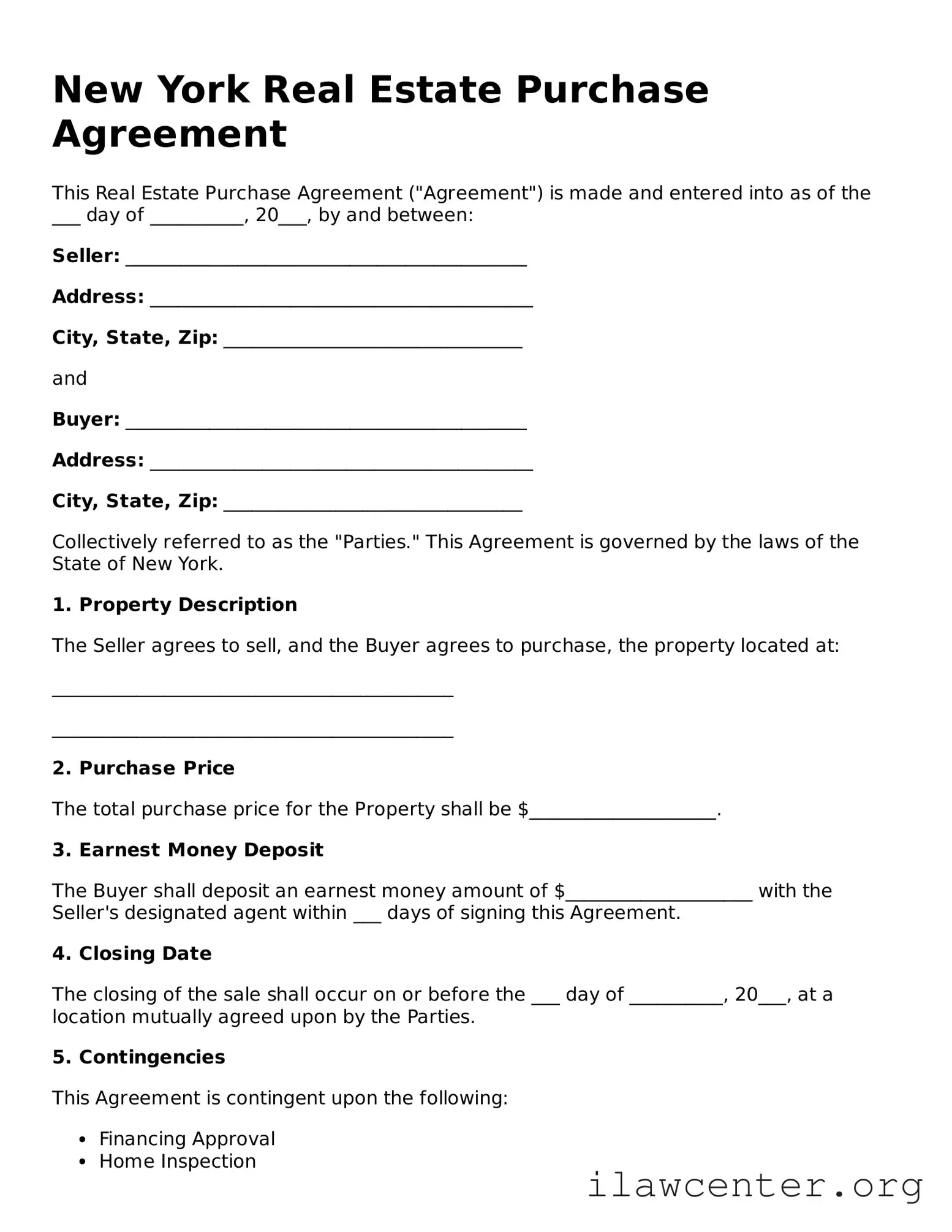
What is a New York Real Estate Purchase Agreement?
A New York Real Estate Purchase Agreement is a legal document that outlines the terms and conditions of a property sale in New York. It serves as a binding contract between the buyer and seller, detailing the sale price, property description, and other essential terms. This agreement is crucial for protecting both parties' interests during the transaction.
What key elements should be included in the agreement?
The agreement should include the following key elements: the names of the buyer and seller, the property address, the purchase price, earnest money deposit, closing date, and any contingencies. Contingencies might include financing, inspections, or the sale of another property. Clear definitions of these elements help prevent misunderstandings.
Is an attorney required to draft or review the agreement?
While it's not legally required to have an attorney, it is highly advisable. An attorney can help ensure that the agreement complies with New York laws and protects your interests. They can also clarify any legal terms and conditions that may be confusing.
What happens if either party wants to back out of the agreement?
If either party wishes to back out, they must review the contingencies outlined in the agreement. If the buyer has not fulfilled a contingency, they may be able to terminate the agreement without penalty. However, if the seller wants to back out, they may face legal consequences, including potential lawsuits for breach of contract.
Can the agreement be modified after it has been signed?
Yes, the agreement can be modified after signing, but both parties must agree to the changes. Any modifications should be documented in writing and signed by both the buyer and seller to ensure clarity and enforceability.
What is an earnest money deposit, and why is it important?
An earnest money deposit is a sum of money the buyer provides to show serious intent to purchase the property. This deposit is typically held in escrow until closing. It is important because it protects the seller from potential buyers who may back out without good reason. If the buyer fails to fulfill the agreement without a valid contingency, the seller may keep the deposit.
How is the closing process handled once the agreement is signed?
Once the agreement is signed, the closing process begins. This involves finalizing financing, conducting inspections, and preparing necessary documents. A closing date is set, and both parties, along with their attorneys, typically meet to finalize the sale. At closing, the buyer pays the remaining balance, and ownership is transferred through the signing of the deed.