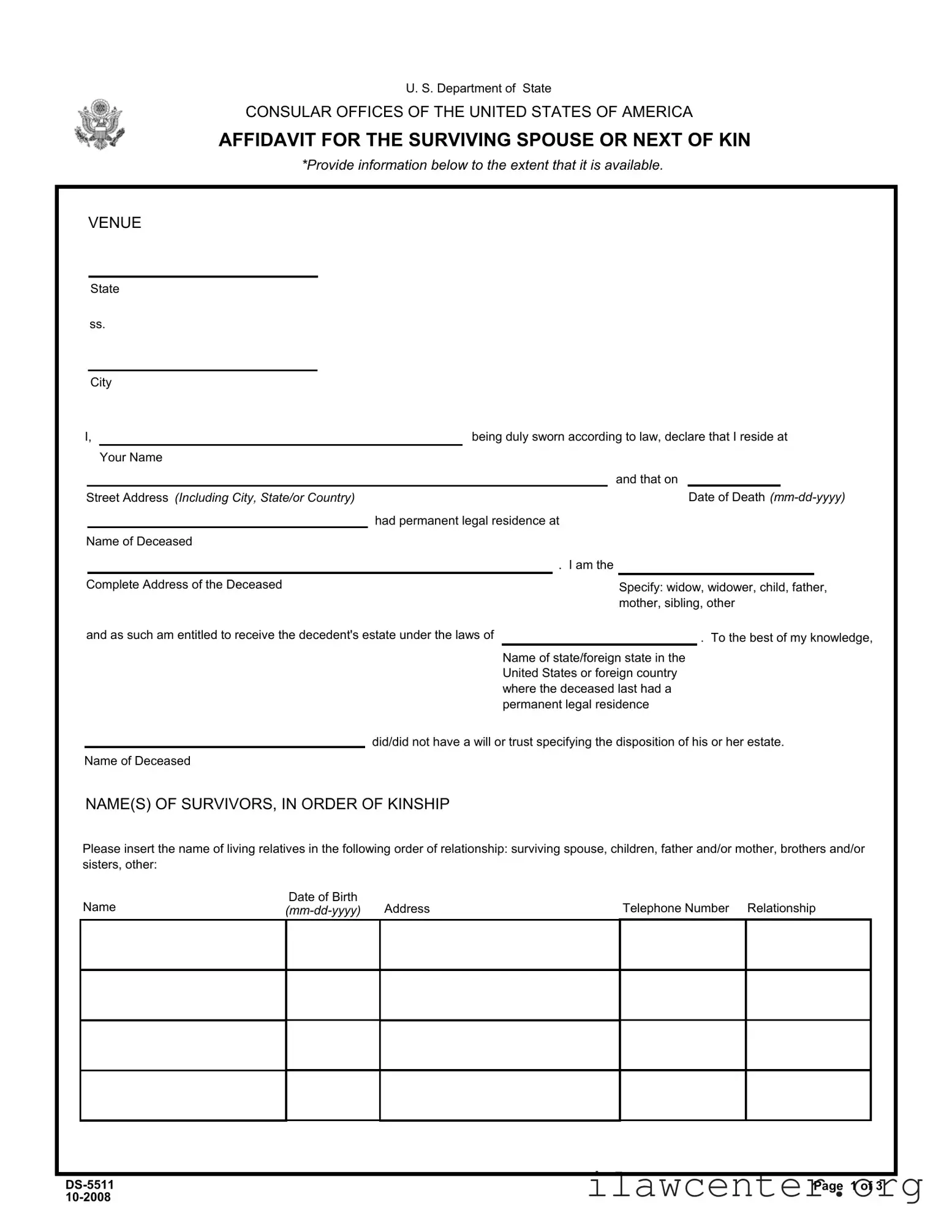
Filling out the Next Of Kin form can be a straightforward process, but several common mistakes can lead to complications. Understanding these pitfalls can help ensure that the form is completed correctly and efficiently.
One frequent error is failing to provide complete and accurate information about the deceased. It is essential to include the full name, address, and date of death. Omitting any of these details can delay the processing of the claim and may lead to misunderstandings regarding the deceased's estate.
Another mistake is not specifying the correct relationship to the deceased. The form requires individuals to identify themselves as a widow, widower, child, or another relation. Misidentifying this relationship can complicate the legal standing of the claim and may result in the wrong person receiving the estate.
Many people overlook the importance of listing all living relatives in the proper order of kinship. The form asks for names and relationships in a specific sequence. Failure to adhere to this order can create confusion and may lead to disputes among family members regarding their rights to the estate.
Additionally, some individuals may neglect to include accurate contact information for themselves and other survivors. Providing a current telephone number and address is crucial for any follow-up communication. Incomplete contact details can hinder the timely processing of the estate.
Another common oversight involves the section regarding whether the deceased had a will or trust. Individuals sometimes check the wrong box or leave this section blank. This information is vital for determining how the estate will be handled, so it should be filled out carefully and truthfully.
People may also forget to have the form notarized. The signature of a notary public is often required to validate the affidavit. Without this notarization, the form may not be accepted, leading to further delays in the process.
Some individuals might not provide sufficient details about the survivors. This section requires names and dates of birth, which should be filled out completely. Incomplete information can lead to complications, especially if there are multiple potential heirs.
Moreover, individuals sometimes fail to double-check their entries for typos or errors. Simple mistakes can have significant consequences, so reviewing the form before submission is advisable. Errors can lead to misunderstandings or even legal challenges later on.
Finally, some people may not realize the importance of understanding the privacy implications of the information provided. The form contains a privacy statement that outlines how the information may be used. Being aware of this can help individuals make informed decisions about what to disclose.
By avoiding these common mistakes, individuals can help ensure that the Next Of Kin form is filled out correctly, facilitating a smoother process in handling the deceased's estate.