Attorney-Verified  Commercial Lease Agreement Document for North Carolina

Attorney-Verified Commercial Lease Agreement Document for North Carolina

A North Carolina Commercial Lease Agreement is a legally binding document that outlines the terms and conditions under which a landlord allows a tenant to occupy commercial property. This agreement protects the interests of both parties and ensures clarity regarding rental payments, duration, and responsibilities. To begin the leasing process, consider filling out the form by clicking the button below.

Article Guide

When entering into a commercial lease in North Carolina, understanding the key components of the Commercial Lease Agreement form is essential for both landlords and tenants. This form outlines the terms and conditions that govern the rental of commercial property, ensuring clarity and protection for both parties involved. Key aspects include the identification of the parties, the description of the leased premises, and the duration of the lease. Rent terms, including payment amounts and due dates, are clearly specified, along with details on security deposits and maintenance responsibilities. Additionally, the agreement addresses provisions for renewal, termination, and any restrictions on property use. By grasping these elements, both landlords and tenants can navigate their responsibilities and rights effectively, fostering a positive leasing experience.

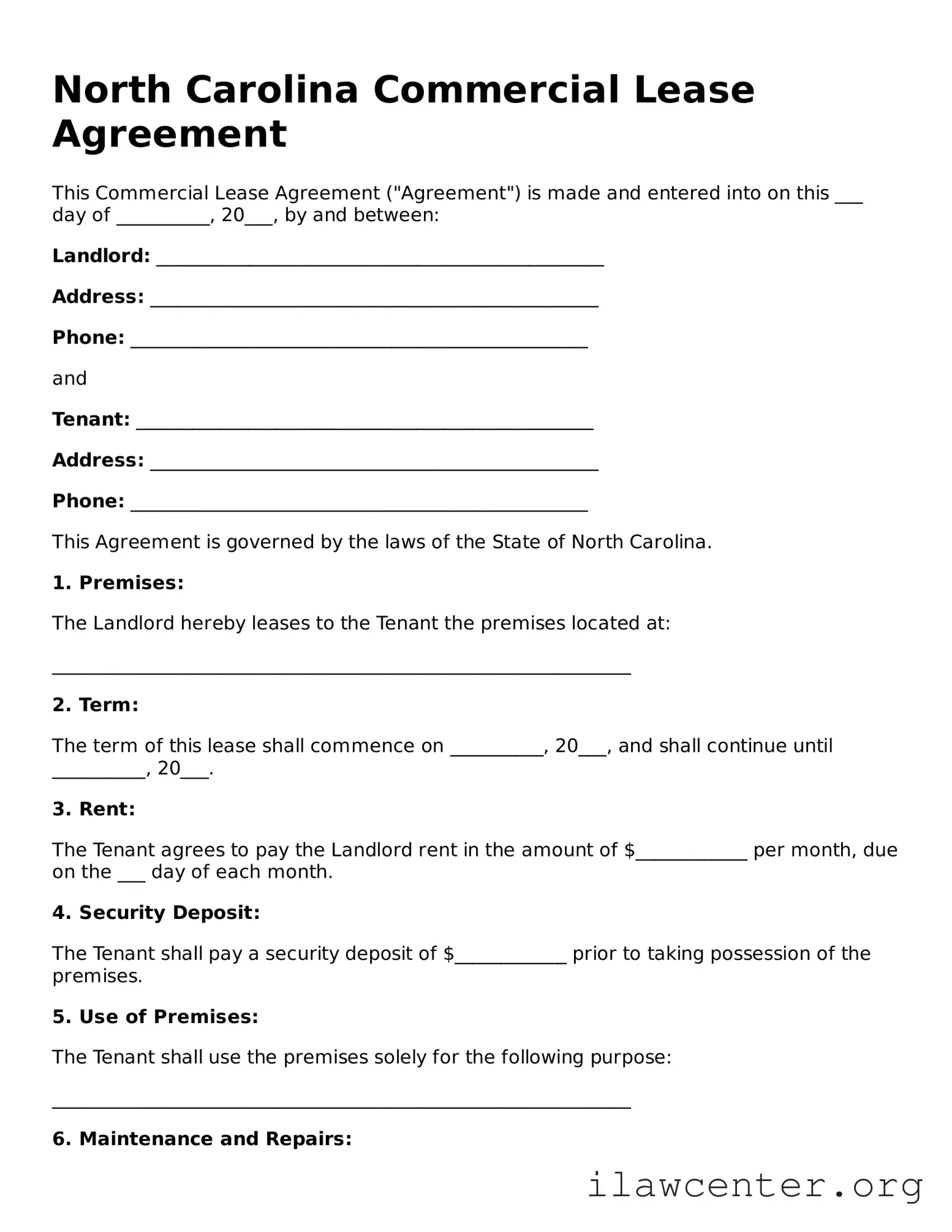
North Carolina Commercial Lease Agreement Preview

North Carolina Commercial Lease Agreement

This Commercial Lease Agreement ("Agreement") is made and entered into on this ___ day of __________, 20___, by and between:

Landlord: ________________________________________________

Address: ________________________________________________

Phone: _________________________________________________

and

Tenant: _________________________________________________

Address: ________________________________________________

Phone: _________________________________________________

This Agreement is governed by the laws of the State of North Carolina.

1. Premises:

The Landlord hereby leases to the Tenant the premises located at:

______________________________________________________________

2. Term:

The term of this lease shall commence on __________, 20___, and shall continue until __________, 20___.

3. Rent:

The Tenant agrees to pay the Landlord rent in the amount of $____________ per month, due on the ___ day of each month.

4. Security Deposit:

The Tenant shall pay a security deposit of $____________ prior to taking possession of the premises.

5. Use of Premises:

The Tenant shall use the premises solely for the following purpose:

______________________________________________________________

6. Maintenance and Repairs:

  • The Tenant shall keep the premises in good condition.
  • The Landlord shall be responsible for major repairs.

7. Alterations:

The Tenant must obtain written consent from the Landlord before making any alterations to the premises.

8. Termination:

Either party may terminate this Agreement by providing ___ days written notice to the other party.

9. Governing Law:

This Agreement shall be governed by the laws of North Carolina.

IN WITNESS WHEREOF, the parties hereto have executed this Agreement as of the date first above written.

Landlord Signature: ____________________________

Date: ____________________________

Tenant Signature: ____________________________

Date: ____________________________

PDF Form Characteristics

Fact Name Description
Governing Law The North Carolina Commercial Lease Agreement is governed by North Carolina state law.
Parties Involved The agreement typically involves a landlord (lessor) and a tenant (lessee).
Property Description The lease must clearly describe the commercial property being leased.
Lease Term The duration of the lease is specified, which can range from months to years.
Rent Amount The agreement includes the amount of rent, payment schedule, and any late fees.
Security Deposit A security deposit amount may be required, typically to cover damages or unpaid rent.
Use of Property The lease outlines how the tenant can use the property, including any restrictions.
Termination Clause Conditions under which the lease can be terminated by either party are included.

Instructions on Utilizing North Carolina Commercial Lease Agreement

Filling out the North Carolina Commercial Lease Agreement form is a straightforward process. By following these steps, you can ensure that all necessary information is provided accurately. Once completed, the form will serve as a binding agreement between the landlord and the tenant, outlining the terms of the lease.

  1. Begin by entering the date at the top of the form.
  2. Fill in the landlord's name and contact information in the designated section.
  3. Provide the tenant's name and contact information.
  4. In the appropriate fields, specify the property address being leased.
  5. Indicate the lease term, including the start and end dates.
  6. Detail the rent amount and specify the payment schedule (monthly, quarterly, etc.).
  7. Outline any security deposit requirements.
  8. Describe the use of the property and any restrictions that may apply.
  9. Include any maintenance responsibilities for both the landlord and tenant.
  10. Sign and date the form at the bottom, ensuring both parties have their signatures.

Important Facts about North Carolina Commercial Lease Agreement

What is a North Carolina Commercial Lease Agreement?

A North Carolina Commercial Lease Agreement is a legal document that outlines the terms and conditions under which a landlord rents commercial property to a tenant. This agreement typically includes details about the rental amount, lease duration, property use, and responsibilities of both parties. It serves to protect the rights of both the landlord and tenant while providing a clear framework for the rental relationship.

What key terms should be included in the lease agreement?

Essential terms in a commercial lease agreement include the lease duration, rent amount, payment schedule, security deposit, maintenance responsibilities, and permitted uses of the property. Additionally, the agreement should specify conditions for renewal, termination, and any restrictions on alterations to the property. Clarity in these terms helps prevent disputes later on.

How long is a typical commercial lease in North Carolina?

Commercial leases in North Carolina can vary widely in length. They typically range from one year to several years, depending on the nature of the business and the agreement between the landlord and tenant. Longer leases may offer more stability for tenants, while shorter leases can provide flexibility. It's important for both parties to consider their long-term plans when negotiating the lease duration.

Can a commercial lease be modified after signing?

Yes, a commercial lease can be modified after it has been signed, but both parties must agree to any changes. Modifications should be documented in writing and signed by both the landlord and tenant to ensure enforceability. This process helps maintain clarity and protects the interests of both parties throughout the lease term.

What happens if a tenant fails to pay rent?

If a tenant fails to pay rent, the landlord typically has the right to take specific actions outlined in the lease agreement. This may include charging late fees, sending a notice to pay or vacate, or initiating eviction proceedings. It is crucial for tenants to communicate with their landlord if they anticipate payment issues, as many landlords may be willing to negotiate a solution.

Are there specific laws governing commercial leases in North Carolina?

Yes, commercial leases in North Carolina are governed by both state laws and the terms of the lease agreement itself. While the lease can dictate many aspects of the rental relationship, it must still comply with applicable state laws. Tenants and landlords should be aware of these regulations, which can cover issues like security deposits, eviction procedures, and tenant rights.

Is it advisable to have a lawyer review the lease agreement?

Having a lawyer review a commercial lease agreement is highly advisable. Legal professionals can provide insights into the terms and conditions, ensuring that your rights are protected. They can also help identify any potential issues that may arise during the lease term. Investing in legal advice can save both parties from costly disputes in the future.
Common mistakes

Filling out the North Carolina Commercial Lease Agreement can be a daunting task. Many individuals and businesses make common mistakes that can lead to misunderstandings and complications down the line. One frequent error is failing to accurately identify the parties involved in the lease. It is crucial to ensure that both the landlord and tenant are clearly named, including their legal business names if applicable. Omitting or misspelling names can create confusion and may complicate enforcement of the lease terms.

Another common mistake occurs when individuals overlook the importance of specifying the lease term. The duration of the lease should be clearly defined, including the start and end dates. If this information is vague or missing, it can lead to disputes over tenancy duration. Both parties should agree on the length of the lease to avoid any potential conflicts regarding renewal or termination.

Additionally, many people fail to thoroughly read and understand the financial obligations outlined in the lease. This includes not only the base rent but also any additional costs such as utilities, maintenance fees, or property taxes. Neglecting to clarify these financial responsibilities can result in unexpected expenses for the tenant. It is essential to detail all monetary obligations to ensure both parties have a clear understanding of their financial commitments.

Lastly, individuals often underestimate the significance of including specific terms regarding property use. The lease should clearly state what activities are permitted on the premises. If the use is not clearly defined, tenants may inadvertently violate lease terms, leading to potential eviction or legal action. Both parties should collaboratively outline acceptable uses to foster a positive landlord-tenant relationship.

Documents used along the form

When entering into a commercial lease agreement in North Carolina, several other forms and documents may be necessary to ensure a smooth transaction. These documents help clarify the terms, responsibilities, and rights of both landlords and tenants. Below is a list of common forms that are often used alongside the North Carolina Commercial Lease Agreement.

  • Letter of Intent: This document outlines the basic terms of the lease agreement before the formal contract is drafted. It serves as a preliminary agreement and helps both parties understand their intentions.
  • Personal Guarantee: If the tenant is a business entity, a personal guarantee may be required. This document holds an individual personally responsible for the lease obligations if the business fails to meet them.
  • Lease Addendum: An addendum is used to modify or add specific provisions to the original lease agreement. It can address unique terms agreed upon after the main lease is signed.
  • Security Deposit Receipt: This document acknowledges the receipt of the security deposit from the tenant. It details the amount received and the conditions under which it may be returned.
  • Rules and Regulations: Often included as an attachment to the lease, this document outlines the specific rules that tenants must follow while occupying the property.
  • Maintenance Agreement: This document specifies the responsibilities of both the landlord and tenant regarding property maintenance and repairs, helping to prevent disputes.
  • Sublease Agreement: If the tenant wishes to lease the space to another party, a sublease agreement is required. This document outlines the terms under which the subtenant will occupy the property.
  • Disclosure Statements: Certain disclosures may be required by law, such as lead-based paint disclosures for older properties. These statements inform tenants of potential hazards.
  • Termination Notice: Should either party wish to terminate the lease, a formal termination notice must be provided. This document outlines the intent to end the lease and the reasons for doing so.

Having these documents prepared and understood can help facilitate a successful commercial leasing experience. Always consider consulting with a legal professional to ensure all necessary forms are completed correctly and comply with local laws.

Similar forms

  • Residential Lease Agreement: This document outlines the terms between a landlord and tenant for renting a residential property. Like a commercial lease, it specifies rent, duration, and responsibilities of both parties.
  • Sublease Agreement: A sublease agreement allows a tenant to rent out their leased space to another party. It shares similarities with a commercial lease by detailing the terms and conditions of the sublet.
  • Rental Agreement: This is a broader term that can apply to both residential and commercial properties. It typically includes payment terms, duration, and rules for use, much like a commercial lease agreement.
  • Property Management Agreement: This document is between a property owner and a management company. It outlines the management company's responsibilities, similar to how a commercial lease defines tenant and landlord obligations.
  • Purchase Agreement: This document is used when buying property. It includes terms of sale, much like a commercial lease outlines terms for leasing a property. Both require clear terms to protect the interests of all parties involved.

Dos and Don'ts

When filling out the North Carolina Commercial Lease Agreement form, it is essential to be thorough and accurate. Here are some important do's and don'ts to consider:

  • Do read the entire lease agreement carefully before starting.
  • Do provide accurate information about the parties involved.
  • Do clearly define the terms of the lease, including duration and rent amount.
  • Do consult with a legal professional if you have any questions.
  • Don't leave any sections blank; fill out all required fields.
  • Don't rush through the process; take your time to ensure accuracy.

Misconceptions

Understanding the North Carolina Commercial Lease Agreement form is crucial for both landlords and tenants. However, several misconceptions can lead to confusion. Here are ten common misunderstandings:

  1. All commercial leases are the same. Many people believe that all commercial leases follow a standard format. In reality, each lease can vary significantly based on the specific needs of the parties involved.
  2. Only lawyers can draft a lease. While having a lawyer can be beneficial, many landlords and tenants can successfully negotiate and draft a lease on their own, provided they understand the essential elements.
  3. Verbal agreements are sufficient. Some assume that a verbal agreement is enough for a commercial lease. However, written agreements are necessary to protect both parties and clarify terms.
  4. Lease terms are set in stone. Many believe that once a lease is signed, the terms cannot be changed. In fact, leases can often be renegotiated if both parties agree.
  5. Security deposits are not required. Some landlords think that security deposits are optional. In North Carolina, a security deposit is typically required to protect against potential damages.
  6. All expenses are covered by the landlord. Tenants may assume that landlords cover all property expenses. However, many leases require tenants to pay for utilities, maintenance, and other costs.
  7. Termination clauses are unnecessary. Some believe that termination clauses are irrelevant. In truth, these clauses are essential for outlining the conditions under which either party can end the lease.
  8. Commercial leases don’t need to be registered. Many think that commercial leases do not require registration. However, registering a lease can provide additional legal protections.
  9. All leases are negotiable. While many terms can be negotiated, some landlords may have strict policies regarding certain aspects of the lease, such as rent increases.
  10. Once signed, a lease cannot be disputed. Some tenants believe that they cannot challenge a lease once it is signed. However, if there are issues such as fraud or misrepresentation, legal recourse may be available.

By understanding these misconceptions, both landlords and tenants can better navigate the complexities of commercial leasing in North Carolina.

Key takeaways

Filling out and using the North Carolina Commercial Lease Agreement form is an important step for both landlords and tenants. Here are some key takeaways to keep in mind:

  • Understand the Terms: Before signing, make sure you fully understand the lease terms, including rent, duration, and any additional fees.
  • Define the Space: Clearly outline the specific area being leased. This helps avoid disputes over what is included in the agreement.
  • Check for Maintenance Responsibilities: Determine who is responsible for maintenance and repairs. This can save you from unexpected costs later.
  • Review Termination Clauses: Know the conditions under which the lease can be terminated by either party. This is crucial for planning your business’s future.
  • Seek Legal Advice: If you have any doubts or questions, consider consulting a legal expert. This can provide peace of mind and help protect your interests.

By keeping these points in mind, you can navigate the leasing process more effectively and ensure a smoother relationship between landlord and tenant.