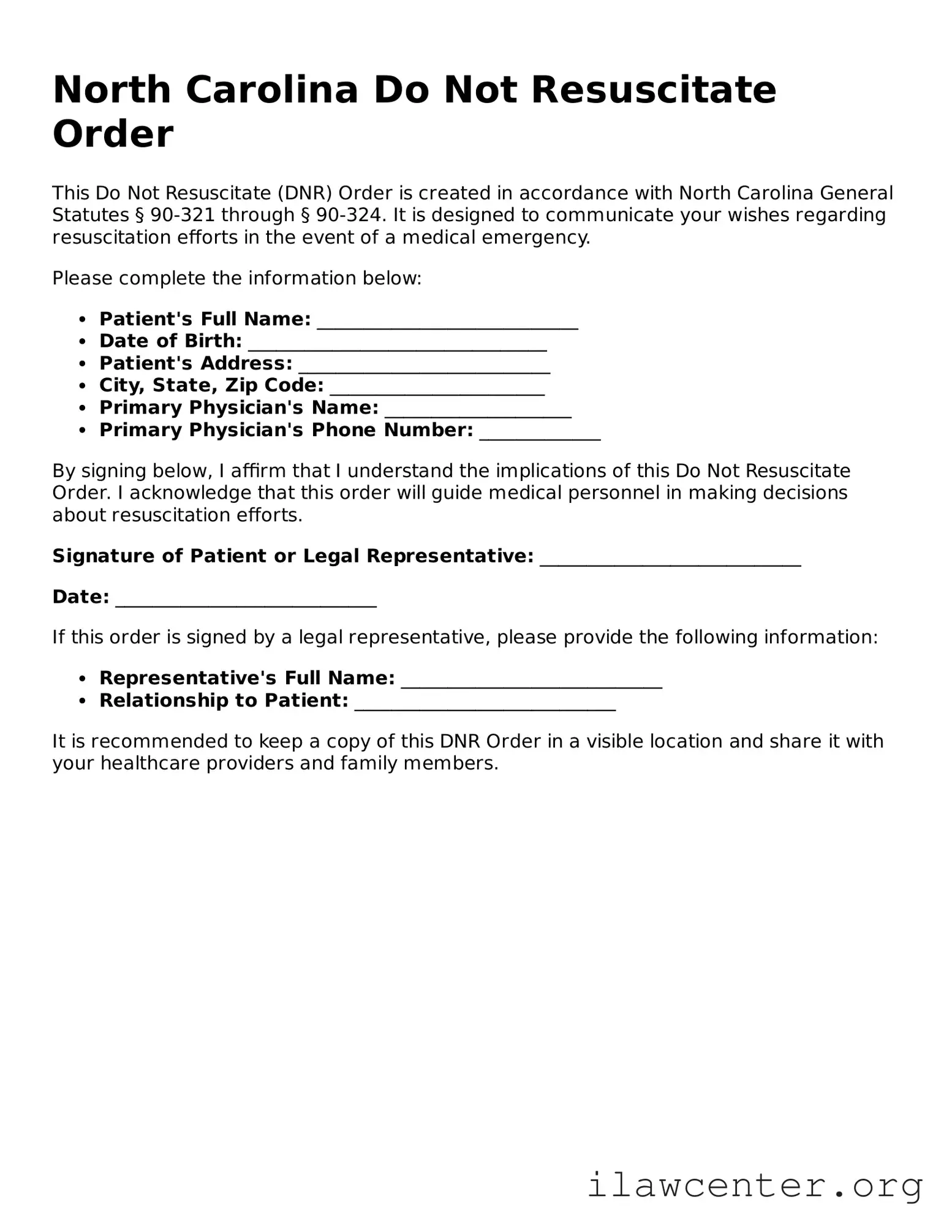
When filling out the North Carolina Do Not Resuscitate (DNR) Order form, many individuals unintentionally make mistakes that can lead to confusion or unintended consequences. One common error is not ensuring that the form is signed by the appropriate parties. In North Carolina, a DNR order must be signed by a physician, and without this signature, the document is not valid. It is crucial for individuals to verify that their healthcare provider has completed this important step.
Another mistake frequently encountered is the failure to clearly communicate the individual's wishes. The DNR form should reflect the person’s specific desires regarding resuscitation. If the language used is vague or ambiguous, healthcare providers may be unsure of how to proceed in an emergency. Clarity is key; it is essential to articulate intentions in straightforward terms.
Some people overlook the importance of discussing their DNR wishes with family members. Without open conversations, loved ones may not understand the individual’s choices, leading to potential conflicts or misunderstandings at critical moments. Engaging in these discussions can help ensure that everyone is on the same page and respects the individual’s preferences.
Additionally, individuals sometimes forget to review and update their DNR orders regularly. Life circumstances change, and so do preferences regarding medical care. A DNR order that was valid a year ago may no longer align with a person’s current wishes. It is advisable to revisit the document periodically and make necessary adjustments.
Another common pitfall involves not providing copies of the DNR order to relevant parties. It is essential to distribute copies to healthcare providers, family members, and anyone else who may be involved in the individual’s care. Without proper dissemination, there is a risk that the order may not be honored when it is needed most.
People also sometimes neglect to consider the implications of their DNR decision on other medical treatments. A DNR order specifically addresses resuscitation efforts but does not necessarily indicate a refusal of all medical care. Individuals should clarify their preferences regarding other forms of treatment to avoid any confusion among healthcare providers.
Moreover, some individuals fail to ensure that the DNR form is easily accessible. In emergencies, time is of the essence, and having the DNR order readily available can make a significant difference. Keeping the form in a visible location, such as on the refrigerator or with other important documents, can facilitate prompt access when needed.
Another mistake is misunderstanding the role of the healthcare proxy. While a DNR order expresses wishes regarding resuscitation, it does not replace the need for a healthcare proxy who can make decisions on behalf of the individual if they are unable to do so. It is important to have both a DNR order and a designated healthcare proxy to ensure comprehensive planning.
Lastly, individuals may not fully understand the legal implications of a DNR order. This form is a legally binding document, and it is essential to comprehend the weight it carries. Seeking guidance from a legal professional or healthcare provider can provide clarity and help avoid any missteps in the process.