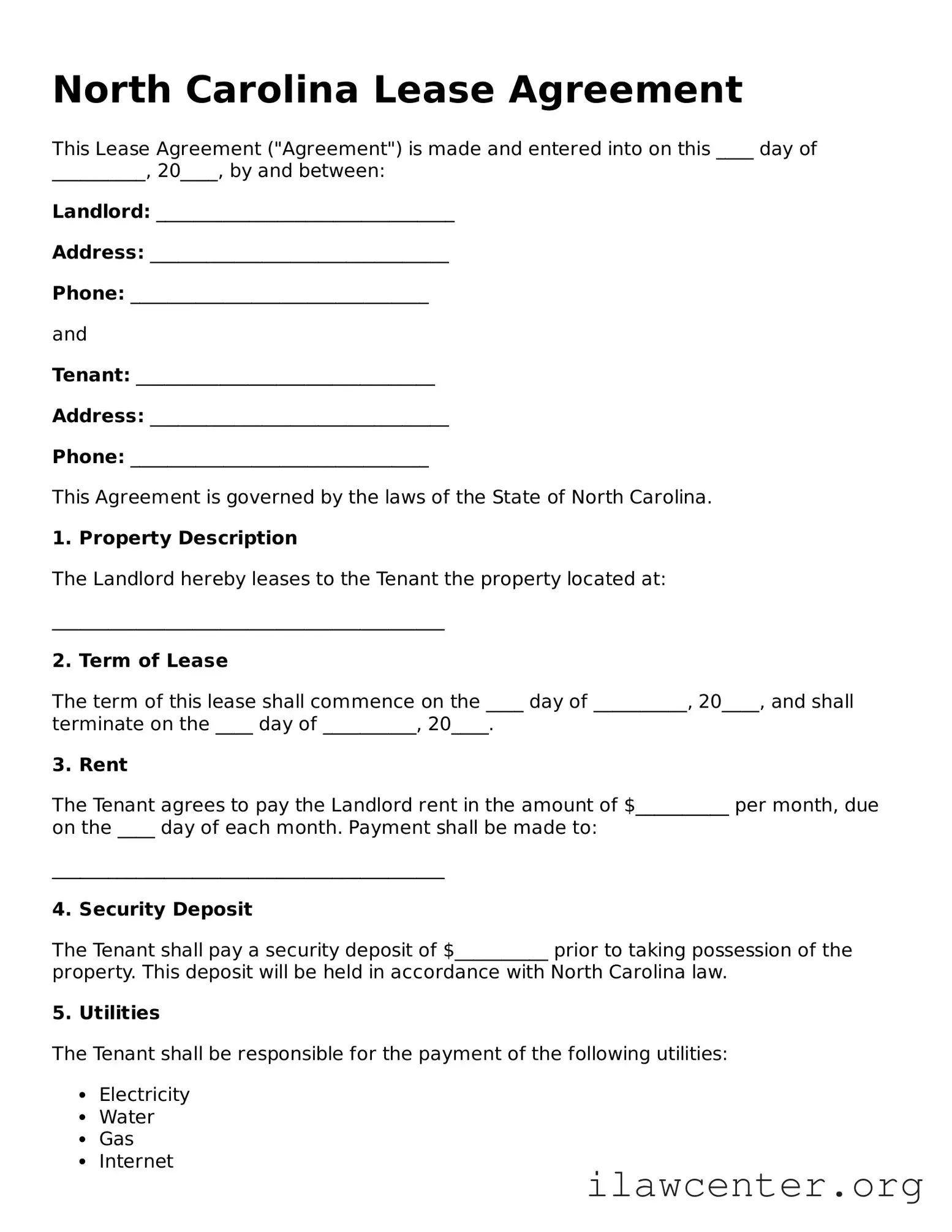
What is a North Carolina Lease Agreement?
A North Carolina Lease Agreement is a legally binding document that outlines the terms and conditions under which a landlord rents property to a tenant. This agreement serves to protect the rights and responsibilities of both parties, detailing aspects such as rental payments, duration of the lease, maintenance responsibilities, and rules for terminating the lease.
What essential elements should be included in the lease agreement?
Key elements of a North Carolina Lease Agreement include the names of the landlord and tenant, the property address, the lease term (start and end dates), the amount of rent, payment due dates, security deposit details, and any specific rules or regulations governing the property. It is also wise to include provisions for maintenance, repairs, and conditions under which the lease may be terminated.
How long is a typical lease term in North Carolina?
Lease terms in North Carolina can vary widely. They can be as short as a month-to-month agreement or as long as a year or more. The duration should be clearly stated in the lease agreement to avoid any confusion. Both parties should agree on the length before signing.
Is a security deposit required in North Carolina?
Yes, landlords in North Carolina typically require a security deposit. This deposit serves as protection against potential damages or unpaid rent. North Carolina law allows landlords to charge up to two months' rent as a security deposit for leases longer than one month. It is important to document the condition of the property before the tenant moves in to ensure a fair assessment when returning the deposit.
Can a lease be terminated early in North Carolina?
Yes, a lease can be terminated early, but the process must follow the terms outlined in the lease agreement. Common reasons for early termination include mutual agreement between the landlord and tenant, a breach of contract, or specific circumstances such as domestic violence. Tenants should provide written notice as required by the lease terms, while landlords must also comply with legal requirements when terminating a lease.
What happens if a tenant fails to pay rent?
If a tenant fails to pay rent, the landlord has the right to initiate eviction proceedings after providing proper notice. North Carolina law requires landlords to give a tenant a 10-day notice to pay rent or vacate the property. If the tenant does not comply, the landlord may file for eviction in court. It is essential for both parties to communicate openly to resolve any issues before resorting to legal action.
Are there any specific tenant rights in North Carolina?
Yes, tenants in North Carolina have several rights, including the right to a habitable living environment, protection from retaliation for exercising their rights, and the right to privacy. Landlords must provide reasonable notice before entering the rental property, except in emergencies. Understanding these rights can help tenants advocate for themselves and ensure a safe living situation.
Can a landlord increase rent during a lease term?
Generally, a landlord cannot increase rent during a lease term unless the lease agreement specifically allows for it. Rent increases typically take effect at the beginning of a new lease term. If the lease is month-to-month, landlords can provide notice of a rent increase, usually 30 days in advance, as required by law.
What should a tenant do if they have a dispute with their landlord?
If a tenant has a dispute with their landlord, the first step is to communicate directly with the landlord to resolve the issue. If that does not work, tenants may consider mediation services or contacting local tenant advocacy groups for assistance. As a last resort, legal action can be pursued, but it is advisable to seek legal counsel before proceeding.
Is it advisable to have a written lease agreement?
Yes, having a written lease agreement is highly advisable. A written document provides clarity and protects both the landlord and tenant by outlining their rights and responsibilities. It serves as a reference point for resolving disputes and ensures that both parties are on the same page regarding the terms of the rental arrangement.