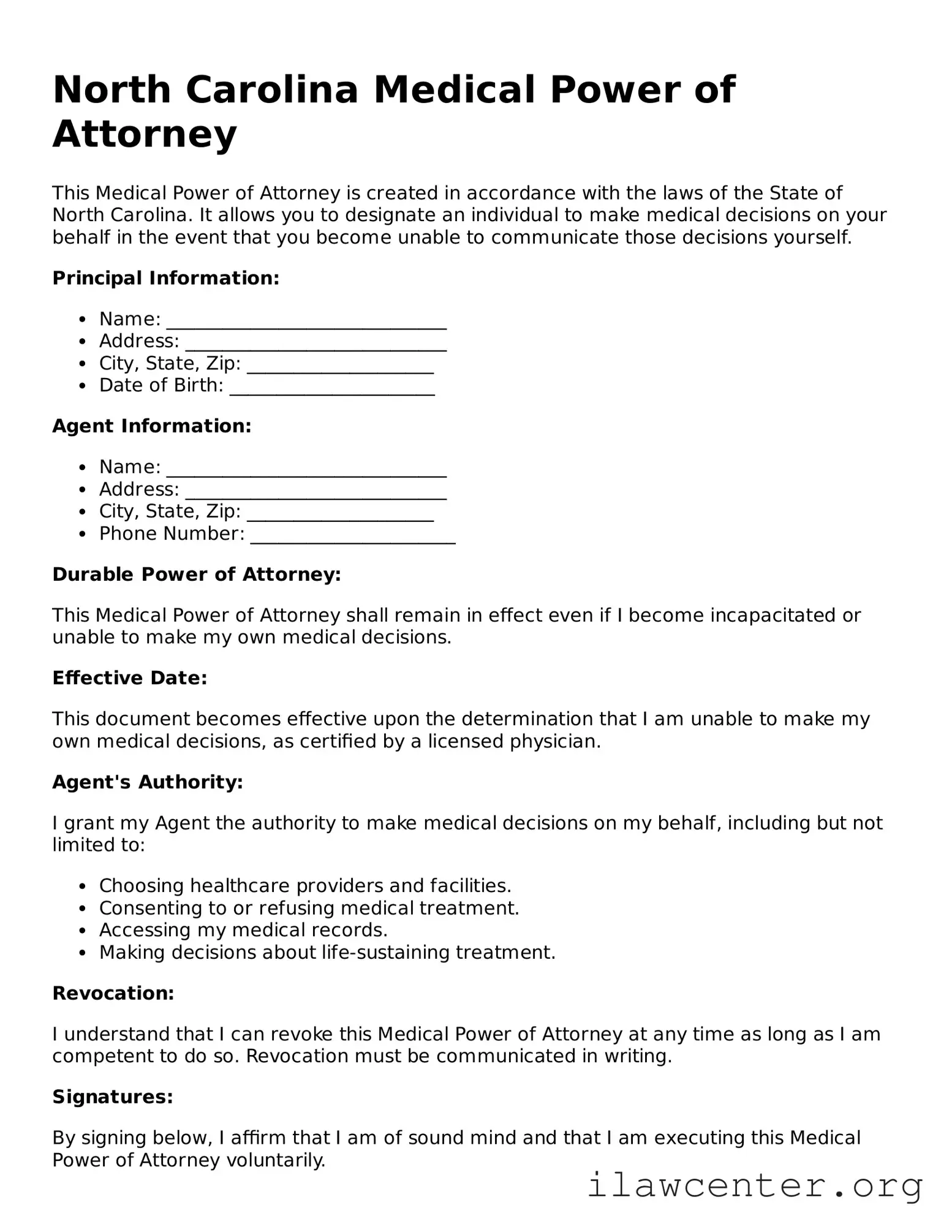
What is a Medical Power of Attorney in North Carolina?
A Medical Power of Attorney is a legal document that allows an individual, known as the principal, to designate another person, referred to as the agent, to make healthcare decisions on their behalf in the event that they become unable to do so. This document is essential for ensuring that a person's medical preferences are respected when they are incapacitated or unable to communicate their wishes.
Who can serve as an agent in a Medical Power of Attorney?
In North Carolina, any competent adult can serve as an agent in a Medical Power of Attorney. This includes family members, friends, or trusted individuals. However, it is important to choose someone who understands your healthcare preferences and can make decisions that align with your values and wishes. Additionally, the agent cannot be an employee of a healthcare facility where the principal is receiving care, unless they are related to the principal.
How do I create a Medical Power of Attorney in North Carolina?
To create a Medical Power of Attorney, you must complete a form that meets the requirements set by North Carolina law. This form should clearly identify the principal and the agent, outline the powers granted to the agent, and include any specific healthcare preferences. After filling out the form, it must be signed by the principal in the presence of two witnesses or a notary public. It is advisable to keep copies of the signed document in accessible locations and provide one to the designated agent.
Can I revoke my Medical Power of Attorney?
Yes, a Medical Power of Attorney can be revoked at any time by the principal, as long as they are competent to do so. To revoke the document, the principal should notify the agent and any healthcare providers who may have a copy of the form. It is also recommended to create a written revocation and keep a copy for personal records. This ensures that all parties are aware that the previous document is no longer valid.
What happens if I do not have a Medical Power of Attorney?
If an individual does not have a Medical Power of Attorney and becomes incapacitated, healthcare decisions may be made by family members or, in some cases, by a court-appointed guardian. This process can lead to delays and may not reflect the individual’s personal healthcare preferences. Having a Medical Power of Attorney in place ensures that your wishes are honored and that decisions are made by someone you trust.
Is a Medical Power of Attorney the same as a Living Will?
No, a Medical Power of Attorney and a Living Will are distinct documents. A Medical Power of Attorney designates an agent to make healthcare decisions on your behalf, while a Living Will outlines your preferences regarding life-sustaining treatments and end-of-life care. Both documents serve important roles in healthcare planning and can be used together to provide comprehensive guidance on medical decisions.