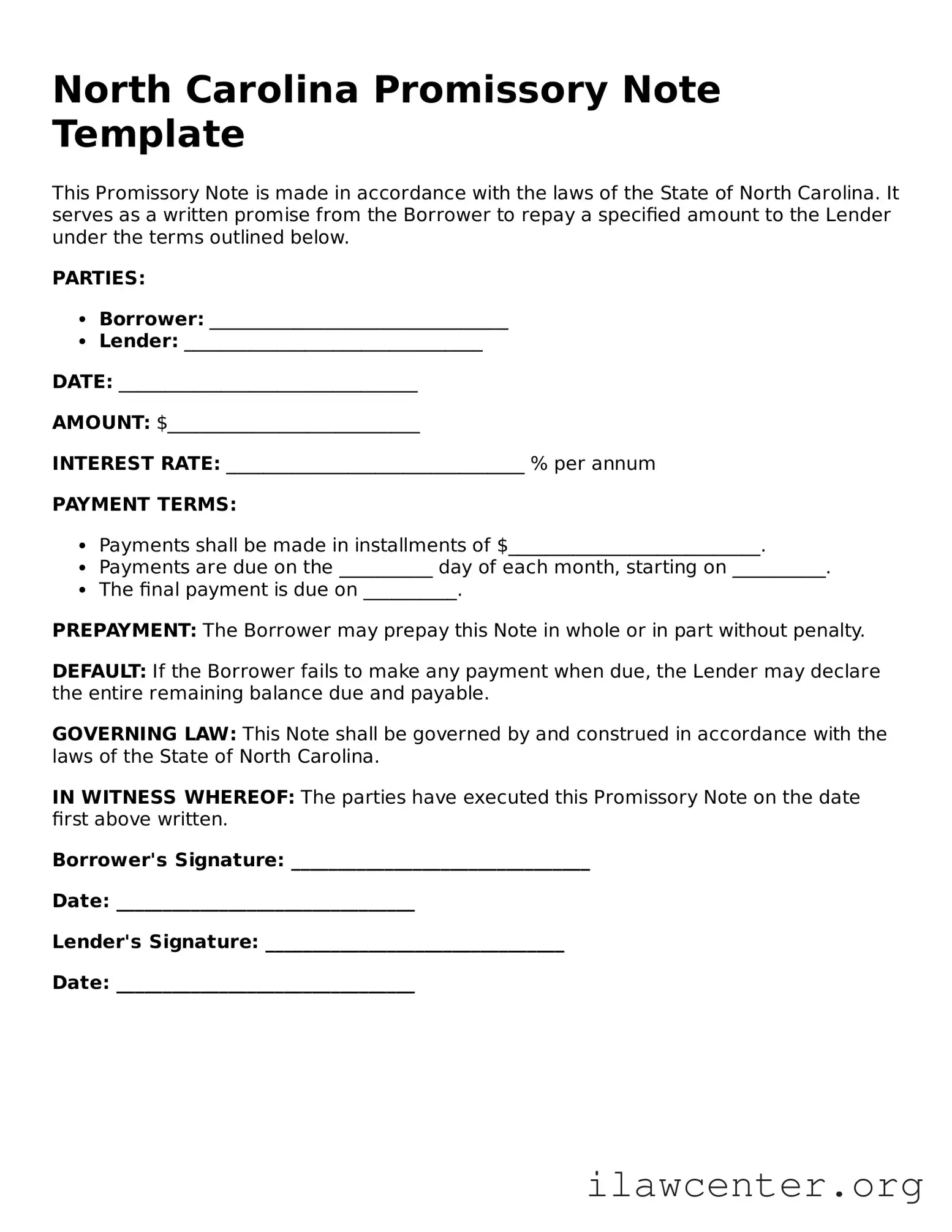
What is a Promissory Note in North Carolina?
A Promissory Note is a legal document that outlines a promise by one party (the borrower) to pay a specific amount of money to another party (the lender) under agreed-upon terms. In North Carolina, this document serves as evidence of a debt and details the repayment schedule, interest rate, and any other relevant conditions. It is essential for both parties to understand the terms to avoid potential disputes in the future.
Who can use a Promissory Note in North Carolina?
Any individual or business can use a Promissory Note in North Carolina. This includes personal loans between friends or family members, business loans, or formal agreements between lenders and borrowers. It is important for both parties to ensure the terms are clear and mutually agreed upon to protect their interests.
What are the key components of a North Carolina Promissory Note?
A typical Promissory Note in North Carolina includes several key components: the names of the borrower and lender, the principal amount borrowed, the interest rate (if applicable), the repayment schedule, and any penalties for late payments. Additionally, it may contain provisions for default, which outline what happens if the borrower fails to make payments as agreed.
Is a Promissory Note legally binding in North Carolina?
Yes, a Promissory Note is legally binding in North Carolina, provided it meets certain criteria. Both parties must agree to the terms, and the document must be signed by the borrower. It is advisable to have the document notarized to strengthen its enforceability. If the borrower defaults, the lender can take legal action to recover the owed amount.
Can a Promissory Note be modified after it is signed?
Yes, a Promissory Note can be modified after it is signed, but both parties must agree to the changes. It is best practice to document any modifications in writing and have both parties sign the amended agreement. This helps prevent misunderstandings and provides clarity regarding the new terms.
What happens if the borrower defaults on the Promissory Note?
If the borrower defaults on the Promissory Note, the lender has several options. They can pursue legal action to collect the owed amount, which may include filing a lawsuit. The lender may also choose to negotiate a new payment plan or settle the debt for a lesser amount. It is crucial for both parties to communicate openly to find a resolution that works for everyone involved.
Are there any specific laws governing Promissory Notes in North Carolina?
Yes, Promissory Notes in North Carolina are governed by state laws, including the Uniform Commercial Code (UCC). These laws outline the rights and responsibilities of both borrowers and lenders, including enforcement and collection procedures. It is advisable to consult with a legal professional to ensure compliance with all applicable laws when drafting or entering into a Promissory Note.