Attorney-Verified  Real Estate Purchase Agreement Document for North Carolina

Attorney-Verified Real Estate Purchase Agreement Document for North Carolina

The North Carolina Real Estate Purchase Agreement is a legal document that outlines the terms and conditions of a real estate transaction between a buyer and a seller. This form serves as a crucial step in the home buying process, ensuring that both parties are clear on their obligations and rights. For those ready to take the next step in their real estate journey, fill out the form by clicking the button below.

Article Guide

The North Carolina Real Estate Purchase Agreement is a crucial document in the home buying process, serving as a binding contract between the buyer and seller. This form outlines essential details such as the purchase price, property description, and the terms of sale, ensuring both parties are clear on their obligations. It also includes provisions for earnest money deposits, contingencies like inspections and financing, and timelines for closing the transaction. Understanding this agreement is vital for anyone involved in real estate transactions in North Carolina, as it not only protects the interests of both parties but also facilitates a smoother transfer of property ownership. By carefully reviewing and negotiating the terms within this document, buyers and sellers can navigate the complexities of real estate with greater confidence and security.

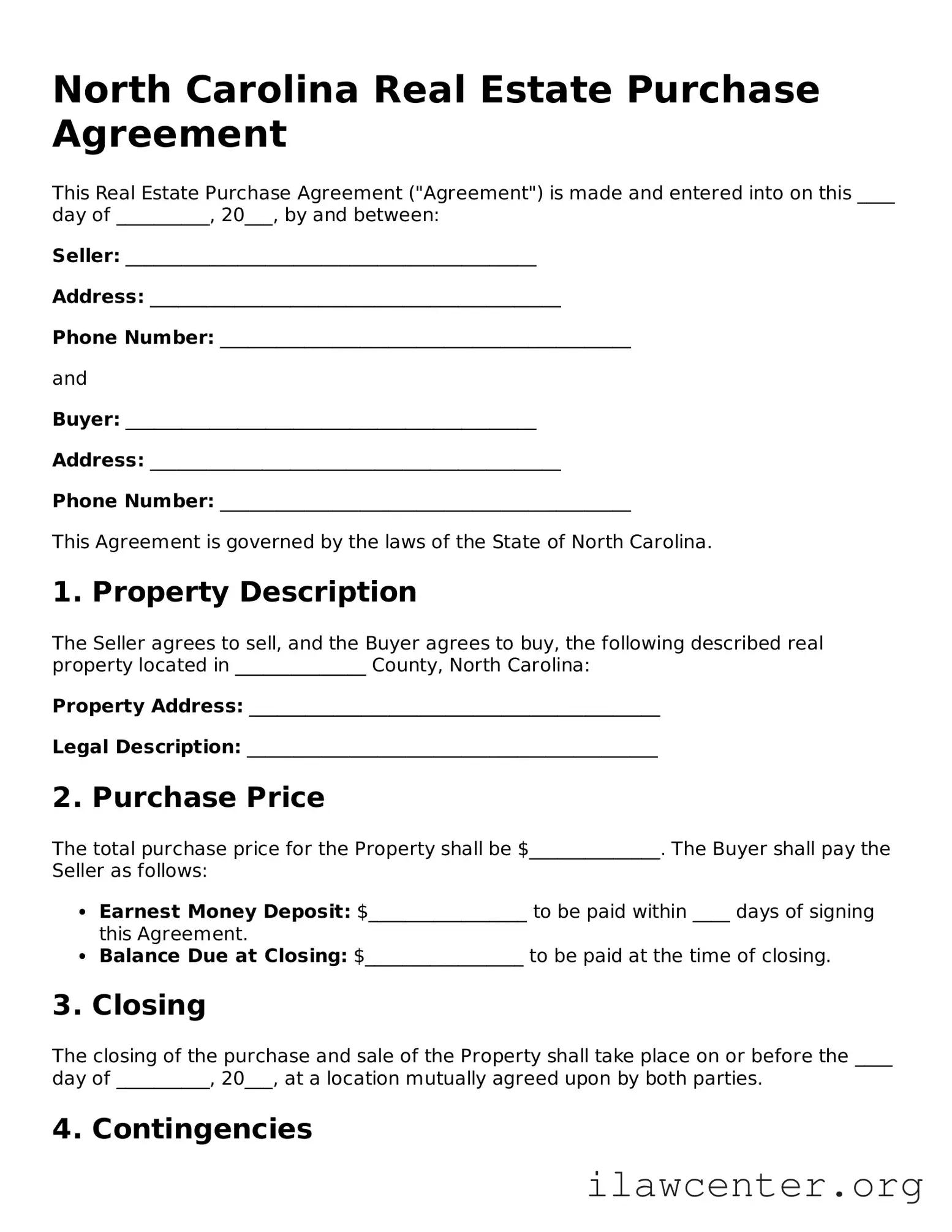
North Carolina Real Estate Purchase Agreement Preview

North Carolina Real Estate Purchase Agreement

This Real Estate Purchase Agreement ("Agreement") is made and entered into on this ____ day of __________, 20___, by and between:

Seller: ____________________________________________

Address: ____________________________________________

Phone Number: ____________________________________________

and

Buyer: ____________________________________________

Address: ____________________________________________

Phone Number: ____________________________________________

This Agreement is governed by the laws of the State of North Carolina.

1. Property Description

The Seller agrees to sell, and the Buyer agrees to buy, the following described real property located in ______________ County, North Carolina:

Property Address: ____________________________________________

Legal Description: ____________________________________________

2. Purchase Price

The total purchase price for the Property shall be $______________. The Buyer shall pay the Seller as follows:

  • Earnest Money Deposit: $_________________ to be paid within ____ days of signing this Agreement.
  • Balance Due at Closing: $_________________ to be paid at the time of closing.

3. Closing

The closing of the purchase and sale of the Property shall take place on or before the ____ day of __________, 20___, at a location mutually agreed upon by both parties.

4. Contingencies

This Agreement is contingent upon:

  1. The Buyer obtaining financing under terms acceptable to the Buyer.
  2. A satisfactory home inspection conducted by a licensed inspector.
  3. The Buyer selling their current home, if applicable.

5. Disclosures

The Seller agrees to provide the Buyer with all required disclosures, including but not limited to:

  • Lead-Based Paint Disclosure (if applicable).
  • Property Condition Disclosure Statement.

6. Signatures

By signing below, both parties agree to the terms and conditions set forth in this Agreement.

Seller's Signature: _______________________________ Date: ____________

Buyer's Signature: _______________________________ Date: ____________

This Agreement represents the entire understanding between the parties and supersedes all prior negotiations or agreements.

PDF Form Characteristics

Fact Name Description
Governing Law The North Carolina Real Estate Purchase Agreement is governed by North Carolina state law.
Purpose This form outlines the terms and conditions for the sale of real estate in North Carolina.
Parties Involved The agreement typically involves a buyer and a seller, both of whom must provide their consent.
Key Components It includes essential details such as purchase price, property description, and contingencies.

Instructions on Utilizing North Carolina Real Estate Purchase Agreement

Filling out the North Carolina Real Estate Purchase Agreement form is a crucial step in the property buying process. This document requires careful attention to detail to ensure that all necessary information is accurately captured. After completing the form, it will be ready for submission to the appropriate parties involved in the transaction.

  1. Begin by entering the date at the top of the form.
  2. Provide the names and addresses of both the buyer and the seller in the designated sections.
  3. Fill in the property description, including the address and any relevant details about the property.
  4. Specify the purchase price of the property in the appropriate field.
  5. Indicate the amount of the earnest money deposit and the method of payment.
  6. Outline any contingencies that may apply, such as financing or inspection requirements.
  7. Fill in the closing date, ensuring it aligns with the agreed-upon timeline.
  8. Review the sections regarding disclosures and warranties, and ensure they are completed correctly.
  9. Sign and date the form, ensuring all parties involved do the same where required.
  10. Make copies of the completed form for all parties involved in the transaction.

Important Facts about North Carolina Real Estate Purchase Agreement

What is the North Carolina Real Estate Purchase Agreement form?

The North Carolina Real Estate Purchase Agreement form is a legal document used when buying or selling real estate in North Carolina. It outlines the terms and conditions of the sale, including the purchase price, financing details, and the responsibilities of both the buyer and the seller.

Who should use this form?

This form should be used by anyone looking to buy or sell residential property in North Carolina. It is essential for both parties to have a clear understanding of the agreement to ensure a smooth transaction.

What key elements are included in the agreement?

The agreement includes several important elements such as the property description, sale price, earnest money deposit, closing date, and any contingencies that may apply. It also outlines the rights and obligations of both the buyer and seller.

Is this form legally binding?

Yes, once both parties have signed the North Carolina Real Estate Purchase Agreement, it becomes a legally binding contract. This means both the buyer and seller are obligated to adhere to the terms outlined in the agreement.

Can the agreement be modified after signing?

Yes, the agreement can be modified if both parties agree to the changes. Any modifications should be documented in writing and signed by both the buyer and seller to maintain clarity and legality.

What happens if one party breaches the agreement?

If one party fails to fulfill their obligations under the agreement, the other party may have the right to seek legal remedies. This could include enforcing the contract or seeking damages, depending on the situation.

Are there any contingencies that can be included in the agreement?

Yes, contingencies are often included in the agreement. Common contingencies include financing, home inspections, and appraisal conditions. These contingencies allow the buyer or seller to back out of the agreement if specific conditions are not met.

Is it necessary to have a real estate agent when using this form?

While it is not required to have a real estate agent, it is highly recommended. An agent can provide valuable guidance and ensure that all necessary details are addressed in the agreement, making the process smoother for both parties.

Where can I obtain a copy of the North Carolina Real Estate Purchase Agreement form?

The form can be obtained from various sources, including real estate agents, legal offices, or online real estate platforms. It is important to ensure that you are using the most current version of the form to comply with state laws.
Common mistakes

When filling out the North Carolina Real Estate Purchase Agreement form, many individuals encounter common pitfalls that can lead to misunderstandings or complications later on. One significant mistake is failing to include all necessary parties in the agreement. It is crucial that all buyers and sellers are clearly identified. Omitting a party can create confusion and may lead to legal issues down the line, especially if one party believes they have rights that are not formally recognized in the agreement.

Another frequent error is neglecting to specify the purchase price clearly. While it may seem straightforward, vague language can lead to disputes. It is essential to state the exact amount being offered and any conditions that may affect this price, such as contingencies. A lack of clarity here can result in misunderstandings that could jeopardize the transaction.

Additionally, many people overlook the importance of including important dates in the agreement. This includes the closing date and any deadlines for inspections or financing contingencies. Without these dates, both parties may have different expectations about the timeline of the sale. This can create unnecessary stress and conflict as the transaction progresses.

Lastly, failing to read and understand the terms of the agreement can be a significant mistake. It is vital for both buyers and sellers to fully comprehend what they are agreeing to. This includes understanding the implications of any contingencies, disclosures, or obligations outlined in the document. Taking the time to review the agreement thoroughly can prevent surprises and ensure a smoother transaction for everyone involved.

Documents used along the form

When engaging in a real estate transaction in North Carolina, several forms and documents accompany the Real Estate Purchase Agreement. Each document plays a crucial role in ensuring a smooth process and protecting the interests of all parties involved. Below is a list of commonly used forms that you may encounter.

  • Seller's Disclosure Statement: This document requires the seller to disclose any known issues with the property. It provides buyers with essential information about the condition of the home, helping them make informed decisions.
  • Lead-Based Paint Disclosure: For homes built before 1978, this form informs buyers about the potential presence of lead-based paint. It is a federal requirement aimed at protecting buyers, especially families with young children.
  • Property Inspection Report: After a property inspection, this report details the condition of the home, including any repairs needed. Buyers typically use this information to negotiate repairs or price adjustments.
  • Closing Disclosure: This document outlines the final terms of the mortgage, including loan costs, closing costs, and the amount the buyer needs to bring to closing. It ensures transparency in the financial aspects of the transaction.
  • Title Search Report: A title search verifies the property's ownership history and identifies any liens or claims against it. This report is vital for ensuring that the seller has the right to sell the property.
  • Deed: The deed is the legal document that transfers ownership of the property from the seller to the buyer. It must be recorded with the county to provide public notice of the new ownership.

These documents work together to facilitate a successful real estate transaction. Understanding each one will help ensure that you are well-prepared and informed throughout the buying or selling process.

Similar forms

  • The Lease Agreement outlines the terms under which a tenant can occupy a property. Like a Real Estate Purchase Agreement, it specifies the parties involved, the property details, and the obligations of each party. Both documents aim to protect the interests of the involved parties.

  • The Option to Purchase Agreement grants a potential buyer the right to purchase a property at a predetermined price within a specified time frame. Similar to a Real Estate Purchase Agreement, it includes essential details such as price, terms, and conditions, ensuring clarity for both parties.

  • The Sales Contract is often used in various types of transactions, including real estate. It serves a similar purpose to the Real Estate Purchase Agreement by detailing the sale terms, including price, contingencies, and timelines for closing.

  • The Joint Venture Agreement can be relevant when two or more parties collaborate to purchase real estate together. This document outlines each party's contributions, responsibilities, and profit-sharing arrangements, akin to how a Real Estate Purchase Agreement defines the roles of the buyer and seller.

  • The Escrow Agreement is crucial in real estate transactions, as it involves a third party holding funds until all conditions of the purchase are met. It parallels the Real Estate Purchase Agreement by ensuring that both parties fulfill their obligations before the property changes hands.

  • The Title Transfer Document is essential for officially transferring ownership of the property from the seller to the buyer. This document complements the Real Estate Purchase Agreement, as it finalizes the transaction and ensures that the buyer receives clear title to the property.

Dos and Don'ts

When filling out the North Carolina Real Estate Purchase Agreement form, it's essential to approach the task with care. This document is crucial for ensuring a smooth transaction. Here are some important do's and don'ts to keep in mind:

  • Do read the entire agreement carefully before filling it out.
  • Do provide accurate information regarding the property and parties involved.
  • Do consult with a real estate agent or attorney if you have questions.
  • Do ensure that all necessary signatures are included.
  • Don't leave any sections blank; this can lead to misunderstandings.
  • Don't rush through the process; take your time to ensure accuracy.

Following these guidelines can help facilitate a successful real estate transaction. Remember, clarity and precision are key to protecting your interests.

Misconceptions

Understanding the North Carolina Real Estate Purchase Agreement form is essential for anyone involved in buying or selling property. However, several misconceptions can lead to confusion. Here are nine common misunderstandings:

  1. It is a legally binding contract immediately upon signing.

    Many believe that once both parties sign the agreement, it becomes legally binding. While signatures are crucial, certain conditions, like financing or inspections, may need to be satisfied before the contract is enforceable.

  2. All terms are negotiable.

    While many terms can be negotiated, some aspects, such as state laws and regulations, may limit the extent of negotiation. Understanding which terms can be altered is key.

  3. The form is the same for every transaction.

    Each transaction is unique, and the agreement should be tailored to fit the specific circumstances of the buyer and seller. Using a generic form without adjustments can lead to issues.

  4. Once the agreement is signed, no changes can be made.

    This is not true. Amendments can be made to the agreement if both parties agree to the changes. Documenting these amendments is important for clarity.

  5. Real estate agents handle all aspects of the agreement.

    While agents can provide guidance, buyers and sellers should actively participate in understanding the agreement. Knowledge of the terms is crucial for informed decision-making.

  6. The agreement guarantees the sale will go through.

    Even with a signed agreement, various factors can prevent the sale from closing, such as financing issues or problems discovered during inspections. It is important to remain aware of these possibilities.

  7. All contingencies are optional.

    Some contingencies, like financing and inspection, are highly recommended to protect buyers. Ignoring these can expose parties to significant risks.

  8. The agreement does not require legal advice.

    While not mandatory, seeking legal advice can be beneficial. A legal professional can help clarify terms and ensure that rights are protected throughout the process.

  9. It is only a formality and does not require careful review.

    Every detail in the agreement matters. A thorough review can prevent misunderstandings and ensure that both parties' interests are adequately represented.

By addressing these misconceptions, individuals can approach the North Carolina Real Estate Purchase Agreement with greater confidence and clarity. Understanding the nuances of this document is essential for a successful real estate transaction.

Key takeaways

When engaging in a real estate transaction in North Carolina, understanding the Real Estate Purchase Agreement form is essential. Here are key takeaways to consider:

  • Clarity is Crucial: Ensure that all terms are clearly stated to avoid misunderstandings between the buyer and seller.
  • Identification of Parties: The agreement should accurately identify all parties involved in the transaction, including full names and contact information.
  • Property Description: A detailed description of the property is necessary. This includes the address and any specific features that define the property.
  • Purchase Price: Clearly outline the purchase price and any terms related to payment, such as deposit amounts and financing contingencies.
  • Contingencies: Specify any contingencies, such as inspections or financing, that must be satisfied before the sale can proceed.
  • Closing Date: Establish a timeline for the closing date, which is when the ownership of the property is officially transferred.
  • Disclosures: The seller must disclose any known issues with the property. This transparency helps protect both parties.
  • Signatures: Ensure that all parties sign the agreement. Without signatures, the document may not be legally binding.
  • Legal Advice: Consider consulting with a legal professional before finalizing the agreement to ensure all aspects are covered and understood.

By keeping these takeaways in mind, both buyers and sellers can navigate the process more smoothly and with greater confidence.