Attorney-Verified  Rental Application Document for North Carolina

Attorney-Verified Rental Application Document for North Carolina

The North Carolina Rental Application form is a crucial document that potential tenants complete to express their interest in renting a property. This form collects essential information about the applicant, including personal details, rental history, and financial background. To begin your journey toward securing a rental, consider filling out the application form by clicking the button below.

Article Guide

The North Carolina Rental Application form is a crucial document for both landlords and prospective tenants. It serves as a tool to gather essential information about applicants, ensuring that landlords can make informed decisions. Key components of the form typically include personal details such as the applicant's name, contact information, and social security number. Employment history and income verification are also critical, allowing landlords to assess financial stability. Additionally, the application often requests references from previous landlords or personal contacts to gauge the applicant's rental history and reliability. Understanding the nuances of this form can streamline the rental process, protect the interests of all parties involved, and help establish a positive landlord-tenant relationship from the outset.

North Carolina Rental Application Preview

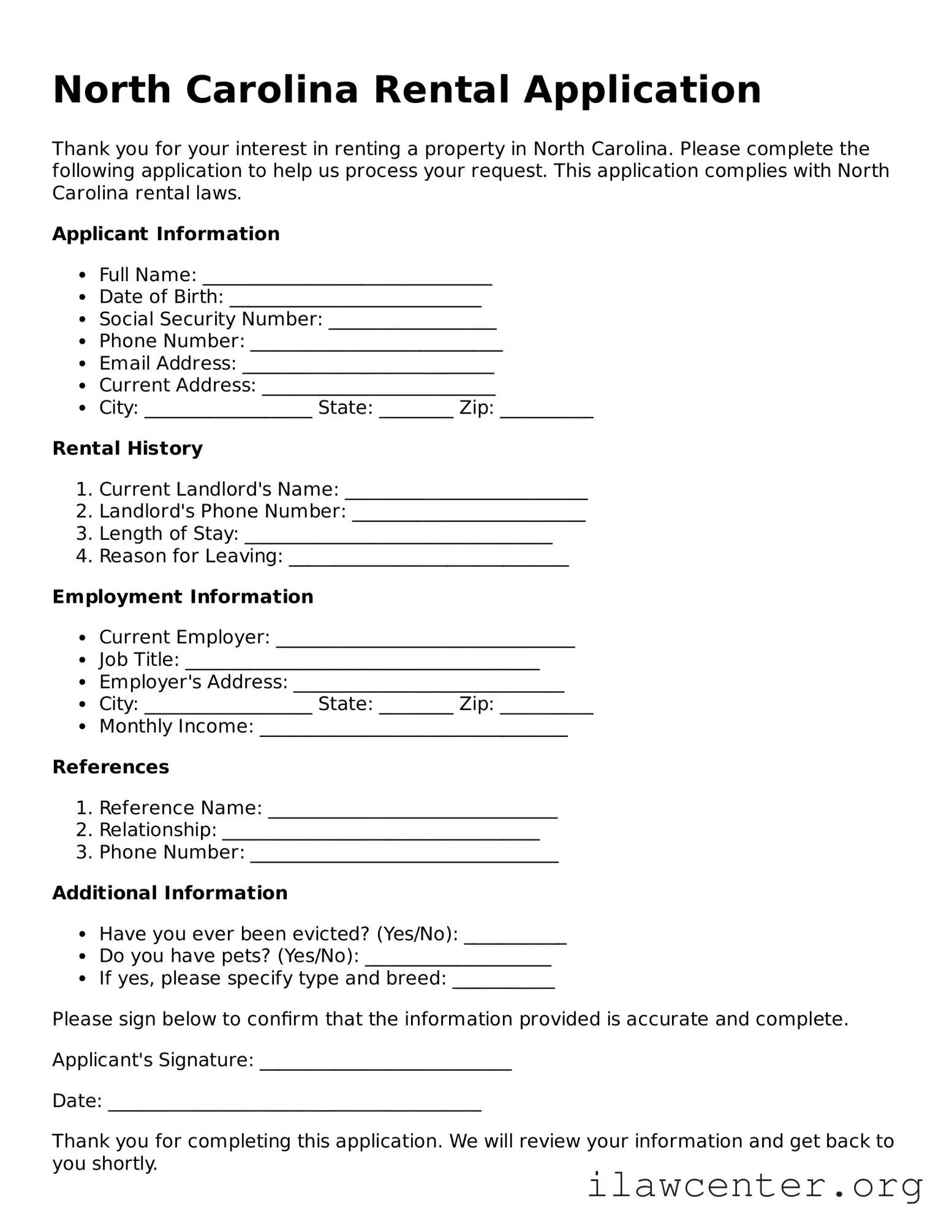
North Carolina Rental Application

Thank you for your interest in renting a property in North Carolina. Please complete the following application to help us process your request. This application complies with North Carolina rental laws.

Applicant Information

  • Full Name: _______________________________
  • Date of Birth: ___________________________
  • Social Security Number: __________________
  • Phone Number: ___________________________
  • Email Address: ___________________________
  • Current Address: _________________________
  • City: __________________ State: ________ Zip: __________

Rental History

  1. Current Landlord's Name: __________________________
  2. Landlord's Phone Number: _________________________
  3. Length of Stay: _________________________________
  4. Reason for Leaving: ______________________________

Employment Information

  • Current Employer: ________________________________
  • Job Title: ______________________________________
  • Employer's Address: _____________________________
  • City: __________________ State: ________ Zip: __________
  • Monthly Income: _________________________________

References

  1. Reference Name: _______________________________
  2. Relationship: __________________________________
  3. Phone Number: _________________________________

Additional Information

  • Have you ever been evicted? (Yes/No): ___________
  • Do you have pets? (Yes/No): ____________________
  • If yes, please specify type and breed: ___________

Please sign below to confirm that the information provided is accurate and complete.

Applicant's Signature: ___________________________

Date: ________________________________________

Thank you for completing this application. We will review your information and get back to you shortly.

PDF Form Characteristics

Fact Name Description
Purpose The North Carolina Rental Application form is used by landlords to screen potential tenants for rental properties.
Required Information Applicants typically need to provide personal details such as name, contact information, and employment history.
Background Checks Landlords often use the information provided to conduct background checks, including credit history and criminal records.
Application Fee Many landlords charge a non-refundable application fee to cover the cost of processing the application.
Fair Housing Laws The application process must comply with the Fair Housing Act, which prohibits discrimination based on race, color, religion, sex, national origin, familial status, or disability.
Governing Law In North Carolina, the rental application process is governed by state laws including the North Carolina Residential Rental Agreements Act.
Tenant Rights Applicants have the right to request a copy of any background check results used in the screening process.
Approval Process Landlords are not legally required to accept every application; they may choose to approve or deny based on the information gathered.

Instructions on Utilizing North Carolina Rental Application

Completing the North Carolina Rental Application form is an important step in securing a rental property. Ensure you have all necessary information ready, as this will help streamline the process. Below are the steps to guide you through filling out the form accurately.

  1. Begin by entering your personal information. This includes your full name, current address, and contact details such as phone number and email address.
  2. Provide your employment information. Include your employer's name, your job title, and the length of employment. If applicable, add any additional sources of income.
  3. List your rental history. Include the addresses of previous residences, the names of landlords, and the duration of your tenancy at each location.
  4. Disclose any criminal history if required. Be honest about any past convictions, as this information may be checked during the application process.
  5. Provide references. Include names and contact information for personal or professional references who can vouch for your character and reliability as a tenant.
  6. Sign and date the application. Ensure you understand any consent statements regarding background checks and credit history.
  7. Submit the completed application along with any required fees. Check if the property management requires payment and how they prefer to receive it.

After submitting the application, the property manager will review your information. They may contact you for further details or to schedule a meeting. Be prepared for potential follow-up questions or requests for additional documentation.

Important Facts about North Carolina Rental Application

What is a North Carolina Rental Application form?

The North Carolina Rental Application form is a document that potential tenants complete to apply for a rental property. It gathers essential information about the applicant, including personal details, rental history, employment information, and references. Landlords use this information to evaluate applicants and make informed decisions about tenancy.

What information do I need to provide on the application?

You will typically need to provide your full name, contact information, Social Security number, employment details, income, and rental history. Additionally, you may be asked for references from previous landlords or personal contacts. Be prepared to share information that helps the landlord assess your suitability as a tenant.

Is there a fee to apply for a rental property?

Many landlords or property management companies charge an application fee. This fee covers the cost of processing your application, including background and credit checks. Fees can vary widely, so it's important to ask about the amount before submitting your application.

How long does the application process take?

The application process can take anywhere from a few hours to several days. It often depends on how quickly the landlord can verify your information and complete background checks. To speed up the process, ensure that you provide accurate and complete information on your application.

What happens if my application is denied?

If your application is denied, the landlord is required to provide you with a reason. Common reasons for denial include insufficient income, poor credit history, or negative rental references. You may request a copy of your credit report to understand any issues that may have contributed to the denial.

Can I appeal a denial decision?

Yes, you can appeal a denial decision. Contact the landlord or property management company to discuss the reasons for the denial. If you believe there has been a mistake or if you have new information that could improve your application, present that information during your appeal.

How can I improve my chances of being approved?

To improve your chances of approval, provide complete and accurate information on your application. Offer references from previous landlords who can vouch for your reliability as a tenant. Additionally, demonstrating a stable income and good credit history can significantly enhance your application.

Common mistakes

Filling out a rental application can be a straightforward process, but many individuals make common mistakes that can hinder their chances of securing a rental property. Understanding these pitfalls can help applicants present themselves in the best light possible.

One common mistake is incomplete information. When applicants leave sections blank or fail to provide necessary details, it raises red flags for landlords. It’s essential to fill out every part of the application accurately and thoroughly. Double-checking the form before submission can prevent this issue.

Another frequent error involves providing inaccurate information. Whether it’s an incorrect Social Security number or an outdated employment address, inaccuracies can lead to delays or even disqualification. Applicants should take the time to verify all information before submitting their applications.

Many people also overlook the importance of references. Not including personal or professional references can make an application appear weak. Landlords often seek reassurance from previous landlords or employers, so it’s wise to provide reliable contacts who can vouch for one’s character and reliability.

Additionally, some applicants fail to check their credit history before applying. A poor credit score can significantly impact rental applications. By reviewing their credit report in advance, individuals can address any discrepancies and be prepared to discuss their financial history with potential landlords.

Another mistake is not providing proof of income. Landlords want assurance that tenants can pay rent consistently. Applicants should include recent pay stubs or bank statements to demonstrate their financial stability. This documentation helps build trust and credibility.

Many applicants also forget to read the fine print. Terms and conditions can vary significantly between rental agreements. Understanding the lease terms can prevent misunderstandings later on. Taking the time to read and ask questions about the lease can save applicants from future complications.

Lastly, some individuals fail to submit the application on time. Rental properties can be highly competitive, and delays can result in missed opportunities. Setting reminders and planning ahead can ensure that applications are submitted promptly.

By avoiding these common mistakes, applicants can enhance their chances of securing their desired rental property. Taking the time to carefully complete the application can lead to a smoother and more successful rental experience.

Documents used along the form

When applying for a rental property in North Carolina, several forms and documents are often required in addition to the Rental Application form. These documents help landlords assess potential tenants and ensure a smooth leasing process. Here is a list of commonly used forms and documents:

  • Credit Report Authorization Form: This document allows landlords to obtain a credit report on the applicant. It provides insight into the applicant's credit history and financial responsibility.
  • Background Check Consent Form: This form grants permission for landlords to conduct a background check, which may include criminal history and past evictions. It helps landlords assess the applicant's suitability as a tenant.
  • Income Verification Documents: Applicants may need to provide pay stubs, bank statements, or tax returns to verify their income. This information helps landlords determine if the applicant can afford the rent.
  • Rental History Verification Form: This form requests information about the applicant's previous rental experiences. Landlords may contact previous landlords to confirm rental history and assess reliability.
  • Application Fee Receipt: Many landlords charge an application fee to cover the cost of processing the application. A receipt for this fee is often required as proof of payment.
  • Pet Policy Acknowledgment: If the rental property allows pets, applicants may need to sign a document acknowledging the pet policy. This ensures that tenants understand any restrictions or fees related to pet ownership.
  • Lease Agreement: Once approved, tenants will need to sign a lease agreement. This legally binding document outlines the terms of the rental, including rent amount, duration, and responsibilities of both parties.
  • Move-In Inspection Checklist: This checklist is completed at the time of moving in to document the condition of the property. It protects both the landlord and tenant by providing a record of any existing damage or issues.

Having these forms and documents prepared can facilitate a more efficient rental application process. Being organized and providing all necessary information helps build trust between potential tenants and landlords.

Similar forms

The Rental Application form shares similarities with several other documents that are often used in the context of renting or leasing properties. Each of these documents serves a specific purpose but has overlapping elements with the Rental Application form. Below is a list of documents that are similar:

  • Lease Agreement: This is a contract between a landlord and tenant that outlines the terms of renting a property. Like the Rental Application, it requires personal information and may include financial details.
  • Background Check Authorization: This document allows landlords to conduct background checks on potential tenants. It often requires the same personal information as the Rental Application.
  • Credit Report Authorization: Similar to the background check, this form gives permission to access a tenant's credit history. Both documents help landlords assess the financial reliability of applicants.
  • Employment Verification Form: This form confirms a tenant's employment status and income. It complements the Rental Application by providing proof of financial capability.
  • Rental History Verification: This document requests information about previous rental experiences. It is similar in that it helps landlords evaluate an applicant's history as a tenant.
  • Guarantor Agreement: If a tenant needs a guarantor, this document outlines the responsibilities of the guarantor. It often requires similar financial information to that found in the Rental Application.
  • Pet Application: For tenants with pets, this form gathers information about the pet. It parallels the Rental Application by requiring details about the tenant and their living situation.
  • Security Deposit Agreement: This document outlines the terms regarding the security deposit. It relates to the Rental Application by addressing financial responsibilities tied to renting a property.
  • Move-In Checklist: This checklist is used when a tenant moves in and documents the condition of the property. It is similar in that it involves the tenant's responsibilities and the property's condition.

Dos and Don'ts

When filling out the North Carolina Rental Application form, certain practices can help ensure a smooth process. Here are some dos and don'ts to consider:

  • Do provide accurate and complete information.
  • Do include all required documentation, such as proof of income.
  • Do double-check your application for any errors before submission.
  • Do be honest about your rental history and references.
  • Don't leave any sections blank unless specified.
  • Don't provide false information, as this can lead to disqualification.
  • Don't ignore any specific instructions provided by the landlord or property manager.

Misconceptions

Understanding the North Carolina Rental Application form is essential for both landlords and prospective tenants. However, several misconceptions can lead to confusion. Below is a list of common misunderstandings.

  • All rental applications are the same. Many believe that rental applications are standardized across the state. In reality, each landlord or property management company may have their own specific form and requirements.
  • Rental applications are optional. Some people think that filling out a rental application is not mandatory. However, most landlords require a completed application to evaluate potential tenants.
  • Providing personal information is unnecessary. A common misconception is that tenants can withhold personal information, such as Social Security numbers. This information is often necessary for background checks and credit evaluations.
  • Application fees are illegal. Some tenants believe that charging an application fee is against the law. In North Carolina, landlords can charge a fee, but it must be reasonable and disclosed in advance.
  • Landlords must approve every application. Many assume that if they complete an application, they are guaranteed approval. However, landlords have the right to deny applications based on various factors, including credit history and rental references.
  • Rental applications are only for new tenants. Some people think that rental applications are only necessary for new leases. Existing tenants may also need to fill out a new application if they are renewing or transferring to a different unit.
  • All information on the application is confidential. While many aspects of a rental application are private, landlords may share certain information with credit agencies or other relevant parties during the screening process.
  • Once submitted, the application cannot be changed. Some individuals believe that they cannot make changes after submitting an application. In fact, applicants can often update their information, but they should communicate these changes to the landlord promptly.

By addressing these misconceptions, both landlords and tenants can navigate the rental application process more effectively.

Key takeaways

Filling out and using the North Carolina Rental Application form is an important step in securing a rental property. Here are some key takeaways to keep in mind:

  • Provide accurate personal information, including your full name, current address, and contact details.
  • Be prepared to disclose your rental history, including previous addresses and landlord contact information.
  • Employment details are crucial. Include your current employer, job title, and income information.
  • Be honest about your financial situation. This may include providing information about your credit history.
  • Some landlords may require a background check, so be ready to consent to this process.
  • Include references if requested. This can help strengthen your application.
  • Review the application for completeness before submission. Missing information can delay the process.
  • Understand that application fees may apply. These are typically non-refundable, so ensure you are serious about the property.

Taking the time to fill out the application thoughtfully can greatly enhance your chances of being approved for your desired rental home.