Fillable Notice of Intent to Vacate Document

Fillable Notice of Intent to Vacate Document

The Notice of Intent to Vacate form is a formal document that tenants submit to their landlords to announce their intention to leave a rental property. This notice is essential for ensuring that both parties are aware of the upcoming vacancy and can plan accordingly. If you are ready to fill out the form, click the button below.

Article Guide

When tenants decide to move out of a rental property, clear communication with their landlord is essential. The Notice of Intent to Vacate form serves as a formal declaration of a tenant's intention to leave the premises. This document typically includes vital information such as the tenant's name, the address of the rental property, and the intended move-out date. It is important for tenants to provide adequate notice, often specified in their lease agreement, to avoid potential penalties. Additionally, this form may outline any conditions regarding the return of the security deposit and the process for scheduling a final walk-through. Understanding the nuances of this form can help ensure a smooth transition for both tenants and landlords, minimizing misunderstandings and fostering a positive end to the rental relationship.

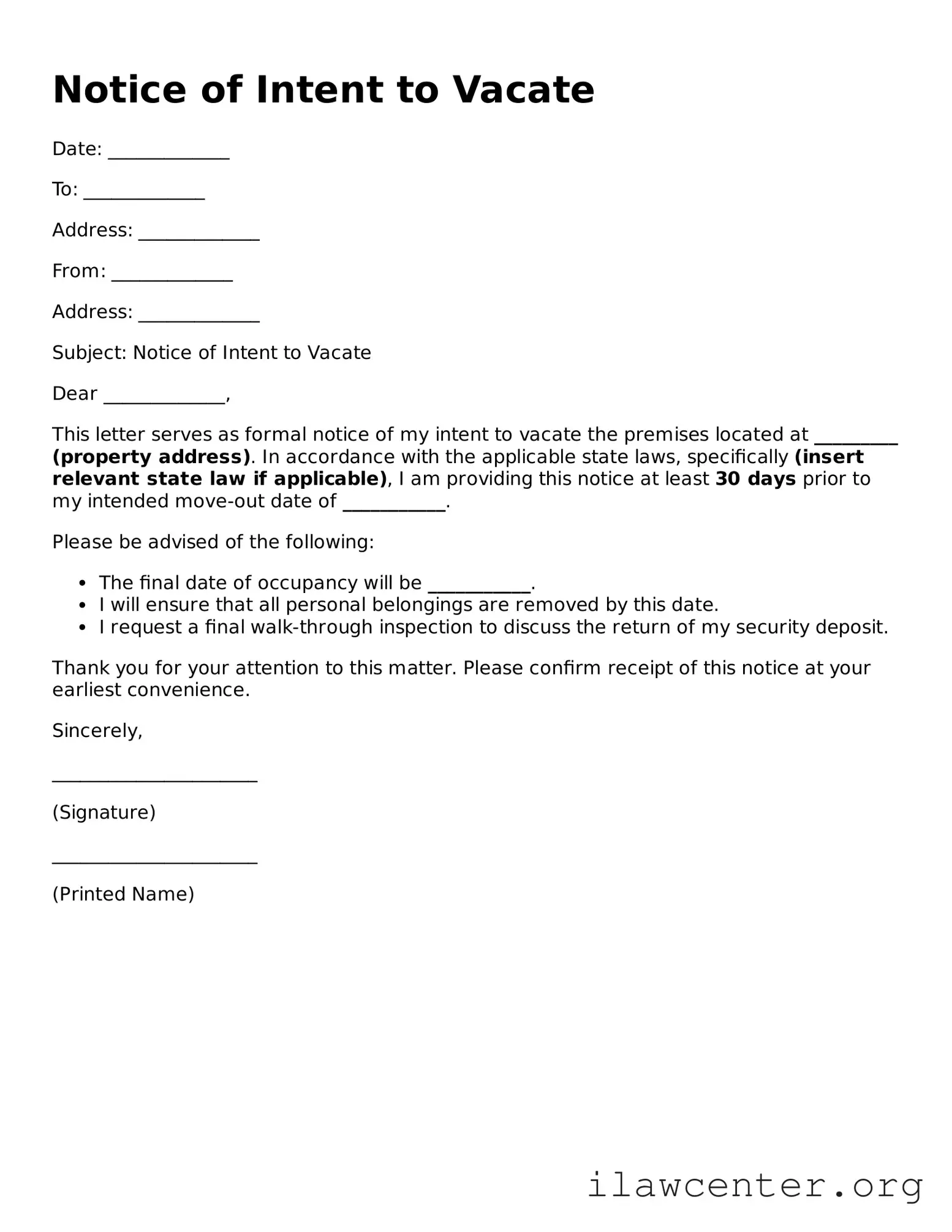
Notice of Intent to Vacate Preview

Notice of Intent to Vacate

Date: _____________

To: _____________

Address: _____________

From: _____________

Address: _____________

Subject: Notice of Intent to Vacate

Dear _____________,

This letter serves as formal notice of my intent to vacate the premises located at _________ (property address). In accordance with the applicable state laws, specifically (insert relevant state law if applicable), I am providing this notice at least 30 days prior to my intended move-out date of ___________.

Please be advised of the following:

  • The final date of occupancy will be ___________.
  • I will ensure that all personal belongings are removed by this date.
  • I request a final walk-through inspection to discuss the return of my security deposit.

Thank you for your attention to this matter. Please confirm receipt of this notice at your earliest convenience.

Sincerely,

______________________

(Signature)

______________________

(Printed Name)

PDF Form Characteristics

Fact Name Description
Purpose The Notice of Intent to Vacate form informs landlords of a tenant's decision to end their lease agreement.
Notice Period Most states require a specific notice period, typically ranging from 30 to 60 days, before vacating the property.
State-Specific Forms Each state may have its own version of the form, which must comply with local laws and regulations.
Governing Law For example, California law (Civil Code Section 1946) governs the notice period for residential leases.
Delivery Method The form can be delivered in person, via certified mail, or through electronic means, depending on state laws.
Signature Requirement Some states may require the tenant's signature on the form to validate the notice.
Documentation It is advisable for tenants to keep a copy of the notice for their records and to document the delivery method.
Consequences of Non-Compliance Failure to provide proper notice may result in penalties, including loss of the security deposit or additional rent charges.

Instructions on Utilizing Notice of Intent to Vacate

Once you have decided to move out of your rental property, it is essential to formally notify your landlord or property management company. Filling out the Notice of Intent to Vacate form is a crucial step in this process. After submitting this form, you can expect to receive confirmation from your landlord regarding your move-out date and any necessary next steps.

  1. Begin by downloading or obtaining a copy of the Notice of Intent to Vacate form from your landlord or property management's website or office.
  2. Carefully read the instructions provided with the form to ensure you understand what information is required.
  3. Fill in your full name as the tenant in the designated section at the top of the form.
  4. Provide the address of the rental property you are vacating. This should include the street address, city, state, and zip code.
  5. Clearly state the date you plan to vacate the property. This date should comply with the notice period outlined in your lease agreement.
  6. If applicable, include the names of any co-tenants who will also be vacating the property.
  7. Sign and date the form at the bottom to confirm that the information provided is accurate and that you intend to move out on the specified date.
  8. Make a copy of the completed form for your records before submitting it.
  9. Submit the form to your landlord or property management company. This can typically be done via mail, email, or in person, depending on their preferred method of communication.

Important Facts about Notice of Intent to Vacate

What is a Notice of Intent to Vacate form?

The Notice of Intent to Vacate form is a document that tenants use to formally inform their landlord or property management company of their intention to move out of a rental property. This notice typically includes the date the tenant plans to vacate the premises and may also specify the reason for leaving. It serves as a way to ensure that both parties are on the same page regarding the end of the tenancy and helps facilitate a smooth transition for everyone involved.

How much notice do I need to give my landlord?

The amount of notice required can vary depending on your lease agreement and state laws. Generally, a notice period of 30 days is common, but some leases may require more or less time. It’s important to check your lease for specific terms regarding notice requirements. Providing adequate notice helps avoid any potential disputes and ensures that you are compliant with your rental agreement.

Do I need to provide a reason for vacating?

What happens after I submit the Notice of Intent to Vacate?

Common mistakes

Completing a Notice of Intent to Vacate form is an important step for tenants planning to leave a rental property. However, several common mistakes can lead to complications. One frequent error is failing to provide the correct notice period. Most leases specify how much advance notice a tenant must give before vacating. Not adhering to this timeline can result in penalties or loss of the security deposit.

Another common mistake involves omitting essential information. Tenants often forget to include their current address, the date they plan to vacate, or their contact information. Without this information, landlords may have difficulty processing the notice, leading to misunderstandings or disputes.

Inaccurate dates can also create issues. Some individuals mistakenly write the wrong date for their intended move-out. This error can cause confusion and may lead landlords to believe that the tenant has not provided sufficient notice. It is crucial to double-check all dates to ensure accuracy.

Finally, tenants sometimes neglect to sign and date the form. A Notice of Intent to Vacate is not considered valid without the tenant's signature. This oversight can delay the move-out process and may lead to further complications. Ensuring that all required fields are filled out correctly and completely is essential for a smooth transition.

Documents used along the form

The Notice of Intent to Vacate form is an important document for tenants planning to leave a rental property. However, several other forms and documents may accompany this notice to ensure a smooth transition. Below is a list of commonly used documents in conjunction with the Notice of Intent to Vacate.

  • Lease Agreement: This is the original contract between the landlord and tenant that outlines the terms of the rental arrangement, including duration, rent amount, and responsibilities of both parties.
  • Move-Out Checklist: This document helps tenants prepare for their departure by listing tasks that need to be completed before moving out, such as cleaning, repairs, and returning keys.
  • Security Deposit Return Request: After vacating, tenants often submit this request to retrieve their security deposit, detailing any deductions for damages or unpaid rent.
  • Final Utility Bill Statement: This document shows the final charges for utilities, which tenants may need to settle before leaving the property to avoid disputes over outstanding payments.
  • Forwarding Address Form: Tenants provide this form to ensure that any future correspondence, including the return of the security deposit, reaches them at their new address.
  • Landlord’s Acknowledgment of Move-Out: This form serves as a record that the landlord acknowledges the tenant's move-out date and condition of the property upon departure.

Using these documents in conjunction with the Notice of Intent to Vacate can help facilitate a clear and organized process for both tenants and landlords. Proper documentation can prevent misunderstandings and ensure that all parties fulfill their obligations during the moving process.

Similar forms

  • Lease Termination Notice: This document informs the landlord that a tenant intends to end their lease agreement. Like the Notice of Intent to Vacate, it specifies the date of termination and may include reasons for leaving.
  • Eviction Notice: This is a formal notice from the landlord to the tenant, indicating that they must vacate the property. Both documents serve as a means of communication regarding the tenant's status in the rental agreement.
  • Notice of Rent Increase: This document notifies tenants of an upcoming increase in rent. Similar to the Notice of Intent to Vacate, it outlines important changes affecting the tenant's living situation.
  • Sublease Agreement: A sublease agreement allows a tenant to rent their space to another person. This is similar to the Notice of Intent to Vacate in that both involve changes to occupancy and require communication between parties.
  • Move-Out Checklist: This document lists items and tasks that tenants should complete before moving out. Like the Notice of Intent to Vacate, it helps ensure a smooth transition for both tenants and landlords.
  • Security Deposit Return Request: This request is made by a tenant to retrieve their security deposit after moving out. Both documents are related to the end of a tenancy and address financial matters associated with it.
  • Notice of Lease Renewal: This document informs tenants about the option to renew their lease. Similar to the Notice of Intent to Vacate, it addresses the tenant's future in the rental property.
  • Tenant's Notice to Landlord: This notice allows tenants to communicate various issues to their landlord, such as repairs needed or complaints. Both documents require formal communication between the tenant and landlord.
  • Final Utility Bill Notification: This notification informs tenants of their final utility bills upon moving out. Similar to the Notice of Intent to Vacate, it deals with the conclusion of the tenant's responsibilities in the rental property.

Dos and Don'ts

When filling out the Notice of Intent to Vacate form, it is important to follow certain guidelines to ensure clarity and compliance. Here are some things you should and shouldn't do:

  • Do read the instructions carefully before starting the form.
  • Do provide accurate information regarding your move-out date.
  • Don't leave any sections blank unless specified.
  • Don't forget to sign and date the form before submission.

Misconceptions

When it comes to the Notice of Intent to Vacate form, many misunderstandings can arise. Here are five common misconceptions, along with clarifications to help you navigate this important document.

  • Misconception 1: Submitting a Notice of Intent to Vacate means you have to move out immediately.
  • This is not true. The form simply informs your landlord of your intention to leave the property. You typically have a specified notice period, such as 30 days, before you must vacate.

  • Misconception 2: You can send the notice verbally or through informal channels.
  • While some landlords may accept verbal notifications, it is best practice to provide a written notice. This creates a clear record of your intent and helps avoid any potential disputes.

  • Misconception 3: The Notice of Intent to Vacate form is only required in certain states.
  • Most states have laws that require tenants to provide notice before vacating. However, the specific requirements can vary, so it’s essential to check your local regulations.

  • Misconception 4: You cannot change your mind after submitting the notice.
  • While it is possible to change your mind, doing so may complicate your situation. It’s crucial to communicate clearly with your landlord if your plans change.

  • Misconception 5: The notice must be delivered in person to be valid.
  • Delivery methods can vary. Many landlords accept notices sent via certified mail or email, depending on your lease agreement. Always confirm the preferred method with your landlord.

Key takeaways

When filling out and using the Notice of Intent to Vacate form, it is important to consider several key points to ensure a smooth transition. Here are some essential takeaways:

  1. Understand the requirements: Familiarize yourself with the specific rules and regulations regarding notice periods in your state or lease agreement.
  2. Provide accurate information: Include your name, address, and the date you intend to vacate to avoid any confusion.
  3. Check your lease: Review your lease agreement for any specific instructions or requirements related to giving notice.
  4. Delivery method matters: Ensure that you deliver the notice in a way that is acceptable according to your lease, such as via certified mail or in person.
  5. Keep a copy: Retain a copy of the Notice of Intent to Vacate for your records, as this may be important for future reference.
  6. Consider the timeline: Be aware of the timeline for providing notice to avoid penalties or issues with your landlord.
  7. Communicate with your landlord: If possible, have a conversation with your landlord about your intent to vacate to maintain a good relationship.
  8. Inspect the property: Schedule a walk-through with your landlord before moving out to address any potential issues.
  9. Understand your rights: Know your rights regarding the return of your security deposit and any deductions that may be made.

By keeping these points in mind, you can navigate the process of vacating your rental property more effectively.