
Notice Of Right To Cure Auto Loan Letter PDF Template

Notice Of Right To Cure Auto Loan Letter PDF Template

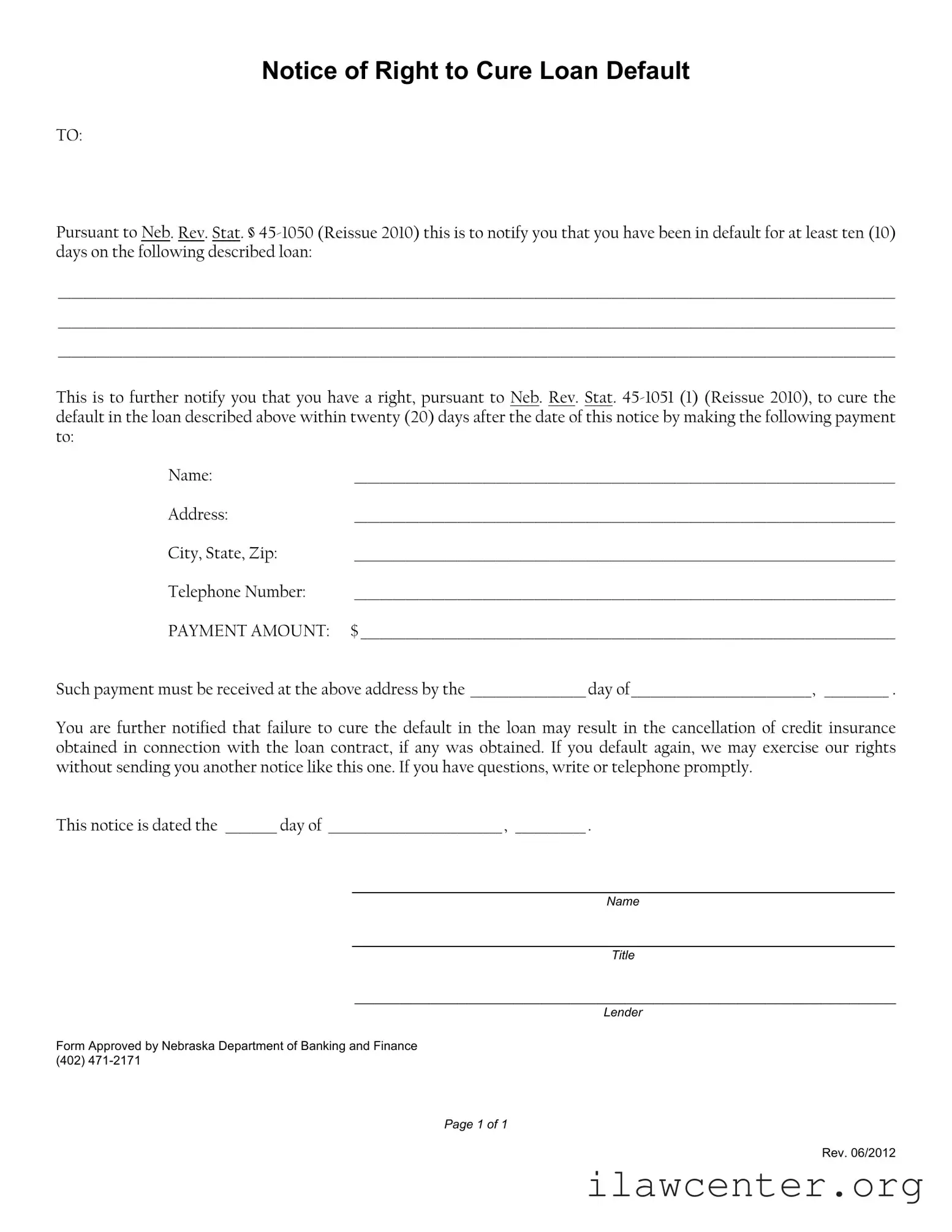
The Notice of Right to Cure Auto Loan Letter is an important document that informs borrowers of their default status on an auto loan. It outlines the steps they can take to remedy the situation and avoid further consequences. If you need to fill out this form, click the button below.

Article Guide

The Notice of Right to Cure Auto Loan Letter is an important document for borrowers facing default on their auto loans. It serves as a formal notification that you have been in default for at least ten days, providing essential details about the loan in question. This letter outlines your rights under Nebraska law, specifically the opportunity to cure the default within twenty days. It specifies the exact payment amount required to bring your loan current and includes the lender's contact information for any questions you may have. Additionally, the letter warns that failure to address the default may lead to the cancellation of any credit insurance tied to the loan. This notice also emphasizes that if you default again, the lender may not be obligated to send another notification. Understanding this form is crucial for protecting your rights and taking the necessary steps to remedy your loan situation.

Notice Of Right To Cure Auto Loan Letter Preview

Page 1 of 1
Rev. 06/2012
Notice of Right to Cure Loan Default
TO:
Pursuant to Neb
. Rev. Stat. § 45-1050 (Reissue 2010) this is to notify you that you have been in default for at least ten (10)
days on the following described loan:
__________________________________________________________________________________________________________________________________
__________________________________________________________________________________________________________________________________
__________________________________________________________________________________________________________________________________
This is to further notify you that you have a right, pursuant to Neb
. Rev. Stat. 45-1051 (1) (Reissue 2010), to cure the
default in the loan described above within twenty (20) days after the date of this notice by making the following payment
to:
Name: ____________________________________________________________________________________
Address: ____________________________________________________________________________________
City, State, Zip: ____________________________________________________________________________________
Telephone Number: ____________________________________________________________________________________
PAYMENT AMOUNT: $ ___________________________________________________________________________________
Such payment must be received at the above address by the __________________ day of ____________________________ , __________ .
You are further notified that failure to cure the default in the loan may result in the cancellation of credit insurance
obtained in connection with the loan contract, if any was obtained. If you default again, we may exercise our rights
without sending you another notice like this one. If you have questions, write or telephone promptly.
This notice is dated the ________ day of ___________________________ , ___________ .
_________________________________________________________
Name
_________________________________________________________
Title
__________________________________________________________
Lender
Form Approved by Nebraska Department of Banking and Finance
(402) 471-2171

File Properties

Fact Name Description
Purpose The Notice of Right to Cure Auto Loan Letter informs borrowers of their default status and their right to remedy the situation within a specified timeframe.
Governing Laws This form is governed by Nebraska Revised Statutes § 45-1050 and § 45-1051 (Reissue 2010), which outline the rights and responsibilities of borrowers in default.
Timeframe for Cure Borrowers have twenty (20) days from the date of the notice to cure the default by making the specified payment.
Consequences of Default If the default is not cured, the lender may cancel any credit insurance associated with the loan and may take further actions without additional notice.

Instructions on Utilizing Notice Of Right To Cure Auto Loan Letter

Filling out the Notice of Right to Cure Auto Loan Letter is straightforward. Once completed, the form serves as an official notification regarding your loan status. Follow the steps below to ensure all necessary information is accurately provided.

  1. Start by entering the date at the top of the form.
  2. Fill in the recipient's name and address in the "TO" section.
  3. Describe the loan in detail, including the loan number and any relevant account information.
  4. In the next section, provide the lender's name, address, city, state, zip code, and telephone number.
  5. Specify the payment amount required to cure the default.
  6. Indicate the deadline for payment by writing the day, month, and year.
  7. Complete the date of the notice at the bottom of the form.
  8. Sign the form and print your name and title below the signature.

Once the form is filled out, make sure to send it to the appropriate lender address. Keep a copy for your records. If you have any questions while completing the form, don’t hesitate to reach out to the lender directly.

Important Facts about Notice Of Right To Cure Auto Loan Letter

What is the Notice of Right to Cure Auto Loan Letter?

The Notice of Right to Cure Auto Loan Letter is a formal notification sent to borrowers who have defaulted on their auto loan payments. It serves to inform the borrower that they have been in default for at least ten days and outlines their right to remedy the situation. According to Nebraska law, the borrower has a specific timeframe to make the necessary payment to cure the default and avoid further consequences.

What steps should I take upon receiving this notice?

Upon receiving the notice, it is crucial to review the details carefully. First, confirm the amount due and the deadline for payment. If you are able to make the payment, ensure it is sent to the address provided in the notice. If you are unable to pay, consider contacting the lender to discuss possible options. Communication is key, as lenders may offer solutions to help you manage the situation.

What happens if I do not cure the default?

If you fail to cure the default within the specified twenty-day period, there may be serious repercussions. The lender may proceed with actions that could include the cancellation of any credit insurance associated with your loan. Additionally, if you default again in the future, the lender may not be required to provide another notice, which could lead to further complications.

Can I seek assistance if I have questions about the notice?

Yes, you can and should seek assistance if you have questions regarding the notice. The letter encourages borrowers to reach out to the lender directly, either by writing or calling the provided telephone number. It is important to clarify any uncertainties you may have to ensure you understand your rights and options moving forward.

Common mistakes

Filling out the Notice of Right to Cure Auto Loan Letter form requires careful attention to detail. One common mistake is failing to provide accurate information about the loan. Borrowers often overlook the necessity of clearly describing the loan in question. This can lead to confusion and complicate the process of rectifying the default.

Another frequent error involves incorrect payment amounts. Individuals sometimes miscalculate the total due, which can result in further complications. It is crucial to ensure that the payment amount reflects the total outstanding balance accurately. A misstep here can delay the cure process and potentially lead to additional penalties.

Inadequate contact information is also a significant issue. Borrowers may neglect to provide a complete address or phone number. This omission can hinder communication between the borrower and the lender, making it difficult to resolve the default in a timely manner. It is essential to double-check that all contact details are filled out correctly.

Many people fail to pay attention to the deadline for submitting the payment. The form specifies a date by which the payment must be received, and misunderstanding or overlooking this timeline can have serious consequences. If the payment is not made by the specified date, the right to cure the default may be forfeited.

Additionally, some borrowers do not keep a copy of the completed form for their records. This can be problematic if there are disputes later regarding whether the notice was sent or the payment was made. Retaining a copy provides a reference point and can be invaluable in resolving any future issues.

Finally, misunderstanding the legal implications of the notice can lead to further complications. Borrowers may not fully grasp that failure to cure the default could result in the cancellation of any credit insurance linked to the loan. Understanding these consequences is vital for making informed decisions about how to proceed.

Documents used along the form

The Notice of Right to Cure Auto Loan Letter is an important document for borrowers facing default. Along with this letter, several other forms and documents may be necessary to ensure clarity and compliance throughout the process. Below is a list of related documents often used in conjunction with the Notice of Right to Cure.

  • Loan Agreement: This is the original contract between the borrower and lender outlining the terms of the loan, including repayment schedules and interest rates.
  • Default Notice: This document formally notifies the borrower of their default status, detailing the specific reasons for the default and any relevant dates.
  • Payment History Statement: This statement provides a record of all payments made on the loan, including dates and amounts, to clarify the borrower's payment status.
  • Credit Insurance Policy: If applicable, this document outlines the terms of any credit insurance taken out in connection with the loan, which may be affected by default.
  • Communication Log: A record of all communications between the lender and borrower regarding the loan, including phone calls, emails, and letters, to ensure transparency.
  • Loan Modification Request Form: If the borrower wishes to change the terms of the loan, this form is used to formally request modifications, such as extending the repayment period.
  • Financial Hardship Letter: This letter may be submitted by the borrower to explain their financial situation and request assistance or leniency from the lender.
  • Settlement Agreement: If a resolution is reached, this document outlines the terms agreed upon by both parties to settle the loan default and any associated penalties.

Understanding these documents can help borrowers navigate the complexities of loan defaults and their rights. Each form serves a specific purpose, ensuring that all parties are informed and protected throughout the process.

Similar forms

The Notice of Right to Cure Auto Loan Letter serves as an important communication for borrowers facing default. Several other documents share similarities with this notice, each addressing various aspects of loan agreements and borrower rights. Here’s a list of eight such documents:

  • Notice of Default: This document informs the borrower that they have failed to meet their loan obligations. Like the Right to Cure letter, it specifies a timeframe for the borrower to address the default.
  • Loan Modification Agreement: This agreement outlines changes to the original loan terms, often initiated due to financial hardship. It shares the goal of providing the borrower with options to avoid default.
  • Foreclosure Notice: A more severe document that indicates the lender’s intent to reclaim the property due to non-payment. It emphasizes the urgency of addressing the default, similar to the Right to Cure letter.
  • Payment Reminder Letter: This is a friendly reminder sent to borrowers who are nearing or have missed a payment. It encourages timely action to prevent default.
  • Debt Settlement Agreement: This document outlines an agreement between the borrower and lender to settle the debt for less than the full amount owed. It offers an alternative solution to avoid further default consequences.
  • Credit Counseling Notice: This notice may recommend that the borrower seek assistance from a credit counseling service. It aims to provide support in managing debts, similar to the intent of the Right to Cure letter.
  • Final Demand Letter: This letter demands immediate payment from the borrower and warns of potential legal action if the debt remains unpaid. It conveys a sense of urgency akin to the Right to Cure notice.
  • Loan Repayment Plan: This plan outlines a structured approach for the borrower to catch up on missed payments. It serves as a proactive measure to remedy default situations, much like the Right to Cure letter.

Understanding these documents can help borrowers navigate their financial obligations and take appropriate action when facing difficulties.

Dos and Don'ts

When filling out the Notice of Right to Cure Auto Loan Letter form, it is essential to follow certain guidelines to ensure accuracy and compliance. Here are some important dos and don'ts to consider:

  • Do read the entire form carefully before starting to fill it out.
  • Do provide accurate information regarding the loan, including the payment amount.
  • Do ensure that all required fields are completed, including your name and contact information.
  • Do double-check the deadlines for payment to avoid any issues.
  • Do keep a copy of the completed form for your records.
  • Don't leave any sections blank unless specifically instructed to do so.
  • Don't use abbreviations or shorthand when filling out your information.
  • Don't ignore the instructions regarding the payment method and address.
  • Don't delay in sending the form, as timely action is crucial.

By following these guidelines, you can effectively navigate the process of completing the Notice of Right to Cure Auto Loan Letter form, ensuring that you meet all necessary requirements.

Misconceptions

Misunderstandings about the Notice of Right to Cure Auto Loan Letter can lead to confusion and potentially serious consequences for borrowers. Here are ten common misconceptions:

  1. This notice is a final demand for payment.

    Many people think that receiving this notice means they must pay immediately or face severe penalties. In reality, it is an opportunity to address the default within a specified timeframe.

  2. The notice is only for serious defaults.

    Some believe that this letter is only sent for significant defaults. However, even minor missed payments can trigger the notice.

  3. You cannot negotiate after receiving this notice.

    Receiving the notice does not mean negotiations are off the table. Borrowers can still discuss options with their lender.

  4. This notice guarantees loan reinstatement.

    Some borrowers think that simply curing the default guarantees that their loan will be reinstated. While curing the default is necessary, it does not automatically restore all terms of the loan.

  5. The payment amount is negotiable.

    While borrowers can discuss their situation, the payment amount specified in the notice is typically the minimum required to cure the default.

  6. Failure to cure leads to immediate repossession.

    Many believe that failing to cure the default will result in immediate repossession of the vehicle. There are often additional steps and time frames involved before repossession occurs.

  7. The lender must send multiple notices before taking action.

    Some think that lenders are required to send multiple notices before acting. In fact, one notice is often sufficient to inform the borrower of their rights and obligations.

  8. This notice affects only the current loan.

    Borrowers may assume that this notice only pertains to the specific loan mentioned. However, it can impact their credit and future borrowing opportunities.

  9. All lenders follow the same procedures.

    Not all lenders handle defaults in the same way. Procedures can vary significantly between different lenders and loan agreements.

  10. You have unlimited time to respond.

    Lastly, some borrowers think they can take their time in responding to the notice. It is crucial to act within the specified time frame to avoid further complications.

Key takeaways

When dealing with the Notice of Right to Cure Auto Loan Letter form, it is essential to understand its purpose and the steps involved. Here are some key takeaways to consider:

  1. Purpose of the Notice: This letter informs you that you have defaulted on your auto loan for at least ten days.
  2. Right to Cure: You have the right to rectify the default within twenty days from the date of the notice.
  3. Payment Information: The letter will specify the payment amount required to cure the default.
  4. Deadline for Payment: Ensure that the payment is received by the specified date to avoid further action.
  5. Consequences of Non-Payment: Failing to cure the default may lead to the cancellation of any credit insurance linked to your loan.
  6. Subsequent Defaults: If you default again, the lender may take action without sending another notice.
  7. Contact Information: The letter includes contact details for the lender, allowing you to ask questions or seek clarification.
  8. Documentation: Keep a copy of the notice and any related correspondence for your records.
  9. Timeliness is Key: Act promptly to ensure you meet the deadlines outlined in the notice.
  10. Legal Framework: This notice is governed by Nebraska state law, specifically Neb. Rev. Stat. § 45-1050 and § 45-1051.

Understanding these points can help you navigate the process more effectively and take appropriate action to protect your interests.