Fillable Nurse Resignation Letter Document

Fillable Nurse Resignation Letter Document

A Nurse Resignation Letter is a formal document that a nurse submits to their employer to announce their decision to leave their position. This letter serves as a professional way to communicate the resignation and provides essential details such as the last working day. For those ready to resign, filling out the form is a straightforward process; click the button below to get started.

Article Guide

When a nurse decides to resign from their position, crafting a professional resignation letter is a crucial step in the process. This letter serves not only as a formal notification to the employer but also as a means to express gratitude for the opportunities and experiences gained during their tenure. A well-structured Nurse Resignation Letter typically includes key elements such as the nurse's name, the date of the letter, and the recipient's details, often the direct supervisor or human resources department. It’s important for the letter to clearly state the intention to resign, along with the effective date, allowing the employer adequate time to manage the transition. Additionally, many nurses choose to include a brief explanation for their departure, whether it’s pursuing further education, relocating, or seeking a different career path. Closing the letter on a positive note, with best wishes for the future of the team and the organization, can leave a lasting impression. By following this format, nurses can ensure that their resignation is handled professionally, maintaining positive relationships in the healthcare community.

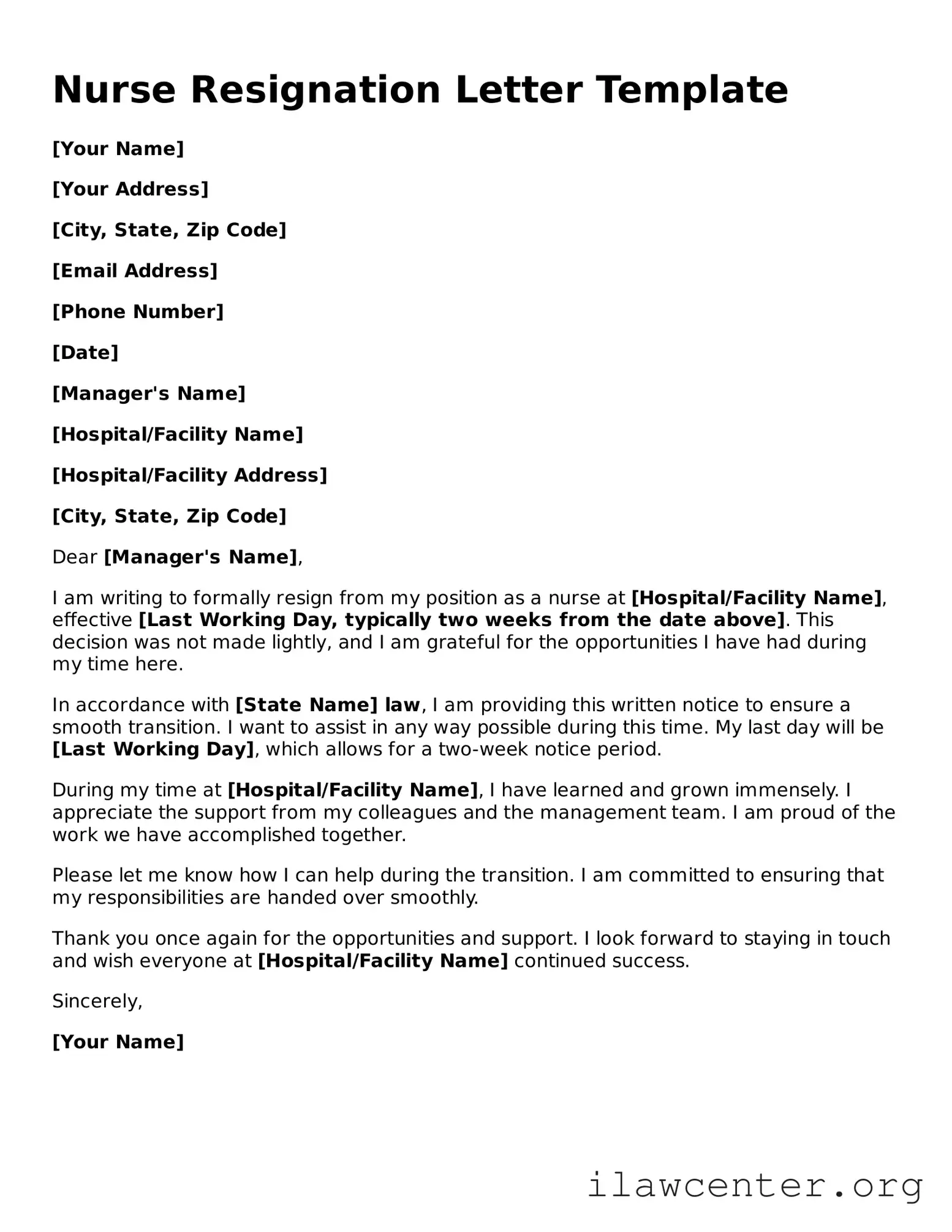
Nurse Resignation Letter Preview

Nurse Resignation Letter Template

[Your Name]

[Your Address]

[City, State, Zip Code]

[Email Address]

[Phone Number]

[Date]

[Manager's Name]

[Hospital/Facility Name]

[Hospital/Facility Address]

[City, State, Zip Code]

Dear [Manager's Name],

I am writing to formally resign from my position as a nurse at [Hospital/Facility Name], effective [Last Working Day, typically two weeks from the date above]. This decision was not made lightly, and I am grateful for the opportunities I have had during my time here.

In accordance with [State Name] law, I am providing this written notice to ensure a smooth transition. I want to assist in any way possible during this time. My last day will be [Last Working Day], which allows for a two-week notice period.

During my time at [Hospital/Facility Name], I have learned and grown immensely. I appreciate the support from my colleagues and the management team. I am proud of the work we have accomplished together.

Please let me know how I can help during the transition. I am committed to ensuring that my responsibilities are handed over smoothly.

Thank you once again for the opportunities and support. I look forward to staying in touch and wish everyone at [Hospital/Facility Name] continued success.

Sincerely,

[Your Name]

PDF Form Characteristics

Fact Name Description
Purpose A Nurse Resignation Letter form is used by nurses to formally resign from their position, ensuring a professional and respectful departure.
Format The letter should typically be typed, following a standard business letter format, which includes the sender's address, date, recipient's address, greeting, body, and closing.
Notice Period Most employers expect a notice period of two weeks, but this can vary based on state regulations or specific employment contracts.
State-Specific Requirements Some states may have specific laws or guidelines governing resignation letters, particularly in healthcare settings, which should be adhered to.
Professionalism Submitting a resignation letter promotes professionalism and helps maintain a positive relationship with the employer for future references.
Content Recommendations It is advisable to include the reason for resignation, the last working day, and a note of gratitude for the opportunities provided.
Delivery Method The letter can be delivered in person, sent via email, or mailed, depending on the workplace culture and established practices.
Record Keeping Both the nurse and the employer should keep a copy of the resignation letter for their records, which can be important for future employment verification.
Impact on Licensing In some states, a resignation may need to be reported to the nursing board, especially if it is related to disciplinary actions or workplace issues.
Emotional Considerations Resigning can be an emotional process. A well-crafted letter can help ease the transition and provide closure for both the nurse and the employer.

Instructions on Utilizing Nurse Resignation Letter

After completing the Nurse Resignation Letter form, you will need to submit it to your supervisor or human resources department. Ensure that you keep a copy for your records. This process helps to formalize your departure and allows for a smooth transition.

  1. Begin by entering your full name at the top of the form.
  2. Next, provide your current job title and the name of the healthcare facility.
  3. Indicate the date you are submitting the resignation letter.
  4. Clearly state your last working day, typically giving two weeks' notice.
  5. Write a brief statement expressing your gratitude for the opportunities you had during your employment.
  6. Optionally, you can include a reason for your resignation, but it is not required.
  7. Sign the letter at the bottom to validate your resignation.
  8. Make a copy of the completed form for your personal records.
  9. Submit the form to your supervisor or the human resources department.

Important Facts about Nurse Resignation Letter

What is a Nurse Resignation Letter form?

A Nurse Resignation Letter form is a document that a nurse uses to formally announce their intention to leave their position. It serves as a professional way to communicate the resignation to the employer, ensuring that the process is clear and documented. This letter typically includes the nurse's last working day and may express gratitude for the experiences gained during their employment.

Why is it important to submit a resignation letter?

Submitting a resignation letter is important for several reasons. It provides a written record of the resignation, which can help prevent misunderstandings. Additionally, it allows the employer to prepare for the transition, including finding a replacement or redistributing responsibilities. A well-crafted resignation letter also maintains professionalism and can help preserve positive relationships for future references.

What should be included in a Nurse Resignation Letter?

A Nurse Resignation Letter should include several key elements. First, it should clearly state the nurse's intention to resign. Next, it should specify the last working day, typically providing at least two weeks' notice. It is also beneficial to express appreciation for the opportunities and experiences gained while working at the facility. Finally, a polite closing statement can help maintain a positive tone.

How much notice should a nurse give when resigning?

Generally, it is advisable for a nurse to provide at least two weeks' notice when resigning. This timeframe allows the employer to make necessary arrangements for coverage and ensures a smoother transition. However, some facilities may have specific policies regarding notice periods, so it is wise to check the employment contract or company guidelines before submitting the resignation letter.

Can a nurse withdraw their resignation after submitting the letter?

Yes, a nurse can attempt to withdraw their resignation after submitting the letter, but it is not guaranteed that the employer will accept the retraction. If a nurse decides to withdraw their resignation, it is best to communicate this decision as soon as possible and discuss the situation directly with management. The employer's response may depend on various factors, including staffing needs and the circumstances surrounding the resignation.

Is it necessary to provide a reason for resignation in the letter?

While it is not strictly necessary to provide a reason for resignation in the letter, doing so can be beneficial. Offering a brief explanation can help maintain goodwill and transparency. However, if a nurse prefers to keep the reasons private, it is perfectly acceptable to focus on gratitude and future plans instead. Ultimately, the choice to include a reason is up to the individual nurse.
Common mistakes

When a nurse decides to resign, filling out the Nurse Resignation Letter form is a critical step in the process. However, many individuals make common mistakes that can complicate their departure. One prevalent error is failing to provide adequate notice. Most healthcare facilities require a two-week notice period, but some nurses underestimate this timeframe. By not adhering to the expected notice period, a nurse may leave their team in a difficult position, potentially harming professional relationships.

Another mistake often seen is neglecting to address the letter to the appropriate person. It’s essential to direct the resignation letter to the nurse’s immediate supervisor or the human resources department. Failing to do so can lead to confusion about the resignation and may delay the processing of the request. Properly addressing the letter demonstrates professionalism and respect for the organization.

Additionally, some nurses may forget to express gratitude in their resignation letter. A resignation can be a bittersweet moment, filled with mixed emotions. Acknowledging the support and opportunities provided by the workplace can leave a positive impression. This simple act of appreciation can foster goodwill, which may be beneficial in future professional endeavors.

Lastly, a common oversight is not keeping a copy of the resignation letter for personal records. Documenting the resignation serves as proof of the notice given and the date of departure. This can be particularly important if any questions arise later regarding the resignation. By retaining a copy, nurses can ensure they have a clear record of their professional transition.

Documents used along the form

When a nurse decides to resign from their position, several other forms and documents may accompany the Nurse Resignation Letter. These documents ensure a smooth transition and help maintain clear communication between the nurse and their employer. Below is a list of common forms that are often used in conjunction with the resignation letter.

  • Exit Interview Form: This document allows the employer to gather feedback from the nurse about their experience at the facility. It can help identify areas for improvement.
  • Final Paycheck Request: Nurses may need to submit a request for their final paycheck, detailing any outstanding wages, vacation pay, or bonuses owed to them.
  • Benefits Termination Form: This form is used to formally terminate any benefits, such as health insurance or retirement plans, that the nurse may have with the employer.
  • Transfer of Patient Care Form: This document ensures that patient care responsibilities are properly transferred to another nurse, maintaining continuity of care.
  • Return of Company Property Form: Nurses may need to document the return of any company property, such as uniforms, equipment, or keys, to avoid future disputes.
  • Non-Disclosure Agreement (NDA): If applicable, this document reinforces the nurse's obligation to maintain confidentiality regarding sensitive information acquired during their employment.
  • Professional Reference Request: Nurses may wish to request a letter of reference from their employer, which can be useful for future job applications.
  • Employment Verification Form: This form can be used by the nurse to request verification of their employment history for future employers.
  • COBRA Notification: Employers are required to provide information about COBRA, which allows the nurse to continue health insurance coverage after leaving their job.

These documents play a crucial role in the resignation process. They help ensure that all necessary steps are taken and that both the nurse and the employer are on the same page regarding the transition. Proper documentation can facilitate a smoother exit and maintain a positive relationship moving forward.

Similar forms

  • Employee Resignation Letter: This document serves as a formal notice from any employee, not just nurses, indicating their intent to leave their position. It outlines the last working day and expresses gratitude towards the employer.
  • Two Weeks' Notice Letter: Similar to a resignation letter, this document specifically states the employee’s intention to resign with a notice period of two weeks, allowing the employer time to prepare for the transition.
  • Termination Letter: While this is often initiated by the employer, it formally ends the employment relationship. It includes reasons for termination and final details regarding the employee’s exit.
  • Exit Interview Form: This document is used during the exit process to gather feedback from employees about their experience. It helps employers understand why employees leave and how to improve the workplace.
  • Retirement Letter: A specific type of resignation letter, this document is used by employees who are retiring. It includes the retirement date and often expresses appreciation for the career spent with the organization.
  • Job Offer Acceptance Letter: When an employee accepts a new job offer, this letter serves as a formal acceptance. It often includes the start date and expresses enthusiasm about the new role.
  • Transfer Request Letter: This document is submitted by an employee seeking to move to a different position within the same organization. It explains the reason for the transfer and outlines the employee’s qualifications.
  • Leave of Absence Request Letter: Similar in formality, this letter requests a temporary leave from work. It details the reason for the leave and the expected duration, which helps employers plan for the absence.

Dos and Don'ts

When filling out a Nurse Resignation Letter form, it's important to be clear and professional. Here’s a list of things you should and shouldn’t do to ensure your resignation is handled smoothly.

Things You Should Do:

  • Be clear and concise in your letter.
  • Include your last working day to avoid confusion.
  • Express gratitude for the opportunities you’ve had.
  • Offer to assist with the transition process if possible.

Things You Shouldn't Do:

  • Avoid using negative language about your experience.
  • Do not leave out important details, like your contact information.
  • Refrain from making your resignation letter too lengthy.
  • Do not forget to proofread for any errors before submitting.

Misconceptions

  • It is unnecessary to submit a resignation letter. Some believe that simply informing a supervisor verbally is enough. However, a written resignation letter provides a formal record of the decision and helps maintain professionalism.
  • Resignation letters must be lengthy. Many think that a resignation letter needs to be detailed and lengthy. In reality, a concise letter that states the intention to resign and the last working day is sufficient.
  • A resignation letter can be submitted at any time. Some assume that they can submit their resignation letter at any moment. It is important to consider the notice period required by the employer, which is typically outlined in the employment contract.
  • Resignation letters are only for full-time nurses. There is a misconception that only full-time nurses need to submit a resignation letter. In fact, all nurses, regardless of their employment status, should provide a formal resignation when leaving a position.

Key takeaways

Filling out and using a Nurse Resignation Letter form is an important process for healthcare professionals. Below are key takeaways to consider:

  • Clearly state your intention to resign in the opening paragraph.
  • Include your last working day, providing adequate notice as per your employment contract.
  • Express gratitude for the opportunities and experiences gained during your employment.
  • Maintain a professional tone throughout the letter to preserve relationships.
  • Keep the letter concise; one page is generally sufficient.
  • Consider delivering the letter in person to your supervisor, if possible.
  • Retain a copy of the resignation letter for your personal records.

These points can help ensure a smooth transition when resigning from a nursing position.