Attorney-Verified  Bill of Sale Document for Ohio

Attorney-Verified Bill of Sale Document for Ohio

A Bill of Sale form in Ohio serves as a legal document that records the transfer of ownership of personal property from one party to another. This form is essential for ensuring that both the buyer and seller have a clear understanding of the transaction details. If you're ready to complete your own Bill of Sale, click the button below to get started.

Article Guide

The Ohio Bill of Sale form serves as a crucial document for individuals engaged in the buying and selling of personal property within the state. This form not only acts as a receipt but also provides essential details about the transaction, such as the names and addresses of both the buyer and seller, a description of the item being sold, and the sale price. It is important to include the date of the transaction to establish a clear timeline. Additionally, the form may require signatures from both parties, which solidifies the agreement and ensures that both the buyer and seller acknowledge the terms of the sale. While often associated with vehicles, the Ohio Bill of Sale can also be used for various types of personal property, including furniture, electronics, and collectibles. Utilizing this form can help protect the interests of both parties and provide a clear record of the exchange, which can be beneficial in case of disputes or future ownership verification.

Ohio Bill of Sale Preview

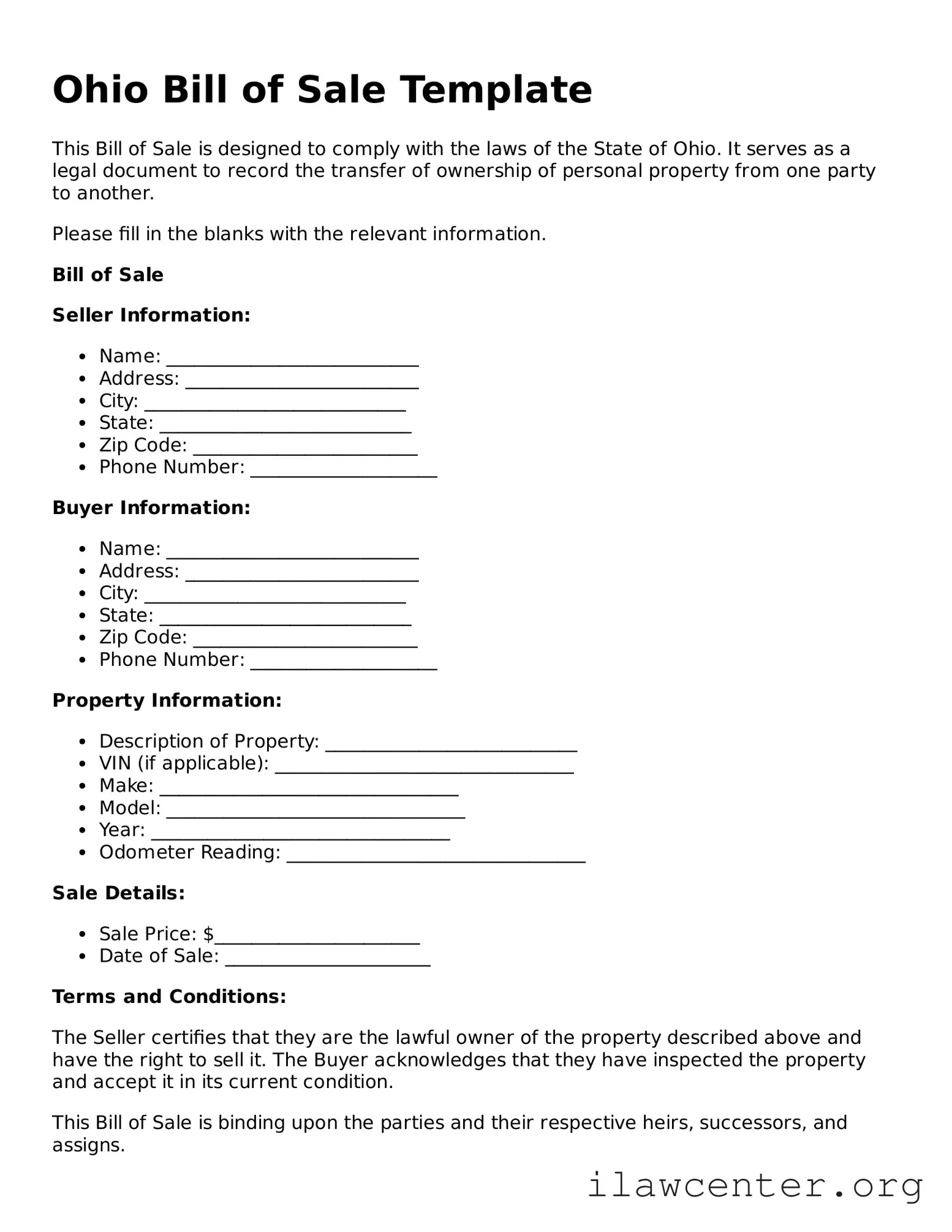
Ohio Bill of Sale Template

This Bill of Sale is designed to comply with the laws of the State of Ohio. It serves as a legal document to record the transfer of ownership of personal property from one party to another.

Please fill in the blanks with the relevant information.

Bill of Sale

Seller Information:

  • Name: ___________________________
  • Address: _________________________
  • City: ____________________________
  • State: ___________________________
  • Zip Code: ________________________
  • Phone Number: ____________________

Buyer Information:

  • Name: ___________________________
  • Address: _________________________
  • City: ____________________________
  • State: ___________________________
  • Zip Code: ________________________
  • Phone Number: ____________________

Property Information:

  • Description of Property: ___________________________
  • VIN (if applicable): ________________________________
  • Make: ________________________________
  • Model: ________________________________
  • Year: ________________________________
  • Odometer Reading: ________________________________

Sale Details:

  • Sale Price: $______________________
  • Date of Sale: ______________________

Terms and Conditions:

The Seller certifies that they are the lawful owner of the property described above and have the right to sell it. The Buyer acknowledges that they have inspected the property and accept it in its current condition.

This Bill of Sale is binding upon the parties and their respective heirs, successors, and assigns.

Signatures:

Seller's Signature: ___________________________ Date: _______________

Buyer's Signature: ___________________________ Date: _______________

This document should be kept for your records. It is advisable to have a copy of this Bill of Sale for both the Buyer and Seller.

PDF Form Characteristics

Fact Name Details
Purpose The Ohio Bill of Sale form is used to document the transfer of ownership of personal property from one party to another.
Types of Property This form can be utilized for various types of personal property, including vehicles, boats, and equipment.
Governing Laws The Ohio Revised Code, particularly Section 4505.06, governs the requirements for vehicle sales and the use of the Bill of Sale.
Information Required Essential information includes the names and addresses of the buyer and seller, a description of the property, and the sale price.
Notarization While notarization is not mandatory for all Bill of Sale forms in Ohio, it is recommended for added legal protection.

Instructions on Utilizing Ohio Bill of Sale

After you have gathered all necessary information, you can begin filling out the Ohio Bill of Sale form. Make sure to have the details of the transaction ready, including the buyer, seller, and item being sold. Follow these steps to complete the form accurately.

  1. Identify the parties involved: Enter the full names and addresses of both the seller and the buyer.
  2. Describe the item: Clearly state the item being sold. Include details such as make, model, year, and VIN if applicable.
  3. Specify the sale price: Write the total amount agreed upon for the sale.
  4. Include the date of sale: Write the date when the transaction takes place.
  5. Signatures: Both the seller and buyer must sign and date the form to make it valid.

Once completed, ensure that both parties retain a copy for their records. This document serves as proof of the transaction and can be useful for future reference.

Important Facts about Ohio Bill of Sale

What is an Ohio Bill of Sale form?

An Ohio Bill of Sale form is a legal document that records the transfer of ownership of personal property from one party to another. This form provides essential details about the transaction, including the names of the buyer and seller, a description of the item being sold, and the sale price. It serves as proof of the transaction for both parties.

When do I need a Bill of Sale in Ohio?

A Bill of Sale is typically required when selling or buying personal property, such as vehicles, boats, or equipment. It is especially important for transactions that involve items that need to be registered, like cars. Although not always legally required for every sale, having a Bill of Sale can help protect both the buyer and seller in case of disputes.

What information should be included in an Ohio Bill of Sale?

The Bill of Sale should include the names and addresses of both the buyer and seller, a detailed description of the item being sold (including make, model, year, and VIN for vehicles), the sale price, and the date of the transaction. It may also include any warranties or conditions of the sale, as well as signatures from both parties.

Is a Bill of Sale required for vehicle sales in Ohio?

Yes, a Bill of Sale is required for vehicle sales in Ohio. It helps establish proof of ownership and is necessary for the buyer to register the vehicle in their name. The Ohio Bureau of Motor Vehicles (BMV) often requires a completed Bill of Sale when transferring vehicle titles.

Can I create my own Bill of Sale in Ohio?

Yes, you can create your own Bill of Sale in Ohio. There are no strict requirements for the format, but it must include all necessary information to be valid. Many templates are available online to help you create a comprehensive document that meets your needs.

Do I need to have the Bill of Sale notarized?

Notarization is not required for a Bill of Sale in Ohio. However, having it notarized can add an extra layer of security and authenticity to the document. It may also be beneficial if you plan to use the Bill of Sale for legal purposes in the future.

What if the item sold is damaged or defective?

If the item sold is damaged or defective, the terms of the Bill of Sale will determine the buyer's recourse. If the seller provided warranties or guarantees, the buyer may have a claim against the seller. If the sale was “as-is,” the buyer typically assumes the risk for any defects.

How long should I keep a Bill of Sale?

It is advisable to keep a Bill of Sale for at least a few years after the transaction. This can help resolve any future disputes or questions about ownership. Both the buyer and seller should retain a copy for their records.
Common mistakes

Filling out the Ohio Bill of Sale form can seem straightforward, but many individuals make critical mistakes that could lead to complications down the line. One common error is failing to include all required information. This includes not just the buyer's and seller's names and addresses, but also details about the item being sold. Omitting this information can create confusion or disputes later.

Another frequent mistake is not providing accurate descriptions of the item. It's essential to include the make, model, year, and Vehicle Identification Number (VIN) for vehicles, or a detailed description for other items. A vague description can lead to misunderstandings about what is being sold and may complicate the transaction.

People often neglect to sign the form. While it may seem obvious, both the buyer and seller must sign the Bill of Sale for it to be valid. Without signatures, the document may not hold up if any issues arise after the sale.

Additionally, some individuals forget to date the form. The date is crucial as it establishes when the sale took place. Without a date, it can be challenging to resolve any disputes regarding the timing of the transaction.

Not making copies of the completed form is another mistake that can lead to problems. Both parties should keep a copy for their records. This ensures that everyone has access to the same information in case any questions arise later.

Lastly, failing to understand the local laws regarding the Bill of Sale can lead to significant issues. Different counties may have specific requirements or additional forms that need to be completed. It is important to check with local regulations to ensure compliance and avoid any legal pitfalls.

Documents used along the form

The Ohio Bill of Sale form is an essential document for transferring ownership of personal property. However, several other forms and documents often accompany it to ensure a smooth transaction. Below is a list of these documents, each serving a specific purpose in the process.

  • Title Transfer Document: This document officially transfers the title of a vehicle or property from the seller to the buyer. It is crucial for vehicles to ensure that the new owner is recognized legally.
  • Odometer Disclosure Statement: Required for vehicle sales, this form records the vehicle's mileage at the time of sale. It helps prevent fraud and ensures that the buyer is aware of the vehicle's condition.
  • Purchase Agreement: This is a contract between the buyer and seller outlining the terms of the sale, including price, payment method, and any warranties or conditions. It serves as a reference point for both parties.
  • Affidavit of Ownership: This sworn statement is used when the seller cannot provide a title or other proof of ownership. It affirms that the seller is the rightful owner of the property being sold.
  • Release of Liability: This document protects the seller from future claims related to the property after the sale. It confirms that the buyer assumes all responsibilities once the transaction is completed.
  • Notarized Signature: While not a separate document, having signatures notarized adds an extra layer of authenticity and can be required for certain transactions to ensure validity.
  • Sales Tax Form: This form is used to report and pay sales tax on the transaction, if applicable. It helps ensure compliance with state tax regulations.

Having these documents prepared and organized can facilitate a seamless transfer of ownership. Each form plays a vital role in protecting the interests of both the buyer and seller during the transaction.

Similar forms

The Bill of Sale form serves as a crucial document in the transfer of ownership of personal property. Several other documents share similarities with the Bill of Sale, each playing a role in various transactions. Below are six documents that are comparable to the Bill of Sale:

  • Purchase Agreement: This document outlines the terms of a sale, including price and conditions. Like a Bill of Sale, it signifies a transfer of ownership but often includes more detailed terms regarding the sale.
  • Title Transfer Document: Used primarily for vehicles, this document officially transfers ownership from one party to another. It functions similarly to a Bill of Sale by providing proof of ownership change.
  • Lease Agreement: While primarily for rental arrangements, a lease agreement can include terms that lead to eventual ownership transfer, resembling a Bill of Sale in its function of documenting an agreement between parties.
  • Gift Deed: This document is used when property is transferred without payment. It serves a similar purpose to a Bill of Sale by providing legal proof of the transfer of ownership.
  • Warranty Deed: In real estate transactions, a warranty deed guarantees that the seller has the right to sell the property. It shares similarities with a Bill of Sale in that it conveys ownership and provides assurances regarding the title.
  • Promissory Note: This financial document outlines a promise to pay a specific amount of money. While it does not transfer ownership directly, it often accompanies a Bill of Sale in transactions involving financing, establishing a legal obligation between the parties.

Dos and Don'ts

When filling out the Ohio Bill of Sale form, it's important to follow certain guidelines to ensure that the document is valid and effective. Here are ten things you should and shouldn't do:

  • Do provide accurate information about the buyer and seller.
  • Don't leave any required fields blank.
  • Do include a detailed description of the item being sold.
  • Don't use vague terms that could lead to confusion.
  • Do specify the sale price clearly.
  • Don't forget to date the document.
  • Do sign the form in the presence of a witness if required.
  • Don't sign the document without reading it thoroughly.
  • Do keep a copy of the completed Bill of Sale for your records.
  • Don't assume that verbal agreements are sufficient; always use written documentation.

Misconceptions

When it comes to the Ohio Bill of Sale form, several misconceptions can lead to confusion. Understanding the truth behind these misunderstandings is crucial for anyone engaging in a transaction. Below are six common misconceptions:

  • Misconception 1: A Bill of Sale is only necessary for vehicle transactions.
  • This is not true. While many people associate a Bill of Sale with vehicles, it is actually useful for any sale of personal property. This includes boats, furniture, and even electronics.

  • Misconception 2: A Bill of Sale does not need to be notarized.
  • In Ohio, notarization is not required for most Bill of Sale forms. However, having it notarized can add an extra layer of protection and verification for both parties involved.

  • Misconception 3: The Bill of Sale serves as a title transfer.
  • While a Bill of Sale documents the sale, it does not transfer ownership in the same way a title does. For vehicles, a title must be properly signed over to the new owner to complete the transfer.

  • Misconception 4: A verbal agreement is sufficient without a Bill of Sale.
  • Relying on a verbal agreement can lead to disputes. A written Bill of Sale provides clear evidence of the transaction and protects both parties in case of disagreements.

  • Misconception 5: Any format of a Bill of Sale is acceptable.
  • While there is no official state form, a Bill of Sale should include specific information to be legally valid. This includes the names of the buyer and seller, a description of the item, and the sale price.

  • Misconception 6: A Bill of Sale is only needed for used items.
  • Even new items can benefit from a Bill of Sale. It provides proof of purchase and can be useful for warranty claims or returns.

By clarifying these misconceptions, individuals can make informed decisions when engaging in sales transactions in Ohio. Always consider having a properly completed Bill of Sale to protect your interests.

Key takeaways

When using the Ohio Bill of Sale form, there are several important points to keep in mind. Below are key takeaways that can help ensure a smooth transaction.

  • Ensure that all required information is accurately filled out, including the names and addresses of both the buyer and seller.
  • Clearly describe the item being sold, including details such as make, model, year, and any identification numbers.
  • Both parties should sign and date the form to validate the transaction.
  • Consider including the purchase price to establish a clear record of the sale.
  • Keep a copy of the completed Bill of Sale for your records, as it serves as proof of the transaction.
  • Check for any additional state-specific requirements that may apply to your particular sale.

By following these guidelines, individuals can effectively use the Ohio Bill of Sale form to document their transactions.