Attorney-Verified  Commercial Lease Agreement Document for Ohio

Attorney-Verified Commercial Lease Agreement Document for Ohio

The Ohio Commercial Lease Agreement form is a legal document that outlines the terms and conditions under which a property owner leases commercial space to a tenant. This agreement serves to protect the interests of both parties by clearly defining responsibilities, payment terms, and the duration of the lease. For those looking to enter into a commercial lease in Ohio, completing this form is an essential step; click the button below to fill it out.

Article Guide

The Ohio Commercial Lease Agreement form serves as a crucial document for landlords and tenants engaging in commercial property rental. This legally binding contract outlines essential terms and conditions governing the rental arrangement, ensuring both parties understand their rights and responsibilities. Key aspects of the agreement include the lease duration, rental payment terms, and security deposit requirements. Additionally, it addresses maintenance responsibilities, permissible use of the property, and provisions for renewal or termination. By clearly defining these elements, the form helps to prevent disputes and fosters a transparent relationship between landlords and tenants. Understanding the nuances of this agreement is vital for anyone involved in commercial real estate transactions in Ohio.

Ohio Commercial Lease Agreement Preview

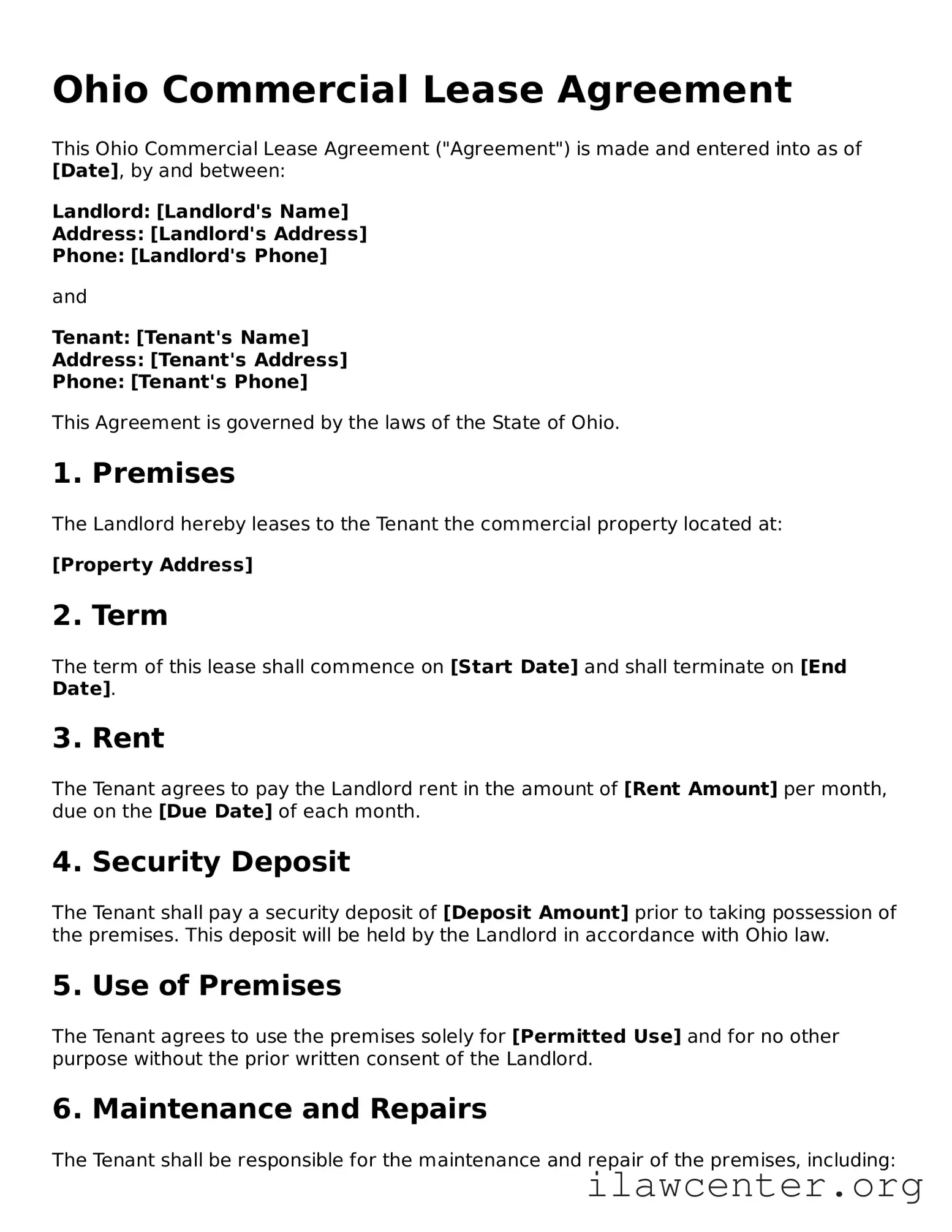
Ohio Commercial Lease Agreement

This Ohio Commercial Lease Agreement ("Agreement") is made and entered into as of [Date], by and between:

Landlord: [Landlord's Name]
Address: [Landlord's Address]
Phone: [Landlord's Phone]

and

Tenant: [Tenant's Name]
Address: [Tenant's Address]
Phone: [Tenant's Phone]

This Agreement is governed by the laws of the State of Ohio.

1. Premises

The Landlord hereby leases to the Tenant the commercial property located at:

[Property Address]

2. Term

The term of this lease shall commence on [Start Date] and shall terminate on [End Date].

3. Rent

The Tenant agrees to pay the Landlord rent in the amount of [Rent Amount] per month, due on the [Due Date] of each month.

4. Security Deposit

The Tenant shall pay a security deposit of [Deposit Amount] prior to taking possession of the premises. This deposit will be held by the Landlord in accordance with Ohio law.

5. Use of Premises

The Tenant agrees to use the premises solely for [Permitted Use] and for no other purpose without the prior written consent of the Landlord.

6. Maintenance and Repairs

The Tenant shall be responsible for the maintenance and repair of the premises, including:

  • Routine cleaning and upkeep
  • Repairs due to Tenant's negligence

The Landlord will maintain the structural integrity of the building and common areas.

7. Utilities

The Tenant shall be responsible for all utilities associated with the premises, including:

  • Electricity
  • Water
  • Gas
  • Internet and phone services

8. Termination

Either party may terminate this Agreement by providing [Notice Period] written notice to the other party.

9. Governing Law

This Agreement shall be governed by and construed in accordance with the laws of the State of Ohio.

10. Signatures

IN WITNESS WHEREOF, the parties hereto have executed this Ohio Commercial Lease Agreement as of the date first above written.

Landlord Signature: ____________________________
Date: ____________________________

Tenant Signature: ____________________________
Date: ____________________________

PDF Form Characteristics

Fact Name Details
Definition The Ohio Commercial Lease Agreement is a legal document that outlines the terms under which a property owner (lessor) rents commercial property to a business (lessee).
Governing Law This agreement is governed by the laws of the State of Ohio.
Parties Involved The lease involves two main parties: the landlord and the tenant.
Duration The lease specifies the duration of the rental agreement, which can vary from short-term to long-term leases.
Rent Payment Details regarding the amount of rent, payment schedule, and acceptable payment methods are included.
Security Deposit The agreement may require a security deposit, which protects the landlord against potential damages or unpaid rent.
Maintenance Responsibilities It outlines the responsibilities of both the landlord and tenant regarding property maintenance and repairs.
Use of Premises The lease specifies how the tenant can use the property, including any restrictions on activities.
Termination Conditions Conditions for terminating the lease, including notice periods, are clearly defined.
Amendments Any changes to the lease must be made in writing and agreed upon by both parties.

Instructions on Utilizing Ohio Commercial Lease Agreement

When preparing to fill out the Ohio Commercial Lease Agreement form, it is essential to gather all necessary information about the property and the parties involved. This includes details about the landlord, tenant, and the terms of the lease. Once you have everything ready, you can proceed with filling out the form accurately to ensure a smooth leasing process.

  1. Begin by entering the date at the top of the form.
  2. Identify the parties involved. Write the full legal name of the landlord and the tenant in the designated spaces.
  3. Provide the address of the property being leased. This should include the street address, city, state, and zip code.
  4. Specify the term of the lease. Indicate the start and end dates of the lease period.
  5. Detail the rental amount. Clearly state the monthly rent and any additional fees that may apply.
  6. Outline the security deposit requirements, including the amount and conditions for its return.
  7. Include information regarding maintenance responsibilities. Specify who is responsible for repairs and upkeep of the property.
  8. Address any provisions for utilities. Indicate which utilities will be paid by the tenant and which will be covered by the landlord.
  9. Review any special terms or conditions that may be relevant to the lease. This could include clauses about subleasing or modifications to the property.
  10. Sign and date the agreement. Ensure both parties sign the document to make it legally binding.

Important Facts about Ohio Commercial Lease Agreement

What is a Commercial Lease Agreement in Ohio?

A Commercial Lease Agreement is a legally binding contract between a landlord and a business tenant. It outlines the terms under which the tenant can use the property for commercial purposes. This includes details about the rental amount, duration of the lease, and responsibilities of both parties. It is essential for protecting the interests of both the landlord and the tenant.

What key elements should be included in the Ohio Commercial Lease Agreement?

The agreement should include several important elements. These typically consist of the names of the parties involved, a description of the property, the lease term, rental payment details, security deposit requirements, maintenance responsibilities, and conditions for termination. Having all these details clearly outlined helps avoid misunderstandings later on.

How long is a typical commercial lease in Ohio?

Commercial leases in Ohio can vary significantly in length. They can range from a few months to several years, depending on the agreement between the landlord and tenant. Common lease terms are often one to five years, but longer terms are not unusual, especially for businesses that want stability in their location.

Can a commercial lease in Ohio be modified after it is signed?

Yes, a commercial lease can be modified, but both parties must agree to the changes. Any amendments should be documented in writing and signed by both the landlord and tenant. This ensures that all parties are clear about the new terms and helps maintain legal validity.

What happens if a tenant wants to terminate the lease early?

If a tenant wishes to terminate the lease early, they must refer to the terms outlined in the lease agreement. Many agreements include a clause about early termination, which may require the tenant to provide notice or pay a penalty. Understanding these terms beforehand can help avoid unexpected costs or legal issues.

Are there any specific laws governing commercial leases in Ohio?

Yes, commercial leases in Ohio are governed by state laws, which can differ from residential lease laws. While there is flexibility in how leases can be structured, it’s important for both landlords and tenants to be aware of their rights and obligations under Ohio law. Consulting with a legal professional can provide clarity on these regulations.

What should a tenant do if there is a dispute with the landlord?

If a tenant encounters a dispute with their landlord, the first step is to review the lease agreement for any relevant clauses. Open communication is often the best approach; discussing the issue directly may lead to a resolution. If that doesn’t work, tenants can seek mediation or legal advice to explore their options for resolving the dispute.

Common mistakes

Filling out the Ohio Commercial Lease Agreement form can be a straightforward process, but many people make common mistakes that can lead to complications down the line. One frequent error is failing to provide accurate property details. Ensure that the address, suite number, and any other identifying information are correct. An incorrect address can lead to confusion and legal issues later.

Another mistake is overlooking the lease term. It's essential to clearly specify the start and end dates of the lease. If these dates are vague or missing, it can create uncertainty for both the landlord and tenant. A well-defined lease term helps set clear expectations.

Many individuals also forget to address the rent payment details. This includes the amount due, payment frequency, and acceptable payment methods. Without this information, misunderstandings about payment obligations can arise, potentially leading to disputes.

Additionally, some people neglect to review the maintenance responsibilities. It's vital to clarify who is responsible for repairs and maintenance of the property. Ambiguities in this area can lead to disagreements later on, especially if something breaks or needs attention.

Another common oversight is not including any clauses related to renewal options. If both parties wish to extend the lease, having a clear renewal clause can simplify the process. Without it, tenants may find themselves scrambling to negotiate terms at the end of the lease.

Moreover, some individuals fail to include provisions for termination. It’s important to outline the conditions under which either party can terminate the lease. This helps protect both the landlord and tenant should circumstances change unexpectedly.

People often overlook the importance of signatures. A lease agreement is not legally binding until it is signed by both parties. Make sure that all required signatures are obtained and that the document is dated appropriately.

Finally, many individuals do not seek legal advice before finalizing the agreement. Consulting with a legal expert can provide valuable insights and help identify potential issues before they become problems. Taking this step can save time, money, and stress in the long run.

Documents used along the form

When entering into a commercial lease agreement in Ohio, several additional forms and documents can support and clarify the leasing process. These documents help both landlords and tenants understand their rights and responsibilities, ensuring a smoother transaction.

  • Letter of Intent (LOI): This document outlines the preliminary terms and conditions of the lease before the final agreement is drafted. It serves as a starting point for negotiations and helps both parties align their expectations.
  • Personal Guaranty: In some cases, landlords may require a personal guaranty from the tenant. This document ensures that an individual agrees to be personally responsible for the lease obligations, providing additional security for the landlord.
  • Estoppel Certificate: This form is often used to confirm the terms of the lease and the status of the tenant’s obligations. It can be important during property sales or refinancing, as it provides assurance to potential buyers or lenders about the lease’s validity.
  • Sublease Agreement: If a tenant wishes to rent out part or all of the leased space to another party, a sublease agreement is necessary. This document outlines the terms under which the subtenant will occupy the property, ensuring compliance with the original lease.
  • Maintenance and Repair Agreement: This document specifies the responsibilities of both the landlord and tenant regarding property maintenance and repairs. Clearly defining these obligations helps prevent disputes and ensures the property remains in good condition.

Understanding these additional forms and documents can enhance the leasing experience for both landlords and tenants. By being informed, parties can navigate the complexities of commercial leasing with greater confidence and clarity.

Similar forms

  • Residential Lease Agreement: This document outlines the terms for renting a residential property. Similar to a commercial lease, it specifies rent, duration, and responsibilities of both parties.

  • Sublease Agreement: A sublease agreement allows a tenant to lease their rented space to another party. It mirrors a commercial lease by detailing terms, duration, and payment obligations.

  • Rental Application: This form collects information from potential tenants. Like a commercial lease, it assesses qualifications and suitability for the property.

  • Lease Termination Agreement: This document formalizes the end of a lease. It shares similarities with a commercial lease by outlining the conditions under which the lease can be terminated.

  • Real Estate Purchase Agreement: This agreement details the terms for buying property. It resembles a commercial lease in that both documents define the rights and responsibilities of the parties involved.

  • Property Management Agreement: This outlines the relationship between property owners and managers. Like a commercial lease, it specifies duties, fees, and obligations.

  • Commercial Rental Application: This form is used by businesses seeking to rent commercial space. It parallels a commercial lease by evaluating the prospective tenant's qualifications.

  • Option to Renew Agreement: This document allows tenants to extend their lease. Similar to a commercial lease, it details the terms under which renewal can occur.

  • Lease Assignment Agreement: This agreement permits a tenant to transfer their lease to another party. It shares key elements with a commercial lease, such as rights and obligations of the new tenant.

  • Commercial Lease Addendum: An addendum modifies the original lease terms. It is similar to a commercial lease in that it provides additional details and stipulations relevant to the agreement.

Dos and Don'ts

When filling out the Ohio Commercial Lease Agreement form, attention to detail is crucial. Here are some essential dos and don'ts to keep in mind:

  • Do read the entire agreement carefully before filling it out.
  • Do provide accurate information about the parties involved.
  • Do clearly outline the terms of the lease, including duration and rent amount.
  • Do specify any additional fees or expenses that may apply.
  • Don't rush through the process; take your time to ensure accuracy.
  • Don't leave any sections blank; all fields should be completed.
  • Don't ignore local laws or regulations that may affect your lease.
  • Don't forget to keep a copy of the signed agreement for your records.

By following these guidelines, you can help ensure that your lease agreement is filled out correctly and comprehensively.

Misconceptions

When it comes to the Ohio Commercial Lease Agreement form, several misconceptions can lead to confusion for both landlords and tenants. Here are four common misunderstandings:

  1. All commercial leases are the same.

    This is not true. Each lease can be tailored to fit the specific needs of the parties involved. Terms such as duration, rent, and maintenance responsibilities can vary significantly.

  2. Oral agreements are sufficient.

    While verbal agreements may seem convenient, they are often difficult to enforce. A written lease provides clear documentation of the terms agreed upon, reducing the risk of disputes.

  3. Only landlords can make changes to the lease.

    Both landlords and tenants have the right to negotiate terms before signing. Open communication can lead to a more favorable agreement for both parties.

  4. Once signed, the lease cannot be changed.

    Leases can be amended if both parties agree to the changes. It’s important to document any modifications in writing to avoid future misunderstandings.

Understanding these misconceptions can help both landlords and tenants navigate the leasing process more effectively.

Key takeaways

When filling out and using the Ohio Commercial Lease Agreement form, it’s essential to understand the key components to ensure a smooth leasing process. Here are some important takeaways:

  • Read the Entire Agreement: Before signing, read the entire lease agreement thoroughly. This ensures you understand all terms and conditions.
  • Identify Parties Clearly: Clearly identify the landlord and tenant in the agreement. Include full names and contact information to avoid confusion.
  • Specify the Lease Term: Clearly state the duration of the lease. Specify the start and end dates to prevent any misunderstandings.
  • Detail Rent Payment Terms: Include the amount of rent, payment due dates, and acceptable payment methods. This clarity helps prevent disputes.
  • Outline Maintenance Responsibilities: Clearly define who is responsible for maintenance and repairs. This can help avoid conflicts during the lease term.
  • Include Renewal Options: If applicable, specify any options for renewing the lease. This provides flexibility for both parties.
  • Consult a Legal Professional: Before finalizing the agreement, consider consulting a legal professional. They can help ensure that the lease complies with Ohio laws and protects your interests.

Taking these steps will help you navigate the leasing process more effectively and ensure a positive experience for both landlords and tenants.