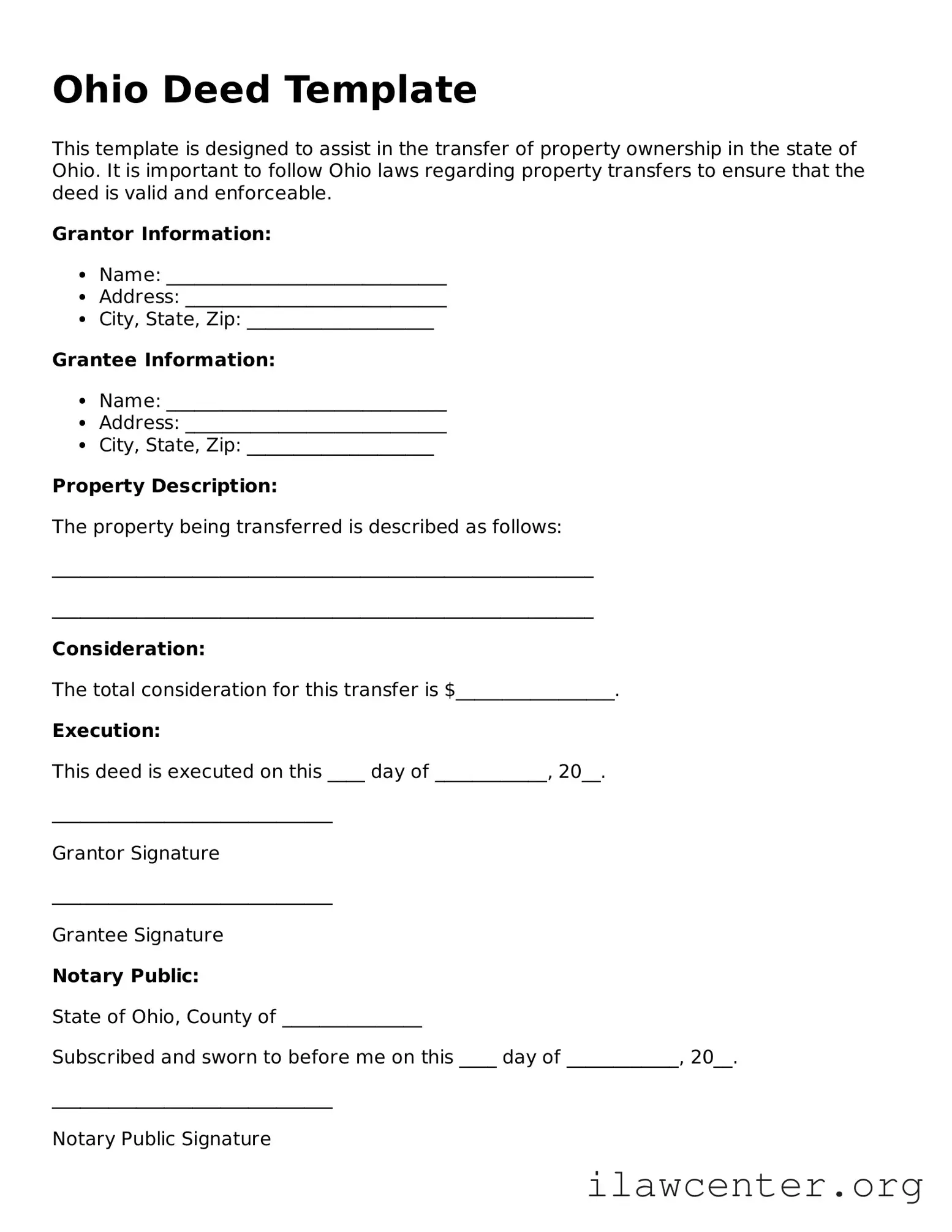
What is an Ohio Deed form?
An Ohio Deed form is a legal document used to transfer ownership of real property in the state of Ohio. This form outlines the details of the property being transferred, the parties involved in the transaction, and the terms of the transfer. It serves as proof of ownership once it is properly executed and recorded with the county recorder’s office.
What types of deeds are available in Ohio?
Ohio recognizes several types of deeds, including warranty deeds, quitclaim deeds, and special warranty deeds. A warranty deed provides the highest level of protection to the buyer, guaranteeing that the seller holds clear title to the property. A quitclaim deed, on the other hand, transfers whatever interest the seller has in the property without any warranties. Special warranty deeds offer limited warranties, protecting against issues that arose during the seller's ownership.
Who needs to sign the Ohio Deed form?
The Ohio Deed form must be signed by the seller, also known as the grantor. If there are multiple owners, all must sign the deed. Additionally, the deed should be notarized to ensure its validity. The buyer, or grantee, does not need to sign the deed for it to be effective, but their acceptance is implied by the transaction.
How do I fill out an Ohio Deed form?
Filling out an Ohio Deed form requires careful attention to detail. Start by entering the names and addresses of both the grantor and grantee. Next, provide a legal description of the property, which can often be found on the previous deed or through the county auditor’s office. Include any relevant details regarding the transfer, such as the consideration (the amount paid for the property). Finally, ensure that the form is signed and notarized before submission.
Where do I file the Ohio Deed form?
The completed Ohio Deed form must be filed with the county recorder’s office in the county where the property is located. This filing is essential to make the transfer of ownership public and to protect the rights of the new owner. Each county may have its own specific requirements, so it’s advisable to check with the local office for any additional steps or fees.
Are there any fees associated with filing an Ohio Deed?
Yes, there are fees associated with filing an Ohio Deed form. The fees vary by county, and they typically depend on the number of pages in the deed and the specific county recorder's office policies. It’s important to inquire about the exact fees before filing to ensure that you have the correct payment ready.
Can I revoke an Ohio Deed once it is filed?
Once an Ohio Deed is filed and recorded, it cannot be revoked or undone simply by the grantor's desire. If a mistake was made or if circumstances change, the grantor may need to execute a new deed to reverse the transfer or clarify ownership. Legal advice may be necessary to navigate this process effectively.
What happens if the Ohio Deed is not recorded?
If an Ohio Deed is not recorded, the transfer of ownership may not be legally recognized against third parties. This means that if someone else claims an interest in the property, they may have stronger legal standing than the unrecorded grantee. Recording the deed protects the new owner's rights and provides public notice of the ownership change.
Is it necessary to hire a lawyer to complete an Ohio Deed?
While it is not legally required to hire a lawyer to complete an Ohio Deed, it is often advisable, especially for those unfamiliar with real estate transactions. A lawyer can help ensure that the deed is filled out correctly, that all legal requirements are met, and that the transfer is executed smoothly. This can save time and prevent potential legal issues down the road.
What should I do if I lose my Ohio Deed?
If you lose your Ohio Deed, it is important to act quickly. While the deed itself is not required for ownership, having a copy is crucial for proving your rights to the property. You can obtain a certified copy of the deed from the county recorder’s office where it was originally filed. This process usually involves filling out a request form and paying a small fee.