Attorney-Verified  Durable Power of Attorney Document for Ohio

Attorney-Verified Durable Power of Attorney Document for Ohio

A Durable Power of Attorney in Ohio is a legal document that allows an individual to appoint someone else to make decisions on their behalf, even if they become incapacitated. This form is essential for ensuring that your financial and healthcare matters are managed according to your wishes when you cannot act for yourself. To get started on securing your future, fill out the form by clicking the button below.

Article Guide

In Ohio, the Durable Power of Attorney (DPOA) form serves as a crucial legal document that empowers individuals to designate a trusted person, known as an agent or attorney-in-fact, to make decisions on their behalf in various matters, particularly when they become incapacitated. This form not only facilitates the management of financial affairs but can also extend to healthcare decisions, depending on how it is structured. By executing a DPOA, individuals can ensure that their preferences are honored, even when they are unable to communicate or make decisions for themselves. It is vital to understand that the authority granted through this document remains effective even if the principal becomes mentally incompetent, hence the term "durable." Properly completing and notarizing the form is essential to ensure its validity, and it is advisable to discuss the implications with a knowledgeable advisor to tailor the document to specific needs and circumstances. With the right precautions and considerations, the Durable Power of Attorney can provide peace of mind and safeguard personal interests during challenging times.

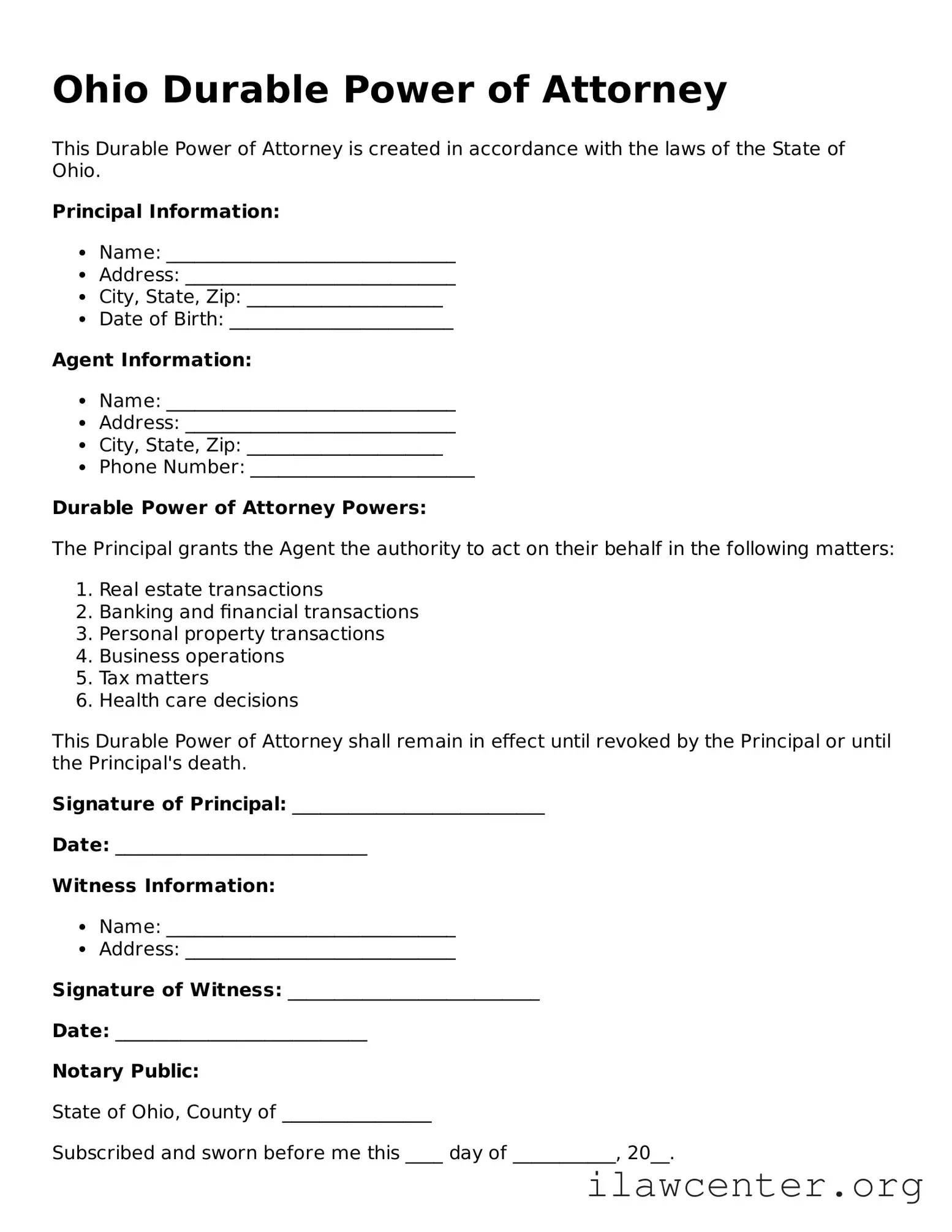
Ohio Durable Power of Attorney Preview

Ohio Durable Power of Attorney

This Durable Power of Attorney is created in accordance with the laws of the State of Ohio.

Principal Information:

  • Name: _______________________________
  • Address: _____________________________
  • City, State, Zip: _____________________
  • Date of Birth: ________________________

Agent Information:

  • Name: _______________________________
  • Address: _____________________________
  • City, State, Zip: _____________________
  • Phone Number: ________________________

Durable Power of Attorney Powers:

The Principal grants the Agent the authority to act on their behalf in the following matters:

  1. Real estate transactions
  2. Banking and financial transactions
  3. Personal property transactions
  4. Business operations
  5. Tax matters
  6. Health care decisions

This Durable Power of Attorney shall remain in effect until revoked by the Principal or until the Principal's death.

Signature of Principal: ___________________________

Date: ___________________________

Witness Information:

  • Name: _______________________________
  • Address: _____________________________

Signature of Witness: ___________________________

Date: ___________________________

Notary Public:

State of Ohio, County of ________________

Subscribed and sworn before me this ____ day of ___________, 20__.

Notary Signature: ___________________________

My Commission Expires: _____________________

PDF Form Characteristics

Fact Name Details
Definition The Ohio Durable Power of Attorney form allows an individual to appoint someone to make decisions on their behalf, even if they become incapacitated.
Governing Law This form is governed by Ohio Revised Code Section 1337.24.
Durability The "durable" aspect means the authority remains in effect even if the principal is unable to make decisions.
Execution Requirements The form must be signed by the principal and witnessed by two individuals or acknowledged by a notary public.

Instructions on Utilizing Ohio Durable Power of Attorney

Completing the Ohio Durable Power of Attorney form is an important step in ensuring that your wishes are respected when it comes to managing your financial affairs. Follow these steps carefully to fill out the form correctly.

  1. Obtain the form: You can find the Ohio Durable Power of Attorney form online or at your local county clerk's office.
  2. Read the instructions: Before filling out the form, take a moment to review any accompanying instructions to understand what information is required.
  3. Fill in your information: Start by entering your full name, address, and date of birth at the top of the form. This identifies you as the principal.
  4. Designate your agent: Clearly write the name and contact information of the person you are appointing as your agent. This person will have the authority to act on your behalf.
  5. Specify powers: Indicate the specific powers you want to grant your agent. You can choose broad powers or limit them to certain areas, such as managing bank accounts or selling property.
  6. Include alternate agents: If desired, list one or more alternate agents who can step in if your primary agent is unable or unwilling to serve.
  7. Sign and date the form: After filling out all necessary information, sign and date the form in the designated area. Your signature must be witnessed.
  8. Have witnesses sign: Ensure that at least two witnesses sign the form, confirming they saw you sign it. They should also provide their addresses.
  9. Notarize the document: Although not required, having the form notarized can add an extra layer of validity. If you choose to do this, sign in front of a notary public.

Once you have completed the form, keep a copy for your records and provide copies to your agent and any relevant financial institutions. This ensures that your agent can act on your behalf when needed.

Important Facts about Ohio Durable Power of Attorney

What is a Durable Power of Attorney in Ohio?

A Durable Power of Attorney (DPOA) in Ohio is a legal document that allows you to appoint someone to make decisions on your behalf if you become unable to do so. This could be due to illness, injury, or any other circumstance that affects your ability to manage your affairs. The key feature of a DPOA is that it remains effective even if you become incapacitated, unlike a regular Power of Attorney, which may become void in such situations.

Who can be appointed as an agent under a Durable Power of Attorney?

You can choose almost anyone to be your agent, also known as an attorney-in-fact. This can be a trusted family member, friend, or professional, such as an attorney or financial advisor. However, it’s crucial to select someone who understands your values and wishes, as they will be making important decisions on your behalf.

What types of decisions can an agent make under a Durable Power of Attorney?

Your agent can make a wide range of decisions depending on the powers you grant them in the DPOA. These can include managing your finances, paying bills, handling real estate transactions, and making healthcare decisions. You can specify which powers you want to grant or limit certain powers based on your preferences.

How do I create a Durable Power of Attorney in Ohio?

Creating a DPOA in Ohio involves filling out a specific form that complies with state laws. You can obtain this form from various sources, including legal websites or local government offices. After completing the form, you must sign it in the presence of a notary public. It’s advisable to discuss your choices with your potential agent before finalizing the document.

Can I revoke a Durable Power of Attorney once it is created?

Yes, you have the right to revoke your Durable Power of Attorney at any time as long as you are mentally competent. To revoke it, you should create a written notice stating your intent to revoke and provide copies to your agent and any institutions or individuals who may have relied on the DPOA. This ensures that everyone is aware that the document is no longer valid.

What happens if I do not have a Durable Power of Attorney?

If you do not have a Durable Power of Attorney and become incapacitated, your loved ones may have to go through a court process to obtain guardianship over you. This can be time-consuming, costly, and may not reflect your wishes. Establishing a DPOA can help avoid this situation and ensure that someone you trust is in charge of your affairs.

Is a Durable Power of Attorney the same as a Living Will?

No, a Durable Power of Attorney and a Living Will serve different purposes. While a DPOA allows someone to make decisions on your behalf, a Living Will specifically addresses your wishes regarding medical treatment and end-of-life care. It’s important to consider both documents as part of your overall estate planning strategy to ensure your preferences are honored.

Common mistakes

Filling out a Durable Power of Attorney (DPOA) form in Ohio is an important step in ensuring your financial and medical decisions are handled according to your wishes. However, many people make common mistakes that can lead to confusion or even legal issues down the line. Understanding these pitfalls can help you navigate the process smoothly.

One frequent mistake is failing to choose the right agent. Your agent is the person you trust to make decisions on your behalf. It’s essential to select someone responsible and trustworthy. Some individuals mistakenly choose a family member out of obligation rather than considering their ability to manage the responsibilities effectively. Always prioritize capability and reliability over familial ties.

Another common error is not specifying the powers granted to the agent. The DPOA form allows you to outline what decisions your agent can make, whether it be financial, medical, or both. Leaving this section vague can lead to misunderstandings. Be clear and specific about the authority you wish to grant. This clarity will help avoid disputes and ensure your wishes are honored.

People often overlook the need for witnesses or notarization. In Ohio, a DPOA must be signed in the presence of a notary public or two witnesses. Neglecting this step can render the document invalid. Always check the requirements to ensure your DPOA is legally binding. This small detail can make a significant difference in the effectiveness of your document.

Another mistake is not reviewing the document after completion. Once the DPOA is filled out, it’s crucial to read through it carefully. Errors in names, dates, or powers can lead to complications. A simple review can help catch mistakes before they become a problem. It’s also wise to have someone else look over the document for an additional layer of scrutiny.

Additionally, many people forget to communicate their decisions with their chosen agent. Even if you have filled out the DPOA form correctly, failing to discuss your wishes and intentions with your agent can lead to confusion when the time comes to use the document. Open communication ensures your agent understands your preferences and can act accordingly.

Finally, neglecting to update the DPOA when life changes occur is a common oversight. Major life events such as marriage, divorce, or the death of a loved one can impact your choices. Regularly reviewing and updating your DPOA ensures that it reflects your current wishes and circumstances. Keeping this document current is vital for effective planning.

Documents used along the form

A Durable Power of Attorney (DPOA) is an important legal document that allows an individual, known as the principal, to appoint someone else, called the agent, to make decisions on their behalf. When creating or utilizing a DPOA in Ohio, several other documents may also be relevant. Below are some commonly used forms and documents that often accompany a Durable Power of Attorney.

  • Health Care Power of Attorney: This document allows an individual to designate an agent to make health care decisions if they become unable to do so. It specifically addresses medical treatment and end-of-life care, ensuring that the principal's wishes are honored.
  • Living Will: A Living Will outlines an individual's preferences regarding medical treatment in situations where they are terminally ill or incapacitated. This document provides guidance to healthcare providers and loved ones about the principal's wishes concerning life-sustaining measures.
  • HIPAA Authorization: This form allows the principal to grant permission for healthcare providers to share their medical information with designated individuals. It is essential for ensuring that the agent can access necessary health information to make informed decisions.
  • Financial Power of Attorney: Similar to a Durable Power of Attorney, this document specifically focuses on financial matters. It allows the agent to manage the principal's financial affairs, such as paying bills, managing investments, and handling real estate transactions.

These documents work in tandem with the Durable Power of Attorney to create a comprehensive plan for both health care and financial decisions. It is advisable to consider each document's purpose and ensure they align with personal preferences and legal requirements.

Similar forms

The Durable Power of Attorney (DPOA) form shares similarities with several other legal documents. Each serves a unique purpose but can overlap in function regarding authority and decision-making. Below are six documents that are similar to the DPOA:

  • General Power of Attorney: This document grants broad powers to an agent to act on behalf of the principal. Unlike the DPOA, it may become invalid if the principal becomes incapacitated.
  • Health Care Power of Attorney: This document specifically allows an agent to make medical decisions for the principal if they are unable to do so. It focuses solely on health-related matters.
  • Living Will: While not a power of attorney, a living will outlines the principal's wishes regarding medical treatment in case of terminal illness or incapacitation. It complements a health care power of attorney.
  • Financial Power of Attorney: Similar to the DPOA, this document allows an agent to manage financial affairs. It can be limited to specific tasks or accounts rather than broad authority.
  • Springing Power of Attorney: This type of power of attorney becomes effective only upon a specific event, such as the principal's incapacitation. It can function similarly to a DPOA but is activated under defined circumstances.
  • Revocable Living Trust: While primarily an estate planning tool, a revocable living trust allows the principal to manage their assets during their lifetime. It can also designate a successor trustee to manage assets if the principal becomes incapacitated.

Dos and Don'ts

When filling out the Ohio Durable Power of Attorney form, it is essential to follow certain guidelines to ensure the document is valid and meets your needs. Here’s a list of things you should and shouldn't do:

  • Do clearly identify the principal, the person granting the authority.
  • Do specify the powers you wish to grant to the agent.
  • Do ensure the form is signed in the presence of a notary public.
  • Do discuss your wishes with your agent to ensure they understand your preferences.
  • Don't leave any sections blank; this can lead to confusion or invalidation.
  • Don't use outdated forms; always check for the most current version.
  • Don't assume your agent knows your wishes without clear communication.
  • Don't forget to keep copies of the signed document for your records.

By adhering to these guidelines, you can help ensure that your Durable Power of Attorney form accurately reflects your intentions and is legally effective.

Misconceptions

Understanding the Ohio Durable Power of Attorney (DPOA) form is crucial for effective estate planning. However, several misconceptions can lead to confusion and potential legal issues. Here are five common misconceptions:

  1. Misconception 1: A Durable Power of Attorney is only for financial matters.

    This is incorrect. While many people use a DPOA for financial decisions, it can also grant authority for healthcare decisions. It’s essential to specify the powers granted in the document.

  2. Misconception 2: A DPOA becomes effective only when the principal is incapacitated.

    In Ohio, a DPOA can be set up to be effective immediately or to spring into effect upon the principal’s incapacitation. This needs to be clearly stated in the document.

  3. Misconception 3: A DPOA automatically expires after a certain period.

    This is not true. A DPOA remains effective until the principal revokes it, passes away, or if a court invalidates it. Always check the specific terms outlined in the document.

  4. Misconception 4: Anyone can be appointed as an agent.

    While you can appoint anyone as your agent, they must be of sound mind and at least 18 years old. Choosing a trusted individual is vital to ensure your wishes are honored.

  5. Misconception 5: A DPOA is the same as a living will.

    This is a significant misunderstanding. A living will outlines your healthcare preferences, while a DPOA grants someone the authority to make decisions on your behalf. Both documents serve different purposes and should be used together for comprehensive planning.

Addressing these misconceptions can help individuals make informed decisions about their legal and healthcare planning. It is advisable to consult with a legal expert to ensure that the DPOA meets your specific needs.

Key takeaways

Understanding the Ohio Durable Power of Attorney (DPOA) form is essential for anyone looking to designate someone to make financial or legal decisions on their behalf. Here are key takeaways to consider:

  • Purpose of the DPOA: This document allows individuals to appoint an agent to manage their financial affairs in case they become incapacitated.
  • Durability: Unlike regular power of attorney forms, a durable power of attorney remains effective even if the principal becomes mentally incompetent.
  • Agent Selection: Choose an agent you trust, as they will have significant control over your financial matters.
  • Specific Powers: Clearly outline the powers granted to the agent. This may include managing bank accounts, selling property, or handling investments.
  • Witness and Notarization: The DPOA must be signed in the presence of a notary public and, in some cases, witnesses to be valid.
  • Revocation: The principal can revoke the DPOA at any time as long as they are mentally competent. This should be done in writing.
  • State-Specific Requirements: Familiarize yourself with Ohio's specific requirements for the DPOA to ensure compliance and validity.
  • Review Regularly: It is advisable to review the DPOA periodically, especially after major life changes, to ensure it still reflects your wishes.

By keeping these points in mind, individuals can effectively utilize the Ohio Durable Power of Attorney form to safeguard their interests and ensure their financial affairs are managed according to their preferences.