Attorney-Verified  Firearm Bill of Sale Document for Ohio

Attorney-Verified Firearm Bill of Sale Document for Ohio

The Ohio Firearm Bill of Sale form is a legal document used to record the sale and transfer of firearms between private parties in Ohio. This form provides essential details about the buyer, seller, and the firearm being sold, ensuring a clear record of the transaction. For those looking to buy or sell a firearm in Ohio, completing this form is crucial; click the button below to fill it out.

Article Guide

The Ohio Firearm Bill of Sale form serves as an essential document for individuals involved in the private sale or transfer of firearms. This form outlines key details such as the names and addresses of both the seller and the buyer, ensuring that both parties are clearly identified in the transaction. It also includes a description of the firearm being sold, which typically encompasses the make, model, caliber, and serial number. By documenting the sale, the form provides a record that can be useful for both parties in the event of future disputes or legal inquiries. Additionally, the bill of sale may include a statement confirming that the buyer is legally eligible to own a firearm, thereby promoting responsible ownership. Understanding the components and significance of this form is crucial for anyone considering a firearm transaction in Ohio.

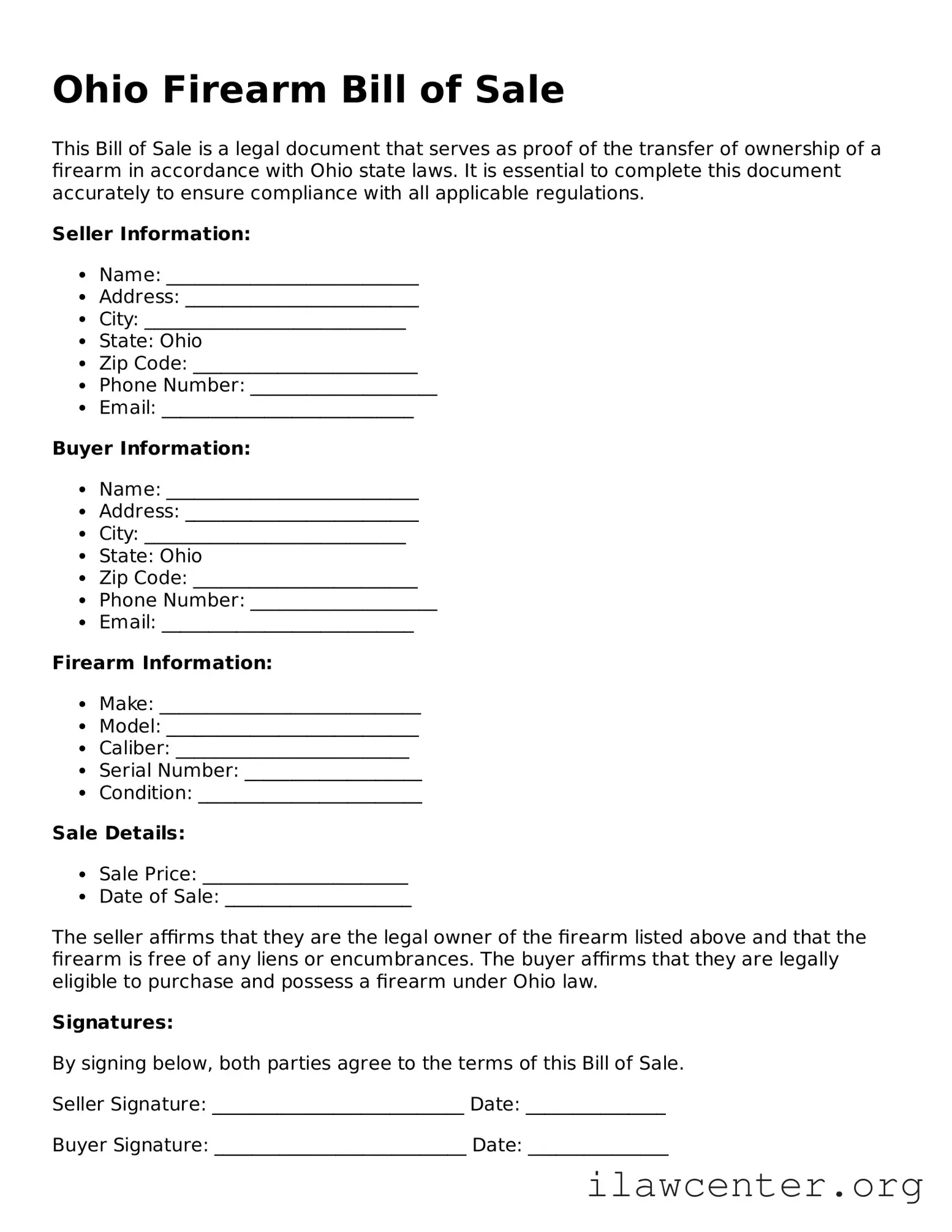
Ohio Firearm Bill of Sale Preview

Ohio Firearm Bill of Sale

This Bill of Sale is a legal document that serves as proof of the transfer of ownership of a firearm in accordance with Ohio state laws. It is essential to complete this document accurately to ensure compliance with all applicable regulations.

Seller Information:

  • Name: ___________________________
  • Address: _________________________
  • City: ____________________________
  • State: Ohio
  • Zip Code: ________________________
  • Phone Number: ____________________
  • Email: ___________________________

Buyer Information:

  • Name: ___________________________
  • Address: _________________________
  • City: ____________________________
  • State: Ohio
  • Zip Code: ________________________
  • Phone Number: ____________________
  • Email: ___________________________

Firearm Information:

  • Make: ____________________________
  • Model: ___________________________
  • Caliber: _________________________
  • Serial Number: ___________________
  • Condition: ________________________

Sale Details:

  • Sale Price: ______________________
  • Date of Sale: ____________________

The seller affirms that they are the legal owner of the firearm listed above and that the firearm is free of any liens or encumbrances. The buyer affirms that they are legally eligible to purchase and possess a firearm under Ohio law.

Signatures:

By signing below, both parties agree to the terms of this Bill of Sale.

Seller Signature: ___________________________ Date: _______________

Buyer Signature: ___________________________ Date: _______________

This document should be retained by both parties for their records. It is advisable to consult with a legal professional for any specific questions regarding firearm transactions.

PDF Form Characteristics

Fact Name Description
Purpose The Ohio Firearm Bill of Sale form serves as a legal document that records the sale or transfer of a firearm between two parties.
Governing Law This form is governed by Ohio Revised Code Section 2923.12, which outlines the regulations regarding the sale and transfer of firearms.
Required Information The form typically requires the names, addresses, and signatures of both the seller and the buyer, along with details about the firearm being sold.
Legality While a bill of sale is not legally required for private sales in Ohio, having one can provide protection for both parties in case of future disputes.
Record Keeping It is advisable for both the seller and buyer to retain a copy of the completed bill of sale for their records, as it may be useful for legal purposes.
Background Checks Ohio law does not mandate background checks for private firearm sales, but parties may choose to conduct one for added security.

Instructions on Utilizing Ohio Firearm Bill of Sale

After you have obtained the Ohio Firearm Bill of Sale form, you will need to complete it accurately. This document serves as a record of the transfer of ownership between the buyer and seller. Follow the steps below to fill it out correctly.

  1. Begin by entering the date of the transaction at the top of the form.
  2. Next, provide the full name of the seller. Include their address and contact information.
  3. Then, fill in the buyer's full name, along with their address and contact information.
  4. In the section for firearm details, clearly describe the firearm being sold. Include the make, model, caliber, and serial number.
  5. Indicate the sale price of the firearm in the designated area.
  6. Both the seller and the buyer must sign and date the form to validate the transaction.

Once you have completed the form, keep a copy for your records. Ensure that both parties retain their respective copies for future reference.

Important Facts about Ohio Firearm Bill of Sale

What is a Firearm Bill of Sale in Ohio?

A Firearm Bill of Sale in Ohio is a legal document that records the sale or transfer of a firearm between two parties. This form serves as proof of the transaction, detailing important information such as the make, model, and serial number of the firearm, as well as the names and addresses of both the buyer and seller. While Ohio law does not require a bill of sale for private sales, having one can provide protection for both parties and clarify the terms of the transaction.

Is a Firearm Bill of Sale required in Ohio?

No, Ohio does not legally require a bill of sale for the private sale of firearms. However, it is highly recommended to create one. This document can help protect both the buyer and the seller by providing a written record of the transaction. In the event of any legal issues or disputes, having a bill of sale can serve as important evidence to clarify ownership and the details of the sale.

What information should be included in the Firearm Bill of Sale?

When creating a Firearm Bill of Sale in Ohio, it is essential to include specific information to ensure the document is comprehensive. Key details should encompass the names and addresses of both the buyer and seller, the date of the transaction, and a thorough description of the firearm being sold, including its make, model, caliber, and serial number. Additionally, both parties should sign the document to validate the agreement. Including any terms or conditions of the sale can also be beneficial.

Can I use a Firearm Bill of Sale for transactions involving multiple firearms?

Yes, a Firearm Bill of Sale can be used for transactions involving multiple firearms. In this case, the document should clearly list each firearm being sold, including the make, model, caliber, and serial number for each item. This ensures that both parties have a complete understanding of what is being transferred. It is important to keep the information organized and detailed to avoid any confusion in the future.
Common mistakes

When completing the Ohio Firearm Bill of Sale form, individuals may encounter several common mistakes. One frequent error involves not providing complete information about the firearm being sold. This includes failing to include details such as the make, model, and serial number. Omitting these specifics can lead to confusion and may complicate future ownership verification.

Another mistake often made is not including the correct names and addresses of both the buyer and the seller. Accurate identification is crucial for legal purposes. Incomplete or incorrect names can result in issues down the line, particularly if there is a dispute regarding ownership or the transaction itself.

Additionally, some individuals neglect to sign and date the form. This step is essential, as it signifies that both parties agree to the terms of the sale. Without signatures, the document may not hold legal weight, which could lead to complications if questions about the transaction arise in the future.

Lastly, failing to provide a copy of the completed Bill of Sale to both parties is a common oversight. Each party should retain a copy for their records. This practice ensures that both the buyer and seller have proof of the transaction, which can be important for future reference or in case of any legal inquiries.

Documents used along the form

When purchasing or selling a firearm in Ohio, the Firearm Bill of Sale form is an essential document. However, there are several other forms and documents that are often used in conjunction with it to ensure a smooth transaction and compliance with state laws. Here’s a list of some important documents you might encounter.

  • Background Check Consent Form: This form allows the seller to conduct a background check on the buyer to ensure they are legally eligible to purchase a firearm.
  • ATF Form 4473: Required by federal law, this form collects information about the buyer and the firearm. It is used to determine if the buyer can legally purchase a gun.
  • Ohio Concealed Carry License: If the buyer intends to carry a concealed firearm, they must present a valid concealed carry license during the transaction.
  • Firearm Transfer Record: This document records the details of the firearm being transferred, including its make, model, and serial number.
  • Affidavit of Firearm Ownership: This sworn statement can help establish ownership of the firearm, especially if the seller is not the original purchaser.
  • Proof of Residency: Buyers may need to provide proof of residency, such as a utility bill or lease agreement, to confirm they are a legal resident of Ohio.
  • Seller’s Identification: A valid form of ID from the seller helps verify their identity and confirms they are legally allowed to sell the firearm.
  • Transfer of Ownership Certificate: This certificate formally documents the transfer of ownership from the seller to the buyer, ensuring that both parties have a record of the transaction.
  • Gun Lock or Safety Device Certification: In some cases, sellers may provide a certification that a gun lock or safety device is included with the firearm to promote safe storage practices.

Using these documents alongside the Firearm Bill of Sale form can help protect both the buyer and seller, ensuring a legal and responsible firearm transaction. Always consult local laws and regulations to stay informed about any additional requirements that may apply.

Similar forms

  • Vehicle Bill of Sale: This document serves as proof of the transfer of ownership for a vehicle. Like the Firearm Bill of Sale, it includes details about the buyer, seller, and the item being sold, ensuring both parties have a record of the transaction.
  • Boat Bill of Sale: Similar to the Firearm Bill of Sale, a Boat Bill of Sale records the transfer of ownership of a boat. It captures essential details about the vessel, the buyer, and the seller, providing a legal record of the sale.
  • Personal Property Bill of Sale: This form is used for various personal items, such as furniture or electronics. It functions like the Firearm Bill of Sale by documenting the sale and protecting the rights of both the buyer and seller.
  • Real Estate Purchase Agreement: While more complex, this agreement outlines the terms of a real estate sale. Like the Firearm Bill of Sale, it confirms the transaction and includes details about the property and the parties involved.
  • Lease Agreement: This document outlines the terms under which one party rents property from another. It shares similarities with the Firearm Bill of Sale in that it formalizes the arrangement and protects the interests of both parties.
  • Gift Receipt: When a gift is given, a gift receipt can serve as proof of the transfer. It is akin to the Firearm Bill of Sale, as it documents the change of ownership, albeit without a monetary exchange.
  • Equipment Rental Agreement: This agreement details the terms of renting equipment. Like the Firearm Bill of Sale, it specifies the parties involved and the item being transferred, ensuring clarity in the transaction.
  • Art Sales Agreement: When artwork is sold, this agreement outlines the terms of the sale. It mirrors the Firearm Bill of Sale by documenting the details of the transaction and confirming the change in ownership.
  • Mobile Home Bill of Sale: This document transfers ownership of a mobile home. It operates similarly to the Firearm Bill of Sale by recording the essential details of the sale and protecting both parties' rights.
  • Business Sale Agreement: When a business changes hands, this agreement outlines the terms of the sale. Like the Firearm Bill of Sale, it formalizes the transaction and includes critical details about the business and the parties involved.

Dos and Don'ts

When filling out the Ohio Firearm Bill of Sale form, it's important to ensure that the process is handled correctly. Here are some key things to keep in mind.

  • Do provide accurate information about the firearm, including make, model, and serial number.
  • Do include the names and addresses of both the buyer and seller.
  • Do sign and date the form to make it legally binding.
  • Do keep a copy of the completed Bill of Sale for your records.
  • Don't leave any sections of the form blank; complete all required fields.
  • Don't falsify any information, as this can lead to legal issues.
  • Don't forget to check local laws regarding firearm sales, as regulations may vary.

By following these guidelines, you can ensure that your transaction is smooth and compliant with Ohio laws.

Misconceptions

When discussing the Ohio Firearm Bill of Sale form, many misunderstandings can arise. Here are eight common misconceptions that people often have:

  1. It is not necessary to have a Bill of Sale for firearm transactions. Many believe that a Bill of Sale is optional. In reality, having this document helps establish a clear record of the transaction and can protect both parties involved.

  2. The Bill of Sale serves as a firearm registration. Some think that completing a Bill of Sale automatically registers the firearm with the state. However, Ohio does not have a firearm registration system, so the Bill of Sale does not serve this purpose.

  3. Only licensed dealers can provide a Bill of Sale. Many people assume that only licensed firearm dealers can create a Bill of Sale. In fact, private individuals can also draft this document for their transactions.

  4. All firearm sales require a background check. There is a belief that every firearm sale, including private sales, mandates a background check. In Ohio, background checks are required only for sales conducted through licensed dealers.

  5. The Bill of Sale must be notarized. Some think that notarization is a requirement for the Bill of Sale to be valid. While notarization can add an extra layer of authenticity, it is not a legal requirement in Ohio.

  6. There are no specific requirements for the Bill of Sale content. It is a common misconception that any written agreement suffices. In truth, the Bill of Sale should include essential details such as the buyer's and seller's information, firearm description, and transaction date.

  7. Once the Bill of Sale is signed, the seller is liable for the firearm. Some people believe that signing the Bill of Sale means the seller remains responsible for the firearm. However, once the transaction is complete, liability typically transfers to the buyer.

  8. Firearm Bills of Sale are only for handguns. Many think that this form is applicable only to handguns. In reality, it can be used for any type of firearm, including rifles and shotguns.

Understanding these misconceptions can help ensure that firearm transactions in Ohio are conducted smoothly and legally.

Key takeaways

Filling out and using the Ohio Firearm Bill of Sale form involves several important considerations. Below are key takeaways to keep in mind:

  1. Purpose: The form serves as a legal record of the sale or transfer of a firearm between parties.
  2. Identification: Both the buyer and seller must provide valid identification to verify their identities.
  3. Details of the Firearm: Include specific information about the firearm, such as make, model, and serial number.
  4. Condition: Clearly state the condition of the firearm at the time of sale, whether new or used.
  5. Purchase Price: Document the agreed-upon purchase price for the firearm.
  6. Signatures: Both parties must sign the form to validate the transaction.
  7. Witness or Notary: While not required, having a witness or notarization can add an extra layer of authenticity.
  8. Record Keeping: Keep a copy of the completed form for personal records and future reference.
  9. Legal Compliance: Ensure that the sale complies with all local, state, and federal laws regarding firearm transfers.
  10. Privacy: Personal information on the form should be handled with care to protect the privacy of both parties.

Understanding these key points can help ensure a smooth and lawful transaction when using the Ohio Firearm Bill of Sale form.