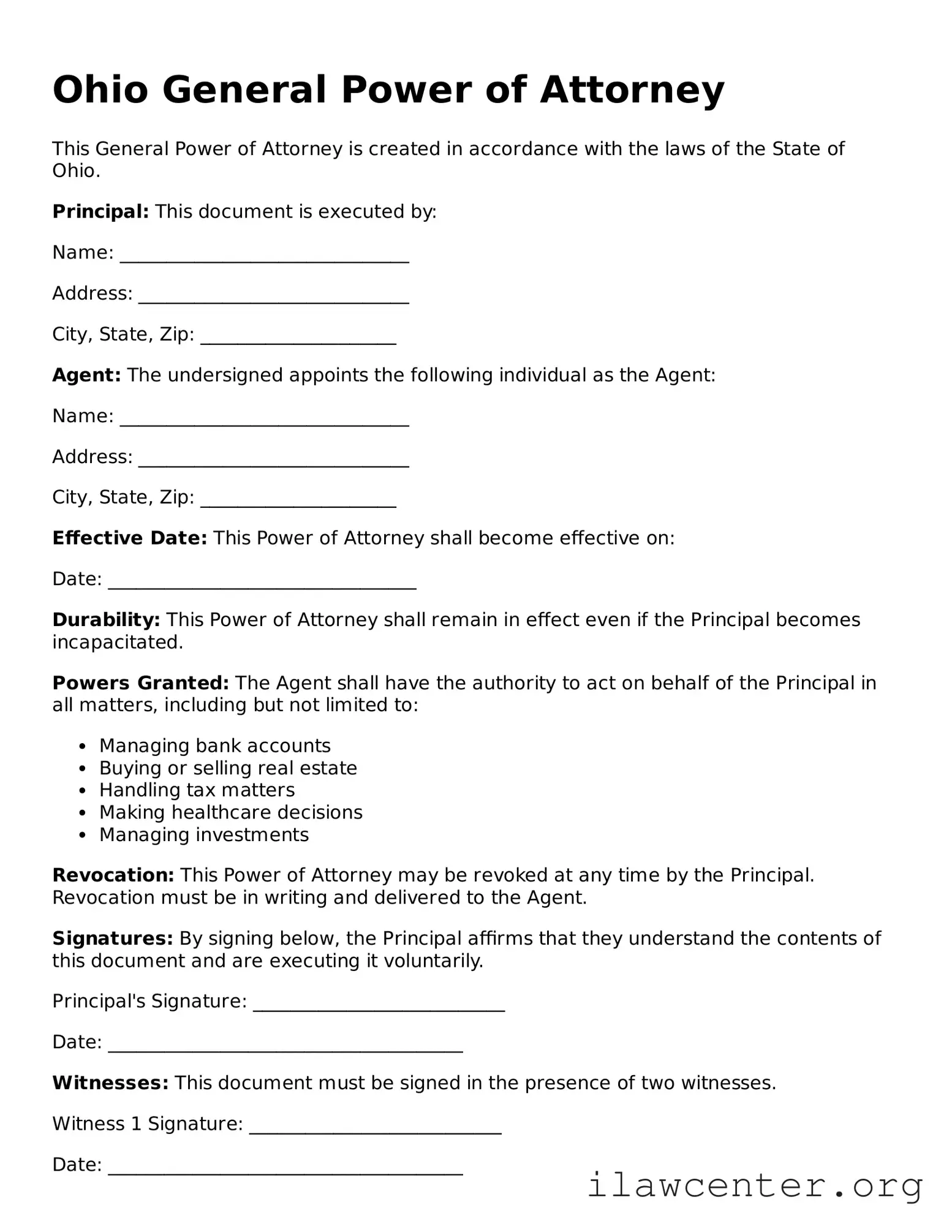
What is a General Power of Attorney in Ohio?
A General Power of Attorney is a legal document that allows one person (the principal) to appoint another person (the agent) to act on their behalf in a variety of financial and legal matters. This document grants broad authority to the agent, enabling them to make decisions and take actions that the principal would normally be able to do themselves.
What powers can be granted through a General Power of Attorney in Ohio?
The General Power of Attorney can grant the agent a wide range of powers, including but not limited to managing bank accounts, paying bills, buying or selling property, filing taxes, and making investment decisions. The principal can specify which powers the agent has and can limit or expand those powers as needed.
Does a General Power of Attorney need to be notarized in Ohio?
Yes, in Ohio, a General Power of Attorney must be signed by the principal in the presence of a notary public. This notarization helps ensure the authenticity of the document and the identity of the principal, providing legal validity to the powers granted.
Can I revoke a General Power of Attorney in Ohio?
Yes, the principal has the right to revoke a General Power of Attorney at any time, as long as they are mentally competent. To revoke the document, the principal should provide written notice to the agent and any third parties who may rely on the authority granted in the document. It is advisable to formally execute a revocation document and have it notarized.
What happens if the principal becomes incapacitated?
If the principal becomes incapacitated, a General Power of Attorney may continue to be effective unless it is specifically stated otherwise in the document. However, if the principal wishes to ensure that someone can make decisions for them in the event of incapacitation, they should consider establishing a Durable Power of Attorney, which remains in effect even when the principal is unable to make decisions.
Can I use a General Power of Attorney for health care decisions?
No, a General Power of Attorney in Ohio does not cover health care decisions. For medical decisions, a separate document known as a Health Care Power of Attorney is required. This document allows an agent to make health-related decisions on behalf of the principal if they are unable to do so.
How long does a General Power of Attorney remain valid?
A General Power of Attorney remains valid until the principal revokes it, the principal passes away, or the specific terms of the document state otherwise. It is important for the principal to review the document periodically to ensure it still meets their needs.
Can I limit the powers granted in a General Power of Attorney?
Yes, the principal can limit the powers granted to the agent in the General Power of Attorney document. Specific instructions can be included to restrict the agent's authority to certain tasks or decisions. This customization allows the principal to maintain control over their affairs while still designating someone to assist them.
Is a General Power of Attorney valid in other states?
A General Power of Attorney executed in Ohio may be recognized in other states, but this can vary based on local laws. It is advisable to check with the laws of the state where the document will be used to ensure its validity. If necessary, a new power of attorney may need to be created in accordance with the laws of that state.