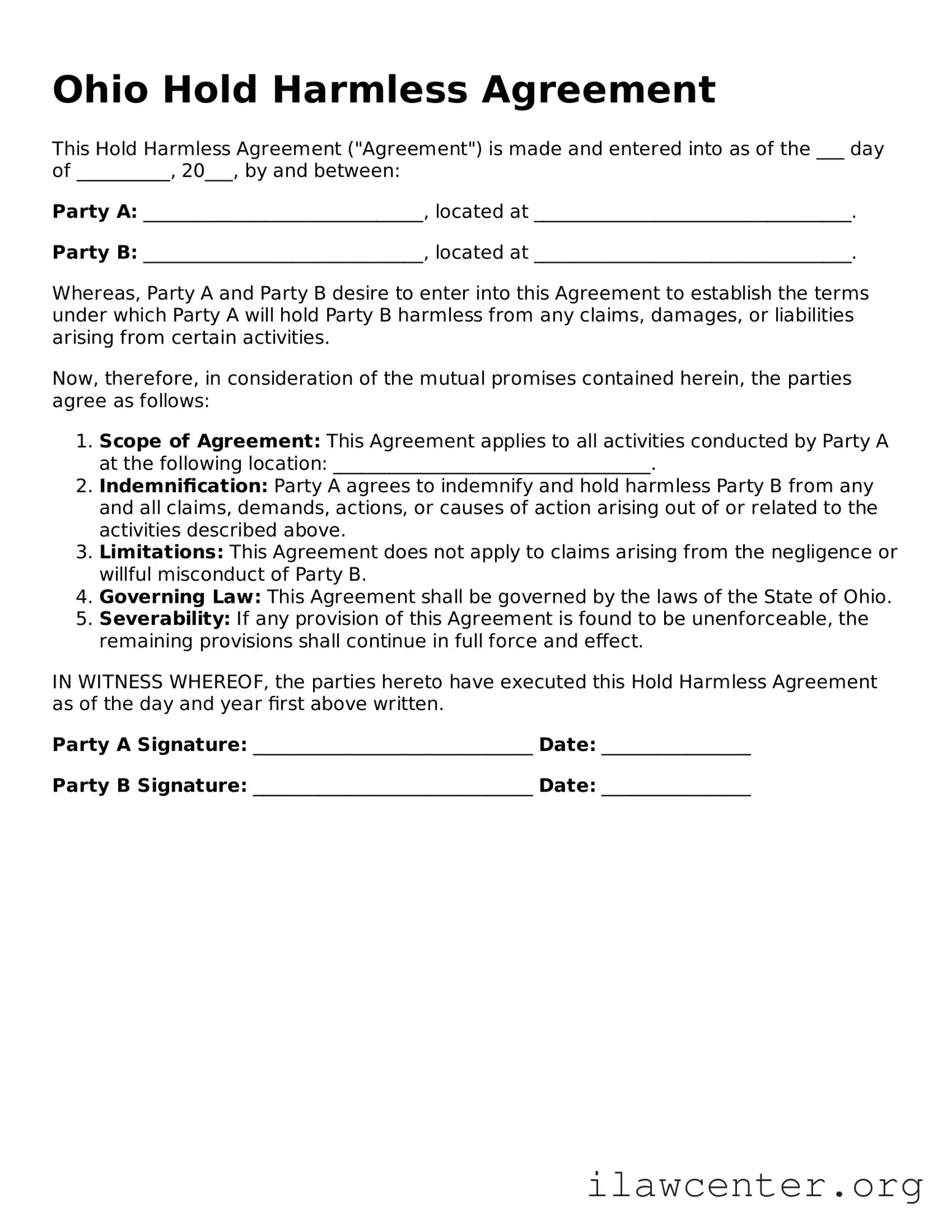
What is a Hold Harmless Agreement in Ohio?
A Hold Harmless Agreement is a legal document in which one party agrees to assume the liability and risk of certain activities or actions, protecting the other party from legal claims or damages. In Ohio, this type of agreement is often used in various contexts, such as rental agreements, event planning, and construction contracts, to ensure that one party will not hold the other responsible for certain risks or injuries that may occur.
Who typically uses a Hold Harmless Agreement?
Individuals and organizations commonly use Hold Harmless Agreements. For instance, property owners may require tenants to sign this agreement to protect themselves from liability in case of accidents on their property. Event organizers often use it to safeguard against claims arising from injuries during an event. Similarly, contractors may include these agreements in their contracts to limit their liability for accidents or damages during a project.
What are the key components of a Hold Harmless Agreement?
A Hold Harmless Agreement typically includes the names of the parties involved, a clear description of the activities or events covered, and the specific liabilities being assumed. It may also outline the duration of the agreement and any limitations on liability. Importantly, the language should be clear and unambiguous to ensure that all parties understand their rights and responsibilities.
Is a Hold Harmless Agreement legally enforceable in Ohio?
Yes, a Hold Harmless Agreement can be legally enforceable in Ohio, provided it meets certain criteria. The agreement must be clear, specific, and voluntarily entered into by both parties. Courts generally uphold these agreements unless they are found to be overly broad, unconscionable, or contrary to public policy. It is advisable to consult with a legal professional to ensure the agreement is properly drafted.
Can a Hold Harmless Agreement protect against all types of liability?
No, a Hold Harmless Agreement cannot protect against all types of liability. For example, it may not be enforceable for gross negligence or intentional misconduct. Additionally, Ohio law may impose certain limitations on the extent to which liability can be waived. It is important to understand these limitations when drafting or signing such an agreement.
How does one create a Hold Harmless Agreement?
To create a Hold Harmless Agreement, start by identifying the parties involved and the specific activities or events that will be covered. Clearly outline the liabilities that are being assumed and include any necessary legal language. It is often beneficial to have the agreement reviewed by a legal professional to ensure it complies with Ohio law and adequately protects all parties involved.
Are there any risks associated with signing a Hold Harmless Agreement?
Yes, there are risks associated with signing a Hold Harmless Agreement. By signing, an individual may waive their right to seek compensation for injuries or damages that occur as a result of the activities covered in the agreement. It is crucial to fully understand the terms and implications of the agreement before signing. Consulting with a legal professional can help clarify any concerns.
Can a Hold Harmless Agreement be revoked or modified?
A Hold Harmless Agreement can be revoked or modified, but this typically requires the consent of all parties involved. Any changes should be documented in writing to avoid misunderstandings. If a party wishes to revoke the agreement, it is advisable to consult with a legal professional to ensure that the revocation is valid and does not lead to unintended consequences.