Attorney-Verified  Horse Bill of Sale Document for Ohio

Attorney-Verified Horse Bill of Sale Document for Ohio

The Ohio Horse Bill of Sale form is a legal document that records the transfer of ownership of a horse from one party to another. This form provides essential details about the horse, including its description and sale price, ensuring a clear understanding between the buyer and seller. To facilitate the transfer process, consider filling out the form by clicking the button below.

Article Guide

The Ohio Horse Bill of Sale form serves as a crucial document in the transfer of ownership for horses within the state. This form provides essential details, including the names and addresses of both the seller and buyer, as well as a description of the horse being sold. Important information such as the horse's age, breed, color, and any identifying marks must be included to ensure clarity in the transaction. Additionally, the form outlines the sale price and any terms of sale agreed upon by both parties. By documenting the sale, this form protects the interests of both the buyer and seller, helping to prevent disputes that may arise post-transaction. It is essential to complete this form accurately and to retain copies for personal records, as it serves as proof of ownership transfer and can be referenced in future dealings or registrations.

Ohio Horse Bill of Sale Preview

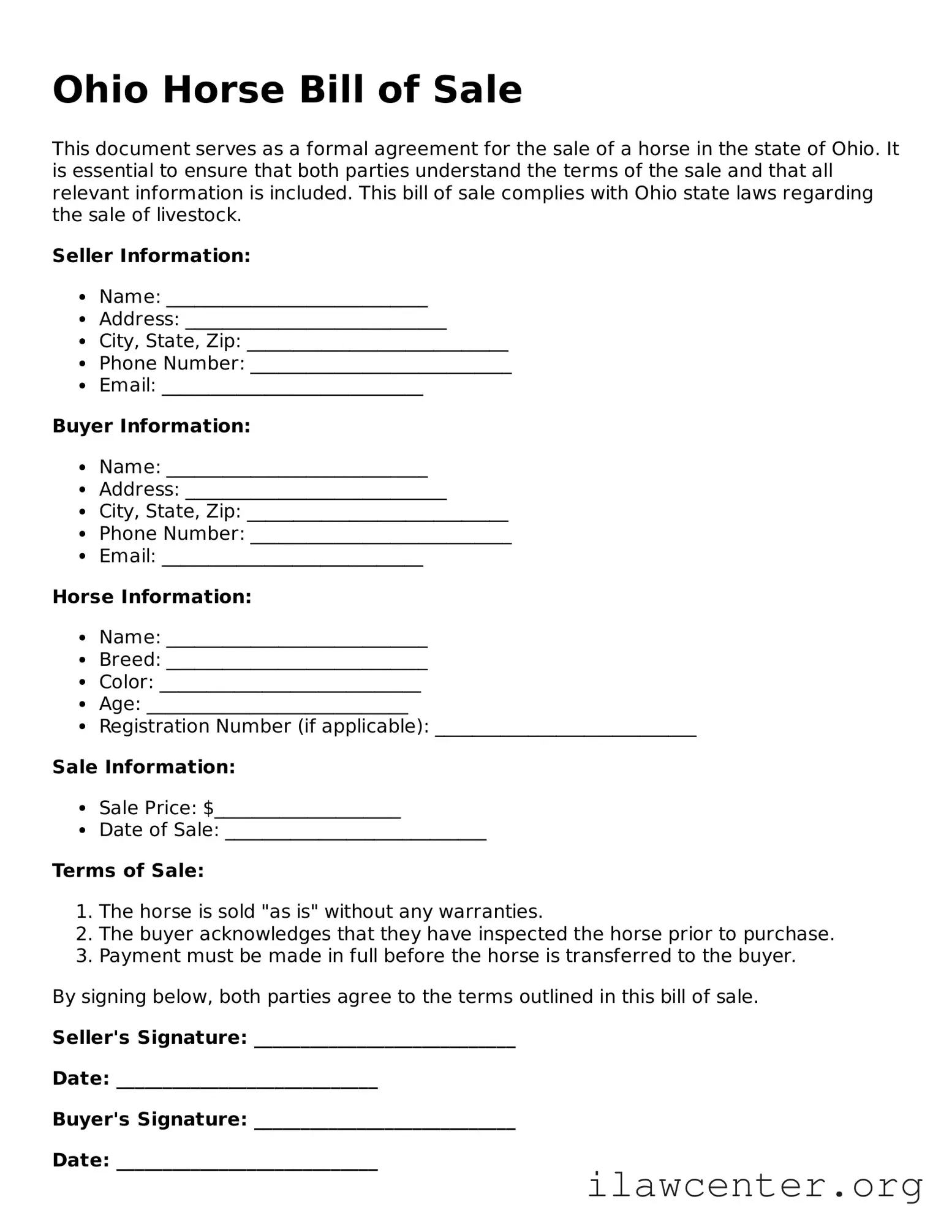
Ohio Horse Bill of Sale

This document serves as a formal agreement for the sale of a horse in the state of Ohio. It is essential to ensure that both parties understand the terms of the sale and that all relevant information is included. This bill of sale complies with Ohio state laws regarding the sale of livestock.

Seller Information:

  • Name: ____________________________
  • Address: ____________________________
  • City, State, Zip: ____________________________
  • Phone Number: ____________________________
  • Email: ____________________________

Buyer Information:

  • Name: ____________________________
  • Address: ____________________________
  • City, State, Zip: ____________________________
  • Phone Number: ____________________________
  • Email: ____________________________

Horse Information:

  • Name: ____________________________
  • Breed: ____________________________
  • Color: ____________________________
  • Age: ____________________________
  • Registration Number (if applicable): ____________________________

Sale Information:

  • Sale Price: $____________________
  • Date of Sale: ____________________________

Terms of Sale:

  1. The horse is sold "as is" without any warranties.
  2. The buyer acknowledges that they have inspected the horse prior to purchase.
  3. Payment must be made in full before the horse is transferred to the buyer.

By signing below, both parties agree to the terms outlined in this bill of sale.

Seller's Signature: ____________________________

Date: ____________________________

Buyer's Signature: ____________________________

Date: ____________________________

PDF Form Characteristics

Fact Name Description
Purpose The Ohio Horse Bill of Sale form is used to document the sale of a horse between a seller and a buyer.
Legal Requirement While not legally required, having a bill of sale provides proof of ownership and protects both parties in the transaction.
Governing Laws The sale of horses in Ohio is governed by the Ohio Revised Code, particularly sections related to personal property transactions.
Information Included The form typically includes details such as the horse's description, sale price, and the names and addresses of both the buyer and seller.
Signatures Both the buyer and seller must sign the document to validate the sale and transfer of ownership.
Notarization Although notarization is not mandatory, it can add an extra layer of authenticity to the document.
Use in Disputes This bill of sale can be used as evidence in case of disputes regarding ownership or the terms of the sale.
Transfer of Liability Once the sale is complete, liability for the horse typically transfers from the seller to the buyer.
Record Keeping Both parties should keep a copy of the bill of sale for their records, as it serves as proof of the transaction.

Instructions on Utilizing Ohio Horse Bill of Sale

Once you have the Ohio Horse Bill of Sale form in front of you, it's time to fill it out carefully. This form is important for documenting the sale of a horse and ensuring that both the seller and buyer have a clear understanding of the transaction. Follow these steps to complete the form accurately.

  1. Obtain the form: Make sure you have the latest version of the Ohio Horse Bill of Sale form. You can find it online or request a copy from your local equine association.
  2. Fill in the seller's information: Write the full name, address, and contact number of the seller. This information identifies the person selling the horse.
  3. Provide the buyer's information: Enter the buyer's full name, address, and contact number. This identifies the person purchasing the horse.
  4. Describe the horse: Include the horse's name, breed, age, color, and any identifying marks. This information helps to clearly identify the horse being sold.
  5. State the sale price: Write down the agreed-upon sale price for the horse. This should be a clear and specific amount.
  6. Include the date of sale: Write the date when the sale is taking place. This establishes when the transaction occurs.
  7. Signatures: Both the seller and buyer must sign the form. This confirms that both parties agree to the terms of the sale.

After completing the form, ensure that both parties keep a copy for their records. This will help avoid any misunderstandings in the future regarding the sale.

Important Facts about Ohio Horse Bill of Sale

What is a Horse Bill of Sale in Ohio?

A Horse Bill of Sale is a legal document that records the sale of a horse from one party to another. It serves as proof of the transaction and outlines the terms agreed upon by the buyer and seller. This document can be important for establishing ownership and may be required for registration or other purposes.

Is a Horse Bill of Sale required in Ohio?

While it is not legally required to have a Horse Bill of Sale in Ohio, it is highly recommended. This document protects both the buyer and the seller by providing clear evidence of the transaction. It can help resolve disputes and clarify ownership in the future.

What information should be included in a Horse Bill of Sale?

A Horse Bill of Sale should include several key details: the names and addresses of both the buyer and seller, a description of the horse (including breed, age, color, and any identifying marks), the sale price, and the date of the transaction. It is also beneficial to include any warranties or guarantees regarding the horse's health or behavior.

Can a Horse Bill of Sale be handwritten?

Yes, a Horse Bill of Sale can be handwritten as long as it includes all necessary information and is signed by both parties. However, using a printed template can help ensure that all relevant details are covered and can make the document look more professional.

Do I need a witness or notary for the Horse Bill of Sale?

In Ohio, a Horse Bill of Sale does not need to be notarized or witnessed to be legally binding. However, having a witness or a notary can add an extra layer of credibility and may be beneficial if disputes arise in the future.

What if the horse has health issues or injuries?

If the horse has any known health issues or injuries, these should be disclosed in the Horse Bill of Sale. Including this information protects the seller from future claims and ensures the buyer is fully informed about the horse's condition before completing the sale.

Can I use a Horse Bill of Sale for other types of livestock?

While a Horse Bill of Sale is specifically designed for horses, similar documents can be used for other types of livestock. It is important to tailor the document to reflect the specifics of the animal being sold, including relevant details and terms of the sale.

What happens if the buyer does not pay?

If the buyer fails to pay as agreed upon in the Horse Bill of Sale, the seller may have legal options to pursue payment. The seller can try to resolve the issue directly with the buyer or may need to consider legal action, depending on the circumstances and the terms outlined in the sale agreement.

Can I cancel a Horse Bill of Sale after it is signed?

Once a Horse Bill of Sale is signed by both parties, it is generally considered a binding contract. Canceling the agreement after signing may be difficult unless both parties agree to the cancellation. It is advisable to discuss any concerns with the other party as soon as possible.

Where can I find a Horse Bill of Sale template?

Horse Bill of Sale templates can be found online through various legal document websites, agricultural associations, or local equine organizations. It is important to ensure that any template used complies with Ohio laws and meets the specific needs of the transaction.
Common mistakes

Filling out the Ohio Horse Bill of Sale form can seem straightforward, but many people make common mistakes that can lead to complications later on. One frequent error is not including all necessary information about the horse. Details such as the horse's name, breed, age, and registration number should be clearly stated. Omitting any of this information can create confusion about the horse's identity.

Another mistake is failing to provide accurate seller and buyer information. Both parties must include their full names and addresses. If this information is incomplete or incorrect, it may complicate any future transactions or disputes.

People often overlook the importance of signatures. The form must be signed by both the seller and the buyer to be valid. Without these signatures, the document may not hold up in a legal context. Additionally, some individuals forget to date the bill of sale. A date is crucial as it establishes when the transaction took place.

Many also neglect to mention any warranties or guarantees associated with the horse. If the seller offers any assurances about the horse's health or performance, these should be clearly outlined in the bill of sale. Failing to do so can lead to misunderstandings later.

Another common error is not keeping a copy of the completed form. Both the buyer and seller should retain a signed copy for their records. This can be vital if any disputes arise in the future.

Some individuals make the mistake of using vague language. Instead of general terms, it's important to be specific about the horse's condition and any known issues. This clarity can help protect both parties.

People sometimes forget to check local laws regarding horse sales. While the Ohio Horse Bill of Sale form is a standard document, there may be additional regulations or requirements at the county or city level that need to be followed.

In some cases, buyers fail to conduct a pre-purchase examination. It’s advisable for buyers to have a veterinarian assess the horse before finalizing the sale. This step can prevent future health-related disputes.

Lastly, individuals may not fully understand the financial terms of the sale. The sale price should be clearly stated, along with any payment terms. If the payment structure is unclear, it could lead to disagreements later on.

By being aware of these common mistakes, both buyers and sellers can ensure a smoother transaction process. Taking the time to fill out the Ohio Horse Bill of Sale form accurately can save both parties from potential legal issues down the road.

Documents used along the form

When purchasing or selling a horse in Ohio, several other forms and documents may be necessary to ensure a smooth transaction. These documents help clarify ownership, health, and legal responsibilities. Below is a list of commonly used forms alongside the Ohio Horse Bill of Sale.

  • Equine Health Certificate: This document verifies that the horse is healthy and free from contagious diseases. It is often required for travel or sale.
  • Brand Inspection Certificate: If the horse has a brand, this certificate confirms its ownership and helps prevent theft.
  • Registration Papers: For registered horses, these papers provide proof of lineage and breed. They are essential for maintaining the horse's pedigree.
  • Transfer of Ownership Form: This form officially documents the change of ownership from seller to buyer. It may be needed for registration purposes.
  • Equine Liability Waiver: This document protects the seller from liability if the horse causes injury or damage after the sale.
  • Purchase Agreement: This contract outlines the terms of the sale, including price, payment method, and any conditions that must be met.
  • Bill of Sale for Equipment: If any equipment is included in the sale, this document details the items and their condition.
  • Insurance Policy: Buyers may want to obtain insurance for the horse. This policy provides coverage for health issues, accidents, or theft.

Having these documents prepared and organized can facilitate a smoother transaction. They help protect both the buyer and seller, ensuring that all legal aspects of the sale are covered.

Similar forms

  • Vehicle Bill of Sale: Similar to a Horse Bill of Sale, this document transfers ownership of a vehicle from one party to another. It includes details such as the vehicle's make, model, and identification number.
  • Boat Bill of Sale: This document serves to transfer ownership of a boat. It outlines the boat's specifications and the terms of the sale, much like the Horse Bill of Sale does for equines.
  • Real Estate Purchase Agreement: This agreement outlines the terms of sale for a property. Like the Horse Bill of Sale, it details the parties involved, the property description, and the agreed purchase price.
  • Pet Bill of Sale: This document facilitates the transfer of ownership of a pet. It includes information about the animal and the seller, similar to how a Horse Bill of Sale outlines the horse's details and the seller's information.
  • Equipment Bill of Sale: Used for the sale of machinery or equipment, this document details the equipment being sold and the terms of the transaction, paralleling the specifics found in a Horse Bill of Sale.
  • Gun Bill of Sale: This document transfers ownership of a firearm. It includes details such as the make, model, and serial number, similar to how a Horse Bill of Sale identifies the horse being sold.
  • Business Asset Purchase Agreement: This agreement outlines the sale of business assets. It details what is being sold and the terms, akin to the Horse Bill of Sale's focus on the horse and sale conditions.
  • Livestock Bill of Sale: This document is specifically for transferring ownership of livestock. It includes details about the animals being sold, mirroring the structure and purpose of the Horse Bill of Sale.

Dos and Don'ts

When filling out the Ohio Horse Bill of Sale form, it is essential to follow certain guidelines to ensure that the document is valid and serves its intended purpose. Below is a list of things you should and shouldn't do.

  • Do provide accurate information about the horse, including breed, age, and registration number.
  • Do include the names and contact information of both the buyer and the seller.
  • Do specify the sale price clearly to avoid any confusion.
  • Do sign and date the form in the presence of a witness if possible.
  • Do keep a copy of the completed form for your records.
  • Don't leave any sections of the form blank; incomplete forms may not be legally binding.
  • Don't use vague language; be specific about the terms of the sale.
  • Don't forget to disclose any known health issues or defects of the horse.
  • Don't sign the form without reading it thoroughly to ensure accuracy.
  • Don't attempt to alter the form after it has been signed, as this could lead to disputes.

Misconceptions

When it comes to the Ohio Horse Bill of Sale form, several misconceptions can lead to confusion for buyers and sellers alike. Understanding these misconceptions can help ensure a smoother transaction.

  • Misconception 1: The form is not legally binding.
  • Many people believe that a Bill of Sale is merely a receipt and lacks legal significance. In reality, a properly completed Bill of Sale serves as a legal document that can protect both the buyer and seller by outlining the terms of the sale.

  • Misconception 2: A Bill of Sale is only necessary for high-value horses.
  • Some assume that only expensive horses require a Bill of Sale. However, regardless of the horse's value, having a Bill of Sale is important for establishing ownership and protecting against future disputes.

  • Misconception 3: The form does not require any specific information.
  • There is a belief that a Bill of Sale can be filled out with minimal information. In truth, the form should include details such as the horse's description, sale price, and both parties' contact information to be effective.

  • Misconception 4: The seller is responsible for all liabilities after the sale.
  • Some think that once the horse is sold, the seller remains liable for any issues that arise. This is not necessarily the case. The Bill of Sale can include clauses that clarify the transfer of liability, protecting the seller from future claims.

  • Misconception 5: A verbal agreement is sufficient.
  • Many believe that a verbal agreement is enough to finalize a sale. However, without a written Bill of Sale, it can be difficult to prove the terms of the agreement, leading to potential disputes later on.

Key takeaways

When engaging in the sale or purchase of a horse in Ohio, understanding the Horse Bill of Sale form is essential. Here are some key takeaways to consider:

  • Purpose of the Form: The Ohio Horse Bill of Sale serves as a legal document that records the transaction between the buyer and the seller. It provides proof of ownership transfer.
  • Essential Information: The form should include critical details such as the horse's description, registration number (if applicable), and the sale price. Accurate information helps avoid disputes later.
  • Signatures Required: Both the seller and the buyer must sign the document. This signature confirms that both parties agree to the terms outlined in the bill of sale.
  • Notarization: While notarization is not mandatory, having the document notarized can add an extra layer of authenticity and can be beneficial in case of future disputes.
  • Retention of Copies: Each party should keep a copy of the signed bill of sale for their records. This documentation can be important for future reference, especially in case of ownership questions.
  • State-Specific Considerations: Always check for any specific regulations or requirements that may apply to horse sales in Ohio. Local laws can influence how the bill of sale should be completed.

By following these guidelines, individuals can ensure a smoother transaction process when buying or selling a horse in Ohio.