Attorney-Verified  Lease Agreement Document for Ohio

Attorney-Verified Lease Agreement Document for Ohio

An Ohio Lease Agreement form is a legal document that outlines the terms and conditions between a landlord and a tenant for renting a property in Ohio. This agreement serves to protect the rights of both parties while establishing clear expectations. If you're ready to secure your rental situation, fill out the form by clicking the button below.

Article Guide

The Ohio Lease Agreement form serves as a crucial document for both landlords and tenants, outlining the terms and conditions of a rental arrangement. This form typically includes essential details such as the names of the parties involved, the property address, and the duration of the lease. Rent payment terms, security deposits, and maintenance responsibilities are also clearly defined, ensuring that both parties understand their obligations. Additionally, the form addresses issues like late fees, termination conditions, and rules regarding pets or alterations to the property. By providing a structured framework, the Ohio Lease Agreement helps prevent misunderstandings and disputes, fostering a more harmonious landlord-tenant relationship.

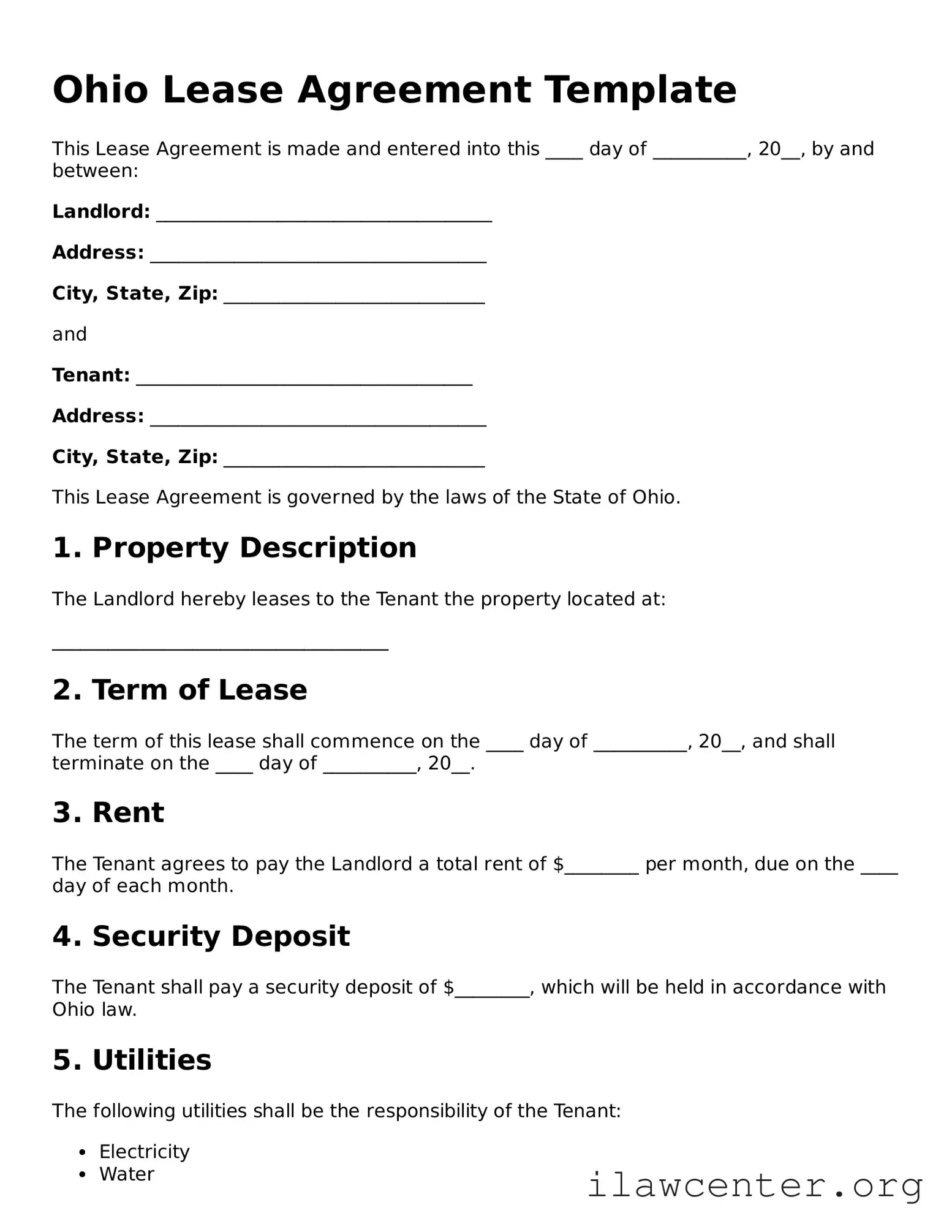
Ohio Lease Agreement Preview

Ohio Lease Agreement Template

This Lease Agreement is made and entered into this ____ day of __________, 20__, by and between:

Landlord: ____________________________________

Address: ____________________________________

City, State, Zip: ____________________________

and

Tenant: ____________________________________

Address: ____________________________________

City, State, Zip: ____________________________

This Lease Agreement is governed by the laws of the State of Ohio.

1. Property Description

The Landlord hereby leases to the Tenant the property located at:

____________________________________

2. Term of Lease

The term of this lease shall commence on the ____ day of __________, 20__, and shall terminate on the ____ day of __________, 20__.

3. Rent

The Tenant agrees to pay the Landlord a total rent of $________ per month, due on the ____ day of each month.

4. Security Deposit

The Tenant shall pay a security deposit of $________, which will be held in accordance with Ohio law.

5. Utilities

The following utilities shall be the responsibility of the Tenant:

  • Electricity
  • Water
  • Gas
  • Internet

6. Maintenance and Repairs

The Tenant agrees to keep the premises in good condition and to notify the Landlord of any necessary repairs.

7. Termination

Either party may terminate this lease by providing written notice at least ____ days prior to the desired termination date.

8. Governing Law

This Agreement shall be governed by the laws of the State of Ohio.

9. Signatures

IN WITNESS WHEREOF, the parties hereto have executed this Lease Agreement on the day and year first above written.

Landlord Signature: ___________________________

Date: ___________________________

Tenant Signature: ___________________________

Date: ___________________________

PDF Form Characteristics

Fact Name Description
Governing Law The Ohio Lease Agreement is governed by the Ohio Revised Code, particularly sections related to landlord-tenant relationships.
Duration of Lease Ohio lease agreements can be for a fixed term, such as one year, or can be month-to-month, providing flexibility for both parties.
Security Deposit Landlords in Ohio can charge a security deposit, typically equal to one month's rent, which must be returned within 30 days of lease termination.
Notice Requirements Ohio law requires landlords to provide written notice of at least 30 days before terminating a month-to-month lease.
Maintenance Responsibilities Landlords must keep rental properties in a habitable condition, while tenants are expected to maintain cleanliness and report necessary repairs.
Discrimination Laws Ohio law prohibits discrimination in housing based on race, color, religion, sex, national origin, disability, or familial status.

Instructions on Utilizing Ohio Lease Agreement

Completing the Ohio Lease Agreement form requires careful attention to detail. Each section of the form serves a specific purpose, ensuring that both the landlord and tenant understand their rights and responsibilities. Follow these steps to fill out the form accurately.

  1. Begin by entering the date on which the lease is being signed at the top of the form.
  2. Provide the landlord's name and contact information in the designated area.
  3. Next, fill in the tenant's name and contact information. Ensure that all details are correct.
  4. Specify the property address where the lease will apply. Include street address, city, and ZIP code.
  5. Indicate the lease term by stating the start date and end date of the lease period.
  6. Detail the monthly rent amount and specify the due date for rent payments.
  7. Include any security deposit amount required and the conditions for its return.
  8. Outline any utilities that are included in the rent and specify which are the tenant's responsibility.
  9. Review any additional terms or clauses that may need to be added to the agreement.
  10. Both the landlord and tenant should sign and date the form at the bottom to finalize the agreement.

Once the form is filled out, both parties should keep a copy for their records. This ensures that everyone has a clear understanding of the terms agreed upon and can refer back to them if necessary.

Important Facts about Ohio Lease Agreement

What is an Ohio Lease Agreement form?

An Ohio Lease Agreement form is a legal document that outlines the terms and conditions under which a landlord rents property to a tenant. This agreement typically includes details such as the rental amount, duration of the lease, responsibilities of both parties, and any specific rules regarding the property. It serves to protect the rights of both landlords and tenants by clearly defining expectations and obligations.

What should I include in an Ohio Lease Agreement?

When drafting an Ohio Lease Agreement, it’s important to include several key components. Start with the names of the landlord and tenant, followed by the property address. Specify the lease term—whether it’s month-to-month or for a fixed period. Clearly state the rent amount, due dates, and acceptable payment methods. Additionally, outline responsibilities for maintenance, repairs, and utilities. Don’t forget to include clauses regarding security deposits, late fees, and any rules specific to the property, such as pet policies.

How long is a typical lease term in Ohio?

In Ohio, lease terms can vary widely. Many leases are set for one year, which is common for residential properties. However, month-to-month leases are also popular, especially for those seeking flexibility. The lease duration should be clearly defined in the agreement to avoid any misunderstandings. If you choose a longer lease term, consider including a renewal option for added security.

What happens if a tenant violates the lease agreement?

If a tenant violates the lease agreement, the landlord has several options. First, it’s advisable to communicate with the tenant to resolve the issue. If the violation continues, the landlord may issue a formal notice, often called a “notice to cure” or “notice to quit,” depending on the severity of the violation. In cases of non-payment of rent, the landlord may proceed with eviction after following the proper legal procedures. It’s crucial to document all communications and actions taken in case legal intervention becomes necessary.

Can a lease agreement be modified after it is signed?

Yes, a lease agreement can be modified after it is signed, but both parties must agree to the changes. Any modifications should be documented in writing and signed by both the landlord and tenant. This ensures that there is a clear record of the agreed-upon changes. Verbal agreements are often not enforceable, so it’s best to keep everything in writing to avoid future disputes.

Common mistakes

When individuals fill out the Ohio Lease Agreement form, several common mistakes can lead to misunderstandings or disputes later on. One frequent error is failing to provide complete and accurate information. This includes not listing all tenants or neglecting to include essential details about the property. Omitting a tenant's name or misrepresenting the rental property's address can create confusion and complicate legal matters. It is crucial to double-check all entries to ensure that everything is correct and up-to-date.

Another mistake often made is not thoroughly reading the terms and conditions of the lease. Many people rush through the agreement without fully understanding their rights and obligations. This oversight can lead to unexpected responsibilities, such as maintenance duties or rules regarding pets. Taking the time to read and comprehend each section of the lease can prevent future conflicts and ensure that all parties are on the same page.

Additionally, individuals sometimes overlook the importance of signatures and dates. A lease is not legally binding until all parties have signed and dated the document. Failing to do so can render the agreement invalid, leaving tenants without protection under the lease terms. It is advisable to ensure that everyone involved has signed the document and that the dates are clearly noted to avoid any legal complications.

Lastly, many people neglect to discuss and clarify any ambiguous terms within the lease. Words or phrases that are unclear can lead to different interpretations by the landlord and tenant. For instance, terms related to "normal wear and tear" or "security deposit" can vary widely in meaning. It is beneficial to address any uncertainties before signing the lease, as this can help both parties understand their expectations and responsibilities better.

Documents used along the form

When entering into a rental agreement in Ohio, several additional forms and documents often accompany the Ohio Lease Agreement. These documents help clarify the terms of the lease, outline responsibilities, and ensure a smooth rental process. Below are some commonly used forms that landlords and tenants may consider.

  • Rental Application: This form is typically completed by prospective tenants. It collects personal information, rental history, and financial details to help landlords evaluate the suitability of applicants.
  • Move-In Checklist: This document is used to document the condition of the rental property at the time of move-in. Both the landlord and tenant should complete this checklist to avoid disputes regarding damages when the tenant moves out.
  • Security Deposit Receipt: This receipt serves as proof of the security deposit paid by the tenant. It details the amount received and the conditions under which the deposit may be retained or returned at the end of the lease.
  • Lease Addendum: This is an additional document that modifies or adds specific terms to the original lease agreement. It can address unique circumstances or rules that were not included in the primary lease.

Incorporating these documents into the leasing process can help protect the rights of both landlords and tenants. They provide clarity and can prevent misunderstandings, fostering a positive rental experience for all parties involved.

Similar forms

  • Rental Agreement: Similar to a lease agreement, a rental agreement outlines the terms under which a property is rented. However, rental agreements are typically for shorter durations, often month-to-month, while lease agreements usually cover longer terms, such as a year.
  • Sublease Agreement: A sublease agreement allows a tenant to rent out their leased space to another party. It includes similar terms to a lease agreement but is specifically tailored to the relationship between the original tenant and the subtenant.
  • Commercial Lease Agreement: This type of lease is used for renting commercial properties. Like residential leases, it specifies rent, duration, and responsibilities, but it also addresses unique aspects of business operations and zoning regulations.
  • Month-to-Month Lease: A month-to-month lease provides flexibility for both landlords and tenants. It operates similarly to a standard lease but allows for termination with short notice, typically 30 days, instead of a fixed term.
  • Property Management Agreement: This document outlines the relationship between a property owner and a property manager. It includes terms related to leasing, maintenance, and tenant relations, paralleling lease agreements in terms of responsibilities and obligations.
  • Real Estate Purchase Agreement: While primarily used for buying property, this agreement shares similarities with lease agreements in that it details terms, conditions, and obligations of both parties, though it focuses on ownership transfer rather than rental.
  • Roommate Agreement: This document is created among individuals sharing a rental space. It outlines responsibilities and expectations, akin to a lease agreement, but is specifically designed for cohabitation arrangements.

Dos and Don'ts

When filling out the Ohio Lease Agreement form, it's important to follow some best practices. Here’s a list of what to do and what to avoid:

  • Do read the entire lease agreement carefully before filling it out.
  • Do ensure all names and addresses are accurate and complete.
  • Do clarify any unclear terms with the landlord before signing.
  • Do keep a copy of the signed lease for your records.
  • Do ask about any additional fees or deposits that may not be listed.
  • Don't rush through the form; take your time to understand each section.
  • Don't leave any blanks; fill in all required information.
  • Don't sign the lease if you feel pressured or uncomfortable.
  • Don't ignore the lease terms; they are legally binding.
  • Don't forget to check the move-in date and other important timelines.

Misconceptions

Understanding lease agreements is crucial for both landlords and tenants. However, misconceptions can lead to confusion and disputes. Below are nine common misconceptions about the Ohio Lease Agreement form, along with clarifications to help you navigate this important document.

  1. All lease agreements are the same.

    Many people believe that all lease agreements follow a standard template. In reality, lease agreements can vary significantly based on the specific terms negotiated between the landlord and tenant, as well as local laws.

  2. Oral agreements are sufficient.

    Some individuals think that a verbal agreement is enough to create a lease. However, written agreements provide clarity and legal protection for both parties, making them essential.

  3. Lease agreements cannot be modified.

    Another misconception is that once a lease is signed, it cannot be changed. In fact, landlords and tenants can agree to modify the lease terms, but these changes should be documented in writing.

  4. Security deposits are non-refundable.

    Many tenants fear that their security deposits will be lost regardless of the circumstances. However, security deposits can be returned if the property is left in good condition, minus any reasonable deductions for damages.

  5. Landlords can enter the property whenever they want.

    Some tenants believe that landlords have unrestricted access to their rental units. In Ohio, landlords must provide reasonable notice before entering, except in emergencies.

  6. Lease agreements are only for long-term rentals.

    There is a belief that lease agreements are only applicable for long-term rentals. However, lease agreements can also be used for short-term rentals, and they should clearly outline the duration of the tenancy.

  7. All lease agreements must be notarized.

    Some people think that notarization is required for lease agreements to be valid. While notarization can add an extra layer of authenticity, it is not a legal requirement in Ohio.

  8. Tenants have no rights in lease agreements.

    This misconception suggests that tenants are powerless in lease agreements. In reality, tenants have rights protected by law, including the right to a habitable living space and protection against discrimination.

  9. Once signed, a lease cannot be terminated early.

    Finally, many believe that a lease must be honored for its entire duration without exception. While breaking a lease can have consequences, there are legal avenues for early termination under specific circumstances, such as job relocation or health issues.

By addressing these misconceptions, both landlords and tenants can foster a better understanding of their rights and responsibilities, leading to healthier rental relationships.

Key takeaways

When filling out and using the Ohio Lease Agreement form, several important points should be kept in mind. Understanding these key aspects can help ensure a smoother rental experience for both landlords and tenants.

  • Clear Identification: Ensure that both the landlord and tenant are clearly identified in the agreement. This includes full names and contact information.
  • Property Description: Accurately describe the rental property, including the address and any specific details that define the unit being rented.
  • Lease Duration: Specify the duration of the lease. Whether it’s a month-to-month agreement or a fixed-term lease, clarity is essential.
  • Rent Amount: Clearly state the amount of rent due, the due date, and the acceptable payment methods. This helps avoid confusion later on.
  • Security Deposit: Include details about the security deposit, including the amount and the conditions under which it may be withheld after the lease ends.
  • Maintenance Responsibilities: Outline who is responsible for maintenance and repairs. This can prevent disputes over property upkeep.
  • Termination Clauses: Clearly define the conditions under which either party can terminate the lease. This should include notice periods and acceptable reasons for termination.

By paying attention to these key takeaways, both landlords and tenants can foster a respectful and clear rental relationship.