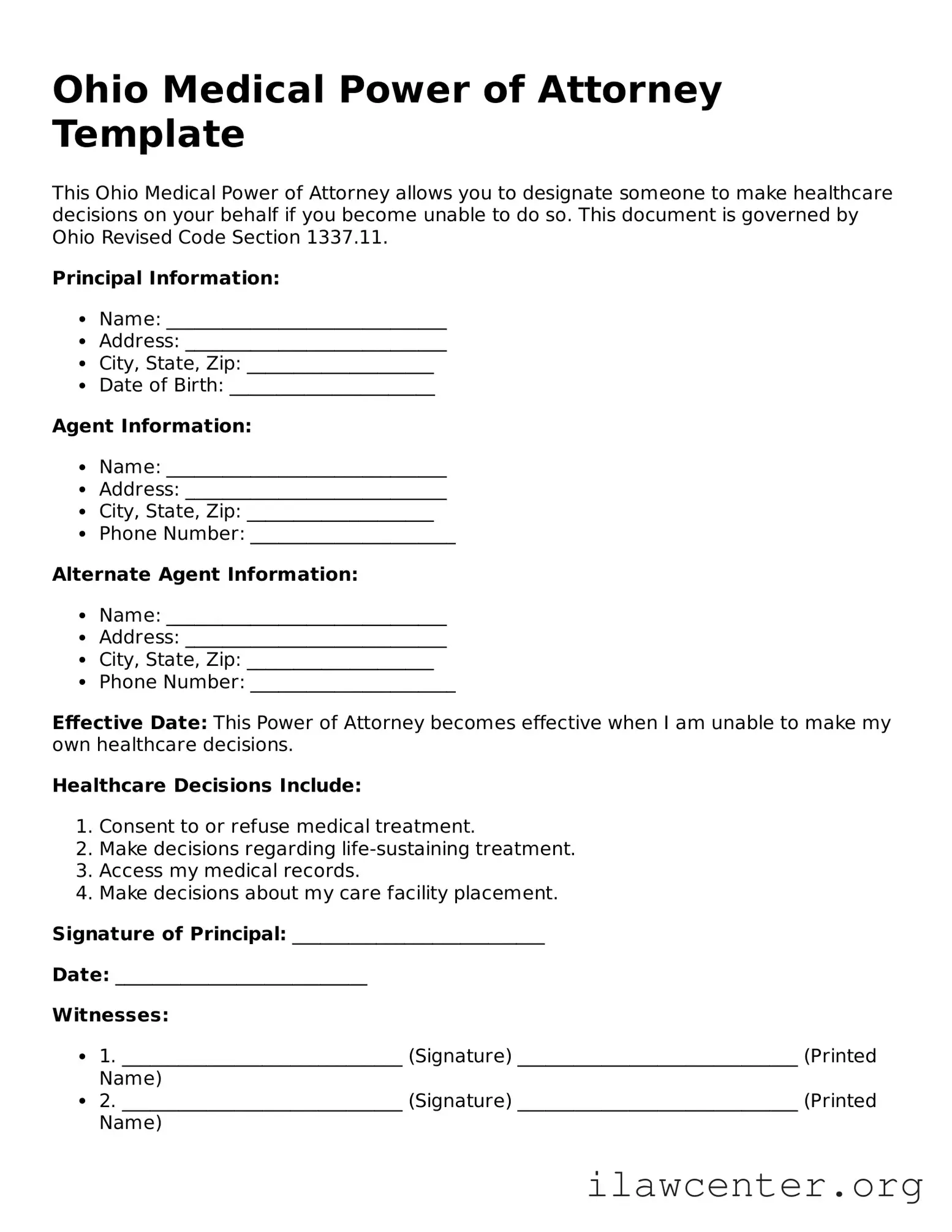
What is a Medical Power of Attorney in Ohio?
A Medical Power of Attorney in Ohio is a legal document that allows you to appoint someone to make medical decisions on your behalf if you become unable to do so. This person, known as your agent, will have the authority to make choices about your medical treatment based on your wishes and best interests.
Why do I need a Medical Power of Attorney?
Having a Medical Power of Attorney ensures that your healthcare preferences are respected, even if you cannot communicate them. It provides clarity to healthcare providers and your loved ones about your wishes, preventing potential conflicts or confusion during difficult times.
Who can be my agent in a Medical Power of Attorney?
Your agent can be any competent adult, such as a family member, friend, or trusted advisor. However, it’s essential to choose someone who understands your values and preferences regarding medical treatment and will advocate for your wishes effectively.
How do I create a Medical Power of Attorney in Ohio?
To create a Medical Power of Attorney in Ohio, you must complete a form that designates your agent and outlines your medical preferences. While you can find templates online, it’s advisable to consult with a legal professional to ensure that the document meets all state requirements and accurately reflects your wishes.
Do I need to have my Medical Power of Attorney notarized?
In Ohio, a Medical Power of Attorney does not require notarization to be valid. However, it must be signed by you and witnessed by two individuals who are not related to you or named in the document. Having it notarized can add an extra layer of credibility, but it’s not mandatory.
Can I revoke my Medical Power of Attorney?
Yes, you can revoke your Medical Power of Attorney at any time, as long as you are competent to do so. To revoke the document, simply notify your agent and any healthcare providers in writing. It’s also a good idea to destroy any copies of the original document to prevent confusion.
What happens if I don’t have a Medical Power of Attorney?
If you do not have a Medical Power of Attorney and become incapacitated, medical decisions will be made by your family members or legal guardians. This can lead to disputes or decisions that may not align with your personal wishes, highlighting the importance of having a designated agent.
Can my agent make decisions that go against my wishes?
Your agent is legally obligated to follow your wishes as outlined in the Medical Power of Attorney. If your preferences are not clear, they must act in your best interest. It’s crucial to communicate your values and preferences clearly to avoid any misunderstandings.
Is a Medical Power of Attorney the same as a Living Will?
No, a Medical Power of Attorney and a Living Will serve different purposes. A Medical Power of Attorney appoints someone to make decisions on your behalf, while a Living Will outlines your preferences for medical treatment in specific situations, such as end-of-life care. Both documents can work together to ensure your wishes are honored.
How often should I review my Medical Power of Attorney?
It’s a good practice to review your Medical Power of Attorney periodically, especially after significant life events such as marriage, divorce, or the birth of a child. Changes in your health status or personal relationships may also warrant an update to ensure that your agent is still the best choice for your medical decisions.