Attorney-Verified  Motorcycle Bill of Sale Document for Ohio

Attorney-Verified Motorcycle Bill of Sale Document for Ohio

A Motorcycle Bill of Sale is a legal document that serves as proof of the transfer of ownership for a motorcycle in Ohio. This form outlines essential details such as the buyer and seller's information, the motorcycle's description, and the sale price. To ensure a smooth transaction, it is important to fill out the form accurately; click the button below to get started.

Article Guide

When purchasing or selling a motorcycle in Ohio, a Motorcycle Bill of Sale form serves as a crucial document that facilitates the transfer of ownership. This form provides essential information, including the names and addresses of both the buyer and the seller, as well as detailed descriptions of the motorcycle, such as its make, model, year, and Vehicle Identification Number (VIN). The bill of sale also outlines the sale price and may include terms regarding any warranties or conditions of the sale. By documenting the transaction, this form helps protect both parties by providing proof of the sale and establishing the date of transfer. Additionally, it can be useful for registration purposes with the Ohio Bureau of Motor Vehicles (BMV), ensuring that the new owner can properly register the motorcycle in their name. Understanding the importance of this document and how to complete it accurately can streamline the buying or selling process, making it a vital step for anyone involved in a motorcycle transaction in the state.

Ohio Motorcycle Bill of Sale Preview

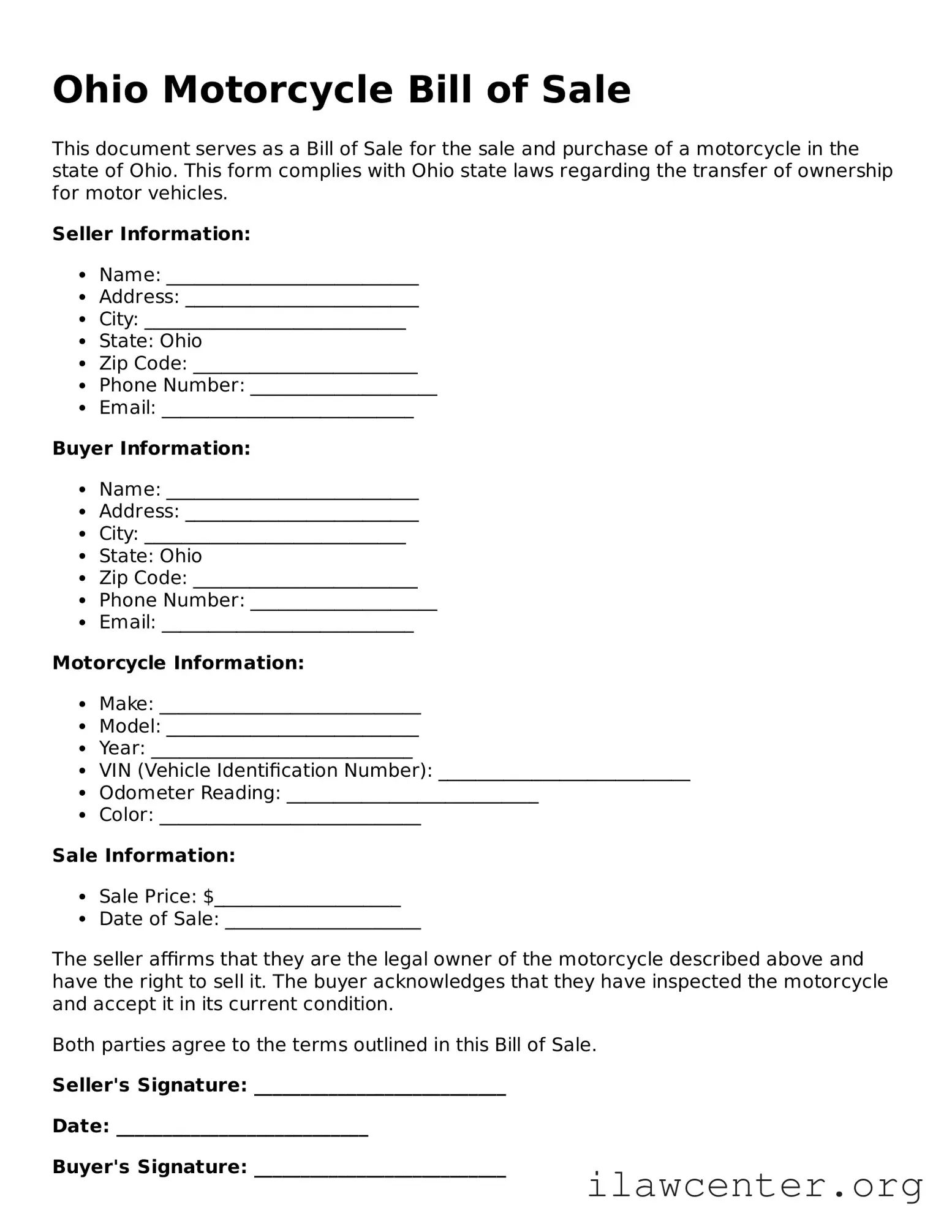
Ohio Motorcycle Bill of Sale

This document serves as a Bill of Sale for the sale and purchase of a motorcycle in the state of Ohio. This form complies with Ohio state laws regarding the transfer of ownership for motor vehicles.

Seller Information:

  • Name: ___________________________
  • Address: _________________________
  • City: ____________________________
  • State: Ohio
  • Zip Code: ________________________
  • Phone Number: ____________________
  • Email: ___________________________

Buyer Information:

  • Name: ___________________________
  • Address: _________________________
  • City: ____________________________
  • State: Ohio
  • Zip Code: ________________________
  • Phone Number: ____________________
  • Email: ___________________________

Motorcycle Information:

  • Make: ____________________________
  • Model: ___________________________
  • Year: ____________________________
  • VIN (Vehicle Identification Number): ___________________________
  • Odometer Reading: ___________________________
  • Color: ____________________________

Sale Information:

  • Sale Price: $____________________
  • Date of Sale: _____________________

The seller affirms that they are the legal owner of the motorcycle described above and have the right to sell it. The buyer acknowledges that they have inspected the motorcycle and accept it in its current condition.

Both parties agree to the terms outlined in this Bill of Sale.

Seller's Signature: ___________________________

Date: ___________________________

Buyer's Signature: ___________________________

Date: ___________________________

PDF Form Characteristics

Fact Name Details
Purpose The Ohio Motorcycle Bill of Sale form is used to document the sale or transfer of ownership of a motorcycle.
Governing Law This form is governed by Ohio Revised Code Section 4505.04.
Required Information The form must include the buyer's and seller's names, addresses, and signatures.
Vehicle Details It is important to provide the motorcycle's make, model, year, and Vehicle Identification Number (VIN).
Sale Price The sale price of the motorcycle should be clearly stated on the form.
Date of Sale The date when the sale occurs must be included to establish a timeline for ownership transfer.
Notarization While notarization is not required, it is recommended for added security and validation.
Use for Registration This bill of sale can be used to register the motorcycle with the Ohio Bureau of Motor Vehicles.
Record Keeping Both the buyer and seller should keep a copy of the bill of sale for their records.
Liability Once the sale is complete, the seller may no longer be liable for the motorcycle.

Instructions on Utilizing Ohio Motorcycle Bill of Sale

After obtaining the Ohio Motorcycle Bill of Sale form, you will need to complete it accurately to ensure a smooth transaction. Follow these steps carefully to fill out the form correctly.

  1. Enter the date: Write the date of the sale at the top of the form.
  2. Seller information: Fill in the seller's name, address, and contact information in the designated fields.
  3. Buyer information: Provide the buyer's name, address, and contact information in the appropriate sections.
  4. Motorcycle details: Include the make, model, year, color, and Vehicle Identification Number (VIN) of the motorcycle being sold.
  5. Sale price: Write down the agreed-upon sale price of the motorcycle.
  6. Odometer reading: Record the current odometer reading of the motorcycle at the time of sale.
  7. Signatures: Both the seller and buyer must sign and date the form to validate the transaction.

Once the form is completed, ensure that both parties retain a copy for their records. This document serves as proof of the sale and can be essential for future reference.

Important Facts about Ohio Motorcycle Bill of Sale

What is an Ohio Motorcycle Bill of Sale?

An Ohio Motorcycle Bill of Sale is a legal document that records the sale of a motorcycle from one party to another. It serves as proof of ownership transfer and includes essential details about the motorcycle and the buyer and seller.

What information is required on the Bill of Sale?

The Bill of Sale must include the following information: the names and addresses of both the buyer and seller, the motorcycle's make, model, year, and Vehicle Identification Number (VIN), the sale price, and the date of the transaction. It may also include any warranties or conditions agreed upon by both parties.

Is a Bill of Sale required in Ohio?

Can I create my own Bill of Sale?

Yes, you can create your own Bill of Sale. However, it is essential to ensure that all required information is included and that the document is signed by both parties. Using a template can help ensure that you do not miss any crucial details.

Do I need to have the Bill of Sale notarized?

In Ohio, notarization is not required for a Bill of Sale. However, having the document notarized can add an extra layer of authenticity and may be beneficial if any disputes arise later.

What should I do with the Bill of Sale after the sale?

Both the buyer and seller should keep a copy of the Bill of Sale for their records. The buyer will need it when registering the motorcycle with the Ohio Bureau of Motor Vehicles (BMV) and may need it for insurance purposes.

How does the Bill of Sale affect motorcycle registration?

The Bill of Sale is a crucial document when registering a motorcycle in Ohio. The buyer must present it to the BMV to prove ownership and facilitate the transfer of the title. Without it, the registration process may be delayed or denied.

What if there are mistakes on the Bill of Sale?

If there are mistakes on the Bill of Sale, both parties should correct them immediately. It is advisable to initial any changes made. If significant errors exist, consider drafting a new Bill of Sale to avoid confusion in the future.

Common mistakes

Filling out the Ohio Motorcycle Bill of Sale form can seem straightforward, but many people make common mistakes that can lead to complications down the road. One frequent error is failing to include all necessary information about the motorcycle. The form requires specific details such as the Vehicle Identification Number (VIN), make, model, and year. Omitting any of these details can create issues with registration or ownership transfer.

Another mistake occurs when sellers do not accurately state the sale price. The price must reflect the actual transaction amount. If it is too low or inconsistent with market values, it may raise red flags during inspections or audits. This can lead to questions about the legitimacy of the sale.

People often overlook the importance of signatures. Both the buyer and the seller must sign the Bill of Sale for it to be legally binding. A missing signature can invalidate the document, leaving the parties without proof of the transaction. It’s crucial to ensure that both parties have signed before finalizing the sale.

Additionally, some individuals neglect to date the form. A date is essential for establishing when the sale occurred. Without it, there could be disputes about ownership timelines or responsibilities related to the motorcycle. This simple oversight can lead to significant confusion later.

Another common error is not providing a clear description of the motorcycle's condition. Buyers want to know if the motorcycle has any defects or issues. Failing to disclose this information can lead to disputes after the sale, potentially resulting in legal action. Honesty about the condition fosters trust and transparency between the parties.

Lastly, people often forget to keep a copy of the completed Bill of Sale for their records. Having a copy is vital for both the buyer and the seller. It serves as proof of the transaction and can be helpful for future reference, especially if questions arise regarding ownership or warranty claims. Without this documentation, individuals may find themselves in a challenging situation if disputes occur.

Documents used along the form

When buying or selling a motorcycle in Ohio, several forms and documents may be needed alongside the Motorcycle Bill of Sale. Each of these documents serves a specific purpose, ensuring a smooth transaction and proper registration of the vehicle.

  • Title Transfer Form: This document is essential for transferring ownership of the motorcycle from the seller to the buyer. It includes details such as the motorcycle's VIN, the seller's and buyer's information, and the sale price.
  • Odometer Disclosure Statement: This form is required when the motorcycle is less than ten years old. It verifies the mileage on the motorcycle at the time of sale, helping to prevent odometer fraud.
  • Application for Certificate of Title: After purchasing a motorcycle, the buyer must complete this application to obtain a new title in their name. This document is submitted to the local title office along with the required fees.
  • Motorcycle Insurance Policy: Proof of insurance is typically required before registering the motorcycle. The buyer should have an active insurance policy that meets Ohio's minimum coverage requirements.
  • Identification Documents: Buyers and sellers may need to provide valid identification, such as a driver’s license or state ID, to verify their identities during the transaction.
  • Sales Tax Receipt: In Ohio, sales tax is applicable on the purchase of a motorcycle. A receipt showing that the sales tax has been paid may be required for title transfer.
  • Affidavit of Ownership: If the seller cannot provide a title due to loss or other reasons, this document can serve as a sworn statement confirming the seller's ownership of the motorcycle.
  • VIN Verification Form: This form may be necessary if the motorcycle has been out of state or if there are discrepancies in the vehicle identification number. It confirms that the VIN on the motorcycle matches the information on the title.

Having these documents prepared and organized can significantly streamline the buying or selling process of a motorcycle in Ohio. It ensures that both parties are protected and that the transaction complies with state regulations.

Similar forms

The Motorcycle Bill of Sale form is a crucial document for anyone buying or selling a motorcycle. It serves as proof of the transaction and outlines important details about the vehicle. Similar documents exist for various types of transactions. Here are seven documents that share similarities with the Motorcycle Bill of Sale:

  • Vehicle Bill of Sale: This document is used for the sale of any motor vehicle, including cars and trucks. Like the motorcycle version, it provides details about the buyer, seller, and vehicle, serving as proof of ownership transfer.
  • Boat Bill of Sale: Just as with motorcycles, a boat bill of sale records the sale of a boat. It includes similar elements such as the boat’s make, model, and identification number, ensuring a clear transfer of ownership.
  • Trailer Bill of Sale: This document is used when selling a trailer. It shares the same purpose as the motorcycle bill of sale, detailing the seller, buyer, and trailer specifics to confirm the transaction.
  • ATV Bill of Sale: For all-terrain vehicles, this bill of sale functions similarly to the motorcycle version. It documents the sale and includes vital information about the ATV, making ownership transfer official.
  • Snowmobile Bill of Sale: When selling a snowmobile, this document is essential. It outlines the sale details and helps protect both the buyer and seller, similar to how a motorcycle bill of sale operates.
  • Personal Property Bill of Sale: This general bill of sale can be used for various personal items, not just vehicles. It serves the same purpose of documenting a sale and protecting both parties involved.
  • Real Estate Purchase Agreement: While this document is for real estate transactions, it shares the same fundamental purpose: to outline the terms of a sale and confirm the transfer of ownership from one party to another.

Each of these documents plays a vital role in their respective transactions, ensuring clarity and legal protection for both buyers and sellers.

Dos and Don'ts

When filling out the Ohio Motorcycle Bill of Sale form, it's important to ensure accuracy and completeness. Here’s a helpful list of dos and don’ts to guide you through the process.

  • Do provide accurate information about the motorcycle, including the Vehicle Identification Number (VIN).
  • Do include the full names and addresses of both the buyer and seller.
  • Do specify the sale price clearly to avoid any confusion later on.
  • Do sign and date the form to validate the transaction.
  • Do keep a copy of the completed bill of sale for your records.
  • Don't leave any sections blank; incomplete forms can lead to issues.
  • Don't use abbreviations or nicknames when filling in names.
  • Don't forget to include the date of the sale.
  • Don't alter the form after it has been signed by both parties.
  • Don't overlook the importance of having a witness if required.

By following these guidelines, you can ensure that your Ohio Motorcycle Bill of Sale is filled out correctly, making the transaction smoother for everyone involved.

Misconceptions

Understanding the Ohio Motorcycle Bill of Sale form is crucial for anyone buying or selling a motorcycle in Ohio. However, several misconceptions can lead to confusion. Here are seven common misconceptions:

  • It’s not necessary for a private sale. Many people believe that a bill of sale is only needed for transactions through dealerships. In reality, it’s important for private sales too, as it provides proof of ownership.
  • Only the seller needs to sign it. Some assume that only the seller's signature is required. Both the buyer and seller should sign the document to make it legally binding.
  • It must be notarized. While notarization can add an extra layer of security, it is not a requirement for the Ohio Motorcycle Bill of Sale. A simple signature from both parties is sufficient.
  • It’s the same as a title transfer. A bill of sale is not a title transfer. It documents the sale but does not transfer ownership. You still need to complete the title transfer with the Ohio Bureau of Motor Vehicles.
  • It’s only for new motorcycles. This form applies to both new and used motorcycles. Whether you’re buying a brand-new bike or a vintage model, a bill of sale is still necessary.
  • There’s a specific format required. Many think the bill of sale must follow a strict format. While certain information is required, there is flexibility in how it is presented.
  • It’s not legally binding. Some people believe that a bill of sale holds no legal weight. In fact, it serves as a legal document that can protect both the buyer and seller in case of disputes.

Being aware of these misconceptions can help ensure a smoother transaction when dealing with motorcycles in Ohio. Always take the time to understand the requirements and protect your interests.

Key takeaways

When filling out and using the Ohio Motorcycle Bill of Sale form, there are several important points to keep in mind. Below are key takeaways to ensure a smooth transaction.

  • Complete Information: Ensure all fields are filled out accurately, including the names and addresses of both the buyer and seller.
  • Vehicle Details: Include specific details about the motorcycle, such as the make, model, year, VIN (Vehicle Identification Number), and mileage.
  • Purchase Price: Clearly state the agreed-upon purchase price to avoid any future disputes.
  • Date of Sale: Record the date of the transaction. This is important for both parties for record-keeping purposes.
  • Signatures: Both the buyer and seller must sign the form to validate the sale. Without signatures, the document is not legally binding.
  • Notarization: While not required, having the bill of sale notarized can provide an extra layer of security and authenticity.
  • Keep Copies: Each party should retain a copy of the completed bill of sale for their records. This can be useful for future reference or if any issues arise.
  • Registration: The buyer must use the bill of sale to register the motorcycle with the Ohio Bureau of Motor Vehicles (BMV) after the sale.

By following these guidelines, both buyers and sellers can facilitate a smooth and legally sound transaction.