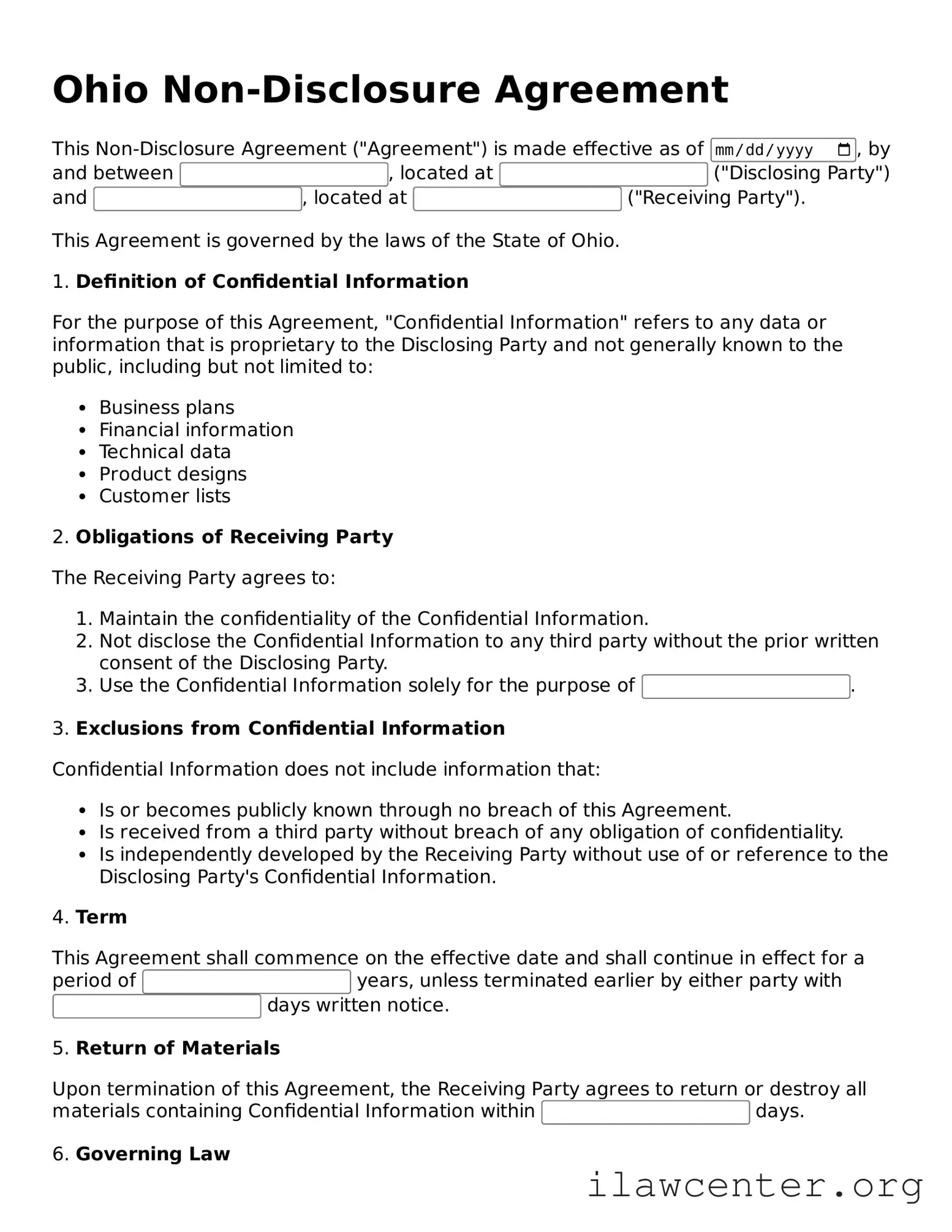
What is a Non-disclosure Agreement (NDA) in Ohio?
A Non-disclosure Agreement, commonly known as an NDA, is a legally binding contract that protects confidential information. In Ohio, this agreement ensures that one party does not disclose sensitive information shared by another party. NDAs are often used in business settings to safeguard trade secrets, client lists, and proprietary data. By signing an NDA, both parties agree to keep certain information private, fostering trust and encouraging open communication.
Who should use a Non-disclosure Agreement in Ohio?
Anyone involved in business dealings where sensitive information is shared should consider using an NDA. This includes entrepreneurs, startups, established companies, freelancers, and contractors. If you're discussing a new project, sharing innovative ideas, or revealing financial data, an NDA can help protect your interests. It’s especially crucial when engaging with potential partners, investors, or employees who will have access to confidential information.
What are the key components of an Ohio Non-disclosure Agreement?
An effective NDA typically includes several important elements. First, it should clearly define what constitutes confidential information. This could include documents, data, or even verbal communications. Next, the agreement must outline the obligations of both parties regarding the handling of this information. Additionally, it should specify the duration of confidentiality and any exceptions to the agreement. Lastly, including provisions for dispute resolution can help address any issues that may arise later.
How enforceable is a Non-disclosure Agreement in Ohio?
In Ohio, NDAs are generally enforceable as long as they are reasonable and clearly defined. Courts will look at the clarity of the terms and the necessity of the confidentiality to determine enforceability. If an NDA is overly broad or vague, it may not hold up in court. Therefore, it’s essential to draft the agreement carefully, ensuring that it protects your interests without being excessively restrictive. If a breach occurs, the injured party may seek legal remedies, including damages or injunctions to prevent further disclosures.