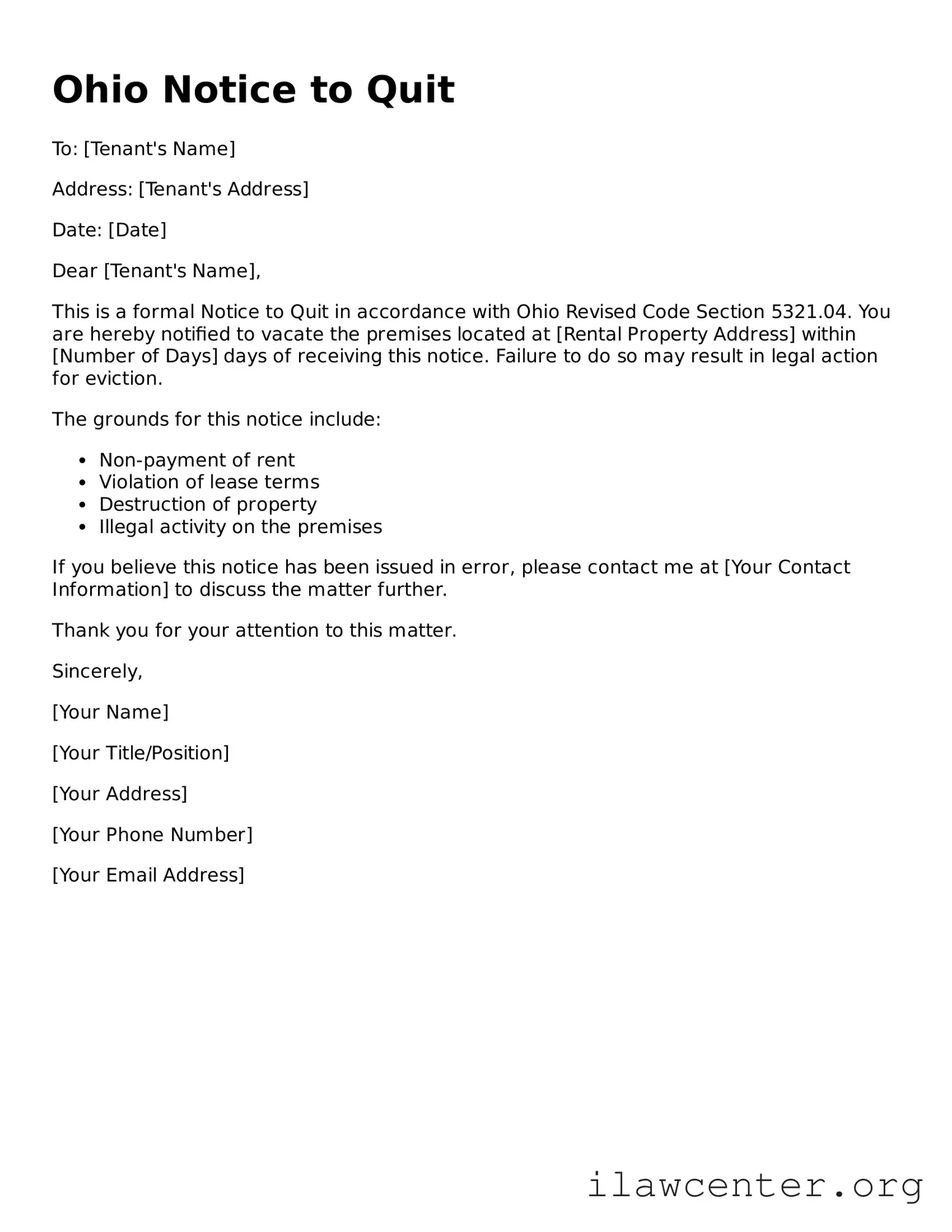
Filling out the Ohio Notice to Quit form can be a straightforward process, but many individuals encounter pitfalls that can complicate matters. One common mistake is failing to provide accurate tenant information. It is crucial to include the full name of the tenant as it appears on the lease agreement. Omitting or misspelling this information can lead to delays or even the dismissal of the notice.
Another frequent error involves incorrect dates. The Notice to Quit must specify the date by which the tenant is required to vacate the premises. If this date is left blank or inaccurately stated, it can create confusion and undermine the effectiveness of the notice. It is essential to double-check that the date is clear and complies with Ohio's legal requirements.
Many people also neglect to include the reason for the eviction. While the form may not require a detailed explanation, stating the reason—such as non-payment of rent or lease violations—adds clarity. This information can be vital if the situation escalates to court proceedings.
Additionally, failing to sign and date the form is a common oversight. A Notice to Quit must be signed by the landlord or their authorized agent. Without a signature, the document lacks validity, rendering it ineffective. Always ensure that the form is signed and dated appropriately.
Another mistake is not providing the correct delivery method. Ohio law requires that the notice be served in a specific manner, whether by personal delivery, certified mail, or another acceptable method. Not adhering to these requirements can result in the notice being deemed invalid.
People often overlook the importance of keeping a copy of the Notice to Quit. After serving the notice, retaining a copy for personal records is crucial. This documentation can serve as evidence in case the situation escalates to court.
Some individuals also fail to check for local regulations that may affect the Notice to Quit. Different municipalities in Ohio may have specific rules regarding eviction notices. Ignoring these local laws can lead to complications and delays in the eviction process.
Another mistake is using outdated forms. Laws and regulations can change, and using an old version of the Notice to Quit may not comply with current legal standards. Always ensure that you are using the most recent version of the form.
People sometimes misinterpret the timeline for serving the notice. Ohio law requires specific notice periods depending on the reason for eviction. Misunderstanding these timelines can result in the eviction process being improperly initiated.
Lastly, some landlords may not seek legal advice when necessary. While it is possible to fill out the Notice to Quit independently, consulting with a legal professional can provide valuable insights and help avoid costly mistakes. Legal guidance can ensure that all aspects of the eviction process are handled correctly and efficiently.