What is a prenuptial agreement in Ohio?
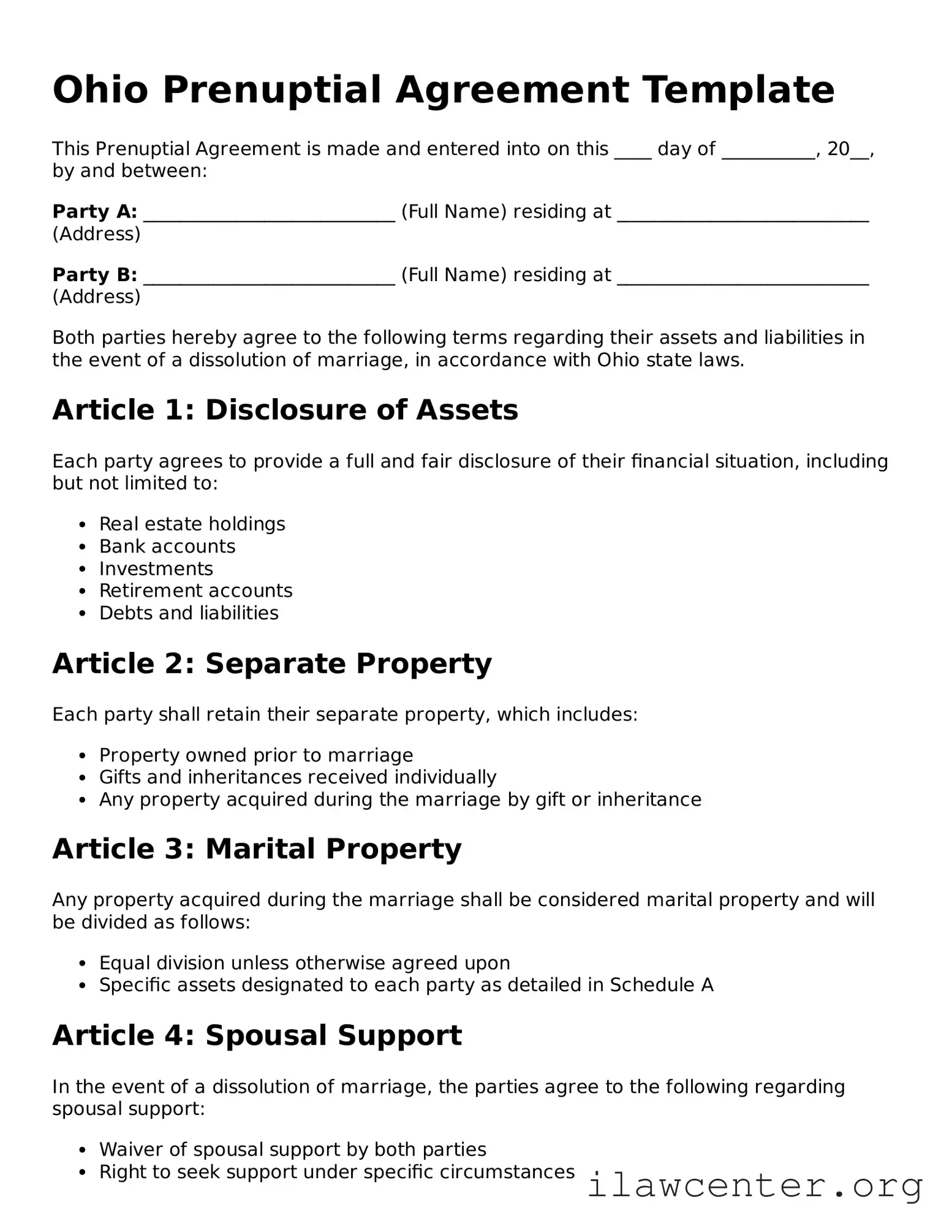
A prenuptial agreement, often referred to as a prenup, is a legal contract made by two individuals before they get married. In Ohio, this agreement outlines how assets and debts will be divided in the event of divorce or separation. It can also address issues like spousal support and property rights. Having a prenup can provide clarity and peace of mind for both parties, ensuring that each person's interests are protected from the outset of the marriage.
How do I create a prenuptial agreement in Ohio?
Creating a prenuptial agreement in Ohio involves several steps. First, both parties should discuss their financial situations and what they want to include in the agreement. It's advisable to draft the agreement in writing, detailing all assets, debts, and any specific provisions. Once the draft is prepared, both parties should review it, ideally with the assistance of separate legal counsel to ensure fairness and understanding. Finally, both parties must sign the agreement, and it's a good idea to have it notarized to enhance its validity.
Can a prenuptial agreement be changed after marriage?
Yes, a prenuptial agreement can be modified or revoked after marriage. Both parties must agree to the changes, and it’s best to document any modifications in writing. This new agreement should also be signed and notarized to ensure it holds up in court. If significant life changes occur, such as the birth of a child or a substantial change in financial circumstances, revisiting the prenup may be wise to reflect the new situation.
What happens if a prenuptial agreement is not signed?
If a prenuptial agreement is not signed before marriage, Ohio law will apply to the division of assets and debts in the event of a divorce. This means that the court will divide property based on equitable distribution principles, which may not align with either party's preferences. Without a prenup, both individuals may have less control over the outcome of property division and spousal support, making it crucial to consider this agreement before tying the knot.
Are there any limitations to what can be included in a prenuptial agreement?
Yes, there are certain limitations on what can be included in a prenuptial agreement in Ohio. For example, agreements that waive child support obligations or promote illegal activities are not enforceable. Additionally, both parties must enter into the agreement voluntarily, without coercion. Courts may also scrutinize prenups that are deemed to be unfair or that do not provide for the basic needs of a spouse, especially in the case of divorce. It’s essential to ensure that the agreement is fair and reasonable to both parties to avoid potential challenges later on.