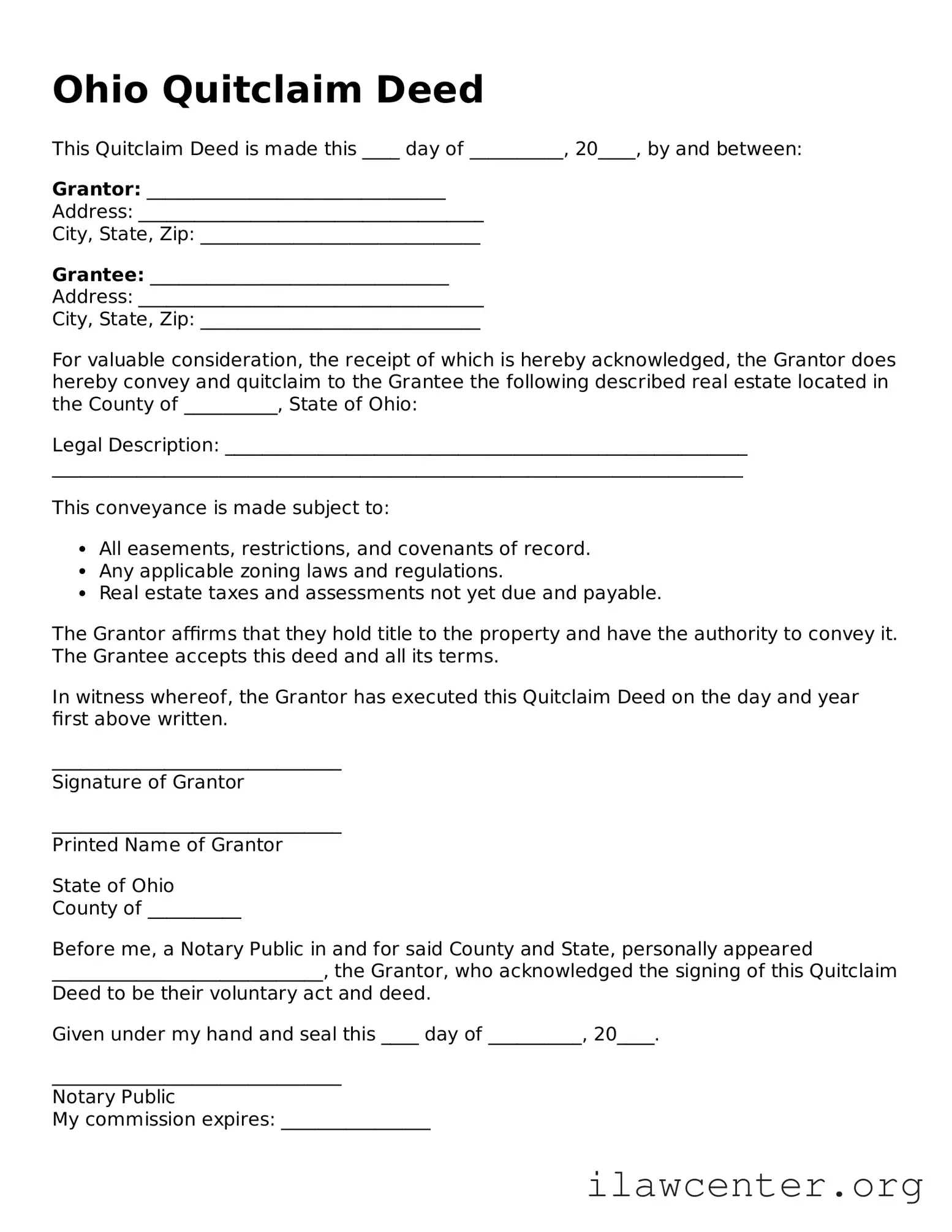
What is a Quitclaim Deed in Ohio?
A Quitclaim Deed is a legal document used to transfer ownership of real estate from one party to another. In Ohio, this type of deed does not guarantee that the property title is clear or free of liens. Instead, it simply transfers whatever interest the grantor has in the property, if any. This makes it a popular choice for transferring property between family members or in situations where the parties know each other well.
When should I use a Quitclaim Deed?
Quitclaim Deeds are commonly used in specific situations, such as transferring property between family members, adding or removing a spouse from the title after marriage or divorce, or correcting a title issue. They are also useful in estate planning when transferring property to heirs. However, they are not recommended for sales or transactions involving unknown parties, as they offer no protection against title defects.
How do I complete a Quitclaim Deed in Ohio?
To complete a Quitclaim Deed in Ohio, you need to include essential information such as the names of the grantor (the person transferring the property) and the grantee (the person receiving the property), a legal description of the property, and the date of the transfer. The document must be signed by the grantor in the presence of a notary public. Once completed, it should be filed with the county recorder's office in the county where the property is located.
Do I need a lawyer to create a Quitclaim Deed?
While it is not legally required to hire a lawyer to create a Quitclaim Deed, consulting with one can be beneficial. A lawyer can ensure that the deed is completed correctly, advise on any potential issues, and help you understand the implications of transferring property. For simple transactions between known parties, many individuals choose to complete the deed without legal assistance.
Is a Quitclaim Deed the same as a Warranty Deed?
No, a Quitclaim Deed and a Warranty Deed are not the same. A Warranty Deed provides a guarantee that the grantor holds clear title to the property and has the right to sell it. It also protects the grantee against any future claims to the property. In contrast, a Quitclaim Deed offers no such guarantees, making it a riskier option for buyers who are unfamiliar with the property's title history.
What are the tax implications of using a Quitclaim Deed?
In Ohio, transferring property via a Quitclaim Deed may have tax implications, including potential conveyance fees. However, if the transfer is between family members or is part of an estate, it may qualify for exemptions. It’s advisable to consult with a tax professional or attorney to understand any tax responsibilities associated with the transfer.
Can a Quitclaim Deed be revoked?
Once a Quitclaim Deed is executed and recorded, it cannot be revoked unilaterally. The grantor cannot take back the property without the consent of the grantee. If a party wishes to reverse the transfer, both parties must agree to execute a new deed or another legal instrument to convey the property back to the original owner.
How do I record a Quitclaim Deed in Ohio?
To record a Quitclaim Deed in Ohio, you must take the completed and notarized deed to the county recorder's office where the property is located. There is usually a fee for recording the deed, which varies by county. Once recorded, the deed becomes part of the public record, providing notice of the ownership transfer.
What happens if there are issues with the title after a Quitclaim Deed is executed?
Since a Quitclaim Deed does not guarantee a clear title, any issues with the title, such as liens or disputes, remain the responsibility of the grantee. The grantee may need to resolve these issues independently, which can involve legal action or negotiation with creditors. It’s essential to conduct a title search before accepting a Quitclaim Deed to understand any potential risks.
Are there any specific requirements for a Quitclaim Deed in Ohio?
Yes, a Quitclaim Deed in Ohio must meet certain requirements to be valid. It must be in writing, include the names of the grantor and grantee, provide a legal description of the property, and be signed by the grantor in the presence of a notary public. Additionally, it should be recorded with the county recorder's office to ensure proper documentation of the transfer.