Attorney-Verified  Rental Application Document for Ohio

Attorney-Verified Rental Application Document for Ohio

The Ohio Rental Application form is a document that prospective tenants complete to provide landlords with essential information for screening purposes. This form typically includes personal details, rental history, employment information, and references. Ensure you fill out the form accurately to improve your chances of securing your desired rental property by clicking the button below.

Article Guide

When seeking a rental property in Ohio, understanding the rental application form is crucial for both landlords and prospective tenants. This form serves as a key tool in the rental process, helping landlords screen applicants and making informed decisions about who to lease their property to. Typically, the application requires personal information, including the applicant's name, contact details, and social security number. Additionally, it often asks for employment history and income verification, ensuring that potential tenants can meet their financial obligations. Many forms also include questions about rental history, allowing landlords to gauge an applicant's reliability based on previous experiences. Furthermore, a background check may be requested, which can include credit history and criminal records. By familiarizing yourself with the Ohio rental application form, you can navigate the rental process more smoothly and increase your chances of securing your desired home.

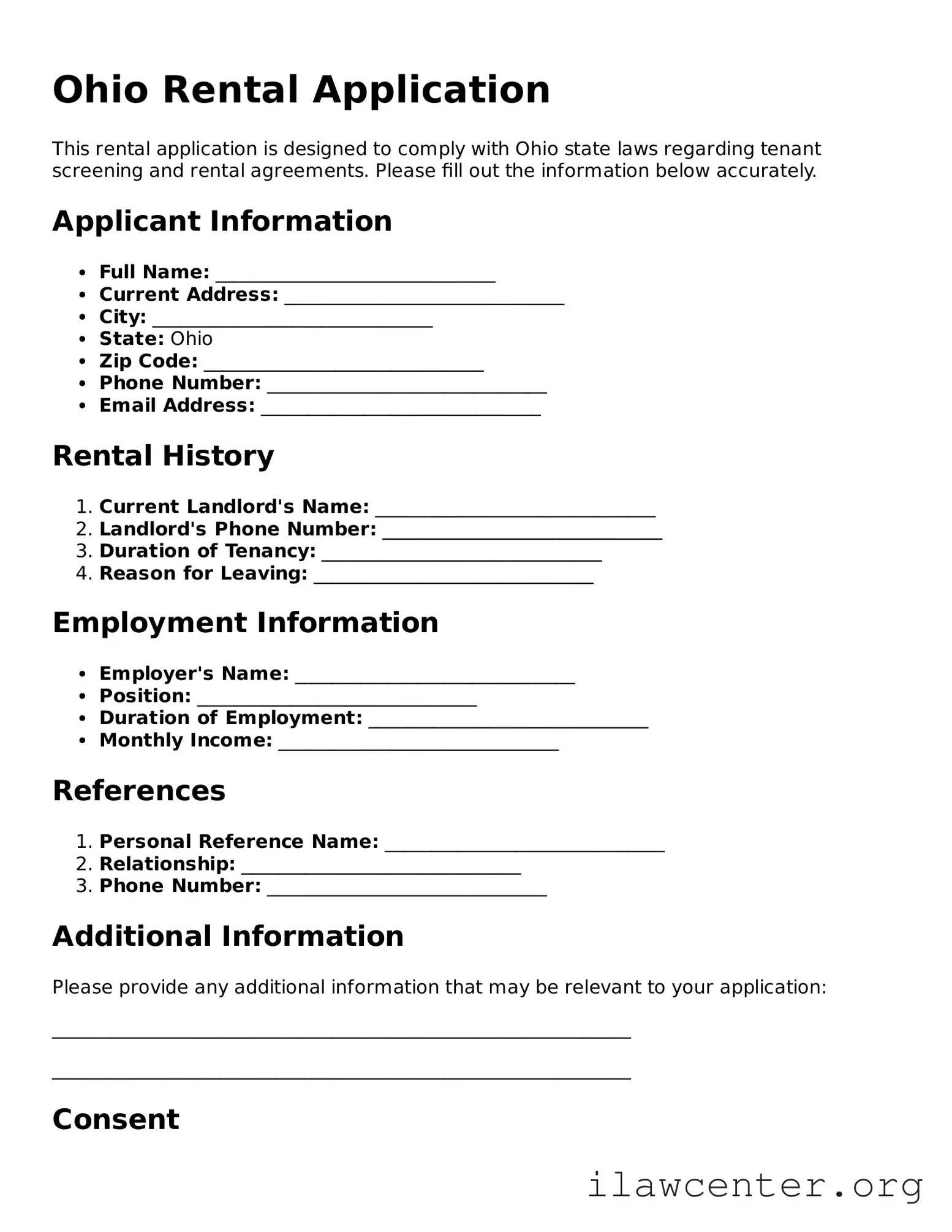
Ohio Rental Application Preview

Ohio Rental Application

This rental application is designed to comply with Ohio state laws regarding tenant screening and rental agreements. Please fill out the information below accurately.

Applicant Information

  • Full Name: ______________________________
  • Current Address: ______________________________
  • City: ______________________________
  • State: Ohio
  • Zip Code: ______________________________
  • Phone Number: ______________________________
  • Email Address: ______________________________

Rental History

  1. Current Landlord's Name: ______________________________
  2. Landlord's Phone Number: ______________________________
  3. Duration of Tenancy: ______________________________
  4. Reason for Leaving: ______________________________

Employment Information

  • Employer's Name: ______________________________
  • Position: ______________________________
  • Duration of Employment: ______________________________
  • Monthly Income: ______________________________

References

  1. Personal Reference Name: ______________________________
  2. Relationship: ______________________________
  3. Phone Number: ______________________________

Additional Information

Please provide any additional information that may be relevant to your application:

______________________________________________________________

______________________________________________________________

Consent

By signing below, you consent to a background check and verification of the information provided.

Applicant's Signature: ______________________________

Date: ______________________________

Thank you for your application. We will contact you shortly regarding your rental status.

PDF Form Characteristics

Fact Name Details
Purpose The Ohio Rental Application form is used by landlords to screen potential tenants.
Information Required Applicants typically provide personal details, rental history, and employment information.
Application Fee Landlords may charge an application fee to cover the cost of background checks.
Fair Housing Laws The application process must comply with the Fair Housing Act, prohibiting discrimination.
Background Checks Landlords often conduct background checks, including credit history and criminal records.
Approval Process Once submitted, landlords review applications and decide based on their criteria.
State Regulations Ohio law requires landlords to follow specific guidelines when processing rental applications.
Tenant Rights Applicants have the right to know why their application was denied if that occurs.
Record Keeping Landlords should retain application records for a certain period for legal compliance.

Instructions on Utilizing Ohio Rental Application

Completing the Ohio Rental Application form is an essential step in securing a rental property. Once you have filled out the form, it will be submitted to the landlord or property manager for review. Be sure to provide accurate and honest information, as this will help facilitate the application process.

  1. Begin by entering your full name at the top of the form.
  2. Provide your current address, including the city, state, and ZIP code.
  3. List your phone number and email address for contact purposes.
  4. Indicate your date of birth to verify your identity.
  5. Fill in your Social Security number, ensuring it is accurate and complete.
  6. Detail your employment information, including your employer's name, address, and your job title.
  7. Include your monthly income to give a clear picture of your financial situation.
  8. List any previous rental history, including addresses and landlord contact information.
  9. Provide references, such as friends or family, who can vouch for your character.
  10. Sign and date the application to confirm that all information is true and complete.

After completing these steps, review the form for any errors before submitting it to the landlord or property manager. This ensures your application is processed smoothly.

Important Facts about Ohio Rental Application

What is an Ohio Rental Application form?

The Ohio Rental Application form is a document used by landlords to gather information about potential tenants. It typically includes sections for personal information, rental history, employment details, and references. This form helps landlords assess the suitability of applicants for their rental properties.

What information do I need to provide on the application?

You will need to provide personal details such as your name, address, phone number, and email. Additionally, the form usually requires information about your employment, income, rental history, and references. Be prepared to disclose any prior evictions or criminal history, as this may be relevant to the landlord's decision.

Is there a fee to submit the Ohio Rental Application?

Yes, many landlords charge an application fee to cover the cost of background checks and processing. The fee amount varies by landlord and can range from $25 to $100. Make sure to confirm the fee with the landlord before submitting your application.

How long does it take to process the application?

The processing time for a rental application can vary. Typically, it takes anywhere from a few hours to a few days. Factors that influence this timeline include the landlord's policies, the completeness of your application, and how quickly references and background checks can be verified.

Can I be denied based on my rental application?

Yes, landlords can deny applications for various reasons, including poor credit history, insufficient income, or negative rental history. If you are denied, the landlord is required to provide a reason, usually based on the information provided in your application or the results of background checks.

What should I do if I have a poor rental history?

If you have a poor rental history, consider providing additional documentation to support your application. This may include letters of recommendation from previous landlords, proof of stable income, or evidence of improved circumstances. Being upfront about your history can also help in explaining any issues.

Common mistakes

When filling out the Ohio Rental Application form, many applicants overlook critical details that can hinder their chances of securing a rental. One common mistake is providing incomplete information. Landlords require specific details about income, employment history, and rental history. Omitting any of these can raise red flags.

Another frequent error is failing to disclose all sources of income. Applicants might only list their primary job, neglecting side jobs, freelance work, or other income streams. This can lead to a misrepresentation of financial stability. Always include all income sources to present a complete picture.

Some applicants make the mistake of not being truthful about their rental history. If there were previous evictions or disputes, it is better to address these issues upfront rather than allowing them to surface later. Honesty can build trust with potential landlords.

Inaccurate contact information is another pitfall. Applicants often provide outdated phone numbers or email addresses. This can delay communication and create frustration for landlords. Always double-check contact details before submitting the application.

Additionally, neglecting to proofread the application can lead to typographical errors. Simple mistakes in names, addresses, or figures can create confusion. A thorough review can prevent misunderstandings and present a more polished application.

Many applicants also fail to include necessary documentation. Pay stubs, bank statements, and identification may be required to support the application. Not providing these documents can lead to delays or outright denial.

Another mistake is not following up after submission. Applicants often assume that once they submit their application, the process is complete. Following up shows interest and can keep the application top of mind for the landlord.

Some people overlook the importance of understanding the lease terms. Failing to read or ask questions about the lease can lead to misunderstandings later. Clarifying terms before signing can prevent disputes down the line.

Finally, applicants sometimes underestimate the importance of a good credit score. A low score can be a dealbreaker for many landlords. It's wise to check your credit report beforehand and address any issues that may arise.

Documents used along the form

When renting a property in Ohio, a rental application is just one piece of the puzzle. Several other documents often accompany the application to ensure both the landlord and tenant are protected and informed. Here is a list of common forms and documents that you might encounter during the rental process.

  • Lease Agreement: This is a legally binding contract between the landlord and tenant that outlines the terms of the rental arrangement, including rent amount, duration, and responsibilities of both parties.
  • Credit Report Authorization: Landlords may request this document to obtain a credit report on the applicant. It helps them assess the tenant's financial responsibility and creditworthiness.
  • Background Check Consent: This form allows landlords to conduct a background check, which may include criminal history. It's an important step in ensuring the safety and security of the rental property.
  • Income Verification: Tenants often need to provide proof of income, such as pay stubs or bank statements. This document helps landlords confirm that the applicant can afford the rent.
  • Pet Agreement: If pets are allowed, this document outlines the rules and responsibilities related to pet ownership within the rental property, including any additional fees or deposits.
  • Move-In Inspection Checklist: This form is used to document the condition of the property at the time of move-in. Both parties should complete this checklist to avoid disputes over damages when the tenant moves out.
  • Rental History Verification: Landlords may request this form to verify the applicant's previous rental history. It helps them understand the tenant's past behavior and reliability as a renter.

Having these documents prepared and organized can streamline the rental process. They not only protect the interests of both parties but also foster clear communication and understanding. Be sure to review each document carefully before signing to ensure a smooth rental experience.

Similar forms

The Rental Application form shares similarities with several other important documents used in the housing and leasing process. Here are four documents that are comparable, along with explanations of their similarities:

  • Lease Agreement: Both the Rental Application and the Lease Agreement collect essential information about the tenant. While the Rental Application focuses on the applicant's background and financial stability, the Lease Agreement outlines the terms and conditions of the tenancy.
  • Credit Report: Like the Rental Application, a Credit Report provides insight into an individual's financial history. Both documents assess the applicant's ability to meet financial obligations, helping landlords make informed decisions.
  • Employment Verification Form: This form, similar to the Rental Application, gathers information about an applicant's employment status and income. Both documents aim to verify the applicant's financial reliability and stability.
  • Background Check Authorization: A Background Check Authorization form, like the Rental Application, seeks permission to investigate an applicant's history. Both are crucial for landlords to ensure the safety and suitability of potential tenants.

Dos and Don'ts

When filling out the Ohio Rental Application form, attention to detail can make a significant difference in your application’s success. Here are some important dos and don'ts to keep in mind:

  • Do provide accurate and complete information. Landlords rely on this data to make informed decisions.
  • Do double-check your contact information. Ensure that your phone number and email address are correct.
  • Don't leave any sections blank. If a question does not apply to you, write "N/A" instead.
  • Don't forget to review your application for spelling and grammatical errors. A polished application reflects your seriousness as a tenant.

Misconceptions

Many people have misconceptions about the Ohio Rental Application form. Understanding these can help clarify the process and ensure a smoother rental experience. Here are six common misconceptions:

  • It's only for tenants with bad credit. Many believe that rental applications are only necessary for those with poor credit histories. In reality, all prospective tenants typically need to complete an application, regardless of their credit score.
  • Landlords can't ask for personal information. Some think that landlords are not allowed to request personal information. However, landlords can ask for information such as employment history and references to assess a tenant's suitability.
  • All applications are the same. Many assume that all rental applications are identical. In fact, each landlord or property management company may have their own specific application form with different requirements and questions.
  • Submitting an application guarantees approval. Some applicants believe that submitting an application means they will automatically be approved. Approval depends on various factors, including credit checks and landlord references.
  • Application fees are optional. Many think that landlords cannot charge application fees. In Ohio, landlords can charge a fee to cover the costs of background checks, but this fee must be disclosed upfront.
  • Once submitted, you cannot withdraw your application. Some people think that once they submit their application, they cannot change their mind. In reality, applicants can withdraw their application before approval, but they may not receive a refund of any application fees paid.

Understanding these misconceptions can help you navigate the rental process more effectively. Always communicate openly with landlords and clarify any doubts you may have about the application process.

Key takeaways

When filling out and using the Ohio Rental Application form, consider the following key takeaways:

  1. Provide accurate personal information, including your full name, contact details, and Social Security number.
  2. Disclose your rental history. Include previous addresses, landlord contact information, and the duration of each tenancy.
  3. Be prepared to share your employment information. This includes your current employer, job title, and income details.
  4. Understand that a background check may be conducted. This could include credit history and criminal background checks.
  5. Include references. List personal and professional contacts who can vouch for your reliability as a tenant.
  6. Review the application for completeness before submission. Missing information can delay the approval process.
  7. Know that application fees may apply. These fees are often non-refundable.
  8. Be aware of your rights. Landlords must comply with fair housing laws during the application process.
  9. Keep a copy of the completed application for your records. This can help if you need to follow up with the landlord.
  10. Follow up after submitting the application. A polite inquiry can demonstrate your interest in the property.