Attorney-Verified  Residential Lease Agreement Document for Ohio

Attorney-Verified Residential Lease Agreement Document for Ohio

The Ohio Residential Lease Agreement is a legally binding document that outlines the terms and conditions between a landlord and tenant for renting a residential property. This form serves to protect the rights of both parties while ensuring a clear understanding of obligations related to rent, maintenance, and other essential aspects of tenancy. To get started on securing your rental agreement, fill out the form by clicking the button below.

Article Guide

The Ohio Residential Lease Agreement form serves as a critical document in the landlord-tenant relationship, outlining the terms and conditions under which a rental property is leased. This legally binding contract includes essential details such as the names of the parties involved, the address of the rental property, and the duration of the lease. It typically specifies the amount of rent, payment due dates, and acceptable methods of payment. Additionally, the form addresses security deposits, maintenance responsibilities, and rules regarding pets, ensuring both parties understand their rights and obligations. By clearly defining the terms of occupancy, this agreement helps to prevent disputes and provides a framework for resolving issues should they arise. The inclusion of clauses related to termination, renewal, and breach of contract further enhances the clarity and enforceability of the agreement, making it an indispensable tool for both landlords and tenants in Ohio.

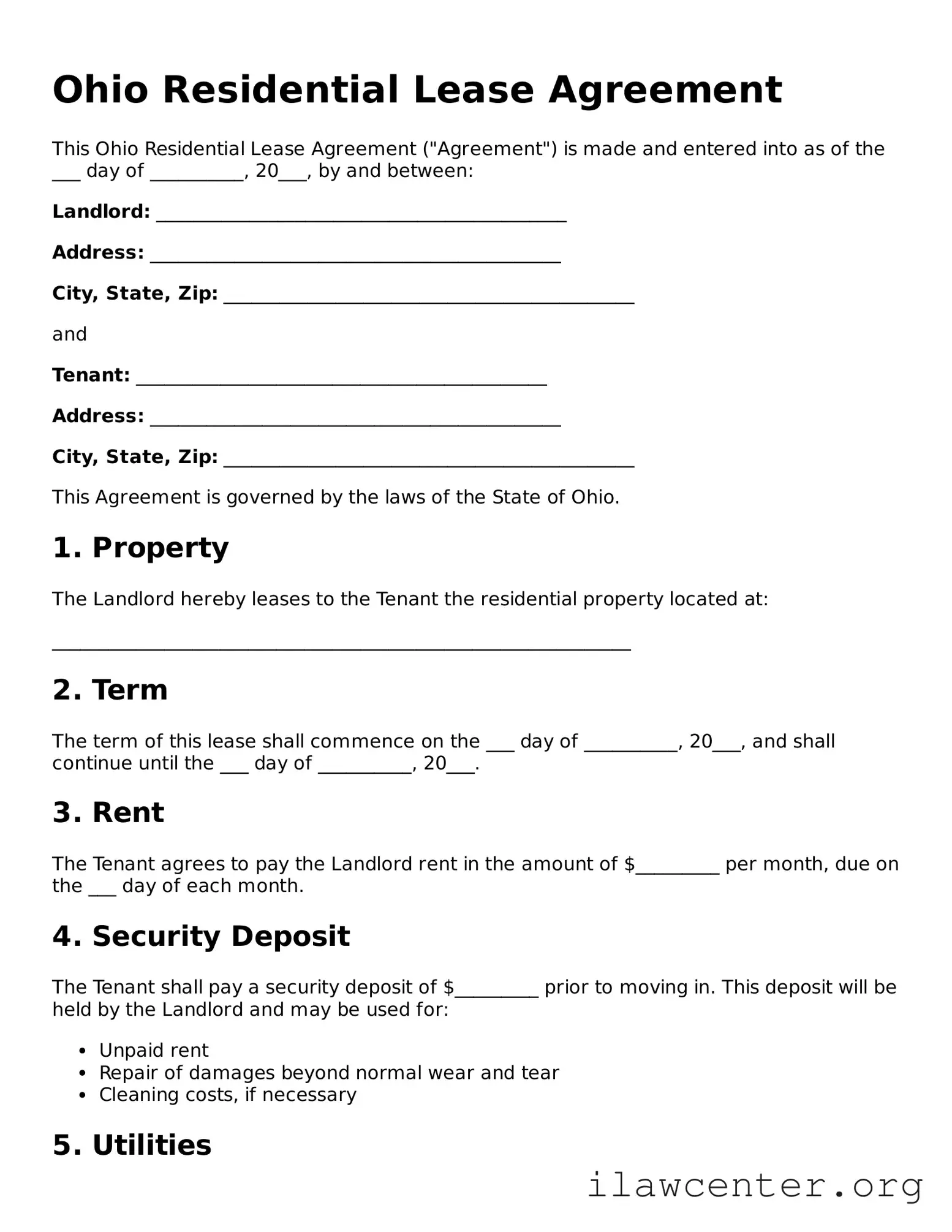
Ohio Residential Lease Agreement Preview

Ohio Residential Lease Agreement

This Ohio Residential Lease Agreement ("Agreement") is made and entered into as of the ___ day of __________, 20___, by and between:

Landlord: ____________________________________________

Address: ____________________________________________

City, State, Zip: ____________________________________________

and

Tenant: ____________________________________________

Address: ____________________________________________

City, State, Zip: ____________________________________________

This Agreement is governed by the laws of the State of Ohio.

1. Property

The Landlord hereby leases to the Tenant the residential property located at:

______________________________________________________________

2. Term

The term of this lease shall commence on the ___ day of __________, 20___, and shall continue until the ___ day of __________, 20___.

3. Rent

The Tenant agrees to pay the Landlord rent in the amount of $_________ per month, due on the ___ day of each month.

4. Security Deposit

The Tenant shall pay a security deposit of $_________ prior to moving in. This deposit will be held by the Landlord and may be used for:

  • Unpaid rent
  • Repair of damages beyond normal wear and tear
  • Cleaning costs, if necessary

5. Utilities

The Tenant shall be responsible for the payment of the following utilities:

  • Electricity
  • Water
  • Gas
  • Internet/Cable

6. Maintenance and Repairs

The Tenant agrees to maintain the property in good condition and report any needed repairs to the Landlord promptly.

7. Use of Property

The Tenant shall use the property solely for residential purposes and shall not engage in any illegal activities on the premises.

8. Termination

Either party may terminate this Agreement by providing written notice at least ___ days prior to the intended termination date.

9. Governing Law

This Agreement shall be governed by and construed in accordance with the laws of the State of Ohio.

10. Signatures

By signing below, both parties agree to the terms and conditions of this Agreement.

Landlord Signature: _______________________________ Date: ________________

Tenant Signature: _______________________________ Date: ________________

PDF Form Characteristics

Fact Name Description
Purpose The Ohio Residential Lease Agreement form is used to outline the terms and conditions of renting a residential property between a landlord and a tenant.
Governing Law This agreement is governed by Ohio Revised Code Chapter 5321, which covers residential landlord-tenant relationships.
Duration The lease can specify a fixed term, typically one year, or it may be month-to-month, depending on the agreement between the parties.
Security Deposit Ohio law allows landlords to collect a security deposit, which cannot exceed one month's rent, to cover potential damages or unpaid rent.
Tenant Rights Tenants in Ohio have specific rights, including the right to a habitable living environment and protection against unlawful eviction.

Instructions on Utilizing Ohio Residential Lease Agreement

Filling out the Ohio Residential Lease Agreement form is an important step in establishing a rental relationship. This document outlines the terms and conditions of the lease, ensuring both parties understand their rights and responsibilities. Follow these steps to complete the form accurately.

  1. Identify the Parties: Write the full names of the landlord and tenant. Make sure to include any co-tenants if applicable.
  2. Property Address: Enter the complete address of the rental property. This should include the street address, city, state, and ZIP code.
  3. Lease Term: Specify the length of the lease. Indicate the start date and end date of the rental period.
  4. Rent Amount: Clearly state the monthly rent amount. Include the due date each month and acceptable payment methods.
  5. Security Deposit: Indicate the amount of the security deposit required. Note the conditions under which it may be withheld.
  6. Utilities: List which utilities are included in the rent and which are the tenant's responsibility.
  7. Maintenance Responsibilities: Outline the responsibilities of both the landlord and tenant regarding property maintenance and repairs.
  8. Signatures: Ensure both parties sign and date the agreement. This signifies acceptance of the terms outlined in the lease.

After completing the form, review it carefully to confirm all information is accurate. Both parties should retain a copy for their records. This ensures clarity and helps prevent any misunderstandings in the future.

Important Facts about Ohio Residential Lease Agreement

What is an Ohio Residential Lease Agreement?

An Ohio Residential Lease Agreement is a legal document that outlines the terms and conditions between a landlord and a tenant for renting a residential property. This agreement typically includes details such as the rental amount, the duration of the lease, security deposit requirements, and the responsibilities of both parties. It serves as a binding contract that protects the rights of both the landlord and the tenant, ensuring clarity and mutual understanding throughout the rental period.

What should be included in the Ohio Residential Lease Agreement?

When drafting or reviewing an Ohio Residential Lease Agreement, several key elements should be included. First, the names of the landlord and tenant must be clearly stated, along with the address of the rental property. The lease should specify the rental amount, payment due dates, and the method of payment. Additionally, it should outline the lease term—whether it’s a fixed-term lease or a month-to-month agreement. Other important aspects include rules regarding pets, maintenance responsibilities, and the process for terminating the lease. Including these details helps prevent misunderstandings and disputes later on.

Can a landlord change the terms of the lease during the rental period?

Generally, a landlord cannot unilaterally change the terms of a lease during the rental period without the tenant's consent. Any modifications to the lease must be agreed upon by both parties and documented in writing. This could include changes to the rental amount or rules regarding property use. If a landlord wishes to make changes, they should communicate openly with the tenant and provide adequate notice, ensuring that both parties are on the same page and that the integrity of the lease agreement is maintained.

What happens if a tenant breaches the lease agreement?

If a tenant breaches the lease agreement, such as failing to pay rent or violating property rules, the landlord has several options. Initially, the landlord may issue a notice to the tenant, outlining the breach and providing a timeframe to remedy the situation. If the issue is not resolved, the landlord may pursue eviction proceedings. However, it’s essential for landlords to follow the legal process carefully, as improper actions can lead to complications. Open communication and a willingness to resolve issues amicably can often lead to better outcomes for both parties.

Common mistakes

Filling out the Ohio Residential Lease Agreement form can be a straightforward process, but there are common mistakes that individuals often make. One frequent error is failing to provide accurate information about the rental property. This includes the address, unit number, and any specific details that define the property. Inaccurate information can lead to confusion and potential legal issues later on.

Another mistake is neglecting to include all necessary dates. The start and end dates of the lease are crucial for both the landlord and tenant. Omitting these dates can create uncertainty regarding the lease term and may result in misunderstandings about when the tenant is expected to move in or out.

People also sometimes overlook the importance of specifying the rental amount and payment details. It is essential to clearly state the monthly rent, due date, and acceptable payment methods. Without this information, there could be disputes over payments or misunderstandings about late fees and penalties.

Lastly, many individuals forget to read the entire agreement thoroughly before signing. This can lead to unintentional acceptance of terms that may not be favorable. It is advisable for both parties to review the lease in detail, ensuring that all clauses are understood and agreed upon. Taking the time to double-check the form can prevent issues down the line.

Documents used along the form

When entering into a rental agreement in Ohio, several additional forms and documents often accompany the Ohio Residential Lease Agreement. These documents help clarify the terms of the lease, outline responsibilities, and protect the rights of both landlords and tenants. Below is a list of common forms used in conjunction with the lease agreement.

  • Rental Application: This document is filled out by prospective tenants to provide personal information, rental history, and references. It helps landlords assess the suitability of applicants.
  • Credit Check Authorization: This form allows landlords to obtain a credit report on the applicant. It helps landlords evaluate the financial responsibility of potential tenants.
  • Lead-Based Paint Disclosure: For properties built before 1978, landlords must provide this disclosure to inform tenants about the potential hazards of lead-based paint.
  • Move-In/Move-Out Inspection Checklist: This checklist documents the condition of the property at the beginning and end of the lease. It protects both parties by providing a record of any existing damages.
  • Security Deposit Receipt: When a tenant pays a security deposit, landlords should provide a receipt. This document serves as proof of payment and outlines the terms regarding the deposit's return.
  • Pet Agreement: If pets are allowed, this document outlines the specific rules and responsibilities related to pet ownership on the property.
  • Notice of Rent Increase: If a landlord decides to increase the rent, this notice must be provided to the tenant, usually within a specified time frame as required by law.
  • Termination Notice: When either party wishes to end the lease, this notice outlines the intent to terminate and the required notice period.
  • Lease Renewal Agreement: This document is used when both parties agree to extend the lease for another term, often under the same terms and conditions.

Understanding these documents can greatly enhance the rental experience for both landlords and tenants. Each form plays a crucial role in ensuring that everyone involved is informed and protected throughout the leasing process.

Similar forms

  • Rental Application: This document is often filled out by prospective tenants to provide landlords with personal and financial information. Like a Residential Lease Agreement, it establishes the terms of the rental relationship, but it focuses more on the tenant's qualifications rather than the lease terms.
  • Lease Addendum: An addendum is used to modify or add to the original lease agreement. It can include specific rules or conditions that weren't covered initially. Both documents work together to clarify expectations and obligations for both parties.
  • Move-In Checklist: This checklist is used to document the condition of the property before the tenant moves in. Similar to the Residential Lease Agreement, it helps protect both the landlord and tenant by providing a clear record of the property’s state, which can prevent disputes later on.
  • Notice to Quit: This document is issued by a landlord to inform a tenant of the need to vacate the property. While it serves a different purpose, it is related to the lease agreement in that it outlines the tenant's rights and responsibilities as defined in the lease.

Dos and Don'ts

When filling out the Ohio Residential Lease Agreement form, it's essential to approach the process with care. Here are some important dos and don'ts to consider:

  • Do read the entire agreement carefully. Understand all terms and conditions before signing.
  • Do provide accurate information. Ensure that all names, addresses, and dates are correct to avoid any future disputes.
  • Do clarify any unclear terms. If something doesn’t make sense, ask the landlord or a legal advisor for clarification.
  • Do keep a copy for your records. After signing, make sure to retain a copy of the agreement for your reference.
  • Don't rush through the form. Take your time to ensure everything is filled out properly.
  • Don't leave any blanks. Fill in all required fields to prevent delays or complications.
  • Don't ignore the fine print. Pay attention to any additional clauses that may affect your rights and responsibilities.
  • Don't forget to discuss any special agreements. If you have specific arrangements with the landlord, make sure they are documented in the lease.

Misconceptions

When it comes to the Ohio Residential Lease Agreement form, several misconceptions often arise. Understanding these can help both landlords and tenants navigate their responsibilities and rights more effectively. Here’s a breakdown of some common misunderstandings:

  • All lease agreements are the same. Each lease can be customized to fit the needs of the landlord and tenant. The Ohio Residential Lease Agreement form is just one template among many.
  • Verbal agreements are enough. While verbal agreements may seem convenient, they are difficult to enforce. A written lease provides clear documentation of the terms agreed upon.
  • Only landlords need to sign the lease. Both parties should sign the lease to ensure that all terms are legally binding. This protects the rights of both the landlord and the tenant.
  • The lease cannot be changed once signed. Amendments can be made to the lease, but both parties must agree to any changes in writing.
  • Security deposits are non-refundable. In Ohio, security deposits can be refunded, provided the terms of the lease are met and no damages occur beyond normal wear and tear.
  • Tenants have no rights. Tenants in Ohio have rights protected by law, including the right to a habitable living environment and protection against unlawful eviction.
  • Landlords can enter the property whenever they want. Landlords must provide notice before entering a tenant's unit, except in emergencies. This protects tenant privacy and security.
  • Rent increases can happen anytime. While landlords can increase rent, they must follow the terms outlined in the lease and provide proper notice as required by Ohio law.

By clarifying these misconceptions, both landlords and tenants can foster a better understanding of their agreement and maintain a positive rental relationship.

Key takeaways

When filling out and using the Ohio Residential Lease Agreement form, consider the following key takeaways:

  • Complete All Sections: Ensure every section of the lease is filled out accurately. This includes tenant and landlord information, property details, and lease terms.
  • Review Terms Thoroughly: Carefully read all terms and conditions. Pay attention to rent amount, payment due dates, and rules regarding security deposits.
  • Document Signatures: Both the landlord and tenant must sign the lease. This confirms that both parties agree to the terms outlined in the document.
  • Keep Copies: After signing, make copies of the lease for both the landlord and tenant. This helps in maintaining clear communication and accountability.