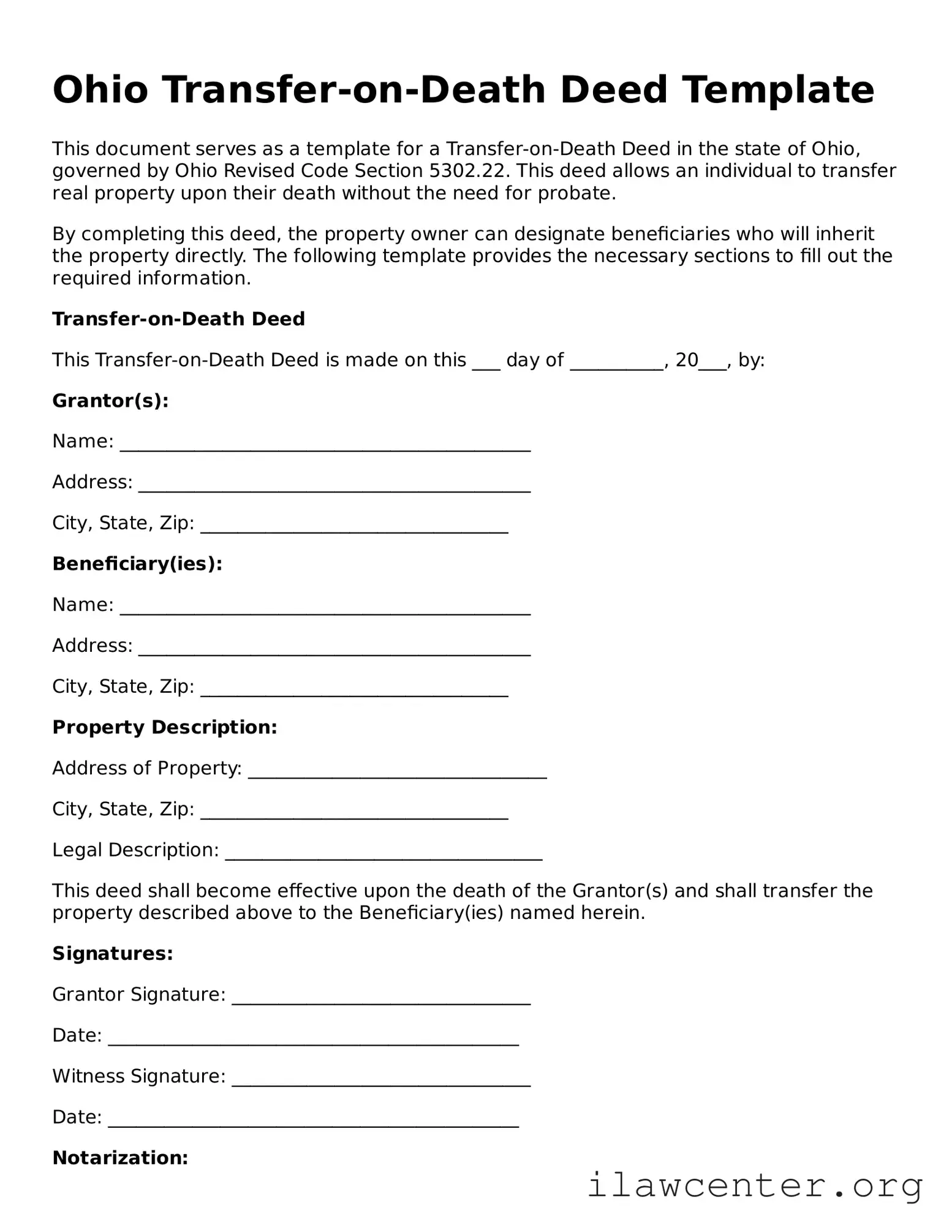
What is a Transfer-on-Death Deed in Ohio?
A Transfer-on-Death Deed (TOD deed) is a legal document that allows a property owner in Ohio to transfer their property to a designated beneficiary upon their death. This deed enables the property to pass directly to the beneficiary without going through probate, simplifying the process for the heirs.
Who can create a Transfer-on-Death Deed?
Any individual who owns real estate in Ohio can create a Transfer-on-Death Deed. The owner must be of sound mind and at least 18 years old. It is important that the deed is properly executed to be valid.
How do I create a Transfer-on-Death Deed?
To create a TOD deed, you must fill out the appropriate form, which includes details about the property and the beneficiary. The deed must then be signed by the owner in the presence of a notary public. Finally, it must be recorded with the county recorder's office where the property is located.
Can I change or revoke a Transfer-on-Death Deed?
Yes, you can change or revoke a Transfer-on-Death Deed at any time while you are still alive. To do this, you need to create a new deed that either names a different beneficiary or states that the previous deed is revoked. This new deed must also be signed and recorded.
What happens if the beneficiary dies before me?
If the designated beneficiary passes away before you do, the property will not automatically transfer to them. Instead, the property will become part of your estate and will be distributed according to your will or, if you do not have a will, according to Ohio intestacy laws.
Are there any tax implications with a Transfer-on-Death Deed?
Generally, there are no immediate tax implications when you create a Transfer-on-Death Deed. However, the property may be subject to estate taxes upon your death. It is wise to consult with a tax professional to understand any potential tax consequences.
Can I use a Transfer-on-Death Deed for all types of property?
A Transfer-on-Death Deed can be used for residential real estate, including single-family homes and condominiums. However, it cannot be used for commercial properties, personal property, or other types of assets like bank accounts or vehicles.
Is a Transfer-on-Death Deed a good option for estate planning?
A Transfer-on-Death Deed can be a beneficial tool in estate planning. It allows for a smooth transfer of property without the complications of probate. However, it is essential to consider your entire estate plan and consult with an estate planning attorney to ensure it aligns with your goals.
What if I have multiple beneficiaries?
If you wish to name multiple beneficiaries, you can do so in the Transfer-on-Death Deed. You should specify how the property will be divided among them. Clear instructions will help avoid confusion or disputes later on.
Do I need an attorney to create a Transfer-on-Death Deed?
While it is not legally required to hire an attorney to create a Transfer-on-Death Deed, it can be beneficial. An attorney can help ensure that the deed is correctly completed and meets all legal requirements, providing peace of mind in your estate planning process.