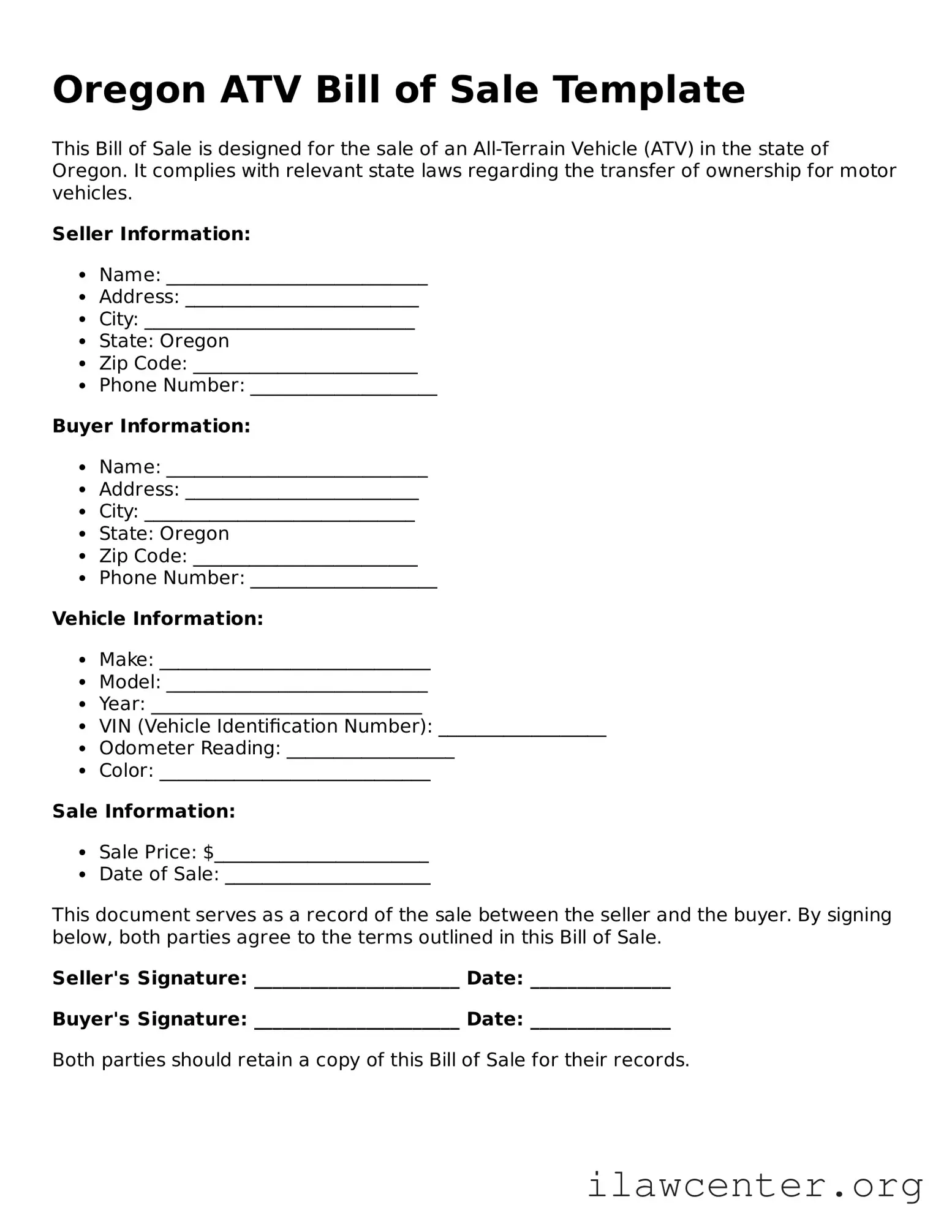
Filling out the Oregon ATV Bill of Sale form can seem straightforward, but many individuals make common mistakes that can lead to complications down the road. One of the most frequent errors is failing to provide accurate information about the all-terrain vehicle (ATV). This includes neglecting to include the Vehicle Identification Number (VIN), which is crucial for identification purposes. Omitting this detail can create confusion and hinder the registration process.
Another mistake is not including the correct sale price. The sale price should reflect the actual amount paid for the ATV. If the price is inaccurately reported, it can lead to issues with taxes and future ownership disputes. Buyers and sellers alike should take care to document this information correctly.
Many people also forget to sign the form. Both the buyer and seller must provide their signatures to validate the transaction. Without these signatures, the Bill of Sale may be deemed incomplete and unenforceable, leaving both parties vulnerable to potential legal issues.
In addition, individuals often overlook the importance of dating the document. A date is essential as it indicates when the transaction occurred. This can be significant for record-keeping and legal purposes. Failing to include a date may lead to misunderstandings regarding the timeline of ownership.
Another common oversight is not providing adequate contact information for both parties. It’s essential to include full names, addresses, and phone numbers. This information is not just helpful for communication; it can also be vital in case any disputes arise after the sale.
Some people mistakenly think that a Bill of Sale is only necessary for the buyer. In reality, both parties benefit from having a written record of the transaction. This document serves as proof of ownership transfer and can protect both the buyer and seller in case of future claims or issues.
Moreover, individuals may neglect to check for any outstanding liens on the ATV. If there are existing liens, the seller must disclose this information to the buyer. Failing to do so can lead to serious legal repercussions and financial loss for the buyer.
Another frequent error is not keeping a copy of the completed Bill of Sale. After the form is filled out and signed, both parties should retain a copy for their records. This serves as a safeguard and provides a reference in case any questions or disputes arise later.
Lastly, some people do not familiarize themselves with the specific requirements of their local DMV regarding the Bill of Sale. Each state may have different regulations, and it’s crucial to ensure that all necessary information is included to comply with local laws. Understanding these requirements can prevent unnecessary delays in the registration process.