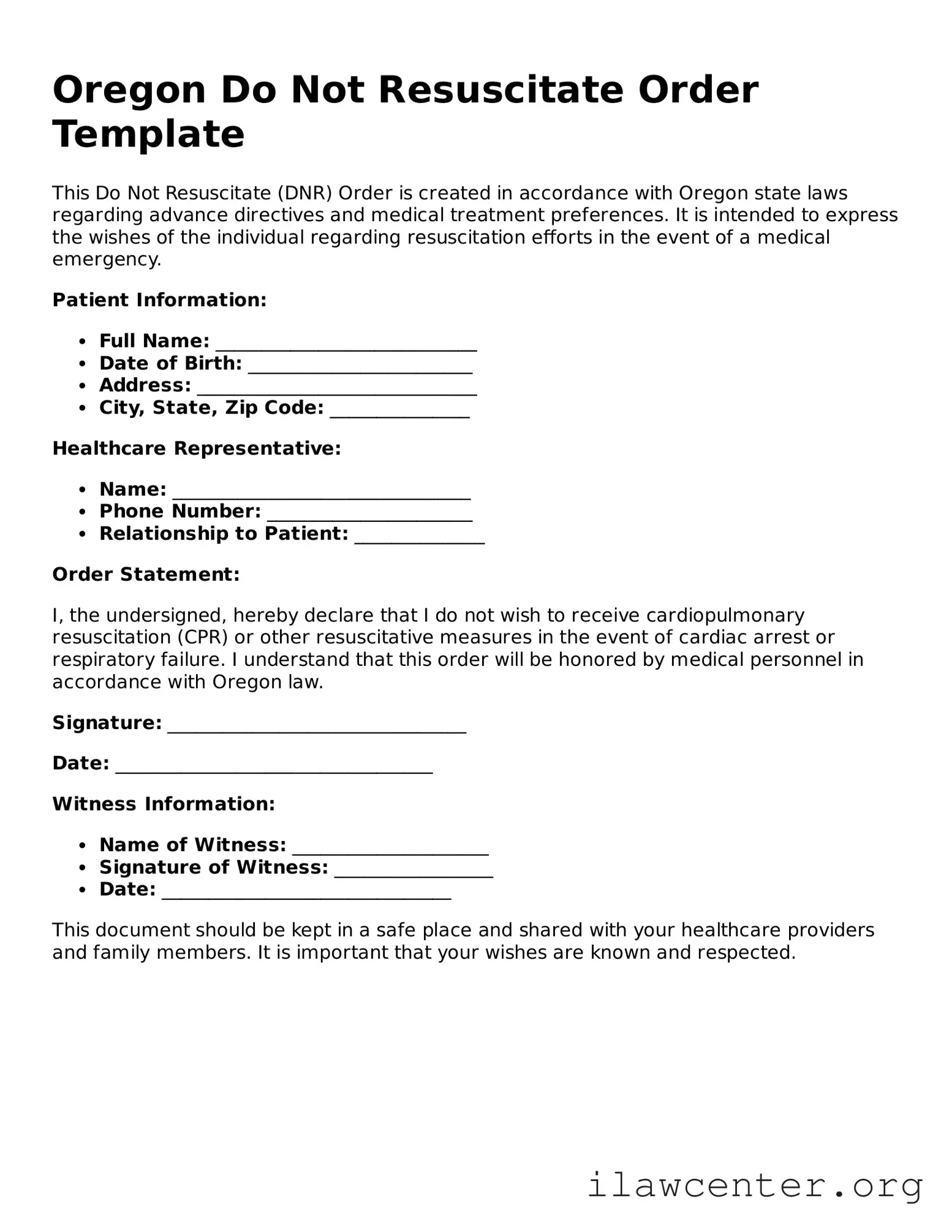
What is a Do Not Resuscitate (DNR) Order in Oregon?
A Do Not Resuscitate Order is a legal document that allows an individual to refuse cardiopulmonary resuscitation (CPR) and other life-sustaining measures in the event of a medical emergency. In Oregon, this order is intended for individuals who wish to avoid aggressive medical interventions that may prolong the dying process, particularly in cases of terminal illness or severe medical conditions.
Who can request a DNR Order in Oregon?
In Oregon, a DNR Order can be requested by any adult who is capable of making their own healthcare decisions. This includes individuals who are facing a terminal illness or have a medical condition that significantly impacts their quality of life. Additionally, a legal representative or healthcare proxy can also request a DNR Order on behalf of an individual who is unable to make decisions for themselves.
How is a DNR Order created in Oregon?
To create a DNR Order in Oregon, an individual must complete the official DNR form provided by the Oregon Health Authority. This form requires the individual to provide personal information and make clear their wishes regarding resuscitation. After completing the form, it must be signed by the individual and a physician, ensuring that both parties understand the implications of the order.
Where should I keep my DNR Order?
It is crucial to keep the DNR Order in a location that is easily accessible to emergency medical personnel. Many individuals choose to keep a copy of the order in their home, on their refrigerator, or with their healthcare proxy. Additionally, it may be beneficial to carry a wallet card indicating the existence of a DNR Order, ensuring that first responders are aware of the individual's wishes in an emergency situation.
Can a DNR Order be revoked?
Yes, a DNR Order can be revoked at any time by the individual who created it. This can be done verbally or in writing, and it is important to communicate the revocation to healthcare providers and family members. Once revoked, the individual should ensure that any copies of the DNR Order are destroyed or marked as void to prevent confusion in the future.
Will a DNR Order affect other medical treatments?
A DNR Order specifically addresses resuscitation efforts and does not impact other medical treatments. Individuals with a DNR Order can still receive necessary medical care, including pain management, comfort care, and other interventions that do not involve resuscitation. It is essential to discuss these preferences with healthcare providers to ensure comprehensive care aligned with the individual's values and wishes.
Do I need a lawyer to create a DNR Order?
No, a lawyer is not required to create a DNR Order in Oregon. The process is designed to be accessible to individuals, allowing them to express their healthcare preferences without the need for legal representation. However, individuals may choose to consult with a lawyer or healthcare advocate if they have questions or concerns about the implications of a DNR Order.
What should I discuss with my healthcare provider regarding a DNR Order?
It is important to have open and honest conversations with your healthcare provider about your values, preferences, and any medical conditions you may have. Discussing your reasons for wanting a DNR Order can help ensure that your healthcare team understands your wishes. Additionally, you should inquire about the implications of the order and how it fits into your overall care plan, allowing for informed decision-making.