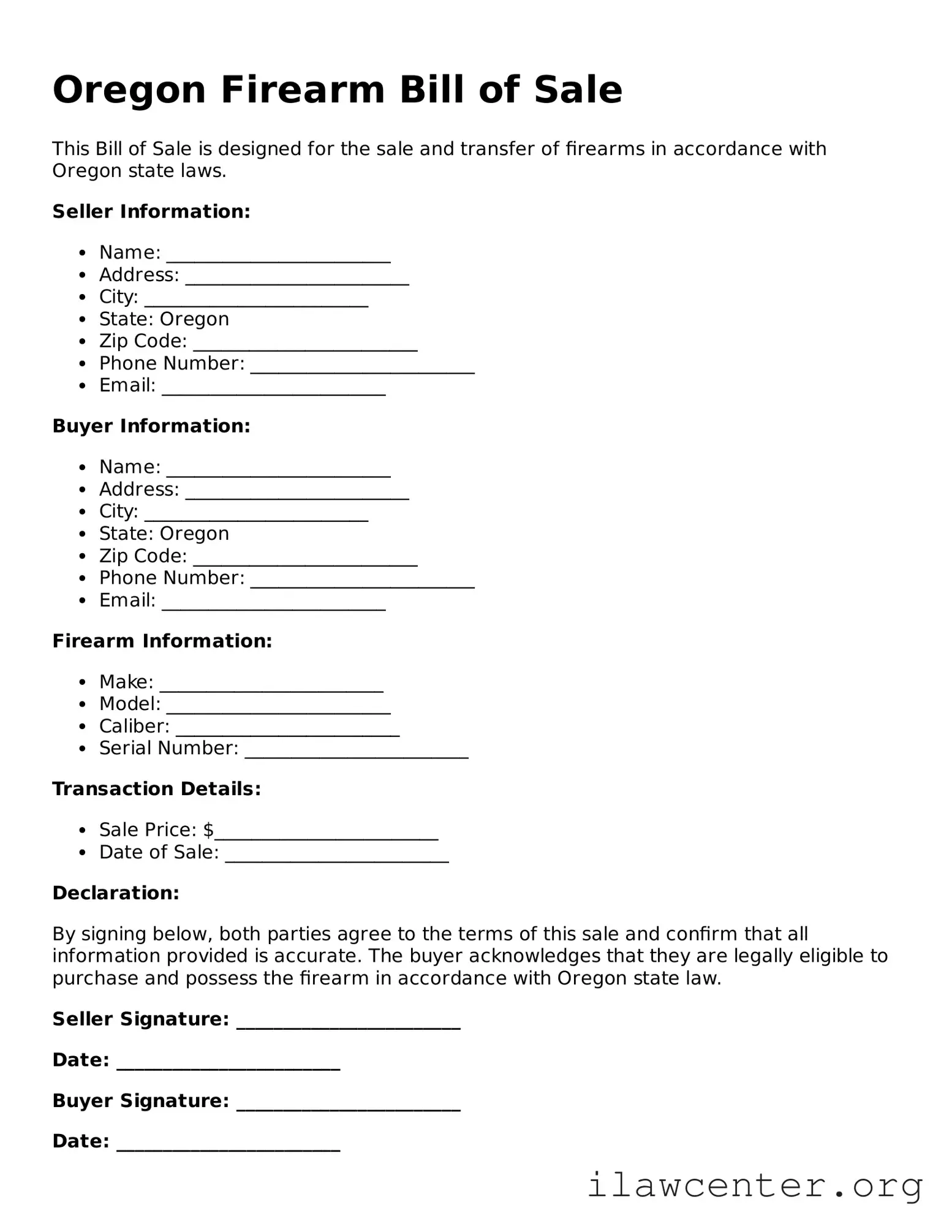
What is an Oregon Firearm Bill of Sale form?
The Oregon Firearm Bill of Sale form is a legal document used to record the sale or transfer of a firearm between two parties. This form captures essential details about the transaction, including the identities of the buyer and seller, the description of the firearm, and the date of the transfer. It serves as proof of ownership and can be useful for both parties in case of future disputes.
Is a Bill of Sale required for firearm transactions in Oregon?
While it is not legally required to use a Bill of Sale for private firearm transactions in Oregon, it is highly recommended. Having a Bill of Sale protects both the buyer and seller by providing a written record of the transaction. This document can help clarify ownership and protect against potential legal issues down the line.
What information should be included in the Bill of Sale?
The Bill of Sale should include the full names and addresses of both the buyer and seller. Additionally, it should detail the firearm's make, model, caliber, and serial number. The date of the transaction and the purchase price should also be documented. Both parties should sign the form to acknowledge the transfer.
Can I use a generic Bill of Sale for firearms?
While you can use a generic Bill of Sale, it is advisable to use a specific Oregon Firearm Bill of Sale form. A specialized form ensures that all necessary information is included and complies with state regulations. This minimizes the risk of errors and strengthens the legal standing of the document.
What should I do if the firearm is lost or stolen after the sale?
If the firearm is lost or stolen after the sale, the seller should report the loss to local law enforcement. The Bill of Sale serves as proof that the firearm was sold, which can help clarify ownership. The buyer should also keep a copy of the Bill of Sale for their records in case they need to provide evidence of ownership in the future.
Are there any restrictions on who can buy or sell firearms in Oregon?
Yes, there are restrictions. Individuals who are prohibited from owning firearms include those with felony convictions, certain mental health adjudications, and individuals subject to restraining orders. Both buyers and sellers should ensure they comply with state and federal laws regarding firearm ownership and transfer. Conducting background checks is a prudent practice to confirm eligibility.