Attorney-Verified  Lease Agreement Document for Oregon

Attorney-Verified Lease Agreement Document for Oregon

The Oregon Lease Agreement form is a legal document that outlines the terms and conditions between a landlord and tenant for renting residential or commercial property in Oregon. This form serves to protect the rights of both parties and provides clarity on rental obligations. To ensure compliance with state laws and regulations, it is essential to fill out the form accurately and completely.

Start the process now by clicking the button below to fill out the Oregon Lease Agreement form.

Article Guide

When it comes to renting a property in Oregon, understanding the Oregon Lease Agreement form is essential for both landlords and tenants. This document serves as a foundational tool that outlines the rights and responsibilities of each party involved in the rental relationship. Key components of the lease include details about the rental property, the duration of the lease, and the amount of rent due. Additionally, the agreement typically covers security deposits, maintenance obligations, and rules regarding pets or alterations to the property. By clarifying these aspects, the lease aims to prevent misunderstandings and provide a clear framework for the tenancy. Both parties must carefully review the terms to ensure that their expectations align, fostering a harmonious living arrangement. Whether you are a seasoned landlord or a first-time tenant, grasping the nuances of the Oregon Lease Agreement can empower you to navigate the rental landscape with confidence.

Oregon Lease Agreement Preview

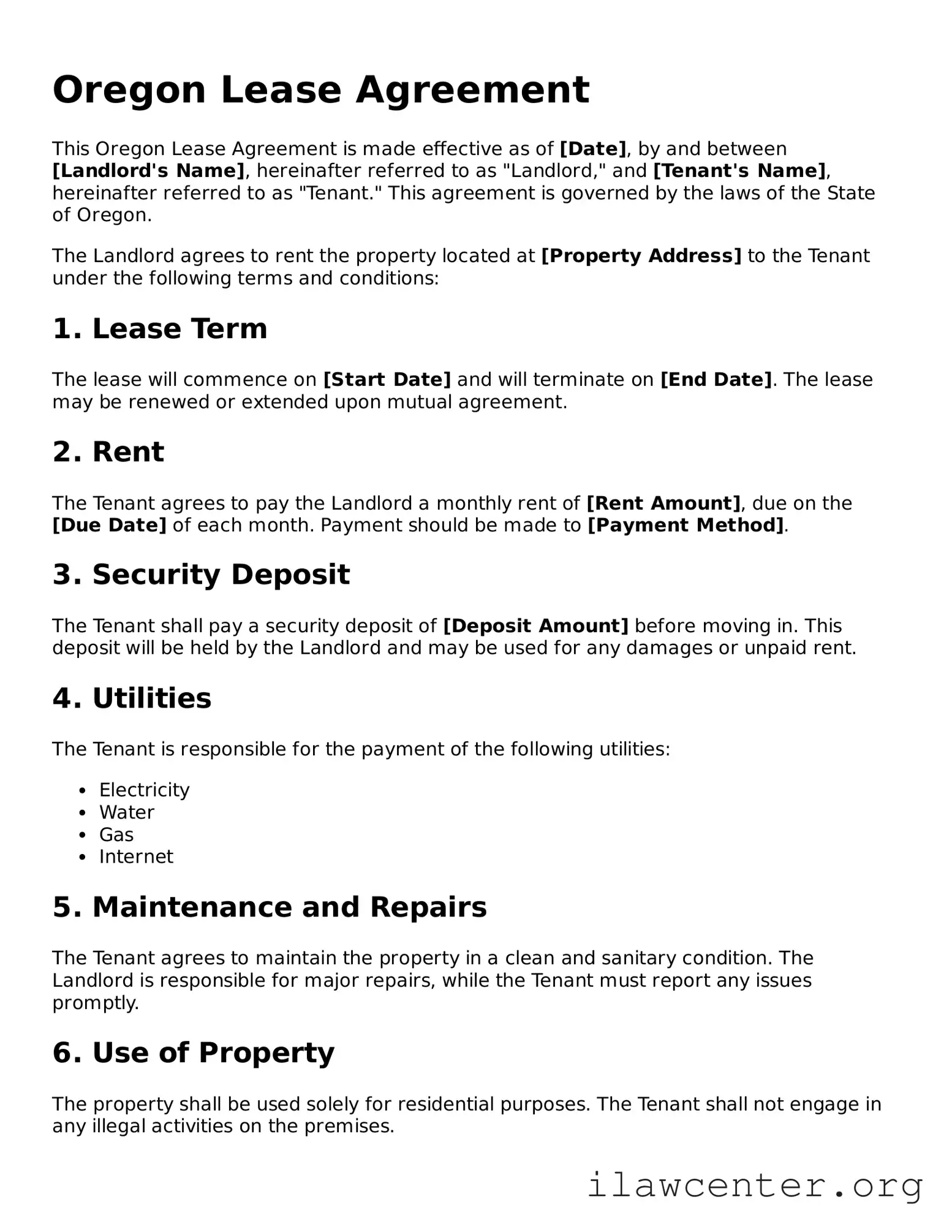
Oregon Lease Agreement

This Oregon Lease Agreement is made effective as of [Date], by and between [Landlord's Name], hereinafter referred to as "Landlord," and [Tenant's Name], hereinafter referred to as "Tenant." This agreement is governed by the laws of the State of Oregon.

The Landlord agrees to rent the property located at [Property Address] to the Tenant under the following terms and conditions:

1. Lease Term

The lease will commence on [Start Date] and will terminate on [End Date]. The lease may be renewed or extended upon mutual agreement.

2. Rent

The Tenant agrees to pay the Landlord a monthly rent of [Rent Amount], due on the [Due Date] of each month. Payment should be made to [Payment Method].

3. Security Deposit

The Tenant shall pay a security deposit of [Deposit Amount] before moving in. This deposit will be held by the Landlord and may be used for any damages or unpaid rent.

4. Utilities

The Tenant is responsible for the payment of the following utilities:

  • Electricity
  • Water
  • Gas
  • Internet

5. Maintenance and Repairs

The Tenant agrees to maintain the property in a clean and sanitary condition. The Landlord is responsible for major repairs, while the Tenant must report any issues promptly.

6. Use of Property

The property shall be used solely for residential purposes. The Tenant shall not engage in any illegal activities on the premises.

7. Termination

Either party may terminate this agreement with [Notice Period] written notice. Upon termination, the Tenant must vacate the property and return the keys to the Landlord.

8. Governing Law

This Lease Agreement shall be governed by and construed in accordance with the laws of the State of Oregon.

9. Signatures

By signing below, both parties agree to the terms of this Lease Agreement.

______________________________

Landlord's Signature

Date: ________________________

______________________________

Tenant's Signature

Date: ________________________

PDF Form Characteristics

Fact Name Description
Governing Law The Oregon Lease Agreement is governed by the Oregon Revised Statutes, specifically ORS Chapter 90, which outlines landlord-tenant laws.
Written Agreement While verbal agreements can be legally binding, a written lease is highly recommended for clarity and legal protection.
Lease Duration Lease agreements can be for a fixed term, such as one year, or can be month-to-month, providing flexibility for both parties.
Security Deposit In Oregon, landlords can charge a security deposit, but it is limited to one month's rent unless otherwise agreed upon.
Notice Requirements Oregon law requires landlords to provide specific notice periods for termination of tenancy, typically 30 days for month-to-month leases.
Rent Control Oregon has statewide rent control laws that limit the amount a landlord can increase rent each year, generally to 7% plus the consumer price index.
Repairs and Maintenance Landlords are responsible for maintaining the rental property in a habitable condition, including necessary repairs to plumbing, heating, and electrical systems.
Tenant Rights Tenants in Oregon have specific rights, including the right to privacy and the right to a habitable living environment, which landlords must respect.

Instructions on Utilizing Oregon Lease Agreement

Filling out the Oregon Lease Agreement form is an important step in establishing a rental arrangement. It ensures that both the landlord and tenant understand their rights and responsibilities. Follow the steps below to complete the form accurately.

  1. Begin by entering the date at the top of the form.
  2. Fill in the names of the landlord and tenant. Make sure to include full names.
  3. Provide the address of the rental property. Include the street address, city, and zip code.
  4. Specify the lease term. Indicate whether it is a fixed-term lease or a month-to-month agreement.
  5. State the monthly rent amount. Clearly write the dollar amount and any due date.
  6. Include any security deposit details. Mention the amount and the conditions for its return.
  7. List any utilities that are included in the rent. Specify which ones are covered.
  8. Detail any rules or regulations that apply to the property. This may include pet policies or maintenance responsibilities.
  9. Both the landlord and tenant should sign and date the form at the bottom.

Important Facts about Oregon Lease Agreement

What is an Oregon Lease Agreement form?

An Oregon Lease Agreement form is a legal document that outlines the terms and conditions under which a landlord rents property to a tenant in Oregon. This agreement covers essential details such as the rental amount, lease duration, and responsibilities of both parties.

What should be included in the Oregon Lease Agreement?

The agreement should include the names of the landlord and tenant, property address, rental amount, payment due dates, lease duration, security deposit details, maintenance responsibilities, and any specific rules or regulations for the property.

How long is a typical lease term in Oregon?

Lease terms in Oregon can vary widely. Common durations include month-to-month agreements or fixed-term leases lasting six months to a year. The length should be clearly stated in the lease agreement.

Can a landlord increase rent during a lease term?

No, a landlord cannot increase rent during a fixed-term lease unless the lease specifically allows for it. However, for month-to-month agreements, landlords must provide proper notice, typically 30 days, before increasing rent.

What is a security deposit, and how is it handled?

A security deposit is a sum of money collected by the landlord to cover potential damages or unpaid rent. In Oregon, landlords can charge up to one month's rent as a security deposit. The landlord must return the deposit within 31 days after the tenant moves out, minus any deductions for damages.

What are the tenant's rights in Oregon?

Tenants in Oregon have several rights, including the right to a habitable living space, privacy, and protection against discrimination. They can also seek legal remedies if their rights are violated, such as through improper eviction or failure to maintain the property.

Can a lease agreement be terminated early?

Yes, a lease agreement can be terminated early, but both parties must agree to the terms. If a tenant needs to break a lease, they may be required to provide notice and possibly pay a fee, depending on the lease's terms.

What happens if a tenant violates the lease agreement?

If a tenant violates the lease agreement, the landlord may issue a notice to remedy the violation. If the issue is not resolved, the landlord can initiate eviction proceedings. It's crucial for both parties to understand their rights and obligations under the lease.

Is it necessary to have a written lease agreement?

While oral agreements can be legally binding, having a written lease agreement is highly recommended. A written document provides clear evidence of the terms and protects both parties in case of disputes.
Common mistakes

Filling out the Oregon Lease Agreement form can be a straightforward process, but many individuals make common mistakes that can lead to confusion or disputes later on. One prevalent error is failing to include all necessary parties on the lease. It’s essential to list every tenant and landlord involved in the agreement. Omitting a name can complicate matters if issues arise.

Another frequent mistake is neglecting to specify the rental amount clearly. This detail should include not only the monthly rent but also any additional fees or deposits. If the rental amount is vague or missing, it can lead to misunderstandings about payment expectations.

Many people also forget to indicate the duration of the lease. Whether it’s a month-to-month arrangement or a fixed-term lease, clarity on the start and end dates is crucial. Without this information, both parties may have different assumptions about the agreement’s length.

Additionally, some individuals overlook the importance of detailing maintenance responsibilities. Who is responsible for repairs? This information should be clearly outlined to avoid disputes over who must handle maintenance issues during the lease term.

Another common oversight is failing to review the pet policy. If pets are allowed, it’s vital to specify any restrictions, such as breed or size limitations. Not addressing this can lead to conflicts if a tenant brings in a pet that violates the lease terms.

Inaccurate contact information is another mistake that can cause problems. Both landlords and tenants should ensure that their contact details are correct and up-to-date. This ensures that all parties can communicate effectively throughout the lease period.

Some people forget to include details about the security deposit. The amount, conditions for its return, and any deductions should be clearly stated in the lease. This prevents misunderstandings when it comes time to return the deposit at the end of the lease.

Another error is not specifying the process for renewing the lease. If both parties wish to continue the arrangement, having a clear renewal process can save time and avoid confusion. It’s beneficial to outline how and when to discuss renewal terms.

Moreover, many individuals neglect to include the consequences of breaking the lease. Understanding the penalties for early termination can help prevent disputes and ensure that all parties are aware of their obligations.

Finally, some people rush through the signing process. Each party should take the time to read the entire lease agreement carefully before signing. This ensures that everyone understands their rights and responsibilities, leading to a smoother rental experience.

Documents used along the form

When entering into a lease agreement in Oregon, several additional forms and documents may be necessary to ensure clarity and legal compliance. These documents help both landlords and tenants understand their rights and responsibilities. Below is a list of commonly used forms associated with the Oregon Lease Agreement.

  • Rental Application: This form collects information about potential tenants, including their rental history, employment status, and creditworthiness. It helps landlords screen applicants before signing a lease.
  • Lease Addendum: An addendum is a document that modifies or adds terms to the original lease agreement. It may address specific issues such as pet policies or maintenance responsibilities.
  • Security Deposit Receipt: This receipt acknowledges the payment of a security deposit. It outlines the amount paid and the conditions under which the deposit may be withheld or returned.
  • Move-In/Move-Out Checklist: This checklist documents the condition of the rental unit at the beginning and end of the lease. It helps prevent disputes over damages and security deposit deductions.
  • Notice of Rent Increase: If a landlord intends to raise the rent, this notice informs tenants of the increase in accordance with Oregon law, including the required notice period.
  • Notice to Cure or Quit: This document is used when a tenant violates a lease term. It gives the tenant a chance to fix the issue or face eviction proceedings.
  • Termination Notice: This notice is used to inform tenants that their lease will not be renewed or that they must vacate the property. It specifies the timeframe for leaving the premises.
  • Rental Agreement Renewal: This document extends the lease for an additional term, outlining any changes to the original agreement, such as rent adjustments or updated terms.

These documents play a crucial role in the rental process, providing essential information and protections for both parties. Understanding each form can help ensure a smooth leasing experience in Oregon.

Similar forms

The Lease Agreement form shares similarities with several other legal documents. Below is a list of nine documents that have comparable features or purposes:

  • Rental Agreement: Like a lease, a rental agreement outlines the terms under which a tenant rents property from a landlord. It typically covers duration, payment terms, and responsibilities.
  • Sublease Agreement: This document allows a tenant to rent out their leased property to another person. It includes terms similar to a lease, such as rent amount and duration.
  • Month-to-Month Agreement: This agreement allows tenants to occupy a property on a month-to-month basis. It provides flexibility and can be terminated with short notice, similar to some lease agreements.
  • Commercial Lease Agreement: Used for business properties, this document outlines terms for renting commercial space. It includes clauses specific to business operations, akin to residential lease agreements.
  • Property Management Agreement: This document establishes the relationship between a property owner and a management company. It details responsibilities and terms, much like a lease does for tenants and landlords.
  • Tenancy Agreement: Similar to a lease, this document defines the rights and duties of both landlords and tenants. It may be used interchangeably in some regions.
  • Real Estate Purchase Agreement: While primarily for buying property, this document outlines terms and conditions that can mirror lease agreements, especially regarding occupancy before closing.
  • Rent-to-Own Agreement: This document allows tenants to rent a property with the option to purchase it later. It includes lease terms and conditions for potential ownership.
  • Eviction Notice: While not a lease, this document outlines the process for terminating a lease due to violations. It directly relates to the enforcement of lease terms.

Dos and Don'ts

When filling out the Oregon Lease Agreement form, it’s essential to be thorough and accurate. Here’s a list of things to keep in mind:

  • Do read the entire lease agreement carefully before filling it out.
  • Do provide accurate information about yourself and the property.
  • Do discuss any terms or conditions with your landlord before signing.
  • Do include all necessary details, such as rental amount and lease duration.
  • Do ask questions if you don’t understand any part of the lease.
  • Don't rush through the form; take your time to ensure accuracy.
  • Don't leave any sections blank unless instructed to do so.
  • Don't sign the lease without reviewing it thoroughly.
  • Don't assume that verbal agreements are included in the lease.
  • Don't ignore any clauses that seem unclear or unfair.

Following these guidelines can help ensure a smoother leasing process and protect your rights as a tenant in Oregon.

Misconceptions

When it comes to lease agreements in Oregon, many people hold misconceptions that can lead to confusion or legal issues. Here are eight common misunderstandings about the Oregon Lease Agreement form:

  1. All lease agreements are the same. Many assume that every lease agreement follows a standard format. In reality, lease agreements can vary significantly based on the specific terms negotiated between landlords and tenants.
  2. Oral agreements are sufficient. Some believe that a verbal agreement is enough to create a lease. However, written agreements are essential for clarity and legal protection.
  3. Security deposits are unlimited. There is a misconception that landlords can charge any amount for a security deposit. In Oregon, there are legal limits on how much can be charged.
  4. Lease terms cannot be changed. Many think once a lease is signed, the terms are set in stone. However, landlords and tenants can negotiate changes, but both parties must agree in writing.
  5. All repairs are the tenant's responsibility. Some tenants believe they must handle all repairs. In Oregon, landlords are generally responsible for maintaining the property in a livable condition.
  6. Rent increases can happen anytime. A common belief is that landlords can raise rent whenever they want. In Oregon, there are specific rules and notice requirements for rent increases.
  7. Only written leases are valid. While written leases provide clarity, oral leases can also be enforceable under certain conditions, although they may be harder to prove.
  8. Tenants can break a lease without consequences. Some tenants think they can leave a lease without repercussions. Breaking a lease can lead to financial penalties or legal action, depending on the lease terms.

Understanding these misconceptions can help both landlords and tenants navigate the leasing process more effectively and avoid potential disputes.

Key takeaways

When it comes to filling out and using the Oregon Lease Agreement form, there are several important points to keep in mind. Here are some key takeaways:

  • Understand the Basics: Familiarize yourself with the essential components of the lease agreement, including the names of the parties involved, the property address, and the lease term.
  • Specify Rent Details: Clearly state the amount of rent, the due date, and acceptable payment methods to avoid any confusion later on.
  • Include Security Deposit Information: Outline the amount of the security deposit, the conditions for its return, and any deductions that may apply.
  • Define Responsibilities: Clearly define the responsibilities of both the landlord and tenant regarding maintenance, repairs, and utilities.
  • Review Local Laws: Be aware of Oregon's specific rental laws, which may affect the terms of your lease agreement.
  • Sign and Date the Agreement: Ensure that both parties sign and date the lease to make it legally binding. Keep a copy for your records.

By paying attention to these key elements, you can create a clear and effective lease agreement that protects the rights of both the landlord and tenant.