Attorney-Verified  Prenuptial Agreement Document for Oregon

Attorney-Verified Prenuptial Agreement Document for Oregon

A Prenuptial Agreement form in Oregon is a legal document that couples use to outline the division of assets and financial responsibilities in the event of a divorce or separation. This agreement helps to clarify expectations and protect individual interests before entering into marriage. To get started on your own agreement, fill out the form by clicking the button below.

Article Guide

When considering marriage, many couples in Oregon find themselves contemplating the benefits of a prenuptial agreement. This legal document can serve as a vital tool for protecting individual assets and clarifying financial responsibilities, should the relationship end in divorce or separation. The Oregon Prenuptial Agreement form outlines essential elements such as the identification of each party's assets and debts, the terms of property division, and provisions for spousal support. It is designed to ensure that both partners enter the marriage with a clear understanding of their financial rights and obligations. Importantly, the form must be completed and signed voluntarily by both parties, ideally with legal counsel involved, to ensure that it is enforceable in court. Understanding the nuances of this agreement can help couples navigate their financial future with confidence, fostering open communication about money matters from the very start of their journey together.

Oregon Prenuptial Agreement Preview

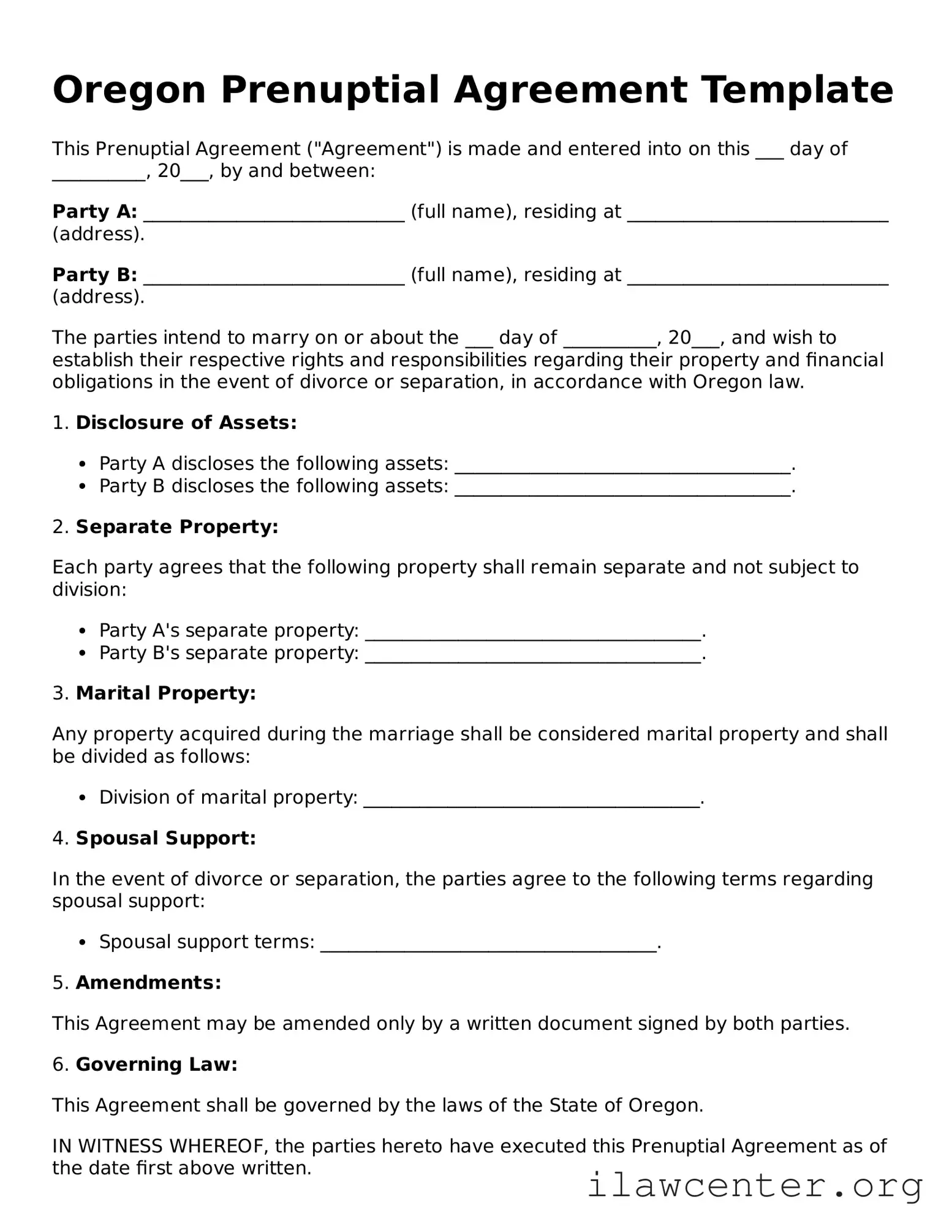
Oregon Prenuptial Agreement Template

This Prenuptial Agreement ("Agreement") is made and entered into on this ___ day of __________, 20___, by and between:

Party A: ____________________________ (full name), residing at ____________________________ (address).

Party B: ____________________________ (full name), residing at ____________________________ (address).

The parties intend to marry on or about the ___ day of __________, 20___, and wish to establish their respective rights and responsibilities regarding their property and financial obligations in the event of divorce or separation, in accordance with Oregon law.

1. Disclosure of Assets:

  • Party A discloses the following assets: ____________________________________.
  • Party B discloses the following assets: ____________________________________.

2. Separate Property:

Each party agrees that the following property shall remain separate and not subject to division:

  • Party A's separate property: ____________________________________.
  • Party B's separate property: ____________________________________.

3. Marital Property:

Any property acquired during the marriage shall be considered marital property and shall be divided as follows:

  • Division of marital property: ____________________________________.

4. Spousal Support:

In the event of divorce or separation, the parties agree to the following terms regarding spousal support:

  • Spousal support terms: ____________________________________.

5. Amendments:

This Agreement may be amended only by a written document signed by both parties.

6. Governing Law:

This Agreement shall be governed by the laws of the State of Oregon.

IN WITNESS WHEREOF, the parties hereto have executed this Prenuptial Agreement as of the date first above written.

_____________________________ _____________________________

Party A Signature Party B Signature

_____________________________ _____________________________

Date Date

_____________________________ _____________________________

Witness Signature Witness Signature

_____________________________ _____________________________

Date Date

PDF Form Characteristics

Fact Name Details
Governing Law The Oregon Prenuptial Agreement is governed by Oregon Revised Statutes, specifically ORS 108.700 to 108.740.
Purpose This agreement outlines the financial rights and responsibilities of each spouse in the event of divorce or death.
Enforceability For the agreement to be enforceable, it must be in writing and signed by both parties.
Full Disclosure Both parties should provide a full disclosure of their assets and debts to ensure fairness.
Legal Advice It is recommended that each party consult with their own attorney before signing the agreement.

Instructions on Utilizing Oregon Prenuptial Agreement

Filling out the Oregon Prenuptial Agreement form is a straightforward process. This document helps couples outline their financial rights and responsibilities before marriage. Follow these steps to complete the form accurately.

  1. Obtain the form: Download the Oregon Prenuptial Agreement form from a reliable legal website or obtain a physical copy from a local legal office.
  2. Read the instructions: Familiarize yourself with any specific guidelines provided with the form to ensure you understand what information is required.
  3. Fill in personal information: Enter your full name and your partner's full name at the top of the form. Include any relevant identifying information, such as addresses and contact numbers.
  4. List assets: Clearly outline all assets owned by each party. Include real estate, bank accounts, investments, and personal property. Be specific about the value of each asset.
  5. Detail liabilities: Provide a list of debts for both parties, such as loans, credit card debts, and any other financial obligations.
  6. Discuss terms: Write down any agreements regarding property division, spousal support, and other financial matters in the event of divorce or separation.
  7. Review the agreement: Both parties should carefully review the completed form to ensure all information is accurate and reflects mutual understanding.
  8. Sign the document: Both parties must sign the form in the presence of a notary public to make it legally binding.
  9. Store the agreement: Keep the signed document in a safe place. Consider providing copies to each party and possibly to legal counsel.

After completing the form, you may want to consult with a legal professional to ensure that your prenuptial agreement meets all legal requirements in Oregon. This step can provide additional peace of mind as you prepare for your marriage.

Important Facts about Oregon Prenuptial Agreement

What is a prenuptial agreement in Oregon?

A prenuptial agreement, often referred to as a prenup, is a legal document that couples can create before getting married. It outlines how assets and debts will be divided in the event of divorce or separation. In Oregon, this agreement can help clarify financial responsibilities and protect individual interests, making it a useful tool for many couples.

Who should consider a prenuptial agreement?

Couples who have significant assets, debts, or children from previous relationships may find a prenuptial agreement particularly beneficial. It is also advisable for individuals entering a marriage later in life or those who expect to receive an inheritance. Ultimately, anyone who wishes to establish clear financial guidelines may want to consider a prenup.

What can be included in a prenuptial agreement?

In Oregon, a prenuptial agreement can cover a variety of topics, including the division of property, spousal support, and the management of debts. Couples can also outline how to handle future earnings and assets acquired during the marriage. However, it cannot include provisions regarding child custody or child support, as these matters are determined based on the best interests of the child at the time of divorce.

How is a prenuptial agreement enforced in Oregon?

For a prenuptial agreement to be enforceable in Oregon, it must be in writing and signed by both parties. Each individual should also have the opportunity to consult with their own attorney to ensure they fully understand the agreement. If the agreement is deemed fair and was entered into voluntarily, a court is likely to uphold it in the event of a dispute.

Can a prenuptial agreement be modified after marriage?

Yes, a prenuptial agreement can be modified after marriage. Both parties must agree to the changes, and the modifications should be documented in writing and signed by both individuals. This ensures that any new terms are legally recognized and enforceable.

What happens if we don’t have a prenuptial agreement?

If a couple does not have a prenuptial agreement and later decides to divorce, the division of assets and debts will be determined according to Oregon's laws. This may lead to outcomes that neither party anticipated or desired. Without a prenup, the court will follow state guidelines, which may not align with the couple's wishes.

Is it necessary to have a lawyer for a prenuptial agreement?

While it is not legally required to have a lawyer when creating a prenuptial agreement, it is highly recommended. An attorney can provide valuable guidance, ensure that the agreement complies with Oregon law, and help protect both parties' interests. Having independent legal representation can also reduce the likelihood of future disputes regarding the agreement's validity.

When should we start discussing a prenuptial agreement?

It is best to start discussing a prenuptial agreement well before the wedding date. Open and honest communication about financial matters can help couples build trust and understanding. Starting the conversation early allows both parties to consider their needs and concerns without the pressure of an impending wedding.

Can a prenuptial agreement be challenged in court?

Yes, a prenuptial agreement can be challenged in court, but certain conditions must be met for a challenge to be successful. Common grounds for challenging a prenup include evidence of coercion, lack of full disclosure of assets, or if the agreement is deemed unconscionable. Courts will carefully evaluate the circumstances surrounding the agreement to determine its enforceability.

Common mistakes

Filling out the Oregon Prenuptial Agreement form is a critical step for couples looking to protect their assets. However, many make common mistakes that can jeopardize the effectiveness of the agreement. One frequent error is failing to fully disclose all assets and liabilities. Transparency is essential. If one party hides significant financial information, it could lead to disputes later on.

Another mistake is not considering the future implications of the agreement. Couples often focus solely on their current financial situation without contemplating changes that may occur. For instance, income growth, property acquisition, or even potential inheritances should be addressed in the prenup. Omitting these factors can render the agreement outdated.

Many individuals also neglect to seek legal advice when drafting their prenup. While it may seem straightforward, having an attorney review the document can help ensure that it complies with Oregon laws. A legal expert can offer insights that may not be apparent to those unfamiliar with the nuances of prenuptial agreements.

Additionally, couples sometimes fail to discuss the prenup openly and honestly. Avoiding this conversation can lead to resentment and misunderstandings. It’s vital for both parties to understand the purpose of the agreement and to feel comfortable with its terms.

Another common oversight is not signing the agreement well in advance of the wedding. Waiting until the last minute can raise questions about coercion or pressure. To avoid this, ensure that both parties have ample time to review and negotiate the terms before the big day.

Finally, some individuals mistakenly believe that a prenuptial agreement is only necessary for the wealthy. This misconception can lead to inadequate protection for both parties. Regardless of financial status, a prenup can provide clarity and security for any couple. It’s essential to recognize that everyone can benefit from a well-structured agreement.

Documents used along the form

When preparing a prenuptial agreement in Oregon, several other documents and forms may be useful. Each of these documents serves a specific purpose and can help clarify financial and personal matters before marriage. Here’s a list of some commonly used forms that can complement a prenuptial agreement:

  • Financial Disclosure Statement: This document provides a detailed account of each party's assets, liabilities, income, and expenses. It ensures transparency and helps both parties understand their financial situations.
  • Separation Agreement: If the couple decides to separate in the future, this document outlines the terms of the separation, including asset division and support obligations.
  • Postnuptial Agreement: Similar to a prenuptial agreement, this document is created after marriage. It can address changes in circumstances or clarify financial matters that arise during the marriage.
  • Will: A will outlines how a person's assets will be distributed after their death. Having a will can complement a prenuptial agreement by ensuring that both parties' wishes are respected.
  • Power of Attorney: This document allows one person to make decisions on behalf of the other in case of incapacity. It can be important for financial and healthcare decisions.
  • Trust Agreement: A trust can hold assets for the benefit of one or both spouses. This document can help manage and protect assets during and after the marriage.
  • Marital Settlement Agreement: If a couple decides to divorce, this document outlines the terms of the divorce, including property division, spousal support, and child custody arrangements.

Understanding these documents can help couples navigate their financial and personal lives more effectively. While a prenuptial agreement is a crucial step, these additional forms can provide further clarity and protection for both parties.

Similar forms

A Prenuptial Agreement is a legal document that outlines the financial and personal arrangements between two individuals before they marry. Several other documents share similarities with a prenuptial agreement, often serving similar purposes in different contexts. Below is a list of ten such documents:

  • Postnuptial Agreement: Like a prenuptial agreement, this document is created after marriage. It addresses the same issues regarding asset division and financial responsibilities but is established once the couple is already married.
  • Separation Agreement: This document is used when a couple decides to live apart. It outlines the terms of their separation, including financial arrangements and custody of children, similar to how a prenuptial agreement outlines terms before marriage.
  • Divorce Settlement Agreement: When a marriage ends, this document specifies the terms of the divorce, including asset division and alimony. Both agreements aim to clarify financial responsibilities and rights.
  • Co-Habitation Agreement: For couples living together without marriage, this document addresses financial responsibilities and asset division, similar to what a prenuptial agreement does for married couples.
  • Will: A will outlines how a person’s assets will be distributed after their death. Both documents involve planning for the future and protecting one’s interests.
  • Trust Agreement: This document establishes a trust to manage assets. Like a prenuptial agreement, it can protect assets and specify how they should be managed and distributed.
  • Power of Attorney: This document grants someone the authority to make decisions on another’s behalf. Both documents involve important decisions regarding personal and financial matters.
  • Living Will: A living will outlines an individual’s wishes regarding medical treatment in case they cannot communicate. Both documents express personal wishes and protect individual rights.
  • Business Partnership Agreement: This agreement outlines the terms of a business partnership, including financial contributions and profit-sharing. Similar to a prenuptial agreement, it helps clarify expectations and responsibilities.
  • Child Custody Agreement: This document specifies the terms of custody and visitation for children in the event of a separation or divorce. Both agreements aim to protect the interests of all parties involved, particularly children.

Understanding these documents can help individuals navigate important life decisions with clarity and confidence.

Dos and Don'ts

When filling out the Oregon Prenuptial Agreement form, it is important to follow certain guidelines to ensure the document is valid and meets the needs of both parties. Below is a list of things you should and shouldn't do during this process.

  • Do consult with a qualified attorney to understand your rights and obligations.
  • Do provide full and honest disclosure of all assets and debts.
  • Do discuss the terms openly with your partner to avoid misunderstandings.
  • Do ensure both parties sign the agreement voluntarily and without coercion.
  • Do keep a copy of the signed agreement for your records.
  • Don't rush the process; take the time to review all terms carefully.
  • Don't hide any financial information from your partner.
  • Don't assume that a verbal agreement is sufficient; it must be in writing.
  • Don't overlook the importance of having independent legal representation.
  • Don't forget to update the agreement if your financial situation changes significantly.

Misconceptions

When it comes to prenuptial agreements, especially the Oregon Prenuptial Agreement form, there are several misconceptions that can lead to misunderstandings. Here’s a list of common myths and the truths behind them:

  1. Myth 1: Prenuptial agreements are only for the wealthy.

    This is a common belief, but prenuptial agreements can benefit anyone, regardless of their financial status. They help clarify financial responsibilities and protect individual assets.

  2. Myth 2: A prenuptial agreement is only necessary if you have children from a previous relationship.

    While protecting children’s interests is one reason to consider a prenup, they are also useful for couples without children. They can address asset division and financial responsibilities.

  3. Myth 3: Prenups are only enforceable if both parties are represented by attorneys.

    While having legal representation is highly recommended, a prenuptial agreement can still be valid even if one party chooses not to have an attorney. However, this may affect enforceability in court.

  4. Myth 4: Prenuptial agreements are not legally binding.

    When properly drafted and executed, prenuptial agreements are legally binding in Oregon. They must meet specific legal requirements to be enforceable.

  5. Myth 5: A prenup can include any terms, no matter how unreasonable.

    While couples have flexibility in crafting their agreements, courts will not enforce terms that are deemed unfair or against public policy.

  6. Myth 6: You can create a prenup at any time before the wedding.

    It’s best to finalize a prenuptial agreement well before the wedding day. Last-minute agreements may raise questions about coercion and fairness.

  7. Myth 7: A prenup can automatically determine child custody and support.

    Child custody and support arrangements must be determined based on the best interests of the child at the time of divorce, regardless of what a prenup states.

  8. Myth 8: Prenups can only be used in divorce proceedings.

    Prenuptial agreements can also address issues that may arise during the marriage, such as financial responsibilities and asset management.

  9. Myth 9: Once signed, a prenup cannot be changed.

    Couples can modify their prenuptial agreements at any time, as long as both parties agree to the changes and follow the legal requirements for amendments.

  10. Myth 10: Prenups are only for people who expect to get divorced.

    This misconception overlooks the practical benefits of a prenup. They can provide clarity and peace of mind, allowing couples to focus on building their future together.

Understanding these misconceptions can help couples make informed decisions about prenuptial agreements. They serve as valuable tools for financial planning and can foster open communication about money matters in a relationship.

Key takeaways

When considering a prenuptial agreement in Oregon, it is important to understand the key aspects of the process. Here are some essential takeaways that can guide you in filling out and using the Oregon Prenuptial Agreement form:

  • Understand the Purpose: A prenuptial agreement serves to clarify the financial rights and responsibilities of each partner in the event of divorce or separation.
  • Full Disclosure is Crucial: Both parties must fully disclose their assets and debts. Transparency is vital for the agreement to be enforceable.
  • Consult Legal Counsel: Each party should seek independent legal advice. This helps ensure that both individuals understand their rights and the implications of the agreement.
  • Consider Timing: It is advisable to complete the agreement well in advance of the wedding. Rushing the process may lead to misunderstandings or disputes later.
  • Be Specific: Clearly outline the terms regarding property division, spousal support, and any other financial matters. Ambiguity can lead to challenges in the future.
  • Review and Update: Regularly review the agreement, especially after significant life changes such as the birth of a child or a change in financial circumstances.
  • Sign in Front of Witnesses: To ensure validity, the agreement should be signed in front of witnesses. This adds an additional layer of protection and legitimacy.

By keeping these key points in mind, individuals can navigate the process of creating a prenuptial agreement more effectively, ensuring that their interests and those of their partner are well protected.