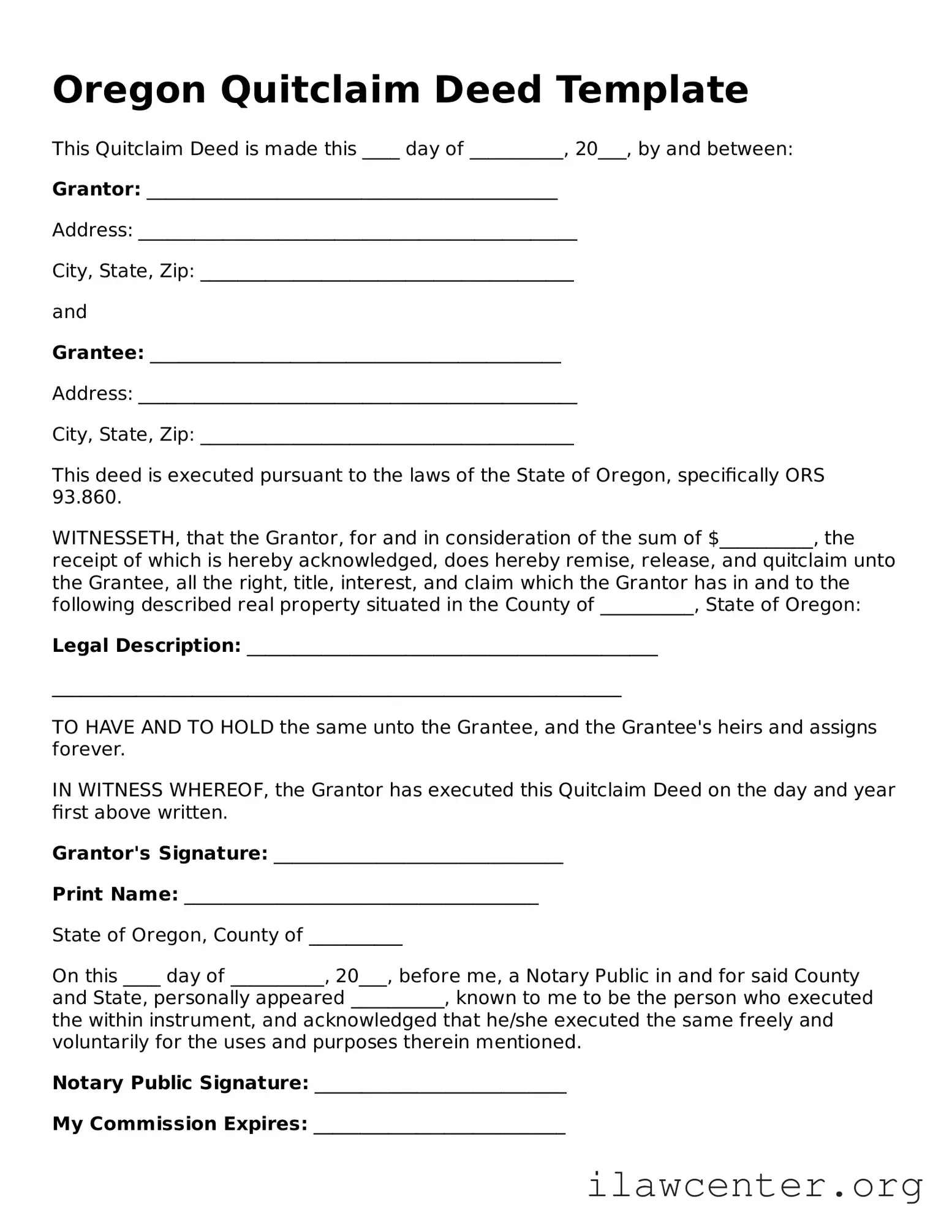
What is a Quitclaim Deed in Oregon?
A Quitclaim Deed is a legal document used to transfer ownership of real estate from one person to another in Oregon. Unlike other types of deeds, a quitclaim deed does not guarantee that the person transferring the property has clear title. Instead, it simply conveys whatever interest the grantor may have in the property, if any. This type of deed is often used among family members or in situations where the parties know each other well.
When should I use a Quitclaim Deed?
You might consider using a Quitclaim Deed in several situations. Common scenarios include transferring property between family members, resolving title issues, or when one spouse relinquishes their interest in a property during a divorce. It is important to understand that this deed does not provide any warranties about the property’s title, so it’s best used when the parties are familiar with each other's interests.
How do I complete a Quitclaim Deed in Oregon?
To complete a Quitclaim Deed, you will need to gather specific information, including the names of the grantor (the person transferring the property) and the grantee (the person receiving the property), a legal description of the property, and the date of the transfer. You can find templates online or consult with a legal professional to ensure all necessary details are included. Once completed, the deed must be signed by the grantor in the presence of a notary public.
Do I need to notarize a Quitclaim Deed?
Yes, in Oregon, a Quitclaim Deed must be notarized to be valid. The grantor must sign the deed in front of a notary public, who will then affix their seal to the document. This step is crucial as it verifies the identity of the signer and helps prevent fraud.
Is there a fee for recording a Quitclaim Deed in Oregon?
Yes, there is typically a fee associated with recording a Quitclaim Deed in Oregon. The fee can vary by county, so it’s a good idea to check with your local county clerk’s office for the exact amount. Recording the deed is important as it provides public notice of the transfer and protects the grantee’s interest in the property.
What happens after I file a Quitclaim Deed?
After you file a Quitclaim Deed, the county clerk will record it in the public records. This action officially updates the ownership of the property. It is advisable to obtain a copy of the recorded deed for your records. The new owner should also ensure that any property taxes and other obligations related to the property are updated in their name.
Can I revoke a Quitclaim Deed?
Once a Quitclaim Deed is executed and recorded, it cannot be unilaterally revoked. However, the grantor can create a new deed that transfers the property back to themselves or to another party. This new deed would also need to be executed and recorded to be effective. If you have concerns about the implications of a Quitclaim Deed, consulting with a legal professional may be beneficial.
Are there any risks associated with using a Quitclaim Deed?
Yes, there are some risks. Since a Quitclaim Deed does not guarantee that the grantor has clear title, the grantee may inherit any issues related to the property, such as liens or claims from other parties. It’s crucial to conduct thorough research or obtain a title search before proceeding with this type of transfer. Understanding these risks can help you make informed decisions about property transfers.
Can I use a Quitclaim Deed for commercial property?
Yes, a Quitclaim Deed can be used for both residential and commercial properties in Oregon. The same principles apply regardless of the type of property being transferred. However, it is advisable to consult with a legal professional, especially for commercial transactions, to ensure that all legal requirements are met and to understand any potential implications.