Attorney-Verified  Room Rental Agreement Document for Oregon

Attorney-Verified Room Rental Agreement Document for Oregon

The Oregon Room Rental Agreement form is a legal document that outlines the terms and conditions between a landlord and a tenant for renting a room in a property. This agreement helps to protect the rights of both parties by clearly defining responsibilities, payment terms, and other essential details. To get started, fill out the form by clicking the button below.

Article Guide

The Oregon Room Rental Agreement form is an essential document for anyone involved in renting a room in the state of Oregon. This form outlines the terms and conditions of the rental arrangement, ensuring that both the landlord and tenant have a clear understanding of their rights and responsibilities. Key aspects of the agreement include the rental amount, payment due dates, security deposits, and the duration of the lease. Additionally, it specifies rules regarding maintenance, utilities, and any restrictions on the use of the property. By detailing the obligations of both parties, the form helps to prevent misunderstandings and disputes. It also addresses procedures for terminating the agreement, providing a framework for both landlords and tenants to follow should the need arise. Overall, this document serves as a foundational tool for fostering a respectful and legally compliant rental relationship in Oregon.

Oregon Room Rental Agreement Preview

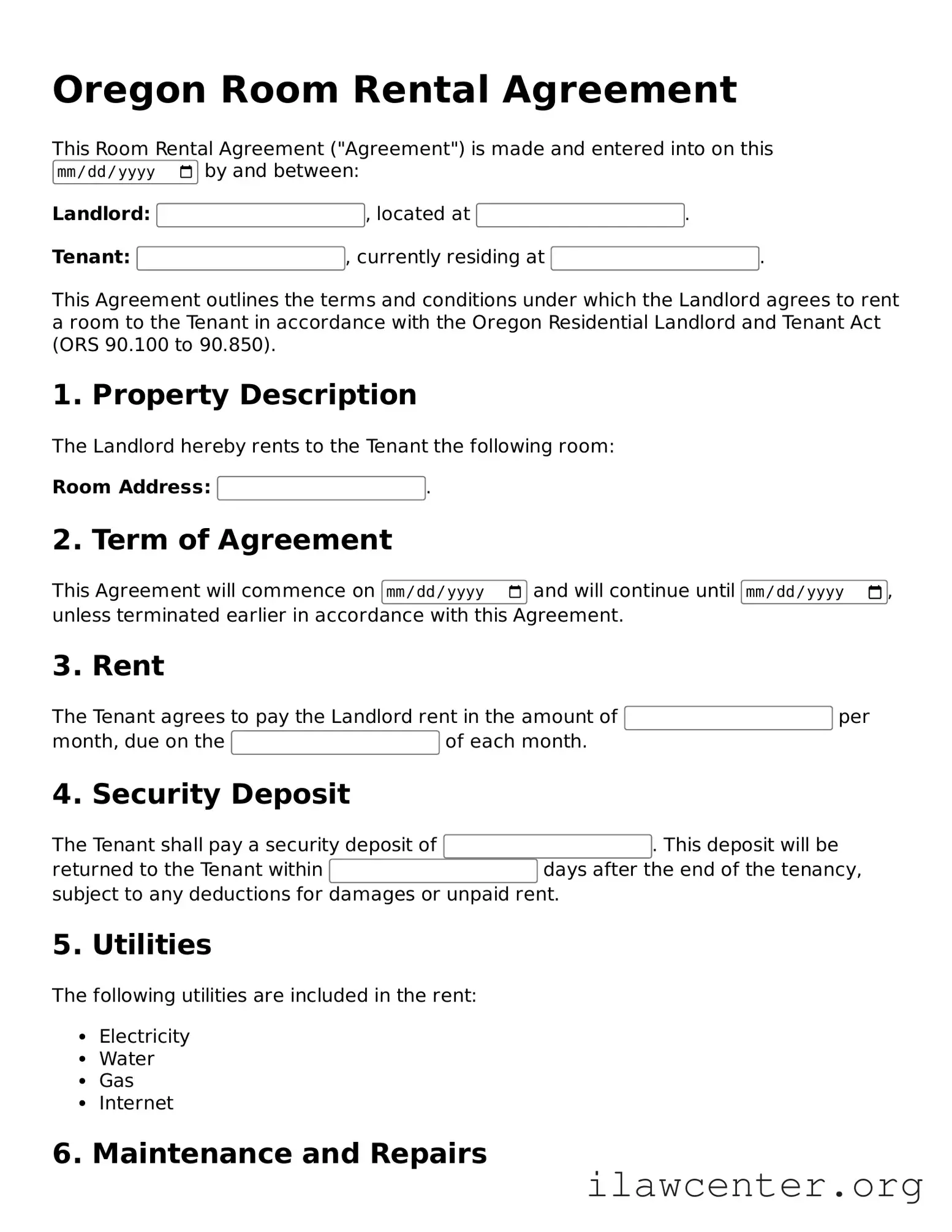
Oregon Room Rental Agreement

This Room Rental Agreement ("Agreement") is made and entered into on this by and between:

Landlord: , located at .

Tenant: , currently residing at .

This Agreement outlines the terms and conditions under which the Landlord agrees to rent a room to the Tenant in accordance with the Oregon Residential Landlord and Tenant Act (ORS 90.100 to 90.850).

1. Property Description

The Landlord hereby rents to the Tenant the following room:

Room Address: .

2. Term of Agreement

This Agreement will commence on and will continue until , unless terminated earlier in accordance with this Agreement.

3. Rent

The Tenant agrees to pay the Landlord rent in the amount of per month, due on the of each month.

4. Security Deposit

The Tenant shall pay a security deposit of . This deposit will be returned to the Tenant within days after the end of the tenancy, subject to any deductions for damages or unpaid rent.

5. Utilities

The following utilities are included in the rent:

  • Electricity
  • Water
  • Gas
  • Internet

6. Maintenance and Repairs

The Landlord is responsible for maintaining the premises in a habitable condition. The Tenant agrees to notify the Landlord of any necessary repairs.

7. Termination

Either party may terminate this Agreement by providing written notice at least days in advance.

8. Governing Law

This Agreement shall be governed by the laws of the State of Oregon.

9. Signatures

By signing below, both parties agree to the terms of this Room Rental Agreement.

Landlord Signature: ___________________________ Date: _____________

Tenant Signature: ____________________________ Date: _____________

PDF Form Characteristics

Fact Name Description
Governing Law The Oregon Room Rental Agreement is governed by the laws of the State of Oregon.
Purpose This agreement outlines the terms and conditions for renting a room in Oregon.
Parties Involved The agreement is between the landlord and the tenant.
Duration The rental period can be specified as short-term or long-term.
Payment Terms It includes details on rent amount, due dates, and acceptable payment methods.
Security Deposit The agreement may require a security deposit to cover potential damages.
Utilities It specifies which utilities are included in the rent and which are the tenant's responsibility.
Termination Clause The agreement outlines the conditions under which either party may terminate the rental agreement.
Signatures Both parties must sign the agreement to make it legally binding.

Instructions on Utilizing Oregon Room Rental Agreement

Completing the Oregon Room Rental Agreement form is an important step in securing a rental arrangement. It requires careful attention to detail to ensure all necessary information is accurately provided. Follow these steps to fill out the form correctly.

  1. Begin by entering the date at the top of the form. This date should reflect when the agreement is being completed.
  2. Fill in the names of the landlord and tenant. Make sure to include full legal names to avoid any confusion later.
  3. Provide the address of the rental property. This should include the street address, city, and zip code.
  4. Specify the rental amount. Clearly state the monthly rent due and any additional fees, if applicable.
  5. Indicate the security deposit amount. This is typically required to secure the rental agreement.
  6. Detail the rental term. Specify whether it is a month-to-month lease or a fixed-term lease and include start and end dates if applicable.
  7. Outline the utilities included in the rent. List any services that the landlord will cover, such as water, electricity, or gas.
  8. Include any additional terms or conditions. This may cover rules regarding pets, maintenance responsibilities, or other specific arrangements.
  9. Both parties should sign and date the agreement at the bottom of the form. Ensure that all signatures are legible and dated appropriately.

After completing the form, ensure that both the landlord and tenant retain a copy for their records. This document serves as a binding agreement and should be stored safely for future reference.

Important Facts about Oregon Room Rental Agreement

What is the purpose of the Oregon Room Rental Agreement form?

The Oregon Room Rental Agreement form serves as a legally binding contract between a landlord and a tenant. It outlines the terms and conditions of renting a room within a property. This agreement protects the rights of both parties by detailing essential information such as rental amount, payment due dates, security deposits, and responsibilities for maintenance and repairs. By using this form, both landlords and tenants can avoid misunderstandings and ensure a smooth rental experience.

What information is typically included in the Oregon Room Rental Agreement?

The agreement generally includes the names of the landlord and tenant, the rental property address, and the duration of the rental period. Additionally, it specifies the rent amount, payment schedule, and any deposits required. Other important details may include rules regarding pets, smoking, and guest policies. It may also outline procedures for termination of the agreement, notice periods, and how to handle disputes. Having all this information in writing helps clarify expectations for both parties.

How can I modify the Oregon Room Rental Agreement to fit my needs?

What should I do if I need to terminate the agreement early?

If either party wishes to terminate the Oregon Room Rental Agreement early, they must refer to the terms outlined in the agreement regarding termination. Typically, this includes providing written notice within a specified timeframe. Depending on the agreement, there may be penalties or conditions for early termination. It is essential to communicate openly and follow the procedures laid out in the contract to avoid legal complications. Seeking legal advice can also be beneficial in understanding your rights and obligations.

Common mistakes

Filling out the Oregon Room Rental Agreement form can be straightforward, but many people make common mistakes that can lead to misunderstandings later on. One frequent error is not providing accurate personal information. Tenants and landlords must ensure that their names, addresses, and contact details are correctly entered. A simple typo can create confusion and complicate communication, potentially leading to disputes down the line.

Another common mistake involves neglecting to specify the rental terms clearly. This includes the rent amount, payment due dates, and the duration of the lease. If these details are vague or missing, it can result in disagreements about payment expectations. Both parties should take the time to outline these terms explicitly to avoid any potential conflicts.

People often overlook the importance of understanding the rules regarding security deposits. The Oregon Room Rental Agreement should clearly state the amount of the deposit, the conditions under which it may be withheld, and the timeline for its return. Failure to address these points can lead to frustration and legal issues when the tenancy ends.

Lastly, many individuals do not read the entire agreement before signing. This oversight can be costly, as it may lead to accepting terms that are not fully understood. It is crucial for both landlords and tenants to review the entire document carefully. Taking the time to ask questions or seek clarification can prevent future complications and ensure a smooth rental experience.

Documents used along the form

When renting a room in Oregon, it's essential to have the right documentation to ensure a smooth and clear agreement between the landlord and tenant. The Oregon Room Rental Agreement form is a key document, but several other forms and documents often accompany it. These documents help clarify terms, outline responsibilities, and protect the rights of both parties.

  • Rental Application: This form is typically completed by potential tenants to provide the landlord with information about their rental history, employment, and financial status. It helps landlords screen applicants and make informed decisions.
  • Security Deposit Receipt: After collecting a security deposit, landlords often provide a receipt. This document serves as proof of the deposit amount and outlines the conditions under which it may be withheld at the end of the tenancy.
  • Move-In Checklist: This checklist is used to document the condition of the room at the time of move-in. It helps both parties agree on the state of the property and can be useful in determining any damage that may occur during the rental period.
  • Lease Addendum: An addendum is a document that modifies or adds specific terms to the original rental agreement. This can include rules about pets, smoking, or maintenance responsibilities, ensuring that all parties are aware of additional expectations.
  • Notice to Terminate Tenancy: This form is used when either the landlord or tenant wishes to end the rental agreement. It outlines the required notice period and ensures that both parties are informed of the intention to terminate the lease.
  • Rent Receipt: Landlords often provide receipts for rent payments. This document serves as proof of payment and can help tenants keep track of their rental history for future reference.

Having these documents in place can significantly enhance the rental experience for both landlords and tenants. Clear communication and well-documented agreements help prevent misunderstandings and foster a positive rental relationship.

Similar forms

  • Lease Agreement: Similar to a Room Rental Agreement, a lease agreement outlines the terms of renting a property, including duration, rent amount, and responsibilities of both parties.
  • Sublease Agreement: This document allows a tenant to rent out their rented space to another person. It includes terms similar to those found in a Room Rental Agreement.
  • Rental Application: A rental application is used to screen potential tenants. It collects personal information and rental history, much like the initial process for a Room Rental Agreement.
  • Security Deposit Agreement: This document specifies the amount of the security deposit, conditions for its return, and is often referenced in Room Rental Agreements.
  • Tenant Agreement: This agreement outlines the rights and responsibilities of tenants. It shares similar terms regarding property use and maintenance with a Room Rental Agreement.
  • Roommate Agreement: A roommate agreement establishes rules and responsibilities among individuals sharing a rental space, paralleling aspects of a Room Rental Agreement.
  • House Rules Document: This document sets forth expectations for behavior and maintenance within a shared living space, similar to stipulations in a Room Rental Agreement.
  • Eviction Notice: An eviction notice outlines the reasons for terminating a rental agreement. It is related in that it addresses breaches of terms found in a Room Rental Agreement.

Dos and Don'ts

When filling out the Oregon Room Rental Agreement form, it's important to approach the task with care. Here are five essential tips to help you navigate the process effectively.

  • Do read the entire form carefully. Understanding each section will help you avoid mistakes that could cause issues later on.
  • Do provide accurate information. Ensure that all personal details, including names and addresses, are correct to prevent any misunderstandings.
  • Do clarify any unclear terms. If you come across language that doesn’t make sense, ask the landlord or property manager for clarification.
  • Don't rush through the process. Take your time to ensure that everything is filled out correctly and completely.
  • Don't ignore the fine print. Pay attention to the details regarding fees, responsibilities, and lease terms; they can significantly impact your rental experience.

Following these guidelines can help ensure a smoother rental experience in Oregon. Remember, being thorough and attentive now can save you from potential issues down the line.

Misconceptions

When it comes to renting a room in Oregon, many people hold misconceptions about the Room Rental Agreement form. Understanding these misconceptions can help both landlords and tenants navigate their rental relationships more effectively. Here are six common misconceptions:

  • The Room Rental Agreement is the same as a lease. Many believe that a room rental agreement and a lease are interchangeable. However, a room rental agreement typically covers shorter-term rentals and may have different terms than a standard lease.
  • All rental agreements must be written. Some think that verbal agreements are sufficient. While written agreements are highly recommended for clarity and legal protection, verbal agreements can still be valid under certain circumstances.
  • The form is only necessary for long-term rentals. There is a misconception that the agreement is only required for extended stays. In reality, it is beneficial for both parties regardless of the rental duration, as it outlines expectations and responsibilities.
  • Only landlords need to sign the agreement. Many assume that only the landlord's signature is required for the agreement to be valid. In fact, both the landlord and tenant should sign the document to ensure mutual consent.
  • The agreement can’t be modified. Some believe that once the form is filled out, it cannot be changed. In truth, modifications can be made, but both parties must agree and document any changes in writing.
  • Security deposits are optional. A common myth is that landlords can choose whether or not to collect a security deposit. In Oregon, security deposits are typically required and serve as protection for the landlord against potential damages or unpaid rent.

By clearing up these misconceptions, both landlords and tenants can foster a better understanding of their rights and responsibilities in the rental process.

Key takeaways

Filling out and using the Oregon Room Rental Agreement form is an important step for both landlords and tenants. Here are some key takeaways to keep in mind:

  • Understand the Purpose: The agreement outlines the terms of the rental arrangement, protecting both parties.
  • Identify the Parties: Clearly state the names of the landlord and tenant to avoid any confusion.
  • Describe the Property: Include a detailed description of the rental space, including the address and specific room being rented.
  • Specify Rent Amount: Clearly indicate the monthly rent and due date to ensure timely payments.
  • Outline Security Deposit: Include information about the security deposit, including the amount and conditions for its return.
  • Set the Duration: Specify the rental period, whether it is month-to-month or for a fixed term.
  • Include Terms of Use: Clearly outline what the rental space can be used for, including any restrictions on activities.
  • Discuss Maintenance Responsibilities: Clarify who is responsible for maintenance and repairs during the rental period.
  • Address Termination Procedures: Include details about how either party can terminate the agreement, including notice periods.
  • Sign and Date: Ensure both parties sign and date the agreement to make it legally binding.

By following these key points, both landlords and tenants can create a clear and effective Room Rental Agreement that serves their needs and helps avoid disputes.