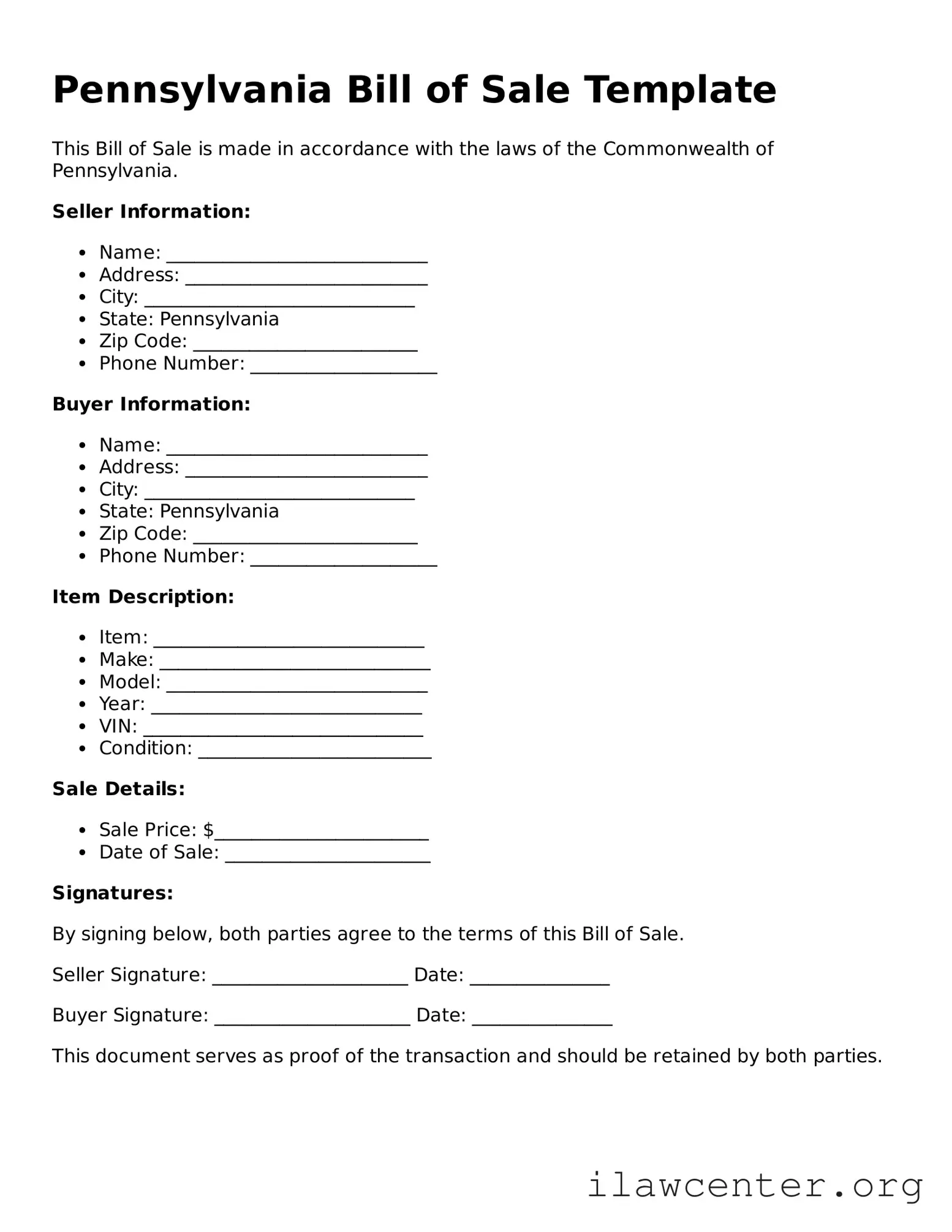
What is a Pennsylvania Bill of Sale?
A Pennsylvania Bill of Sale is a legal document that records the transfer of ownership of personal property from one party to another. This form provides essential details about the transaction, including the description of the item, the sale price, and the names of both the buyer and seller. It serves as proof of purchase and can be important for future reference.
When do I need a Bill of Sale in Pennsylvania?
You should use a Bill of Sale whenever you buy or sell personal property, such as vehicles, boats, or equipment. While not always legally required, having a Bill of Sale can protect both parties by documenting the terms of the sale. It is especially important for high-value items or when the item is being sold between private individuals.
Is a Bill of Sale required for vehicle sales in Pennsylvania?
Yes, a Bill of Sale is required for vehicle sales in Pennsylvania. The state requires a Bill of Sale to be completed when transferring ownership of a vehicle. This document helps facilitate the registration process and provides proof of the transaction for both the buyer and seller.
What information should be included in a Pennsylvania Bill of Sale?
A comprehensive Pennsylvania Bill of Sale should include the following information: the names and addresses of both the buyer and seller, a detailed description of the item being sold (including make, model, year, and VIN for vehicles), the sale price, and the date of the transaction. Additionally, both parties should sign the document to validate the sale.
Can I create my own Bill of Sale, or do I need a specific form?
You can create your own Bill of Sale as long as it contains all the necessary information. However, using a standardized form can simplify the process and ensure that you include all required details. Many online resources offer templates specifically designed for Pennsylvania, making it easy to create a compliant document.
Do I need to have the Bill of Sale notarized?
In Pennsylvania, notarization of a Bill of Sale is not typically required. However, having the document notarized can add an extra layer of protection, especially for high-value transactions. It serves as an official verification of the identities of the parties involved and the authenticity of the signatures.
What if I lose my Bill of Sale?
If you lose your Bill of Sale, it can be challenging, but not impossible, to resolve. You may need to request a duplicate from the seller if they have a copy. If that’s not possible, you can create a new Bill of Sale that includes the same details and is signed by both parties again. Keeping a copy of the document in a safe place is always advisable.
Can a Bill of Sale be used as a receipt?
Yes, a Bill of Sale functions as a receipt for the transaction. It provides proof of the sale and outlines the terms agreed upon by both parties. This can be useful for tax purposes or in case of disputes regarding the transaction in the future.
What should I do if the item I purchased has issues after the sale?
If you encounter issues with an item after the sale, the Bill of Sale can be a critical document. It outlines the condition of the item at the time of sale and any warranties or guarantees made by the seller. Depending on the circumstances, you may be able to negotiate a resolution with the seller based on the terms documented in the Bill of Sale.
Are there any fees associated with filing a Bill of Sale in Pennsylvania?
There are generally no fees associated with creating or filing a Bill of Sale in Pennsylvania, as it is typically a private agreement between two parties. However, if the Bill of Sale is for a vehicle, you may incur fees when registering the vehicle with the Pennsylvania Department of Transportation. Always check with local authorities for any specific requirements or fees that may apply.