Attorney-Verified  Deed in Lieu of Foreclosure Document for Pennsylvania

Attorney-Verified Deed in Lieu of Foreclosure Document for Pennsylvania

The Pennsylvania Deed in Lieu of Foreclosure form allows homeowners to transfer their property back to the lender to avoid foreclosure proceedings. This option can help homeowners mitigate financial loss and protect their credit. If you're considering this route, fill out the form by clicking the button below.

Article Guide

The Pennsylvania Deed in Lieu of Foreclosure form serves as a vital legal tool for homeowners facing financial difficulties and potential foreclosure. This form allows property owners to voluntarily transfer the title of their property back to the lender, thereby avoiding the lengthy and often costly foreclosure process. By executing this deed, homeowners can alleviate the stress of mounting debt and protect their credit ratings from the severe impacts of foreclosure. The form outlines the specific terms and conditions under which the property is transferred, including any outstanding mortgage balances and the responsibilities of both parties. Additionally, it may include provisions regarding the release of liability for the homeowner, which can provide significant peace of mind. Understanding the intricacies of this form is essential for homeowners seeking a more manageable resolution to their financial challenges while minimizing the repercussions of foreclosure on their future financial health.

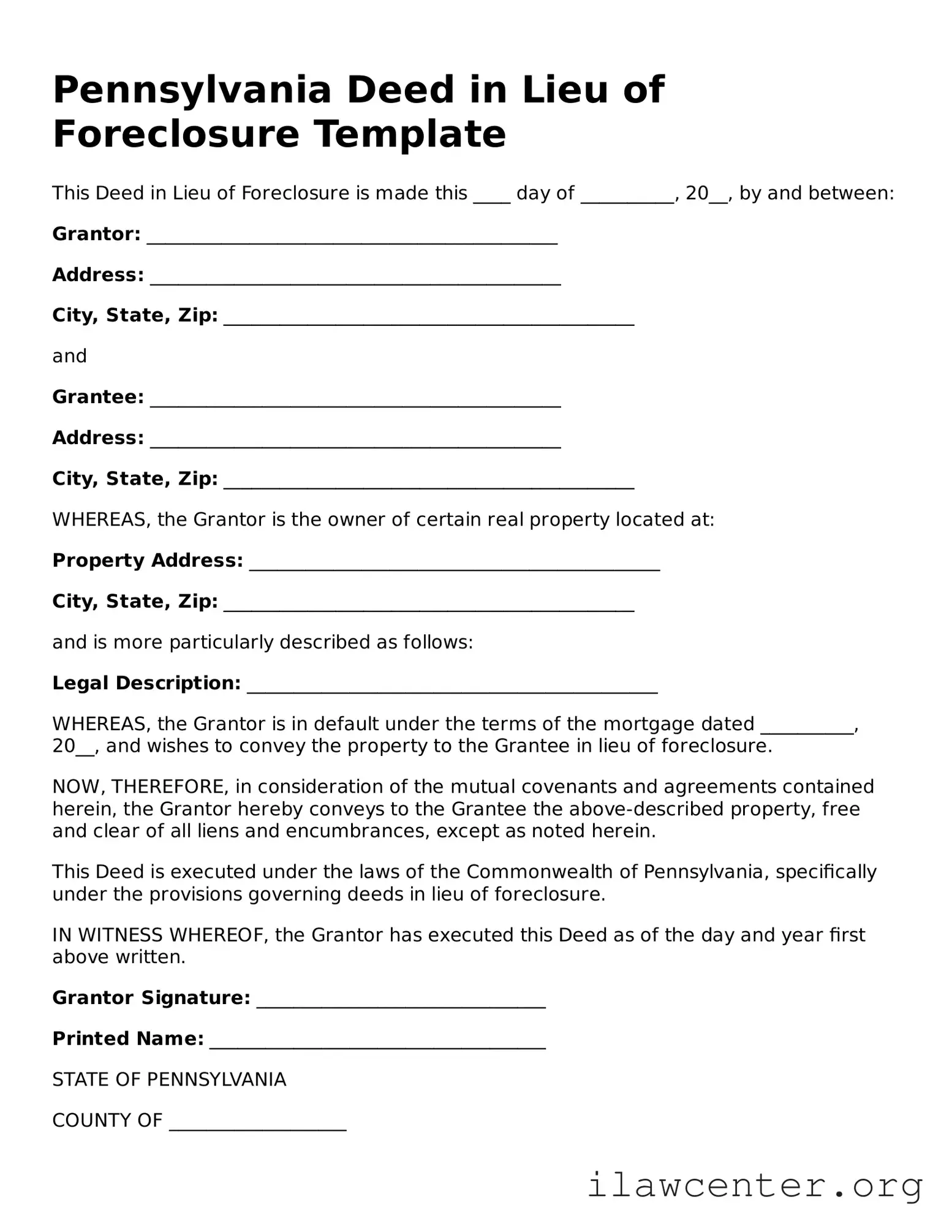
Pennsylvania Deed in Lieu of Foreclosure Preview

Pennsylvania Deed in Lieu of Foreclosure Template

This Deed in Lieu of Foreclosure is made this ____ day of __________, 20__, by and between:

Grantor: ____________________________________________

Address: ____________________________________________

City, State, Zip: ____________________________________________

and

Grantee: ____________________________________________

Address: ____________________________________________

City, State, Zip: ____________________________________________

WHEREAS, the Grantor is the owner of certain real property located at:

Property Address: ____________________________________________

City, State, Zip: ____________________________________________

and is more particularly described as follows:

Legal Description: ____________________________________________

WHEREAS, the Grantor is in default under the terms of the mortgage dated __________, 20__, and wishes to convey the property to the Grantee in lieu of foreclosure.

NOW, THEREFORE, in consideration of the mutual covenants and agreements contained herein, the Grantor hereby conveys to the Grantee the above-described property, free and clear of all liens and encumbrances, except as noted herein.

This Deed is executed under the laws of the Commonwealth of Pennsylvania, specifically under the provisions governing deeds in lieu of foreclosure.

IN WITNESS WHEREOF, the Grantor has executed this Deed as of the day and year first above written.

Grantor Signature: _______________________________

Printed Name: ____________________________________

STATE OF PENNSYLVANIA

COUNTY OF ___________________

On this ____ day of __________, 20__, before me, a Notary Public, personally appeared ____________________________, known to me (or satisfactorily proven) to be the person whose name is subscribed to the within instrument, and acknowledged that he/she executed the same for the purposes therein contained.

IN WITNESS WHEREOF, I hereunto set my hand and official seal.

Notary Public Signature: ___________________________

My Commission Expires: ____________________________

PDF Form Characteristics

Fact Name Description
Definition A Deed in Lieu of Foreclosure is a legal document where a borrower voluntarily transfers ownership of their property to the lender to avoid foreclosure proceedings.
Governing Law This process is governed by Pennsylvania state law, specifically under the Pennsylvania Consolidated Statutes Title 68, Chapter 33.
Benefits Borrowers may benefit from a Deed in Lieu of Foreclosure by potentially minimizing their credit impact compared to a foreclosure and avoiding lengthy legal proceedings.
Requirements Typically, lenders will require that the borrower is unable to make mortgage payments and that the property is free of other liens before accepting a Deed in Lieu of Foreclosure.

Instructions on Utilizing Pennsylvania Deed in Lieu of Foreclosure

After completing the Pennsylvania Deed in Lieu of Foreclosure form, it is essential to ensure that all parties involved understand the implications of the document. This form facilitates the transfer of property ownership to the lender, allowing the borrower to avoid foreclosure. Follow the steps below to fill out the form correctly.

  1. Begin by entering the date at the top of the form.
  2. Provide the name of the borrower as it appears on the mortgage documents.
  3. Fill in the address of the property being transferred.
  4. Include the name of the lender who will receive the property.
  5. Specify the legal description of the property. This is often found in the original deed.
  6. State the consideration for the deed, typically noted as "for no monetary consideration."
  7. Sign the form in the designated area. Ensure that the signature is dated.
  8. Have the form notarized. This step is crucial for legal validity.
  9. Provide a copy of the completed form to the lender and retain a copy for your records.

Important Facts about Pennsylvania Deed in Lieu of Foreclosure

What is a Deed in Lieu of Foreclosure in Pennsylvania?

A Deed in Lieu of Foreclosure is a legal process where a homeowner voluntarily transfers the title of their property to the lender to avoid foreclosure. This arrangement allows the homeowner to walk away from the mortgage obligation, and in many cases, it can help preserve their credit score compared to a foreclosure. It is often seen as a last resort for homeowners facing financial difficulties.

Who qualifies for a Deed in Lieu of Foreclosure?

Generally, homeowners who are struggling to make mortgage payments and are at risk of foreclosure may qualify. Lenders typically look for homeowners who have experienced financial hardship, such as job loss or medical expenses. It's important to note that the homeowner must be willing to give up the property and must not have any other liens on the property. Each lender may have specific requirements, so it's advisable to check with them directly.

What are the benefits of a Deed in Lieu of Foreclosure?

One significant benefit is that it can be less damaging to a homeowner's credit score compared to a foreclosure. Additionally, it allows homeowners to avoid the lengthy foreclosure process. The homeowner may also be relieved of the debt associated with the mortgage, and in some cases, lenders may forgive any remaining balance. This process can provide a quicker resolution and allow homeowners to move on with their lives.

What are the risks involved with a Deed in Lieu of Foreclosure?

While there are benefits, there are also risks. Homeowners may not receive any financial assistance or relocation help from the lender. Additionally, if there are other liens on the property, those debts may not be resolved through this process. It’s also crucial to understand that the lender may report the deed in lieu to credit agencies, which could still affect the homeowner’s credit score.

How does the process work?

The process typically begins with the homeowner contacting their lender to express interest in a Deed in Lieu of Foreclosure. The lender will then review the homeowner's financial situation. If approved, the homeowner will sign a deed transferring ownership of the property to the lender. The lender may also require the homeowner to sign a release of liability to ensure they are not held responsible for any remaining mortgage balance.

Can a homeowner stay in the property after signing a Deed in Lieu of Foreclosure?

In most cases, once the deed is signed and ownership is transferred, the homeowner must vacate the property. However, some lenders may allow a short period for the homeowner to remain in the home, often referred to as a "cash for keys" agreement. This arrangement is not guaranteed and varies by lender.

Is legal assistance recommended for a Deed in Lieu of Foreclosure?

Yes, seeking legal assistance is often advisable. A legal professional can help homeowners understand their rights and obligations throughout the process. They can also assist in negotiating terms with the lender and ensuring that all necessary documents are completed correctly. Having legal guidance can provide peace of mind and help avoid potential pitfalls.

How does a Deed in Lieu of Foreclosure affect future home purchases?

While a Deed in Lieu of Foreclosure is generally less damaging than a foreclosure, it can still impact a homeowner’s ability to purchase another home in the future. Lenders may view it as a negative mark on a credit report. The time frame for qualifying for a new mortgage can vary, but it typically ranges from two to four years after the deed in lieu is completed. Homeowners should consult with a mortgage professional for specific guidance based on their situation.

Common mistakes

Filling out the Pennsylvania Deed in Lieu of Foreclosure form can be a straightforward process, but many make common mistakes that can lead to complications. One frequent error is not providing complete information. It’s essential to include all necessary details about the property, the borrower, and the lender. Missing even a small piece of information can delay the process or cause the form to be rejected.

Another mistake is failing to sign the document properly. All parties involved must sign the deed. If a signature is missing, it could render the deed invalid. This oversight can lead to further legal issues down the line, so double-checking signatures is crucial.

People often overlook the need for notarization. In Pennsylvania, the deed must be notarized to be legally binding. Not having a notary present during the signing can invalidate the deed, making it essential to arrange for notarization ahead of time.

Some individuals also forget to review the terms of the deed before signing. Understanding what rights and responsibilities are being transferred is vital. Without this knowledge, a person may unknowingly agree to unfavorable terms.

Another common mistake is not providing the correct property description. The description must be accurate and match what is recorded in public records. An incorrect description can lead to disputes or confusion about which property is being conveyed.

Additionally, people sometimes neglect to check for outstanding liens or encumbrances on the property. If there are existing debts tied to the property, these may not be resolved by the deed in lieu of foreclosure. It’s important to address any liens before proceeding.

Some individuals fail to communicate effectively with their lender. Not discussing the deed in lieu process with the lender can lead to misunderstandings. Clear communication can help ensure that all parties are on the same page regarding the transaction.

Another mistake is not considering tax implications. A deed in lieu of foreclosure may have tax consequences. It’s wise to consult with a tax professional to understand any potential liabilities that could arise from the transfer.

Finally, people may rush the process without seeking legal advice. While it’s possible to complete the form independently, having a legal advisor review the document can prevent costly errors. Taking the time to ensure everything is correct can save significant headaches later.

Documents used along the form

A Deed in Lieu of Foreclosure is a legal document that allows a borrower to transfer ownership of their property to the lender to avoid foreclosure. Along with this form, several other documents are often necessary to ensure a smooth process. Below is a list of related forms and documents that may be required.

  • Loan Modification Agreement: This document outlines changes to the original loan terms, such as interest rates or repayment schedules, which can help the borrower avoid foreclosure.
  • Notice of Default: A formal notification sent to the borrower indicating that they have failed to meet the loan obligations, often a precursor to foreclosure proceedings.
  • Release of Liability: This document releases the borrower from any further obligations related to the mortgage after the property has been transferred to the lender.
  • Property Condition Disclosure: A statement that provides information about the condition of the property, which the borrower must complete to inform the lender of any known issues.
  • Settlement Statement: A detailed account of all financial transactions related to the property transfer, including any fees or costs incurred during the process.
  • Affidavit of Title: A sworn statement by the borrower affirming that they hold clear title to the property and that there are no undisclosed liens or claims against it.
  • Title Insurance Policy: This insurance protects the lender against any claims or issues that may arise regarding the title of the property after the transfer.
  • Release of Mortgage: A document that officially releases the lender's claim on the property once the deed has been transferred, ensuring that the borrower is no longer liable for the mortgage.
  • Borrower's Financial Statement: A comprehensive overview of the borrower’s financial situation, which may be required to assess their ability to repay any remaining debts after the transfer.

These documents play a crucial role in the Deed in Lieu of Foreclosure process. Each serves a specific purpose, ensuring that both the borrower and lender are protected during the transition of property ownership.

Similar forms

A Deed in Lieu of Foreclosure is a legal document that allows a homeowner to voluntarily transfer ownership of their property to the lender to avoid foreclosure. Several other documents share similarities with this form, each serving a unique purpose in the context of property ownership and debt resolution. Below are seven documents that are similar to the Deed in Lieu of Foreclosure:

  • Short Sale Agreement: This document allows a homeowner to sell their property for less than the amount owed on the mortgage, with the lender's consent. Like a Deed in Lieu, it helps avoid foreclosure.
  • Loan Modification Agreement: This agreement alters the terms of an existing mortgage to make it more manageable for the borrower. Both documents aim to prevent foreclosure by providing a solution to the homeowner's financial difficulties.
  • Forbearance Agreement: This document allows a lender to temporarily reduce or suspend mortgage payments. It provides immediate relief to the homeowner, similar to the Deed in Lieu's goal of avoiding foreclosure.
  • Quitclaim Deed: This document transfers ownership of property without guaranteeing that the title is clear. While it does not directly prevent foreclosure, it can be used in situations where a homeowner wants to relinquish property rights.
  • Release of Mortgage: This document formally releases a borrower from the mortgage obligation once the debt is paid off. It serves a similar purpose as a Deed in Lieu, as both signify the end of the borrower's responsibility for the property.
  • Bankruptcy Filing: Filing for bankruptcy can halt foreclosure proceedings and provide a way to reorganize debts. While it is a more drastic measure, it shares the goal of protecting the homeowner from losing their property.
  • Property Settlement Agreement: Often used in divorce cases, this document outlines how property will be divided. It can resemble a Deed in Lieu when one party relinquishes their interest in a property to avoid foreclosure or financial strain.

Dos and Don'ts

When filling out the Pennsylvania Deed in Lieu of Foreclosure form, it is essential to approach the process with care. The following list provides guidance on what to do and what to avoid.

  • Do ensure that all information is accurate and complete. Double-check names, addresses, and property details.
  • Do consult with a legal professional if you have any questions or uncertainties about the form.
  • Do include all necessary documentation, such as proof of ownership and any related agreements.
  • Do sign the form in the presence of a notary public to ensure its validity.
  • Don't rush through the process. Take your time to understand each section of the form.
  • Don't omit any required signatures. All parties involved must sign the document.
  • Don't ignore any outstanding debts or obligations related to the property, as these may affect the deed's acceptance.

Misconceptions

Understanding the Pennsylvania Deed in Lieu of Foreclosure can be challenging due to common misconceptions. Below are four prevalent misunderstandings about this legal document.

  • It eliminates all debt obligations immediately. Many believe that signing a Deed in Lieu of Foreclosure automatically cancels all mortgage debt. In reality, this process only transfers ownership of the property back to the lender. Borrowers may still be responsible for any remaining debt or deficiencies unless explicitly stated otherwise in the agreement.
  • It is a quick and easy process. Some assume that the Deed in Lieu of Foreclosure is a simple and swift solution to avoid foreclosure. However, the process can be lengthy and requires negotiation with the lender. The lender must agree to accept the deed, and this can take time.
  • It has no impact on credit scores. A common belief is that a Deed in Lieu of Foreclosure will not affect a borrower's credit report. In fact, this action can significantly impact credit scores, similar to a foreclosure. The negative mark may remain on a credit report for several years.
  • It is available to everyone facing foreclosure. Not all homeowners can utilize a Deed in Lieu of Foreclosure. Lenders often have specific criteria that must be met. Factors such as the borrower’s financial situation and the condition of the property can influence eligibility.

By clarifying these misconceptions, homeowners can make more informed decisions regarding their options when facing foreclosure in Pennsylvania.

Key takeaways

Filling out and using the Pennsylvania Deed in Lieu of Foreclosure form can be an important step for homeowners facing foreclosure. Here are some key takeaways to consider:

  • Understanding the Purpose: A Deed in Lieu of Foreclosure allows a homeowner to voluntarily transfer their property to the lender to avoid the foreclosure process.
  • Eligibility Requirements: Homeowners must demonstrate that they are unable to keep up with mortgage payments and that the property is not subject to any other liens.
  • Consulting Professionals: It is advisable to seek legal or financial advice before proceeding, as the implications can be significant.
  • Completing the Form: Accurate completion of the form is crucial. All required information must be filled out clearly to avoid delays.
  • Reviewing Loan Documents: Homeowners should review their loan documents to understand any obligations or rights that may affect the deed transfer.
  • Negotiating with Lenders: Engaging in discussions with the lender can sometimes lead to more favorable terms or conditions in the deed agreement.
  • Tax Implications: Transferring property through a Deed in Lieu may have tax consequences. Consulting a tax professional is wise.
  • Impact on Credit Score: While a Deed in Lieu can be less damaging than foreclosure, it may still negatively affect the homeowner’s credit score.
  • Post-Transfer Considerations: After the transfer, homeowners should understand their rights and responsibilities regarding any remaining debt or deficiency judgments.

These takeaways provide a foundational understanding of the process and implications associated with the Pennsylvania Deed in Lieu of Foreclosure form.