Attorney-Verified  Employee Handbook Document for Pennsylvania

Attorney-Verified Employee Handbook Document for Pennsylvania

The Pennsylvania Employee Handbook form serves as a crucial document that outlines the rights, responsibilities, and policies governing the workplace. This form helps ensure that both employers and employees understand their obligations and expectations within the organization. To create a comprehensive handbook tailored to your needs, fill out the form by clicking the button below.

Article Guide

In the realm of employment law, the Pennsylvania Employee Handbook serves as a vital tool for both employers and employees, outlining essential policies and procedures that govern the workplace. This document is designed to provide clarity on various topics, including employee rights, workplace expectations, and disciplinary processes. It typically covers crucial areas such as attendance policies, code of conduct, anti-discrimination measures, and safety protocols. By establishing clear guidelines, the handbook helps foster a positive work environment while also ensuring compliance with state and federal laws. Employers can use the handbook to communicate their values and expectations, while employees benefit from a clear understanding of their responsibilities and the resources available to them. The importance of a well-structured employee handbook cannot be overstated, as it serves not only as a reference point but also as a foundation for a fair and transparent workplace culture.

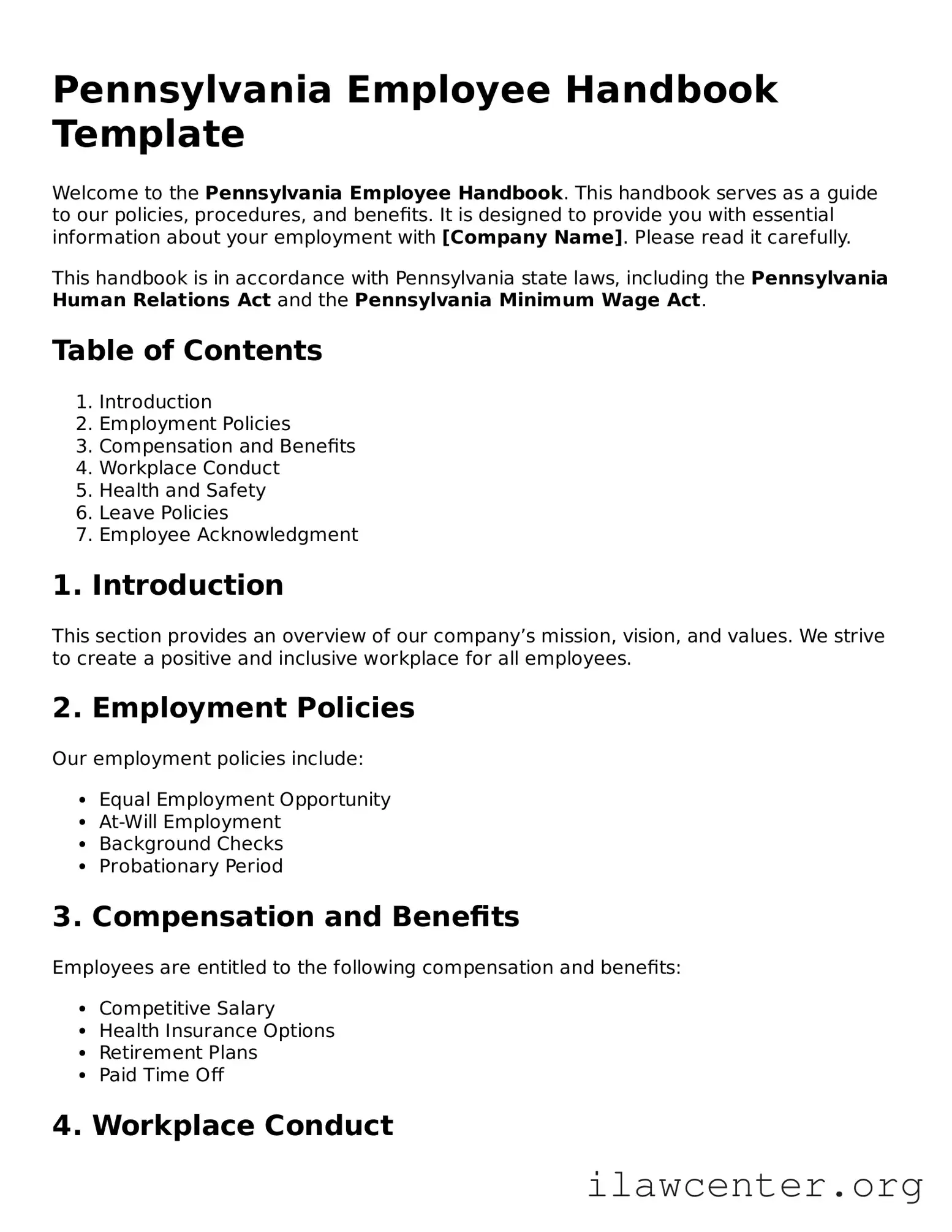
Pennsylvania Employee Handbook Preview

Pennsylvania Employee Handbook Template

Welcome to the Pennsylvania Employee Handbook. This handbook serves as a guide to our policies, procedures, and benefits. It is designed to provide you with essential information about your employment with [Company Name]. Please read it carefully.

This handbook is in accordance with Pennsylvania state laws, including the Pennsylvania Human Relations Act and the Pennsylvania Minimum Wage Act.

Table of Contents

  1. Introduction
  2. Employment Policies
  3. Compensation and Benefits
  4. Workplace Conduct
  5. Health and Safety
  6. Leave Policies
  7. Employee Acknowledgment

1. Introduction

This section provides an overview of our company’s mission, vision, and values. We strive to create a positive and inclusive workplace for all employees.

2. Employment Policies

Our employment policies include:

  • Equal Employment Opportunity
  • At-Will Employment
  • Background Checks
  • Probationary Period

3. Compensation and Benefits

Employees are entitled to the following compensation and benefits:

  • Competitive Salary
  • Health Insurance Options
  • Retirement Plans
  • Paid Time Off

4. Workplace Conduct

We expect all employees to maintain a professional environment. Key conduct guidelines include:

  • Respectful Communication
  • Dress Code Policy
  • Anti-Harassment Policy
  • Conflict Resolution Procedures

5. Health and Safety

Your health and safety are our top priority. We adhere to the following practices:

  • Regular Safety Training
  • Emergency Procedures
  • Reporting Unsafe Conditions

6. Leave Policies

Employees are eligible for various types of leave, including:

  • Sick Leave
  • Family and Medical Leave
  • Vacation Leave

7. Employee Acknowledgment

By signing below, you acknowledge that you have received, read, and understood the Pennsylvania Employee Handbook.

Employee Name: ____________________________

Employee Signature: ________________________

Date: ____________________________

PDF Form Characteristics

Fact Name Description
Purpose The Pennsylvania Employee Handbook serves as a guide for employees regarding company policies, procedures, and expectations.
Legal Requirement While not legally required, providing an employee handbook is highly recommended to clarify workplace rules and reduce misunderstandings.
Governing Laws The handbook should comply with Pennsylvania labor laws, including the Pennsylvania Human Relations Act and the Fair Labor Standards Act.
Contents Typically includes sections on workplace conduct, benefits, leave policies, and disciplinary procedures.
Employee Acknowledgment Employees should sign an acknowledgment form indicating they have received and understood the handbook.
Updates Regular updates are necessary to reflect changes in laws or company policies. Keeping the handbook current is crucial.
Accessibility The handbook must be easily accessible to all employees, whether in print or digital format, to ensure everyone can refer to it as needed.

Instructions on Utilizing Pennsylvania Employee Handbook

Filling out the Pennsylvania Employee Handbook form is an important step in ensuring that both employees and employers are aligned on workplace policies and expectations. This process involves providing specific information that will be reviewed and acknowledged by all parties involved. Follow these steps to complete the form accurately.

  1. Begin by entering the employee's full name in the designated field.
  2. Next, provide the employee's job title. Make sure this matches what is listed in the company records.
  3. Fill in the date of hire. This should reflect the actual start date of employment.
  4. Enter the department where the employee will be working. This helps in categorizing the policies relevant to that specific area.
  5. Review the company policies outlined in the handbook. Take note of any sections that may require special attention or clarification.
  6. Sign and date the form to confirm that you have read and understood the handbook. This signature is crucial for record-keeping purposes.
  7. Submit the completed form to the HR department. Ensure you keep a copy for your records.

Important Facts about Pennsylvania Employee Handbook

What is the Pennsylvania Employee Handbook form?

The Pennsylvania Employee Handbook form is a document that outlines the policies, procedures, and expectations of an employer regarding employee conduct and workplace standards. It serves as a guide for employees to understand their rights and responsibilities within the organization.

Why is an Employee Handbook important?

An Employee Handbook is crucial for establishing clear communication between the employer and employees. It helps to ensure that everyone is aware of company policies, workplace rules, and the benefits available to them. This clarity can prevent misunderstandings and disputes in the workplace.

Who should receive a copy of the Employee Handbook?

All employees should receive a copy of the Employee Handbook. This includes full-time, part-time, and temporary employees. Providing access to the handbook helps ensure that everyone understands the policies that govern their employment.

How often should the Employee Handbook be updated?

It is advisable to review and update the Employee Handbook at least once a year. Changes in laws, company policies, or workplace practices may necessitate updates. Regular revisions help ensure that the handbook remains relevant and compliant with current regulations.

Can an Employee Handbook be modified after it is distributed?

Yes, an Employee Handbook can be modified after distribution. However, it is essential to communicate any changes to all employees promptly. This ensures that everyone is informed of the most current policies and procedures.

What should be included in the Employee Handbook?

The Employee Handbook should include information on company policies, employee rights, workplace safety, anti-discrimination policies, benefits, and procedures for reporting grievances. It may also cover attendance policies, dress code, and disciplinary procedures.

Is it necessary to have employees sign an acknowledgment of receipt of the Employee Handbook?

While it is not legally required, obtaining a signed acknowledgment from employees can be beneficial. This signature serves as proof that employees have received and reviewed the handbook, which can help in resolving any future disputes regarding policies.

What should an employer do if an employee violates a policy in the Employee Handbook?

If an employee violates a policy, the employer should follow the procedures outlined in the handbook for addressing such violations. This may include a verbal warning, written warning, or other disciplinary actions, depending on the severity of the violation and the company's policies.

How can employees provide feedback on the Employee Handbook?

Employees should feel encouraged to provide feedback on the Employee Handbook. Employers can create a process for employees to submit their suggestions or concerns, which can help improve the handbook and foster a positive workplace culture.
Common mistakes

Filling out an employee handbook form is often seen as a simple task, but many individuals overlook critical details that can lead to confusion or complications later on. One common mistake is failing to read the entire form carefully. When individuals rush through the process, they may miss important instructions or sections that require specific information. This oversight can result in incomplete submissions, which might delay the onboarding process.

Another frequent error is neglecting to provide accurate personal information. Employees sometimes enter outdated addresses or incorrect phone numbers. This can create issues when the company needs to contact them regarding benefits, payroll, or other essential matters. It’s crucial to double-check this information to ensure that it is current and correct.

In addition, many people forget to sign and date the form. A signature is often required to validate the information provided and to acknowledge receipt of the handbook itself. Without a signature, the form may be considered incomplete, leading to potential misunderstandings about the employee's rights and responsibilities.

Some individuals fail to ask questions when they do not understand certain sections of the handbook. Instead of seeking clarification, they might make assumptions that could lead to misinterpretations of company policies. It is always better to ask for help than to guess, as this can prevent future conflicts or violations of company rules.

Another mistake is not keeping a copy of the completed form. After submitting the handbook form, employees should retain a copy for their records. This is vital for reference in case any disputes arise regarding the information provided or the policies outlined in the handbook.

Additionally, individuals sometimes overlook the importance of reviewing the handbook itself. The handbook contains essential information about workplace policies, benefits, and expectations. Failing to read it can lead to misunderstandings about workplace behavior and entitlements. Employees should take the time to familiarize themselves with its contents.

Lastly, some employees may not update their handbook forms when their circumstances change, such as a change in marital status or dependents. Keeping the information up to date is essential for benefits and payroll purposes. Regularly reviewing and updating personal information ensures that employees receive the correct benefits and that the company has accurate records.

Documents used along the form

When creating a comprehensive employee handbook in Pennsylvania, several other forms and documents can enhance clarity and compliance. Each of these documents serves a specific purpose and helps establish clear expectations between employers and employees.

  • Employment Application Form: This form collects essential information from job applicants, including personal details, work history, and references. It helps employers assess candidates effectively.
  • Employee Agreement: A written agreement that outlines the terms of employment, including job responsibilities, compensation, and benefits. This document protects both the employer and the employee.
  • Non-Disclosure Agreement (NDA): This agreement prevents employees from sharing confidential company information. It is crucial for protecting trade secrets and sensitive business data.
  • W-4 Form: Employees complete this form to indicate their tax withholding preferences. It ensures that the correct amount of federal income tax is deducted from their paychecks.
  • Direct Deposit Authorization Form: This document allows employees to authorize their employer to deposit their pay directly into their bank accounts, simplifying the payment process.
  • Employee Evaluation Form: This form is used to assess employee performance. Regular evaluations help identify strengths and areas for improvement, fostering employee development.
  • Time-Off Request Form: Employees use this form to request time off for vacations, personal reasons, or medical leave. It helps employers manage staffing and scheduling effectively.
  • Safety Policy Acknowledgment Form: Employees sign this form to acknowledge that they have received and understood the company’s safety policies. It promotes a safe working environment.
  • Harassment Policy Acknowledgment Form: This document ensures employees understand the company's stance on harassment and their rights. It is essential for maintaining a respectful workplace.

Utilizing these forms in conjunction with the Pennsylvania Employee Handbook can create a clear framework for workplace expectations and legal compliance. Each document plays a vital role in fostering a positive and productive work environment.

Similar forms

  • Company Policy Manual: Similar to an Employee Handbook, this document outlines the rules and regulations of the workplace, detailing employee expectations and company standards.
  • Onboarding Guide: This document serves as an introduction for new employees, providing essential information about company culture, procedures, and key contacts, much like the Employee Handbook.
  • Code of Conduct: This document specifies acceptable behaviors and practices within the workplace, similar to the guidelines found in an Employee Handbook.
  • Safety Manual: Focused on workplace safety, this document provides guidelines and procedures to ensure a safe working environment, paralleling the safety policies typically included in an Employee Handbook.
  • Benefits Overview: This document details employee benefits such as health insurance, retirement plans, and leave policies, which are often summarized in an Employee Handbook.
  • Performance Evaluation Guidelines: Similar to an Employee Handbook, this document outlines the criteria and process for employee evaluations, ensuring transparency in performance expectations.
  • Termination Policy: This document describes the processes and reasons for employee termination, aligning with the Employee Handbook's section on employment termination procedures.

Dos and Don'ts

When filling out the Pennsylvania Employee Handbook form, it is important to follow certain guidelines to ensure accuracy and compliance. Here are six essential do's and don'ts to keep in mind:

  • Do read the entire form carefully before starting to fill it out.
  • Do provide complete and accurate information to avoid delays.
  • Do ask questions if any part of the form is unclear.
  • Do keep a copy of the completed form for your records.
  • Don't rush through the form; take your time to ensure everything is correct.
  • Don't leave any required fields blank, as this may result in processing issues.

By following these guidelines, you can help ensure that your submission is handled smoothly and efficiently. Your attention to detail is crucial in this process.

Misconceptions

Creating an employee handbook is an essential step for any business in Pennsylvania. However, there are several misconceptions surrounding the Pennsylvania Employee Handbook form that can lead to confusion. Here’s a list of common misunderstandings:

  • Employee handbooks are optional. Many employers believe that having an employee handbook is not necessary. In reality, a handbook helps set clear expectations and can protect both the employer and employees.
  • All employee handbooks must be the same. Some think that there is a one-size-fits-all handbook template. However, each handbook should reflect the specific policies and culture of the organization.
  • Handbooks are only for large companies. Small businesses may feel that they do not need a handbook. In truth, even small businesses benefit from having clear guidelines to prevent misunderstandings.
  • Once created, the handbook doesn’t need updates. Some employers believe that a handbook is a static document. In fact, it should be reviewed and updated regularly to reflect changes in laws or company policies.
  • Handbooks can cover every possible situation. While handbooks are comprehensive, they cannot anticipate every scenario. It's important to allow for flexibility and discretion in certain situations.
  • Employees must sign the handbook. Many think that a signature is required for the handbook to be valid. Instead, it’s sufficient to inform employees about the handbook and document their acknowledgment.
  • Handbooks replace verbal communication. Some employers assume that having a handbook eliminates the need for face-to-face communication. However, personal interactions remain crucial for fostering a positive workplace culture.
  • Legal language is necessary in handbooks. A common misconception is that handbooks must be filled with legal jargon. In reality, clear and simple language is more effective for employees to understand their rights and responsibilities.
  • Handbooks can’t be enforced. Some believe that handbooks are just suggestions and not enforceable. On the contrary, a well-drafted handbook can serve as a binding agreement and can be enforced in many situations.

Understanding these misconceptions can help employers create a more effective employee handbook that serves its intended purpose. Clear communication and proper documentation are vital for a successful workplace environment.

Key takeaways

Filling out and using the Pennsylvania Employee Handbook form is an important process for both employers and employees. Here are some key takeaways to keep in mind:

  • Understand the Purpose: The Employee Handbook serves as a guide for workplace policies, procedures, and expectations. It helps create a clear understanding of the company's culture and rules.
  • Customization is Key: Each handbook should be tailored to reflect the specific policies and practices of the organization. Generic templates may not adequately address unique workplace situations.
  • Legal Compliance: Ensure that the handbook complies with both state and federal laws. This includes labor laws, anti-discrimination policies, and safety regulations.
  • Clarity and Accessibility: Use clear language and straightforward explanations. The handbook should be easy to read and understand for all employees.
  • Regular Updates: Policies may change over time. Regularly review and update the handbook to reflect current practices and legal requirements.
  • Employee Acknowledgment: Include a section for employees to sign, acknowledging that they have received and understood the handbook. This can help prevent misunderstandings in the future.
  • Training and Orientation: Introduce the handbook during employee orientation. This helps new hires understand the company's expectations from the outset.

By keeping these points in mind, employers can create an effective Employee Handbook that benefits everyone in the workplace.