Attorney-Verified  Lease Agreement Document for Pennsylvania

Attorney-Verified Lease Agreement Document for Pennsylvania

The Pennsylvania Lease Agreement form serves as a legally binding contract between a landlord and a tenant, outlining the terms and conditions of renting a residential property. This essential document ensures that both parties understand their rights and responsibilities, promoting a harmonious rental experience. Ready to secure your rental agreement? Fill out the form by clicking the button below.

Article Guide

When renting a property in Pennsylvania, understanding the Pennsylvania Lease Agreement form is crucial for both landlords and tenants. This document serves as the foundation of the landlord-tenant relationship, outlining the rights and responsibilities of each party. Key aspects include the duration of the lease, the amount of rent, and the payment schedule. Additionally, it addresses security deposits, maintenance responsibilities, and rules regarding pets or alterations to the property. Importantly, the lease agreement also covers termination conditions and the procedures for resolving disputes. By clearly laying out these terms, the form helps prevent misunderstandings and protects the interests of everyone involved.

Pennsylvania Lease Agreement Preview

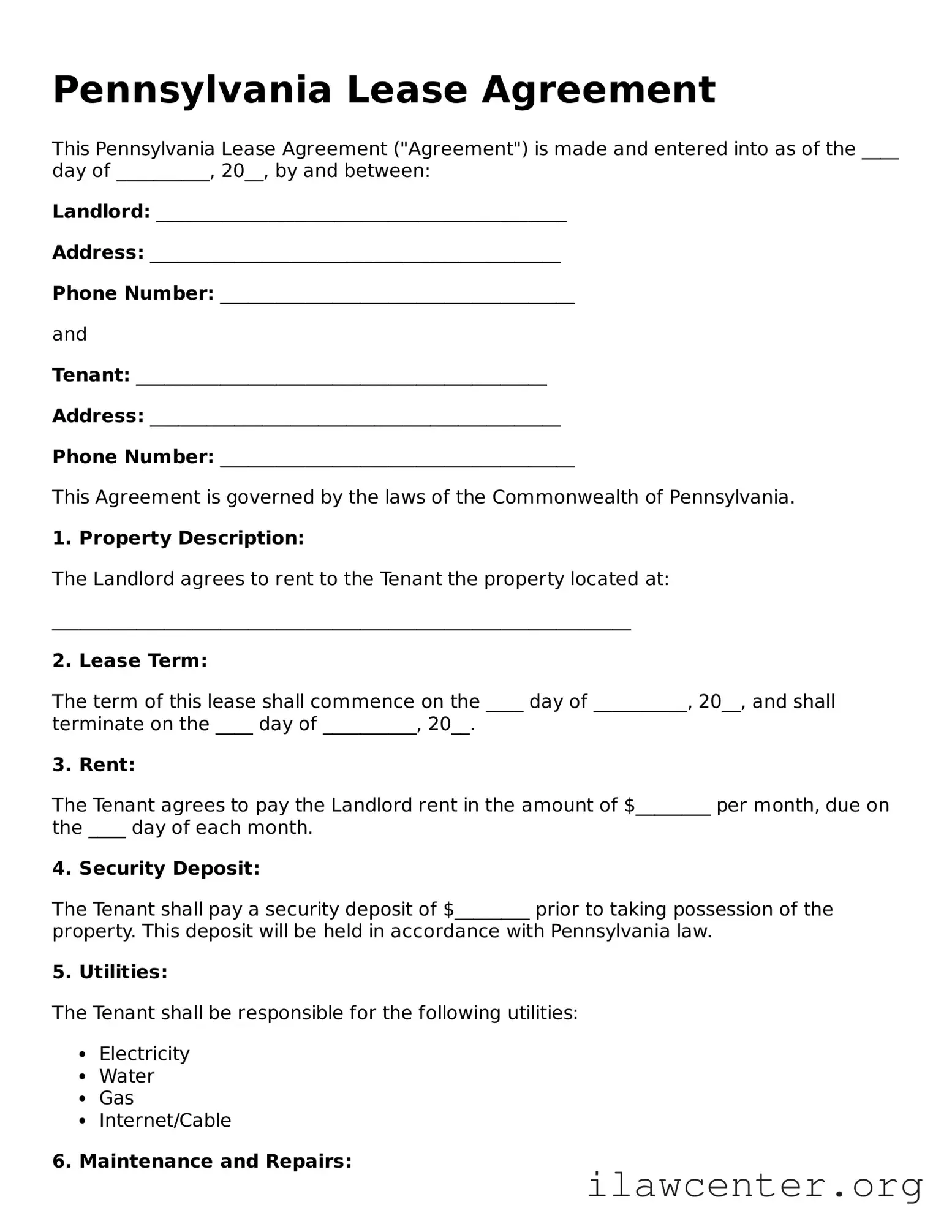
Pennsylvania Lease Agreement

This Pennsylvania Lease Agreement ("Agreement") is made and entered into as of the ____ day of __________, 20__, by and between:

Landlord: ____________________________________________

Address: ____________________________________________

Phone Number: ______________________________________

and

Tenant: ____________________________________________

Address: ____________________________________________

Phone Number: ______________________________________

This Agreement is governed by the laws of the Commonwealth of Pennsylvania.

1. Property Description:

The Landlord agrees to rent to the Tenant the property located at:

______________________________________________________________

2. Lease Term:

The term of this lease shall commence on the ____ day of __________, 20__, and shall terminate on the ____ day of __________, 20__.

3. Rent:

The Tenant agrees to pay the Landlord rent in the amount of $________ per month, due on the ____ day of each month.

4. Security Deposit:

The Tenant shall pay a security deposit of $________ prior to taking possession of the property. This deposit will be held in accordance with Pennsylvania law.

5. Utilities:

The Tenant shall be responsible for the following utilities:

  • Electricity
  • Water
  • Gas
  • Internet/Cable

6. Maintenance and Repairs:

The Tenant shall maintain the property in a clean and sanitary condition. Any necessary repairs should be reported to the Landlord promptly.

7. Termination:

Either party may terminate this lease by providing written notice at least ____ days prior to the intended termination date.

8. Governing Law:

This Agreement shall be governed by the laws of the Commonwealth of Pennsylvania.

9. Signatures:

By signing below, both parties agree to the terms outlined in this Lease Agreement.

Landlord Signature: _______________________________ Date: __________

Tenant Signature: _______________________________ Date: __________

PDF Form Characteristics

Fact Name Description
Governing Law The Pennsylvania Lease Agreement is governed by the Pennsylvania Uniform Commercial Code and relevant state laws.
Duration of Lease Lease terms can vary, but they typically range from 6 months to 1 year, depending on the agreement between the landlord and tenant.
Security Deposit In Pennsylvania, landlords can require a security deposit, which is usually limited to two months' rent for leases longer than 1 year.
Tenant Rights Tenants in Pennsylvania have specific rights, including the right to a habitable living environment and protection against retaliatory eviction.

Instructions on Utilizing Pennsylvania Lease Agreement

Filling out the Pennsylvania Lease Agreement form is a straightforward process that requires attention to detail. Completing this form accurately ensures that both the landlord and tenant understand their rights and responsibilities. Follow these steps to ensure you fill out the form correctly.

  1. Begin by entering the date at the top of the form.
  2. Fill in the names of the landlord and tenant. Make sure to include the full legal names of all parties involved.
  3. Provide the rental property's address. This should include the street number, street name, city, state, and zip code.
  4. Specify the lease term. Indicate the start date and end date of the lease agreement.
  5. State the monthly rent amount. Clearly write the dollar amount that the tenant will pay each month.
  6. Outline the security deposit amount. This is typically one month's rent but can vary based on the agreement.
  7. Detail any additional fees or charges that may apply, such as late fees or maintenance fees.
  8. Include any rules or regulations that the tenant must follow during the lease term. This can cover noise restrictions, pet policies, and other important guidelines.
  9. Sign and date the form at the bottom. Both the landlord and tenant should sign to acknowledge their agreement to the terms outlined.

Once the form is filled out, both parties should keep a copy for their records. This ensures that everyone has access to the same information and can refer back to it if necessary.

Important Facts about Pennsylvania Lease Agreement

What is a Pennsylvania Lease Agreement form?

A Pennsylvania Lease Agreement form is a legal document that outlines the terms and conditions between a landlord and a tenant for renting a residential property. This agreement serves to protect the rights of both parties by detailing important aspects such as rent amount, duration of the lease, security deposits, maintenance responsibilities, and rules regarding the use of the property. By clearly defining these elements, the lease helps to prevent misunderstandings and disputes during the rental period.

What should be included in a Pennsylvania Lease Agreement?

Essential components of a Pennsylvania Lease Agreement include the names of the landlord and tenant, the property address, the lease term (whether it is month-to-month or for a fixed duration), the rental amount and payment due dates, and the security deposit details. Additionally, it should outline the responsibilities of both parties regarding property maintenance, utilities, and any specific rules related to pets or alterations to the property. Including a clause about the process for terminating the lease can also be beneficial.

Are there any specific laws governing lease agreements in Pennsylvania?

Yes, Pennsylvania has specific laws that govern lease agreements. The Pennsylvania Landlord and Tenant Act outlines the rights and responsibilities of both landlords and tenants. This law covers various topics, including security deposits, eviction procedures, and the obligations of landlords to maintain habitable living conditions. It is crucial for both parties to be aware of these laws to ensure compliance and protect their rights throughout the rental process.

Can a lease agreement be modified after it is signed?

Yes, a lease agreement can be modified after it is signed, but both parties must agree to the changes. Any modifications should be documented in writing and signed by both the landlord and tenant to ensure clarity and enforceability. This might include adjustments to the rent, changes in lease duration, or updates to maintenance responsibilities. Verbal agreements are generally not enforceable, so it is always best to have any modifications formally recorded.

What happens if a tenant breaks the lease agreement?

If a tenant breaks the lease agreement, several consequences may follow. The landlord may have the right to retain the security deposit to cover unpaid rent or damages. Additionally, the landlord can seek to recover lost rent through legal action if the tenant vacates the property before the lease term ends. However, it is important to note that tenants may have valid reasons for breaking a lease, such as uninhabitable living conditions or domestic violence situations, which can affect the outcome. Communication between both parties is vital in these situations to explore possible resolutions.

Common mistakes

Filling out a Pennsylvania Lease Agreement form can seem straightforward, but many people make common mistakes that can lead to misunderstandings or legal issues. One frequent error is failing to include all necessary parties. Both the landlord and tenant should be clearly identified. Omitting a party can complicate the lease and create confusion about responsibilities.

Another mistake involves not specifying the lease term. It's crucial to clearly state the duration of the lease, whether it’s month-to-month or for a fixed term. Without this information, tenants and landlords may have different expectations about when the lease ends.

People often overlook the importance of detailing the rental amount and payment terms. The lease should specify the exact rent due, the due date, and acceptable payment methods. Missing this information can lead to disputes over payments.

Security deposits are another area where mistakes frequently occur. The lease should outline the amount of the security deposit, the conditions for its return, and any deductions that may be taken. Failing to address these points can lead to misunderstandings when the lease concludes.

Many individuals neglect to include maintenance responsibilities in the lease. It’s essential to clarify who is responsible for repairs and maintenance. This can prevent disputes over who should handle issues that arise during the tenancy.

Not addressing pet policies can also create problems. If pets are allowed, the lease should specify any restrictions or additional fees. Conversely, if pets are prohibited, this should be clearly stated to avoid future conflicts.

Another common error is not including clauses for termination and renewal. The lease should outline the process for terminating the agreement and whether it can be renewed. This clarity helps both parties understand their rights and obligations.

People sometimes fail to review local laws and regulations. Pennsylvania has specific laws regarding leases that must be followed. Ignoring these can lead to unenforceable clauses or legal penalties.

Lastly, many individuals do not keep a copy of the signed lease. Having a copy is essential for reference and can protect both parties in case of disputes. Always ensure that both landlord and tenant have signed copies of the lease agreement.

Documents used along the form

When entering into a rental agreement in Pennsylvania, it is essential to understand that the lease agreement is just one component of the overall rental process. Several other documents often accompany the lease to ensure clarity and protect the rights of both landlords and tenants. Below is a list of common forms and documents that are frequently used alongside the Pennsylvania Lease Agreement.

  • Rental Application: This document is typically completed by prospective tenants. It collects essential information such as employment history, rental history, and references. Landlords use this information to assess the suitability of applicants.
  • Background Check Authorization: This form allows landlords to conduct background checks on potential tenants. It usually requires the tenant’s consent and may include checks on criminal history, credit scores, and rental history.
  • Move-In/Move-Out Checklist: This checklist is used to document the condition of the rental property at the time of move-in and move-out. It helps prevent disputes over security deposits by providing a clear record of the property's state.
  • Security Deposit Receipt: After collecting a security deposit, landlords should provide a receipt to the tenant. This document serves as proof of the amount paid and outlines the terms regarding the deposit’s return at the end of the lease.
  • Rules and Regulations Addendum: This addendum outlines specific rules that tenants must follow while residing in the property. It may cover topics such as noise levels, pet policies, and common area usage.
  • Lease Renewal Agreement: As the lease term nears its end, landlords and tenants may choose to extend the rental agreement. This document formalizes the new terms and conditions for the extended lease period.

Understanding these additional documents can help ensure a smoother rental experience. Each serves a specific purpose, contributing to a clear and fair relationship between landlords and tenants. Being well-informed about these forms can empower both parties and foster a positive rental environment.

Similar forms

  • Rental Agreement: Like a lease agreement, a rental agreement outlines the terms of renting a property. However, it is typically for a shorter duration, often month-to-month, providing flexibility for both the tenant and the landlord.
  • Sublease Agreement: This document allows a tenant to rent out their leased property to another person. It mirrors a lease agreement in structure but includes specific terms regarding the original lease and the responsibilities of the subtenant.
  • Commercial Lease Agreement: Similar to a residential lease, this document is tailored for commercial properties. It outlines the terms of renting a space for business use, including rent, duration, and permitted activities.
  • Roommate Agreement: This is a contract between individuals sharing a rental property. It specifies each person’s responsibilities and rights, ensuring clarity in shared living situations, much like a lease agreement does for a single tenant.
  • Lease Purchase Agreement: This combines elements of a lease and a purchase agreement. It allows a tenant to rent a property with the option to buy it later, outlining terms for both renting and potential purchasing.
  • Tenancy Agreement: Often used interchangeably with a lease agreement, this document lays out the rights and responsibilities of both the landlord and tenant. It covers similar terms but may vary based on local laws.
  • Real Estate Purchase Agreement: While primarily for buying property, this document can include terms similar to a lease agreement, particularly when discussing occupancy before the sale is finalized.
  • Property Management Agreement: This document outlines the relationship between a property owner and a management company. It details the responsibilities of the management company, akin to how a lease outlines tenant and landlord duties.

Dos and Don'ts

When filling out the Pennsylvania Lease Agreement form, it is important to approach the task with care. Here are five things to consider doing and avoiding:

  • Do read the entire lease agreement carefully before filling it out.
  • Do provide accurate and complete information in all sections of the form.
  • Do ask questions if any part of the lease is unclear.
  • Don't sign the lease until you fully understand its terms and conditions.
  • Don't leave any blank spaces; if a section does not apply, write "N/A."

By following these guidelines, individuals can help ensure a smoother leasing process in Pennsylvania.

Misconceptions

When it comes to lease agreements in Pennsylvania, misunderstandings can lead to confusion and potential legal issues. Here are seven common misconceptions about the Pennsylvania Lease Agreement form that everyone should be aware of:

  1. All lease agreements must be written. Many believe that verbal agreements are sufficient. However, having a written lease is crucial for clarity and legal protection.
  2. Landlords can enter the property whenever they want. Some tenants think landlords have unlimited access. In reality, landlords must provide reasonable notice before entering the property, except in emergencies.
  3. Security deposits can be any amount. There’s a misconception that landlords can charge whatever they want for security deposits. In Pennsylvania, the amount is typically limited to one or two months' rent, depending on the length of the lease.
  4. Lease agreements cannot be changed. Some tenants assume that once signed, a lease is set in stone. In fact, both parties can agree to amendments, but these changes should be documented in writing.
  5. Rent increases can happen at any time. It’s a common belief that landlords can raise rent whenever they choose. However, they must follow the terms of the lease and provide proper notice before any increase.
  6. All utilities are included in the rent. Many tenants think that utilities are always covered. This is not the case; lease agreements should specify which utilities are included and which are the tenant’s responsibility.
  7. Tenants have no rights if the landlord fails to make repairs. Some believe that if a landlord neglects repairs, they have no recourse. In Pennsylvania, tenants have rights and can take action if a landlord fails to maintain the property.

Understanding these misconceptions can help both landlords and tenants navigate their agreements more effectively. Being informed leads to better communication and a smoother rental experience.

Key takeaways

When filling out and using the Pennsylvania Lease Agreement form, it is important to keep several key points in mind. Understanding these aspects can help ensure a smooth rental experience for both landlords and tenants.

  • Understand the Basics: Familiarize yourself with the terms of the lease, including the duration, rent amount, and payment due dates.
  • Identify Parties: Clearly state the names of all parties involved in the lease, including landlords and tenants.
  • Property Description: Provide a detailed description of the rental property, including the address and any specific unit numbers.
  • Security Deposit: Specify the amount of the security deposit and the conditions under which it will be returned.
  • Maintenance Responsibilities: Outline who is responsible for property maintenance and repairs during the lease term.
  • Rules and Regulations: Include any specific rules that tenants must follow while living in the property.
  • Termination Clause: Clearly define the process for terminating the lease, including notice periods required by both parties.
  • Signatures Required: Ensure that all parties sign and date the lease to make it legally binding.
  • Keep Copies: Retain copies of the signed lease for both the landlord and tenant for future reference.

By considering these takeaways, both landlords and tenants can navigate the lease agreement process with confidence and clarity.