Attorney-Verified  Notice to Quit Document for Pennsylvania

Attorney-Verified Notice to Quit Document for Pennsylvania

The Pennsylvania Notice to Quit form is a legal document that landlords use to formally notify tenants of their intent to terminate a rental agreement. This notice serves as an essential step in the eviction process, allowing tenants to understand their obligations and rights. If you need to fill out this form, please click the button below.

Article Guide

The Pennsylvania Notice to Quit form serves as a critical tool in the landlord-tenant relationship, particularly when disputes arise over rental agreements. This document is typically issued by a landlord to inform a tenant that they must vacate the rental property, often due to non-payment of rent or lease violations. In Pennsylvania, the form must adhere to specific legal requirements to ensure its validity. It includes essential details such as the tenant's name, the address of the rental property, and the reason for the notice. Additionally, it specifies the timeframe within which the tenant must respond or vacate, which is usually dictated by state law. Understanding the nuances of this form is vital for both landlords seeking to enforce their rights and tenants aiming to protect their interests. A properly executed Notice to Quit can pave the way for further legal actions, such as eviction proceedings, if necessary. Thus, familiarity with the form's contents and implications is essential for anyone involved in Pennsylvania's rental housing market.

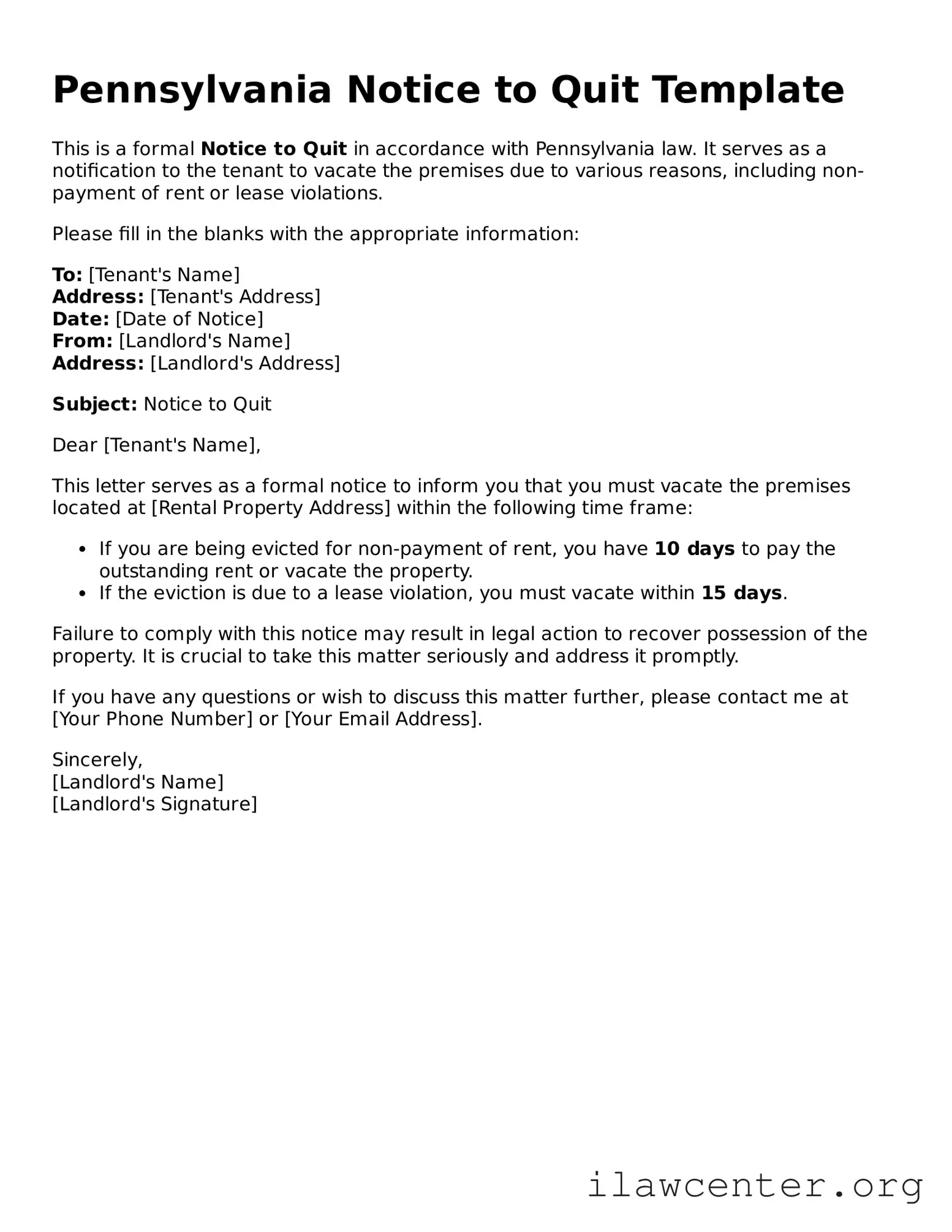
Pennsylvania Notice to Quit Preview

Pennsylvania Notice to Quit Template

This is a formal Notice to Quit in accordance with Pennsylvania law. It serves as a notification to the tenant to vacate the premises due to various reasons, including non-payment of rent or lease violations.

Please fill in the blanks with the appropriate information:

To: [Tenant's Name]
Address: [Tenant's Address]
Date: [Date of Notice]
From: [Landlord's Name]
Address: [Landlord's Address]

Subject: Notice to Quit

Dear [Tenant's Name],

This letter serves as a formal notice to inform you that you must vacate the premises located at [Rental Property Address] within the following time frame:

  • If you are being evicted for non-payment of rent, you have 10 days to pay the outstanding rent or vacate the property.
  • If the eviction is due to a lease violation, you must vacate within 15 days.

Failure to comply with this notice may result in legal action to recover possession of the property. It is crucial to take this matter seriously and address it promptly.

If you have any questions or wish to discuss this matter further, please contact me at [Your Phone Number] or [Your Email Address].

Sincerely,
[Landlord's Name]
[Landlord's Signature]

PDF Form Characteristics

Fact Name Description
Governing Law The Pennsylvania Notice to Quit is governed by the Pennsylvania Landlord-Tenant Act.
Purpose This form is used by landlords to inform tenants of their intention to terminate a lease.
Notice Period Landlords must provide a minimum notice period of 10 days for non-payment of rent.
Delivery Methods The notice can be delivered in person, by mail, or by posting on the property.
Tenant Response Tenants have the right to respond to the notice and remedy the issue, such as paying overdue rent.
Legal Requirements The notice must be clear and include specific details about the lease and the reason for termination.
Form Availability The Pennsylvania Notice to Quit form can be obtained online or from legal aid organizations.
Consequences of Non-Compliance If the notice is not properly executed, it may invalidate the eviction process.
Subsequent Actions After the notice period, landlords may file for eviction if the tenant does not comply.
Tenant Rights Tenants have rights under state law, including the right to contest an eviction in court.

Instructions on Utilizing Pennsylvania Notice to Quit

Once you have the Pennsylvania Notice to Quit form ready, it’s time to fill it out accurately. This form is an important step in the eviction process, and ensuring all details are correct will help in moving forward smoothly.

  1. Obtain the Form: Get a copy of the Pennsylvania Notice to Quit form. You can find it online or at your local courthouse.
  2. Identify the Tenant: Clearly write the full name of the tenant who is being served the notice. Make sure to spell it correctly.
  3. Provide the Address: Fill in the complete address of the rental property. Include the street number, street name, city, and zip code.
  4. Specify the Reason: Indicate the reason for the notice. This could be for non-payment of rent or other lease violations.
  5. Set the Deadline: State the number of days the tenant has to vacate the property. Pennsylvania typically requires a minimum of 10 days for non-payment of rent.
  6. Sign the Form: The landlord or authorized representative must sign the form. Include the date of signing.
  7. Make Copies: Before serving the notice, make copies for your records and for any necessary legal proceedings.

After filling out the form, it’s essential to serve it to the tenant properly. This ensures that they are aware of the notice and can take the appropriate actions moving forward.

Important Facts about Pennsylvania Notice to Quit

What is a Pennsylvania Notice to Quit form?

The Pennsylvania Notice to Quit form is a legal document that a landlord uses to inform a tenant that they must vacate the rental property. This notice is typically issued when a tenant has violated the terms of their lease or has failed to pay rent. The form serves as an official communication that begins the eviction process if the tenant does not comply.

When should a landlord use a Notice to Quit?

A landlord should use a Notice to Quit when they wish to terminate a lease agreement due to specific reasons, such as non-payment of rent, lease violations, or other breaches of the rental agreement. It is important to follow state laws regarding the notice period, which can vary depending on the reason for eviction.

How long does a tenant have to respond to a Notice to Quit?

The response time for a tenant to vacate the property typically depends on the reason for the notice. For example, if the notice is due to non-payment of rent, the tenant usually has ten days to pay the overdue rent or leave the premises. For other lease violations, the notice period may vary, so it is essential to check Pennsylvania state laws for specific timelines.

What information should be included in a Notice to Quit?

A properly completed Notice to Quit should include several key pieces of information. This includes the tenant's name, the address of the rental property, the reason for the notice, and the date by which the tenant must vacate. Additionally, the notice should be signed and dated by the landlord or their authorized representative.

Can a tenant dispute a Notice to Quit?

Yes, a tenant has the right to dispute a Notice to Quit. If a tenant believes the notice is unjust or that they have not violated the lease terms, they can respond to the landlord in writing. If the situation escalates, the tenant may choose to contest the eviction in court, where they can present their case.

What happens if a tenant does not leave after receiving a Notice to Quit?

If a tenant does not vacate the property by the deadline specified in the Notice to Quit, the landlord may proceed with the eviction process. This typically involves filing a complaint with the local court and scheduling a hearing. It is crucial for landlords to follow legal procedures to avoid complications during the eviction process.

Is it necessary to use a specific form for a Notice to Quit in Pennsylvania?

While there is no official state form mandated for a Notice to Quit, it is advisable to use a well-structured template that includes all necessary information. This ensures clarity and helps prevent potential legal issues. Landlords may consult legal resources or seek assistance from a lawyer to ensure compliance with state laws.
Common mistakes

Completing the Pennsylvania Notice to Quit form can be straightforward, but many people make common mistakes that can lead to complications. One frequent error is failing to provide accurate tenant information. It's essential to include the full name of the tenant and the address of the rental property. Missing or incorrect details can delay the eviction process.

Another mistake involves not specifying the reason for the notice. The form should clearly state why the notice is being issued, whether for non-payment of rent or lease violations. Omitting this information can result in confusion and may weaken the case in court.

People often overlook the importance of the correct notice period. Pennsylvania law requires landlords to provide a specific amount of time for tenants to vacate the property, depending on the reason for the eviction. Failing to adhere to these timeframes can render the notice invalid.

Additionally, some individuals neglect to sign and date the form. A Notice to Quit must be signed by the landlord or their representative. Without a signature, the notice lacks legal validity and cannot be enforced.

Another common oversight is not delivering the notice properly. Pennsylvania law has specific requirements for how a Notice to Quit must be served to the tenant. This can include personal delivery, certified mail, or posting on the property. Ignoring these methods can lead to disputes over whether the tenant received the notice.

Lastly, people sometimes forget to keep a copy of the Notice to Quit for their records. Documentation is crucial in legal proceedings. Having a copy can provide proof of the notice and the date it was served, which can be essential if the case goes to court.

Documents used along the form

In Pennsylvania, when a landlord seeks to terminate a lease agreement, the Notice to Quit form is a crucial document. However, several other forms and documents may accompany this notice to ensure that the process complies with state law and that both parties understand their rights and responsibilities. Below is a list of commonly used documents in conjunction with the Pennsylvania Notice to Quit form.

  • Lease Agreement: This document outlines the terms and conditions of the rental arrangement between the landlord and tenant. It typically includes details such as rent amount, payment due dates, and rules regarding property use.
  • Written Demand for Rent: If a tenant fails to pay rent, this document serves as a formal request for payment. It specifies the amount owed and provides a timeline for payment before further action is taken.
  • Eviction Complaint: Should the tenant not comply with the Notice to Quit, the landlord may file this document with the court. It initiates the legal process for eviction and outlines the reasons for seeking removal of the tenant.
  • Affidavit of Service: This form verifies that the Notice to Quit was properly delivered to the tenant. It is often required to prove that the tenant received the notice as part of the eviction process.
  • Judgment Order: If the eviction proceeds to court and the landlord prevails, this document is issued by the court. It officially grants the landlord the right to evict the tenant and may include details about any awarded damages.

Understanding these documents can help both landlords and tenants navigate the legal landscape surrounding lease agreements and evictions in Pennsylvania. Proper use of these forms can facilitate a smoother process and ensure compliance with state regulations.

Similar forms

The Notice to Quit form is an important document in landlord-tenant relationships. It serves as a formal communication that a tenant must vacate the premises. Several other documents share similar purposes or functions. Below is a list of eight such documents:

  • Eviction Notice: This document informs a tenant that they are being evicted for specific reasons, such as failure to pay rent or violating lease terms. It often follows a Notice to Quit.
  • Lease Termination Letter: This letter is used by either party to terminate a lease agreement, indicating the end of the rental period. It may be issued with or without cause.
  • Pay or Quit Notice: This notice demands that the tenant pay overdue rent or vacate the property. It is typically used when rent is late.
  • Demand for Rent: This document requests payment of overdue rent from the tenant. It serves as a reminder and may precede further legal action.
  • Notice of Lease Violation: This notice informs a tenant of specific violations of the lease agreement, giving them a chance to remedy the situation before further action is taken.
  • Notice of Intent to Vacate: This document is submitted by a tenant to notify the landlord of their intention to leave the property, typically within a specified notice period.
  • Rental Agreement Addendum: An addendum can modify the terms of a rental agreement, including provisions for termination. It must be agreed upon by both parties.
  • Residential Lease Agreement: This is the initial contract between landlord and tenant that outlines the terms of the rental. It may include clauses about termination and eviction processes.

Each of these documents plays a crucial role in maintaining clear communication between landlords and tenants, ensuring that both parties understand their rights and responsibilities.

Dos and Don'ts

When filling out the Pennsylvania Notice to Quit form, it’s important to follow certain guidelines to ensure the process goes smoothly. Here are four things you should and shouldn't do:

  • Do make sure to fill out the form completely and accurately.
  • Do include the correct date by which the tenant must vacate the property.
  • Don't use vague language; be clear and specific about the reasons for the notice.
  • Don't forget to keep a copy of the completed form for your records.

Misconceptions

  • Misconception 1: The Notice to Quit is the same as an eviction notice.

    The Notice to Quit serves as a formal request for a tenant to vacate the premises. It is not an eviction notice, which is a legal action filed in court. The Notice to Quit is typically the first step in the eviction process.

  • Misconception 2: A landlord can issue a Notice to Quit for any reason.

    Landlords must have valid reasons to issue a Notice to Quit, such as non-payment of rent or lease violations. Personal reasons or arbitrary decisions do not justify this notice.

  • Misconception 3: Tenants do not have to respond to a Notice to Quit.

    While tenants are not legally required to respond, it is advisable to do so. Ignoring the notice may lead to legal action and potential eviction.

  • Misconception 4: The Notice to Quit must be delivered in person.

    Delivery methods can vary. The Notice to Quit can often be sent via certified mail or posted on the property, depending on local laws.

  • Misconception 5: A Notice to Quit guarantees immediate eviction.

    A Notice to Quit does not guarantee that a tenant will be evicted immediately. Tenants have the right to contest the notice in court, and the eviction process can take time.

Key takeaways

When dealing with the Pennsylvania Notice to Quit form, there are several important points to keep in mind:

  1. Understand the Purpose: The Notice to Quit serves as a formal request for a tenant to vacate the rental property. It is often the first step in the eviction process.
  2. Follow the Required Timeline: Pennsylvania law mandates specific timeframes for the notice. Ensure that you provide the tenant with adequate time to respond or vacate.
  3. Include Essential Information: The form must clearly state the reason for the notice, the address of the rental property, and the deadline for the tenant to leave.
  4. Keep Records: Maintain copies of the Notice to Quit and any related correspondence. This documentation may be important if legal action becomes necessary.