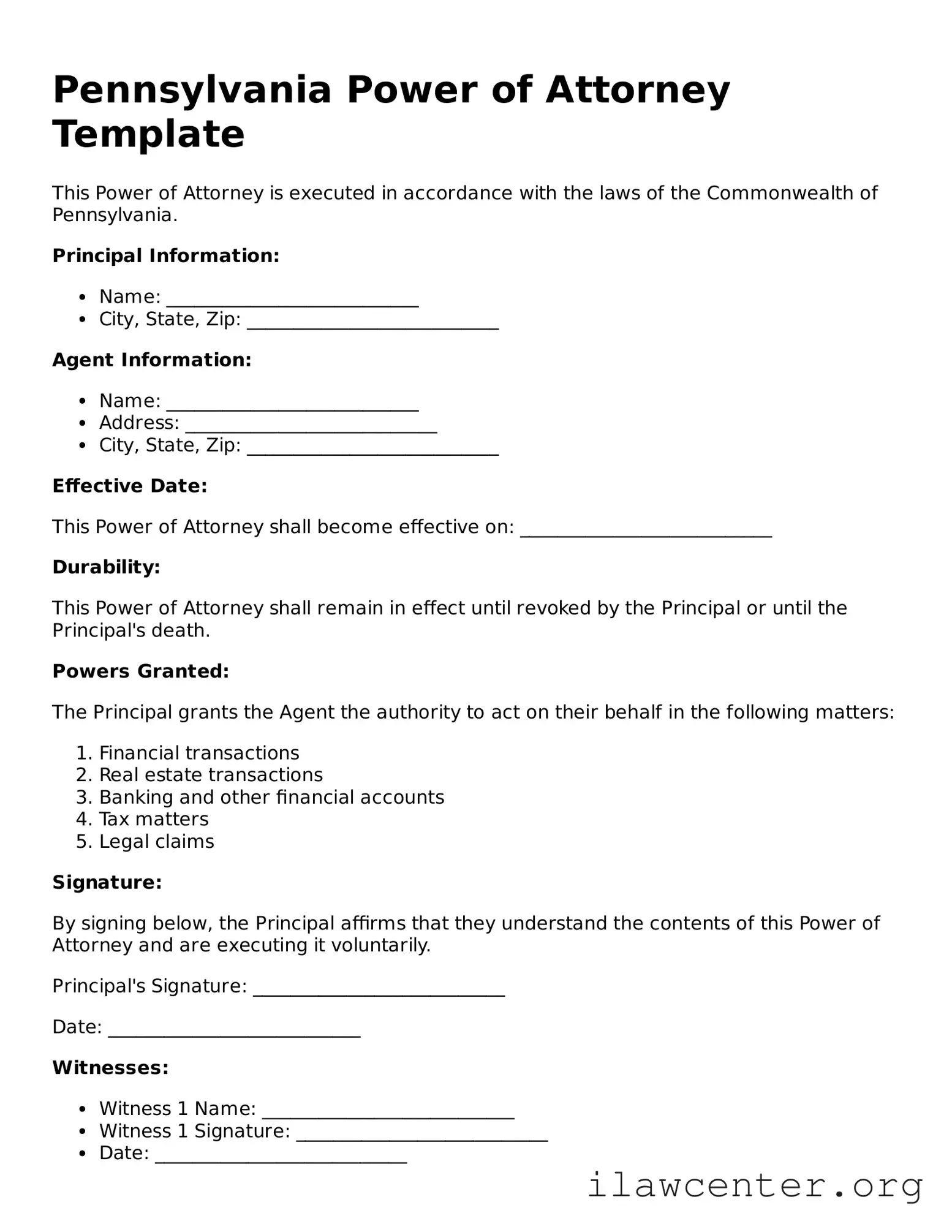
What is a Power of Attorney in Pennsylvania?
A Power of Attorney (POA) in Pennsylvania is a legal document that allows one person, known as the principal, to grant another person, called the agent or attorney-in-fact, the authority to make decisions on their behalf. This can include financial matters, health care decisions, or other personal affairs. The principal must be of sound mind when creating the document, and the agent must act in the best interest of the principal.
What types of Power of Attorney are available in Pennsylvania?
In Pennsylvania, there are several types of Power of Attorney forms. The most common include:
1. General Power of Attorney, which grants broad powers to the agent.
2. Limited Power of Attorney, which restricts the agent's authority to specific tasks or timeframes.
3. Durable Power of Attorney, which remains effective even if the principal becomes incapacitated.
4. Springing Power of Attorney, which only becomes effective under certain conditions, typically when the principal is incapacitated.
Do I need a lawyer to create a Power of Attorney in Pennsylvania?
While it is not legally required to have a lawyer draft a Power of Attorney in Pennsylvania, it is highly recommended. A lawyer can ensure that the document meets all legal requirements and accurately reflects your wishes. If you choose to create the document without legal assistance, make sure to use the official state form and follow all instructions carefully.
How do I revoke a Power of Attorney in Pennsylvania?
To revoke a Power of Attorney in Pennsylvania, you must create a written revocation document. This document should clearly state your intention to revoke the previous Power of Attorney and should be signed and dated. It is advisable to notify the agent and any institutions or individuals who were relying on the original Power of Attorney to prevent any confusion.
Can I name more than one agent in my Power of Attorney?
Yes, you can name multiple agents in your Power of Attorney. You can designate them to act jointly, meaning they must make decisions together, or you can allow them to act separately. Clearly outline the arrangement in the document to avoid any misunderstandings in the future.
What happens if my agent cannot serve?
If your designated agent is unable or unwilling to serve, the Power of Attorney can include alternate agents. If no alternate is named, or if all named agents are unable to serve, a court may need to appoint a guardian or another representative to handle your affairs.
Is a Power of Attorney valid if I move to another state?
A Power of Attorney created in Pennsylvania is generally valid in other states, but laws can vary. It is advisable to check the specific requirements of the state you are moving to, as some states may have their own forms or regulations regarding Powers of Attorney.
What are the signing requirements for a Power of Attorney in Pennsylvania?
In Pennsylvania, the Power of Attorney must be signed by the principal. The signature must be witnessed by two individuals or acknowledged before a notary public. The witnesses cannot be the agent or anyone who stands to benefit from the principal's estate.
Can I use a Power of Attorney to make health care decisions?
Yes, you can use a Power of Attorney to make health care decisions. In Pennsylvania, this is often referred to as a Health Care Power of Attorney. This document allows your agent to make medical decisions on your behalf if you are unable to do so. It is important to specify your wishes regarding medical treatment in this document.