Attorney-Verified  Snowmobile Bill of Sale Document for Pennsylvania

Attorney-Verified Snowmobile Bill of Sale Document for Pennsylvania

The Pennsylvania Snowmobile Bill of Sale form serves as a crucial document for individuals buying or selling a snowmobile in Pennsylvania. This form not only provides a record of the transaction but also ensures that both parties are protected under state laws. To facilitate a smooth transfer of ownership, it is essential to complete this form accurately; you can start by filling it out using the button below.

Article Guide

When engaging in the purchase or sale of a snowmobile in Pennsylvania, having a well-documented Bill of Sale is crucial for both parties involved. This form serves as a legal record of the transaction, detailing essential information such as the names and addresses of the buyer and seller, the make and model of the snowmobile, its Vehicle Identification Number (VIN), and the sale price. Additionally, the form often includes a declaration of the seller's right to sell the vehicle, ensuring that the buyer is receiving a legitimate and unencumbered asset. A properly completed Bill of Sale not only protects the interests of both parties but also facilitates the registration process with the Pennsylvania Department of Transportation. By capturing all pertinent details in writing, this document helps prevent disputes and provides peace of mind for both the seller and the buyer, making it an indispensable part of any snowmobile transaction in the state.

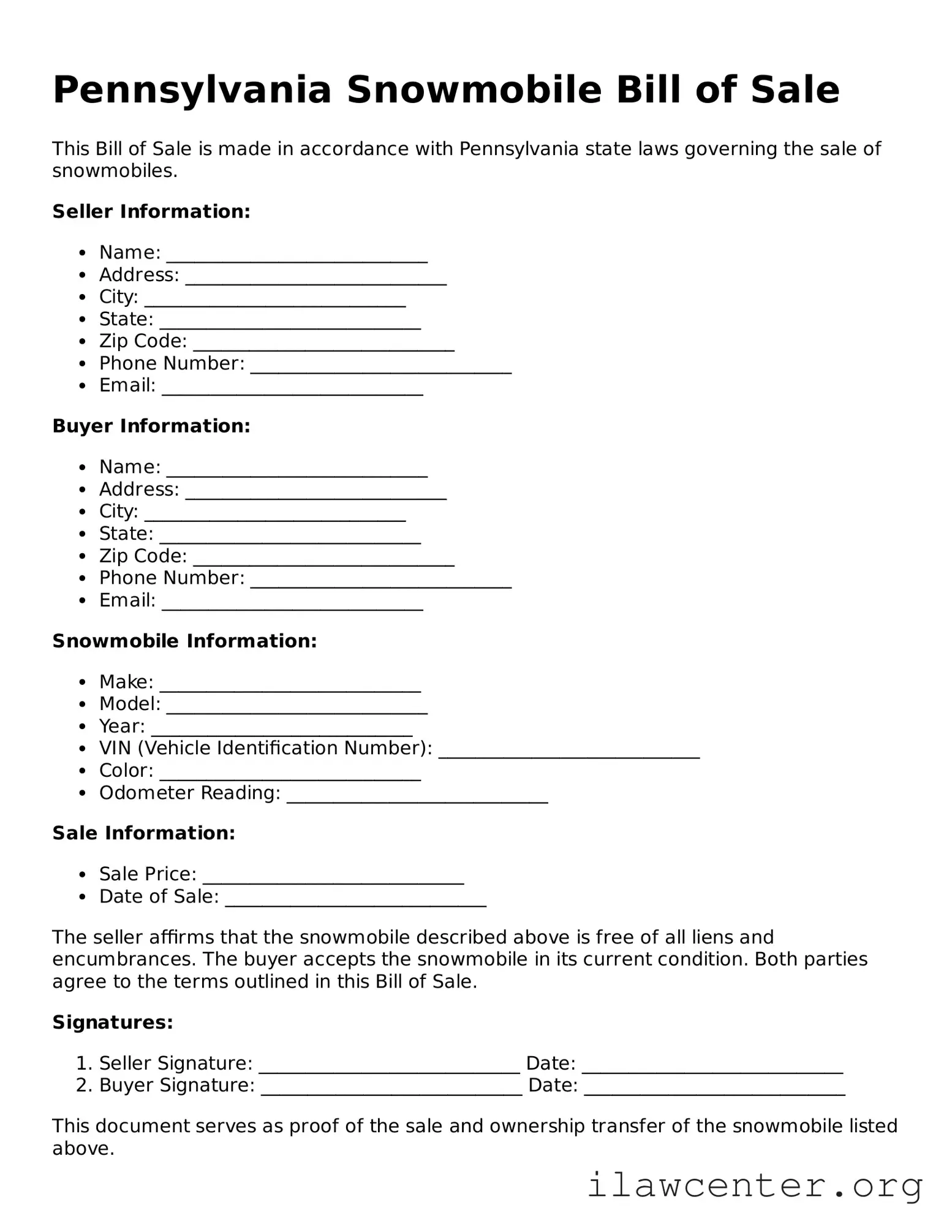
Pennsylvania Snowmobile Bill of Sale Preview

Pennsylvania Snowmobile Bill of Sale

This Bill of Sale is made in accordance with Pennsylvania state laws governing the sale of snowmobiles.

Seller Information:

  • Name: ____________________________
  • Address: ____________________________
  • City: ____________________________
  • State: ____________________________
  • Zip Code: ____________________________
  • Phone Number: ____________________________
  • Email: ____________________________

Buyer Information:

  • Name: ____________________________
  • Address: ____________________________
  • City: ____________________________
  • State: ____________________________
  • Zip Code: ____________________________
  • Phone Number: ____________________________
  • Email: ____________________________

Snowmobile Information:

  • Make: ____________________________
  • Model: ____________________________
  • Year: ____________________________
  • VIN (Vehicle Identification Number): ____________________________
  • Color: ____________________________
  • Odometer Reading: ____________________________

Sale Information:

  • Sale Price: ____________________________
  • Date of Sale: ____________________________

The seller affirms that the snowmobile described above is free of all liens and encumbrances. The buyer accepts the snowmobile in its current condition. Both parties agree to the terms outlined in this Bill of Sale.

Signatures:

  1. Seller Signature: ____________________________ Date: ____________________________
  2. Buyer Signature: ____________________________ Date: ____________________________

This document serves as proof of the sale and ownership transfer of the snowmobile listed above.

PDF Form Characteristics

Fact Name Description
Purpose The Pennsylvania Snowmobile Bill of Sale form is used to document the sale and transfer of ownership of a snowmobile.
Governing Law This form is governed by Pennsylvania state laws regarding the sale and registration of snowmobiles.
Required Information The form requires details such as the buyer's and seller's names, addresses, and the snowmobile's identification number.
Notarization While notarization is not mandatory, it is recommended to provide additional proof of the transaction.
Use in Registration The completed Bill of Sale is often needed for the registration of the snowmobile with the Pennsylvania Department of Conservation and Natural Resources.
Retention Both the buyer and seller should retain a copy of the Bill of Sale for their records to ensure clear ownership documentation.

Instructions on Utilizing Pennsylvania Snowmobile Bill of Sale

Once you have the Pennsylvania Snowmobile Bill of Sale form in hand, you can proceed with filling it out. This document will serve as a record of the sale and transfer of ownership for the snowmobile. Ensure that all required information is accurate to avoid any issues in the future.

  1. Begin by entering the date of the sale at the top of the form.
  2. Fill in the seller's information, including the full name, address, and contact number.
  3. Provide the buyer's information, which should also include the full name, address, and contact number.
  4. Next, describe the snowmobile being sold. Include details such as the make, model, year, and Vehicle Identification Number (VIN).
  5. Indicate the sale price of the snowmobile clearly.
  6. Both the seller and buyer should sign and date the form at the designated areas.
  7. Make a copy of the completed form for your records.

Important Facts about Pennsylvania Snowmobile Bill of Sale

What is a Pennsylvania Snowmobile Bill of Sale form?

The Pennsylvania Snowmobile Bill of Sale form is a document used to record the sale and transfer of ownership of a snowmobile. This form serves as proof of the transaction between the buyer and the seller, detailing important information about the snowmobile and the parties involved.

Why is a Bill of Sale important when selling a snowmobile?

A Bill of Sale is important because it provides legal protection for both the buyer and the seller. It clearly outlines the terms of the sale, including the purchase price and any conditions agreed upon. This document can help prevent disputes in the future and serves as evidence of the transfer of ownership.

What information is typically included in the Snowmobile Bill of Sale?

The Snowmobile Bill of Sale usually includes the following information: the names and addresses of the buyer and seller, the make, model, and year of the snowmobile, the Vehicle Identification Number (VIN), the sale price, and the date of the transaction. Additional details, such as any warranties or conditions, may also be included.

Do I need to have the Bill of Sale notarized?

In Pennsylvania, notarization is not required for the Snowmobile Bill of Sale. However, having the document notarized can add an extra layer of authenticity and may be beneficial if any disputes arise. It is always a good practice to keep a copy for personal records.

Is there a specific format for the Snowmobile Bill of Sale in Pennsylvania?

While there is no official state-mandated format for the Snowmobile Bill of Sale, it is essential to ensure that all necessary information is included. Many sellers choose to use a template or create their own document that includes all relevant details to ensure clarity and completeness.

Can I use a Snowmobile Bill of Sale from another state?

Using a Snowmobile Bill of Sale from another state is generally acceptable, as long as it contains the necessary information required for the transaction. However, it is advisable to check with local authorities or the Pennsylvania Department of Conservation and Natural Resources for any specific requirements that may apply.

What should I do after completing the Snowmobile Bill of Sale?

After completing the Snowmobile Bill of Sale, both the buyer and seller should sign and date the document. The seller should provide the buyer with a copy for their records. Additionally, the buyer should register the snowmobile with the appropriate state agency, using the Bill of Sale as proof of ownership.

Are there any fees associated with the Snowmobile Bill of Sale?

There are no fees specifically associated with creating a Snowmobile Bill of Sale. However, the buyer may incur fees when registering the snowmobile with the state. It is important to check with local authorities for any applicable registration fees or taxes that may apply.

What if I lose the Bill of Sale after the transaction?

If the Bill of Sale is lost after the transaction, it can be challenging to prove ownership. It is advisable to keep a copy in a safe place. If the document is lost, the seller may be able to provide a duplicate or a written statement confirming the sale, but this may not be as effective as the original Bill of Sale.
Common mistakes

When completing the Pennsylvania Snowmobile Bill of Sale form, many individuals overlook essential details. One common mistake is failing to provide accurate information about the snowmobile itself. This includes the Vehicle Identification Number (VIN), make, model, and year. Missing or incorrect information can lead to complications in the registration process.

Another frequent error is neglecting to include the seller's and buyer's full names and addresses. This information is crucial for establishing ownership and ensuring that both parties can be contacted if necessary. Incomplete or incorrect names and addresses can result in delays or disputes later on.

Many people also forget to include the sale date. This date is significant as it marks the official transfer of ownership. Without it, the transaction may be questioned, and the buyer could face issues when trying to register the snowmobile.

Some individuals make the mistake of not signing the form. Both the seller and buyer must provide their signatures to validate the transaction. A missing signature can render the document ineffective, leading to potential legal issues.

Another common oversight involves not including the purchase price. This detail is necessary for tax purposes and to establish the value of the snowmobile. Without a stated purchase price, the transaction may not be recognized by the state.

Many people also fail to provide a clear description of any additional items included in the sale. If accessories or equipment are part of the transaction, listing them helps avoid misunderstandings. Omitting this information can lead to disputes over what was included in the sale.

Another mistake is not retaining a copy of the completed Bill of Sale. Both the buyer and seller should keep a copy for their records. This document serves as proof of the transaction and can be vital if questions arise in the future.

Some individuals do not check for accuracy before submitting the form. Errors can easily be overlooked, but taking a moment to review the information can save time and prevent complications down the line.

Finally, people sometimes underestimate the importance of the Bill of Sale itself. This document is not just a formality; it is a legal record of the sale. Understanding its significance can help ensure that all necessary steps are taken to protect both parties involved in the transaction.

Documents used along the form

When purchasing or selling a snowmobile in Pennsylvania, several important documents may accompany the Snowmobile Bill of Sale form. These documents help ensure a smooth transaction and provide necessary information for both the buyer and seller. Below is a list of common forms and documents that are often used in conjunction with the Snowmobile Bill of Sale.

  • Title Transfer Form: This document is essential for transferring ownership of the snowmobile from the seller to the buyer. It includes details such as the vehicle identification number (VIN), make, model, and the names of both parties involved.
  • Registration Application: After the purchase, the buyer must complete a registration application to officially register the snowmobile with the Pennsylvania Department of Conservation and Natural Resources. This document includes information about the snowmobile and its owner.
  • Proof of Insurance: Pennsylvania law requires snowmobiles to be insured. A proof of insurance document provides evidence that the buyer has obtained the necessary coverage before operating the vehicle.
  • Odometer Disclosure Statement: If the snowmobile has a digital odometer, this statement may be required to confirm the mileage at the time of sale. It protects both parties from potential disputes regarding the vehicle's usage.
  • Sales Tax Form: This form is necessary for the payment of sales tax on the transaction. The buyer typically completes it, ensuring compliance with state tax regulations.
  • Maintenance Records: While not mandatory, providing maintenance records can be beneficial. They offer insight into the snowmobile's history and can reassure the buyer about the vehicle's condition.
  • Bill of Sale for Trailer (if applicable): If the snowmobile is sold with a trailer, a separate bill of sale for the trailer may be required. This document outlines the details of the trailer's sale, ensuring clear ownership transfer.

Having these documents prepared and organized can facilitate a smoother transaction process, protecting both the buyer and seller. It is always advisable to keep copies of all paperwork for personal records and future reference.

Similar forms

The Snowmobile Bill of Sale form serves an important purpose in the sale and transfer of ownership of a snowmobile. It is similar to several other documents used in various transactions. Here are seven documents that share similarities with the Snowmobile Bill of Sale:

  • Vehicle Bill of Sale: Like the Snowmobile Bill of Sale, this document records the transfer of ownership for a motor vehicle. It includes details such as the buyer and seller's information, vehicle identification number, and sale price.
  • Boat Bill of Sale: This document functions similarly by documenting the sale of a boat. It includes the same essential details, ensuring both parties have a record of the transaction.
  • Motorcycle Bill of Sale: Just as with snowmobiles, this form is used to transfer ownership of a motorcycle. It outlines the terms of the sale and protects both the buyer and seller.
  • ATV Bill of Sale: The ATV Bill of Sale serves the same purpose as the Snowmobile Bill of Sale, detailing the sale of an all-terrain vehicle. It provides proof of ownership and transaction details.
  • Real Estate Purchase Agreement: While more complex, this agreement outlines the sale of real property. It includes terms of the sale, buyer and seller information, and legal descriptions, similar to how a bill of sale captures transaction details.
  • Personal Property Bill of Sale: This document is used for the sale of personal items, such as furniture or electronics. It provides a record of the transaction, much like the Snowmobile Bill of Sale does for snowmobiles.
  • Lease Agreement: Though it serves a different purpose, a lease agreement outlines terms between a lessor and lessee. It includes details about the property and payment terms, similar to how a bill of sale captures sale terms.

Dos and Don'ts

When filling out the Pennsylvania Snowmobile Bill of Sale form, there are several important guidelines to follow. Adhering to these can help ensure a smooth transaction and proper documentation.

  • Do provide accurate information about the snowmobile, including the make, model, year, and Vehicle Identification Number (VIN).
  • Do include the full names and addresses of both the buyer and seller to avoid any confusion later on.
  • Do sign and date the form to validate the transaction. Both parties should do this.
  • Don't leave any fields blank. Incomplete information can lead to issues when registering the snowmobile.
  • Don't forget to keep a copy of the completed Bill of Sale for your records. This is important for both parties.

Following these steps can help ensure that the sale goes smoothly and that all necessary information is documented correctly.

Misconceptions

When dealing with the Pennsylvania Snowmobile Bill of Sale form, several misconceptions can arise. Understanding the truth behind these can help ensure a smoother transaction process. Here are eight common misconceptions:

  1. All sales require a notarized bill of sale.

    Many believe that a notarized bill of sale is mandatory for all snowmobile transactions. However, notarization is not always necessary unless specified by the parties involved or required for specific circumstances.

  2. The form is only for private sales.

    Some think the bill of sale is exclusively for private sales. In reality, it can also be used for dealer transactions, providing proof of ownership transfer in various scenarios.

  3. Only the seller needs to sign the bill of sale.

    It is a common misconception that only the seller's signature is required. Both the buyer and seller should sign to validate the transaction and protect their interests.

  4. There is a specific format required for the bill of sale.

    While it’s important to include certain details, there is no strictly enforced format. As long as key information is present, the document is valid.

  5. Sales tax must be collected at the time of sale.

    Some believe that sales tax is automatically collected during the sale. In Pennsylvania, the buyer is responsible for reporting and paying the sales tax when registering the snowmobile.

  6. The bill of sale is unnecessary if a title is provided.

    Many assume that a title alone suffices for ownership transfer. However, a bill of sale provides additional documentation that can be crucial in certain situations.

  7. The bill of sale is only needed for new snowmobiles.

    It’s a misconception that only new snowmobiles require a bill of sale. Used snowmobiles also necessitate this document to ensure proper ownership transfer.

  8. Once signed, the bill of sale cannot be altered.

    Some believe that any changes to the bill of sale after signing invalidate it. In fact, amendments can be made if both parties agree and initial the changes.

Clarifying these misconceptions can help buyers and sellers navigate the process with greater confidence and understanding.

Key takeaways

When filling out and using the Pennsylvania Snowmobile Bill of Sale form, it is essential to keep several key points in mind to ensure a smooth transaction.

  • Accurate Information: Provide complete and accurate details about the snowmobile, including the make, model, year, and Vehicle Identification Number (VIN). This information is crucial for registration and title transfer.
  • Seller and Buyer Details: Clearly list the names and contact information of both the seller and the buyer. This ensures that both parties can be reached if any issues arise post-sale.
  • Sale Price: Include the agreed-upon sale price in the bill of sale. This amount may be necessary for tax purposes and can help avoid disputes later.
  • Signatures: Ensure that both the seller and buyer sign the document. A signature from both parties confirms that the transaction has been completed and agreed upon.

By following these guidelines, you can help facilitate a successful sale and ensure that all necessary information is documented properly.