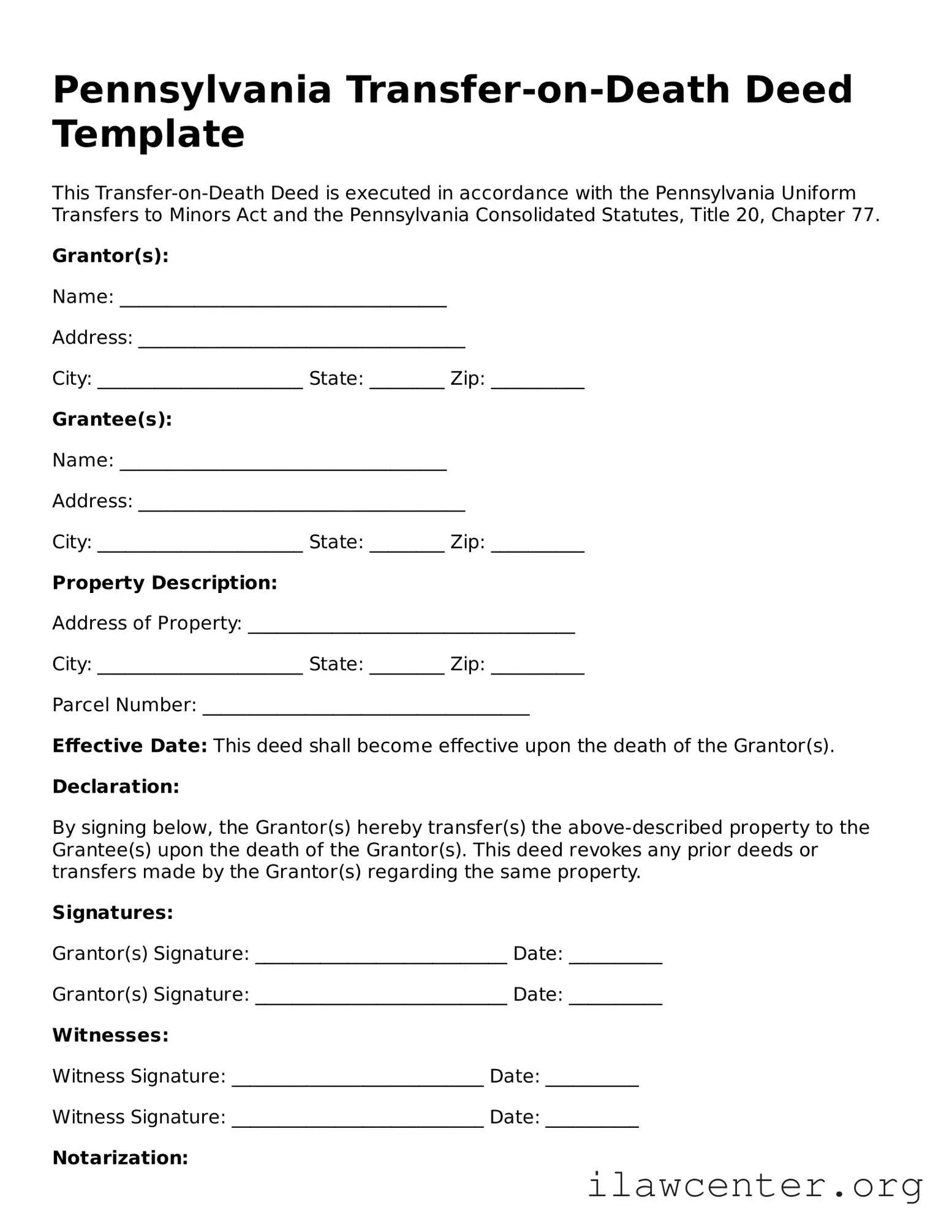
What is a Transfer-on-Death Deed in Pennsylvania?
A Transfer-on-Death Deed (TODD) is a legal document that allows an individual to transfer real estate to a designated beneficiary upon their death. This deed enables property owners to bypass the probate process, making it easier and quicker for beneficiaries to receive the property. It is an effective way to ensure that your property goes directly to your chosen heirs without the delays often associated with probate court.
Who can use a Transfer-on-Death Deed?
Any individual who owns real estate in Pennsylvania can use a Transfer-on-Death Deed. This includes homeowners, co-owners, and those who hold property in trust. However, it is essential that the property is not subject to any liens or other claims that could complicate the transfer.
How do I complete a Transfer-on-Death Deed?
To complete a Transfer-on-Death Deed, you must fill out the form with the required information, including the names of the current owner(s), the beneficiary's name, and a legal description of the property. Once the form is completed, it must be signed in the presence of a notary public and then recorded with the county's office where the property is located. This recording is crucial for the deed to be valid and enforceable.
Can I revoke a Transfer-on-Death Deed?
Yes, you can revoke a Transfer-on-Death Deed at any time before your death. To do this, you must create a new deed that explicitly states the revocation or record a written statement of revocation with the county recorder's office. It is advisable to consult with a legal professional to ensure that the revocation is done correctly.
Will a Transfer-on-Death Deed affect my taxes?
Generally, a Transfer-on-Death Deed does not affect your property taxes while you are alive. The property remains under your ownership, and you are responsible for any taxes. However, upon your death, the property may be reassessed for tax purposes based on its value at that time, which could affect the tax liability of the beneficiary.
What happens if I don’t name a beneficiary?
If you do not name a beneficiary on your Transfer-on-Death Deed, the property will not transfer as intended. Instead, it will become part of your estate and will be subject to the probate process. This can lead to delays and additional expenses for your heirs, so it is crucial to designate a beneficiary to ensure a smooth transfer.
Can I name multiple beneficiaries?
Yes, you can name multiple beneficiaries on a Transfer-on-Death Deed. You can specify how the property should be divided among them, whether equally or in specific proportions. Make sure to clearly outline these details in the deed to avoid confusion or disputes later on.
Is legal assistance necessary to create a Transfer-on-Death Deed?
While it is not legally required to have an attorney to create a Transfer-on-Death Deed, seeking legal assistance can be beneficial. An attorney can help ensure that the deed is completed correctly, that it complies with all legal requirements, and that it reflects your intentions accurately. This can save your heirs from potential complications in the future.
When does the Transfer-on-Death Deed take effect?
The Transfer-on-Death Deed takes effect only upon your death. Until that time, you retain full ownership and control over the property. You can sell, mortgage, or otherwise manage the property as you wish without any restrictions related to the deed.