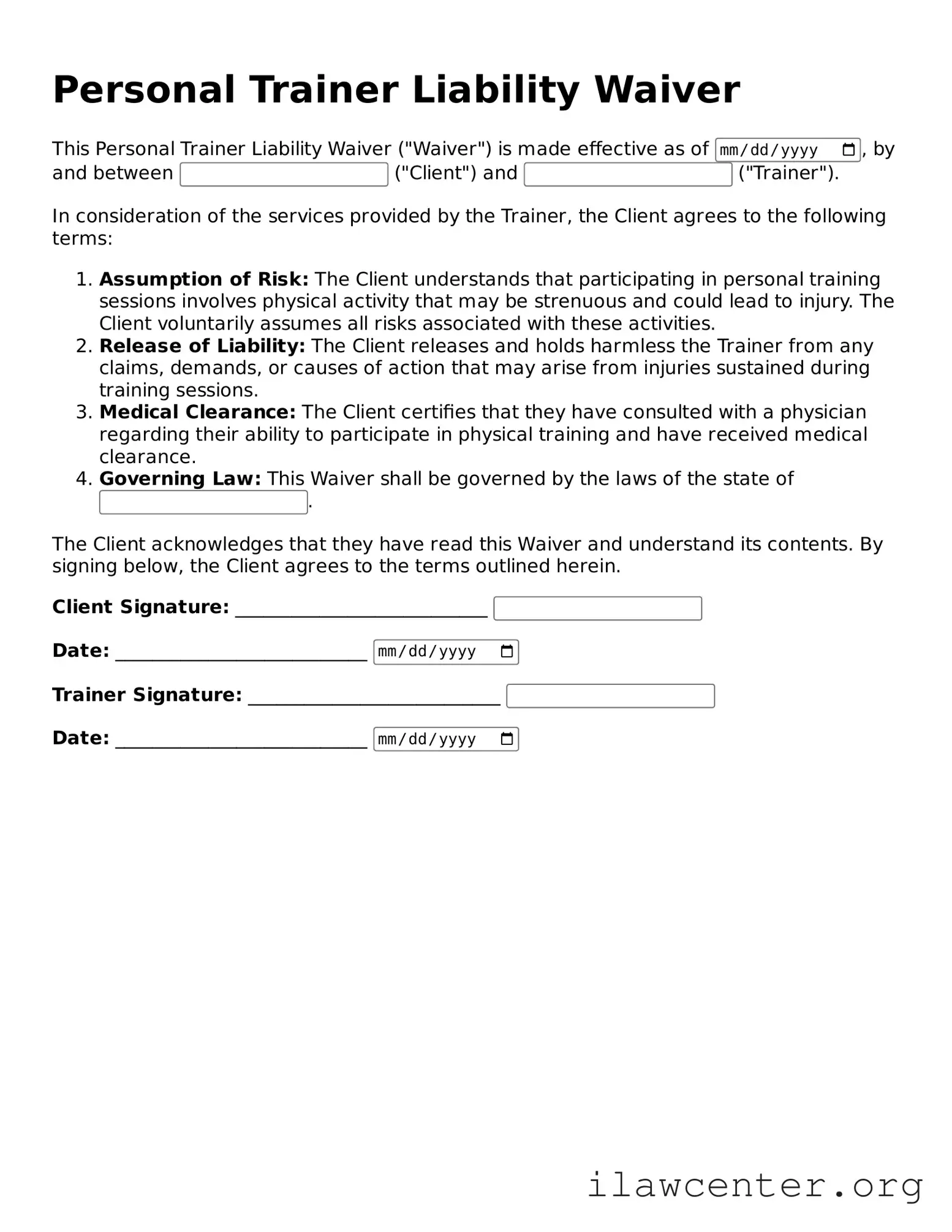
What is a Personal Trainer Liability Waiver form?
A Personal Trainer Liability Waiver form is a document that clients sign to acknowledge the risks associated with physical training. It serves to protect the personal trainer and their business from legal claims that may arise from injuries or accidents that occur during training sessions. By signing this waiver, clients agree to assume responsibility for their own safety and well-being while participating in fitness activities.
Why is it important to sign a waiver before starting training?
Signing a waiver is crucial because it clearly outlines the potential risks involved in physical training. It informs clients that they are participating voluntarily and that they understand the inherent risks. This form also provides legal protection for the trainer, helping to mitigate liability in case of unforeseen incidents. Without a signed waiver, trainers may face challenges in defending against claims of negligence.
What should I consider before signing the waiver?
Before signing the waiver, clients should carefully read the entire document. It is important to understand what risks are outlined and whether any specific activities or conditions are mentioned. Clients should also consider their own health status and any pre-existing conditions. If there are any uncertainties or concerns, discussing them with the trainer before signing is advisable.
Can I still pursue legal action if I sign the waiver?
While signing a waiver generally limits the ability to pursue legal action, it does not completely eliminate it. If a personal trainer acts recklessly or fails to adhere to safety protocols, a client may still have grounds for a lawsuit. Courts may consider the circumstances surrounding the incident and whether the trainer acted within the bounds of professional conduct.
Is a waiver legally binding?
A waiver is typically considered a legally binding contract, provided it meets certain criteria. These include being clear and specific about the risks involved, being signed voluntarily, and not violating any laws. However, the enforceability can vary by state and specific circumstances, so it is wise for clients to understand their rights and consult legal counsel if needed.
What happens if I refuse to sign the waiver?
If a client refuses to sign the waiver, the personal trainer may not be able to proceed with the training sessions. Most trainers require this document to ensure safety and legal protection. Clients should consider the implications of not signing, as it may limit their ability to participate in training programs or services offered by the trainer.