Fillable Pharmacy Residency Letter of Intent Document

Fillable Pharmacy Residency Letter of Intent Document

The Pharmacy Residency Letter of Intent is a formal document that aspiring pharmacy residents use to express their interest in a specific residency program. This letter outlines the candidate's qualifications, experiences, and reasons for applying, serving as a critical component of the application process. Take the next step in your pharmacy career by filling out the form below.

Article Guide

The Pharmacy Residency Letter of Intent form serves as a critical component in the application process for pharmacy residency programs. This document provides candidates with the opportunity to express their interest in a specific residency position and to highlight their qualifications and experiences. Applicants typically outline their career goals, relevant skills, and motivations for pursuing a residency in pharmacy. A well-crafted letter can significantly influence the selection committee's perception of an applicant, as it reflects both professionalism and a genuine commitment to the field. Additionally, the form often requires candidates to detail their academic achievements, clinical experiences, and any leadership roles they have undertaken. By presenting this information effectively, candidates can set themselves apart in a competitive landscape, making a compelling case for their fit within the program. Ultimately, the Pharmacy Residency Letter of Intent is not just a formality; it is a strategic tool that can pave the way for future career opportunities in pharmacy.

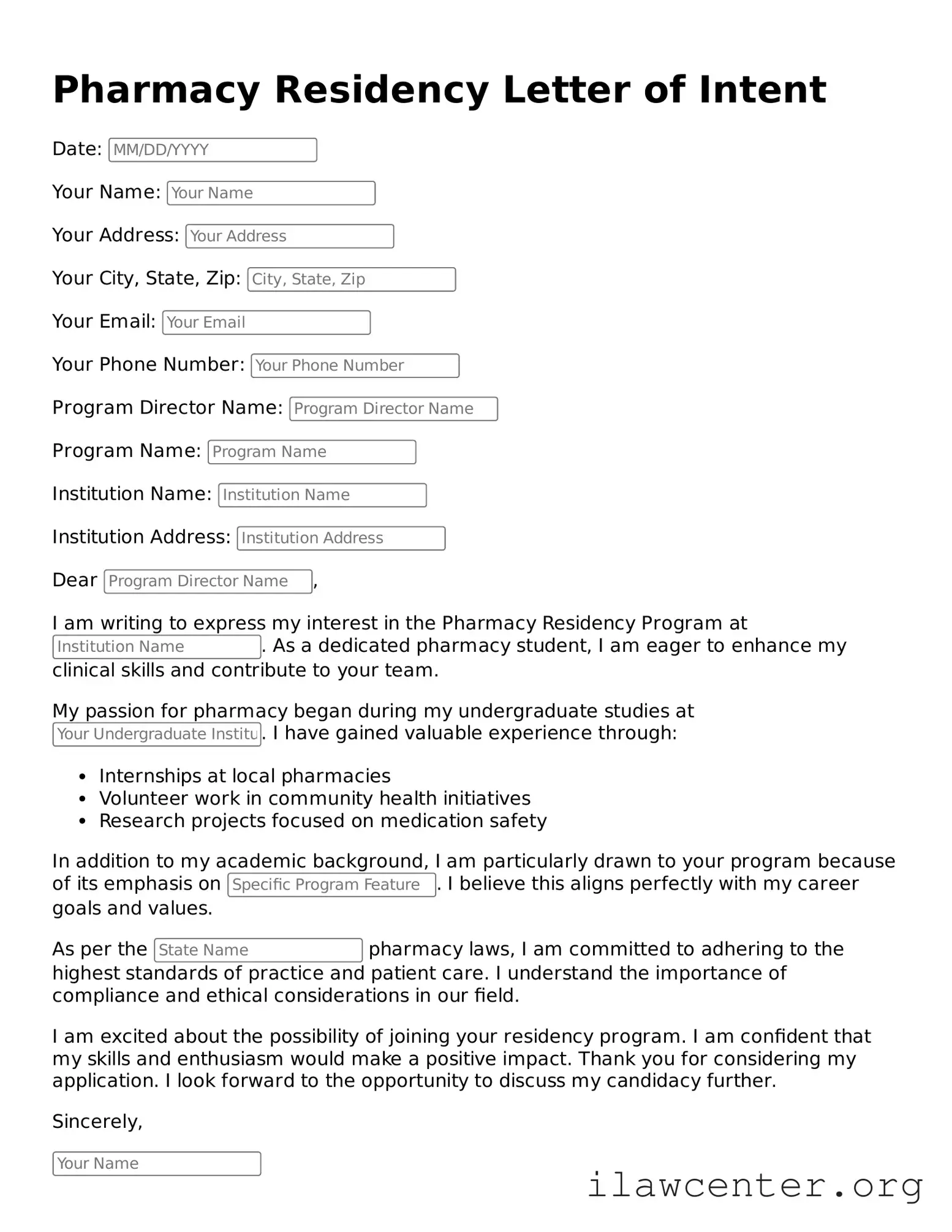
Pharmacy Residency Letter of Intent Preview

Pharmacy Residency Letter of Intent

Date:

Your Name:

Your Address:

Your City, State, Zip:

Your Email:

Your Phone Number:

Program Director Name:

Program Name:

Institution Name:

Institution Address:

Dear ,

I am writing to express my interest in the Pharmacy Residency Program at . As a dedicated pharmacy student, I am eager to enhance my clinical skills and contribute to your team.

My passion for pharmacy began during my undergraduate studies at . I have gained valuable experience through:

  • Internships at local pharmacies
  • Volunteer work in community health initiatives
  • Research projects focused on medication safety

In addition to my academic background, I am particularly drawn to your program because of its emphasis on . I believe this aligns perfectly with my career goals and values.

As per the pharmacy laws, I am committed to adhering to the highest standards of practice and patient care. I understand the importance of compliance and ethical considerations in our field.

I am excited about the possibility of joining your residency program. I am confident that my skills and enthusiasm would make a positive impact. Thank you for considering my application. I look forward to the opportunity to discuss my candidacy further.

Sincerely,

PDF Form Characteristics

Fact Name Description
Purpose The Pharmacy Residency Letter of Intent serves as a formal introduction to the residency program, outlining the applicant's interest and qualifications.
Content Requirements Applicants should include their professional goals, relevant experiences, and reasons for choosing the specific residency program.
Length Typically, the letter should be one page long, allowing for concise yet comprehensive communication.
Submission Guidelines Applicants must follow specific submission guidelines provided by the residency program, which may include formatting and delivery methods.
State-Specific Forms Some states may have unique requirements or forms for the residency application process. Check local pharmacy boards for details.
Governing Laws Each state has its own pharmacy practice act that governs residency programs, ensuring compliance with local regulations.
Review Process The letter is reviewed by residency program directors as part of the selection process, influencing interview decisions.
Importance A well-crafted letter can significantly enhance an applicant's chances of being selected for a residency position.

Instructions on Utilizing Pharmacy Residency Letter of Intent

Once you have the Pharmacy Residency Letter of Intent form in front of you, it’s time to start filling it out. This process is straightforward, and taking your time to provide thoughtful responses will help you present yourself effectively. Follow these steps to ensure you complete the form accurately.

  1. Begin by reading the instructions carefully. Understanding what is required will save you time later.
  2. Gather any necessary information, such as your personal details, educational background, and relevant experience.
  3. Start with your contact information. Include your full name, address, phone number, and email address.
  4. Provide details about your pharmacy education. This typically includes the name of the institution, degree obtained, and graduation date.
  5. Outline your professional experiences. List relevant internships, jobs, or volunteer work, focusing on those that relate to pharmacy.
  6. Detail your reasons for pursuing a residency. Be specific about your career goals and how this residency aligns with them.
  7. Reflect on your strengths and skills. Mention qualities that make you a strong candidate for the residency program.
  8. Proofread your responses. Check for any spelling or grammatical errors that could detract from your application.
  9. Submit the form according to the provided guidelines. Make sure to keep a copy for your records.

After completing the form, it will be reviewed by the residency program. They will assess your application alongside others, so take pride in presenting your best self. Good luck!

Important Facts about Pharmacy Residency Letter of Intent

What is a Pharmacy Residency Letter of Intent?

A Pharmacy Residency Letter of Intent is a formal document that expresses a candidate's interest in a specific residency program. This letter serves as an introduction, highlighting the applicant's qualifications, experiences, and reasons for pursuing the residency. It is an essential part of the application process, allowing candidates to convey their passion for the field and their commitment to advancing their pharmacy practice.

What should I include in my Letter of Intent?

Your Letter of Intent should include several key elements. Start with a brief introduction about yourself, including your educational background and relevant experiences. Clearly state your interest in the specific residency program and explain why it aligns with your career goals. Additionally, mention any unique skills or experiences that make you a strong candidate. Lastly, express your enthusiasm for the opportunity and your willingness to contribute to the program.

How long should my Letter of Intent be?

Typically, a Letter of Intent should be concise, ideally one page in length. Aim for clarity and brevity while ensuring you cover all necessary points. A well-structured letter that is easy to read will make a stronger impression than a longer, more complicated document.

Is it necessary to address my Letter of Intent to a specific person?

Whenever possible, it is advisable to address your Letter of Intent to a specific individual, such as the residency program director. Doing so demonstrates your attention to detail and genuine interest in the program. If you cannot find a name, addressing it to the selection committee is acceptable.

When should I submit my Letter of Intent?

Your Letter of Intent should be submitted according to the residency program's application timeline. Most programs will provide specific deadlines. It is best to submit your letter as early as possible, ideally alongside your application materials, to ensure it is considered during the review process.

Can I use the same Letter of Intent for multiple programs?

While you may be tempted to use a generic Letter of Intent for multiple programs, it is best to customize each letter. Tailoring your letter to reflect the specific values and goals of each residency program will make a more significant impact. Personalization shows that you have researched the program and are genuinely interested in what they offer.

What are some common mistakes to avoid in my Letter of Intent?

Common mistakes include being overly vague, failing to proofread for grammatical errors, and not addressing the letter to a specific person. Additionally, avoid using clichés or generic statements that do not reflect your individual experiences. Instead, focus on providing specific examples that illustrate your qualifications and enthusiasm for the residency program.

Common mistakes

Filling out a Pharmacy Residency Letter of Intent can be a daunting task. Many applicants overlook key elements that could strengthen their application. One common mistake is failing to tailor the letter to the specific program. Each residency has its own unique focus and values, and a generic letter may not resonate with the selection committee. Taking the time to research the program and reflect its goals in your letter can make a significant difference.

Another frequent error is being overly formal or using complex language. While professionalism is important, clarity and authenticity are equally vital. Using simple, straightforward language allows your passion for the field to shine through. A letter that feels genuine is more likely to leave a lasting impression.

Some applicants neglect to showcase their personal experiences and achievements. A list of qualifications is helpful, but sharing personal stories can create a connection with the reader. Highlighting specific experiences that shaped your interest in pharmacy can make your letter memorable.

Additionally, failing to proofread can be detrimental. Typos and grammatical errors can detract from your professionalism. Taking the time to review your letter multiple times or asking someone else to read it can help catch mistakes that might have slipped through the cracks.

Another mistake is not addressing your future goals. Admission committees want to understand where you see yourself in the future. Clearly articulating your aspirations demonstrates your commitment to the field and can help the committee envision you as a future colleague.

Some applicants also make the mistake of being too vague. Specificity is key. Instead of saying you want to "help patients," explain how you plan to do so. Discussing particular interests within pharmacy can give the committee a clearer picture of your motivations.

Moreover, neglecting to mention why you are a good fit for the program is a missed opportunity. Residency programs are looking for candidates who align with their mission and values. Highlighting how your skills and experiences match the program’s needs can strengthen your case.

Another common error is not following the submission guidelines. Each program may have specific requirements regarding length, format, or content. Ignoring these details can reflect poorly on your attention to detail and commitment to the application process.

Lastly, some applicants fail to convey enthusiasm. A Letter of Intent should reflect your passion for the field. If you don’t express excitement about the opportunity, the committee may question your commitment. Infusing your letter with genuine enthusiasm can help you stand out among other candidates.

Avoiding these common mistakes can significantly improve your chances of success. Take the time to craft a thoughtful, engaging, and personal letter that reflects your dedication to the field of pharmacy. Doing so will not only enhance your application but also provide a clearer picture of who you are as a candidate.

Documents used along the form

When applying for a pharmacy residency, candidates typically submit several key documents alongside the Pharmacy Residency Letter of Intent. Each of these documents plays a vital role in presenting a comprehensive view of the applicant's qualifications, experiences, and aspirations. Below is a list of common forms and documents that are often included in the application package.

  • Curriculum Vitae (CV): This document provides a detailed overview of the applicant's educational background, professional experiences, certifications, and relevant skills. It highlights achievements and qualifications in a structured format, making it easy for residency program directors to assess the candidate's suitability.
  • Pharmacy School Transcripts: Transcripts are official records from the pharmacy school that outline the courses taken, grades received, and overall academic performance. They serve as a testament to the applicant's academic capabilities and commitment to the field of pharmacy.
  • Letters of Recommendation: These letters are typically written by faculty members, employers, or other professionals who can vouch for the applicant's skills, work ethic, and character. Strong recommendations can significantly enhance an applicant's profile by providing insights into their strengths and potential contributions to a residency program.
  • Personal Statement: This narrative allows applicants to express their motivations for pursuing a residency, their career goals, and what they hope to gain from the experience. A well-crafted personal statement can convey passion and commitment, setting the candidate apart from others.
  • Supplemental Application Forms: Some residency programs may require additional forms that gather specific information about the applicant. These forms can include questions related to the applicant's interests, experiences, and preferences, helping programs better understand the individual and their fit within the residency.

In summary, the Pharmacy Residency Letter of Intent is just one component of a comprehensive application package. By including a well-prepared CV, official transcripts, strong letters of recommendation, a compelling personal statement, and any required supplemental forms, candidates can present a robust case for their candidacy. Each document complements the others, collectively showcasing the applicant's qualifications and aspirations in the field of pharmacy.

Similar forms

The Pharmacy Residency Letter of Intent is a critical document in the application process for pharmacy residency programs. It shares similarities with several other important documents in various professional and academic contexts. Below is a list of eight documents that are comparable to the Pharmacy Residency Letter of Intent, along with explanations of their similarities.

  • Cover Letter: Like the Letter of Intent, a cover letter is used to express interest in a specific position. Both documents highlight the applicant's qualifications and intentions, serving as an introduction to their application.
  • Statement of Purpose: This document outlines an applicant's motivations and goals. Similar to the Letter of Intent, it provides insight into the applicant's aspirations and commitment to their chosen field.
  • Personal Statement: A personal statement often reflects on an individual's experiences and values. It parallels the Letter of Intent in that both documents seek to convey the applicant's unique perspective and qualifications.
  • Application Essay: In academic settings, application essays are used to assess an applicant's fit for a program. Both the essay and the Letter of Intent require clear communication of the applicant's objectives and interests.
  • Resume/Curriculum Vitae: A resume or CV summarizes an applicant's qualifications and experiences. While more factual, it complements the Letter of Intent by providing a detailed account of the applicant's background.
  • Recommendation Letters: These letters support an applicant's claims by providing third-party endorsements. Like the Letter of Intent, they are crucial in establishing credibility and reinforcing the applicant's suitability.
  • Research Proposal: In academic applications, a research proposal outlines intended research. Similar to the Letter of Intent, it requires clarity of purpose and demonstrates the applicant's commitment to their academic or professional goals.
  • Interview Preparation Document: This document outlines key points an applicant wishes to convey during an interview. Both the preparation document and the Letter of Intent serve to clarify the applicant's objectives and readiness for the opportunity.

Dos and Don'ts

When filling out the Pharmacy Residency Letter of Intent form, it is crucial to present yourself effectively. Here are some key do's and don'ts to consider:

  • Do clearly express your passion for pharmacy and your specific interest in the residency program.
  • Do tailor your letter to the specific program, highlighting why you are a good fit.
  • Do proofread your letter multiple times to avoid any grammatical or spelling errors.
  • Do include relevant experiences and achievements that showcase your qualifications.
  • Don't use generic statements that could apply to any program; be specific.
  • Don't exceed the word limit; respect the guidelines provided by the program.

By following these guidelines, you can enhance your chances of making a strong impression.

Misconceptions

  • Misconception 1: The Letter of Intent is just a formality.

    Many applicants believe that the Letter of Intent holds little significance in the application process. In reality, it serves as a critical opportunity to convey personal motivations, career goals, and fit for the residency program. A well-crafted letter can set an applicant apart from others with similar qualifications.

  • Misconception 2: Length is more important than content.

    Some individuals think that a longer letter will impress selection committees. However, clarity and conciseness are valued more than length. A succinct letter that clearly articulates one’s passion and qualifications is often more effective than a lengthy, unfocused narrative.

  • Misconception 3: Generic letters are acceptable.

    It is a common belief that a generic Letter of Intent can be used for multiple applications. Unfortunately, this approach can backfire. Tailoring the letter to each specific program demonstrates genuine interest and an understanding of what that particular residency offers.

  • Misconception 4: The letter does not need to be proofread.

    Some applicants underestimate the importance of proofreading their letters. Spelling and grammatical errors can detract from the professionalism of the letter. A polished document reflects attention to detail and respect for the application process.

Key takeaways

When preparing to fill out the Pharmacy Residency Letter of Intent form, it is essential to keep several key points in mind. These takeaways will help ensure that the letter is effective and meets the expectations of residency programs.

  1. Understand the Purpose: The letter serves as a formal introduction to residency programs, expressing your interest and qualifications.
  2. Personalize Each Letter: Tailor your letter for each program to reflect your genuine interest and understanding of their specific offerings.
  3. Highlight Relevant Experience: Include details about your education, clinical rotations, and any relevant work experience that makes you a strong candidate.
  4. Showcase Your Goals: Clearly articulate your career objectives and how the residency aligns with those aspirations.
  5. Maintain Professional Tone: Use a formal and respectful tone throughout the letter to convey professionalism.
  6. Be Concise: Aim for clarity and brevity. A one-page letter is typically sufficient to convey your message.
  7. Proofread Carefully: Spelling and grammatical errors can detract from your professionalism. Review your letter multiple times.
  8. Include Contact Information: Ensure that your contact details are clearly stated at the top of the letter for easy reference.
  9. Express Enthusiasm: Convey genuine excitement about the opportunity to join the residency program.
  10. Follow Submission Guidelines: Adhere to any specific formatting or submission requirements outlined by the residency programs.

By keeping these key takeaways in mind, candidates can create a compelling Pharmacy Residency Letter of Intent that effectively communicates their qualifications and enthusiasm for the program.