What is the purpose of the Phone Message Slips form?
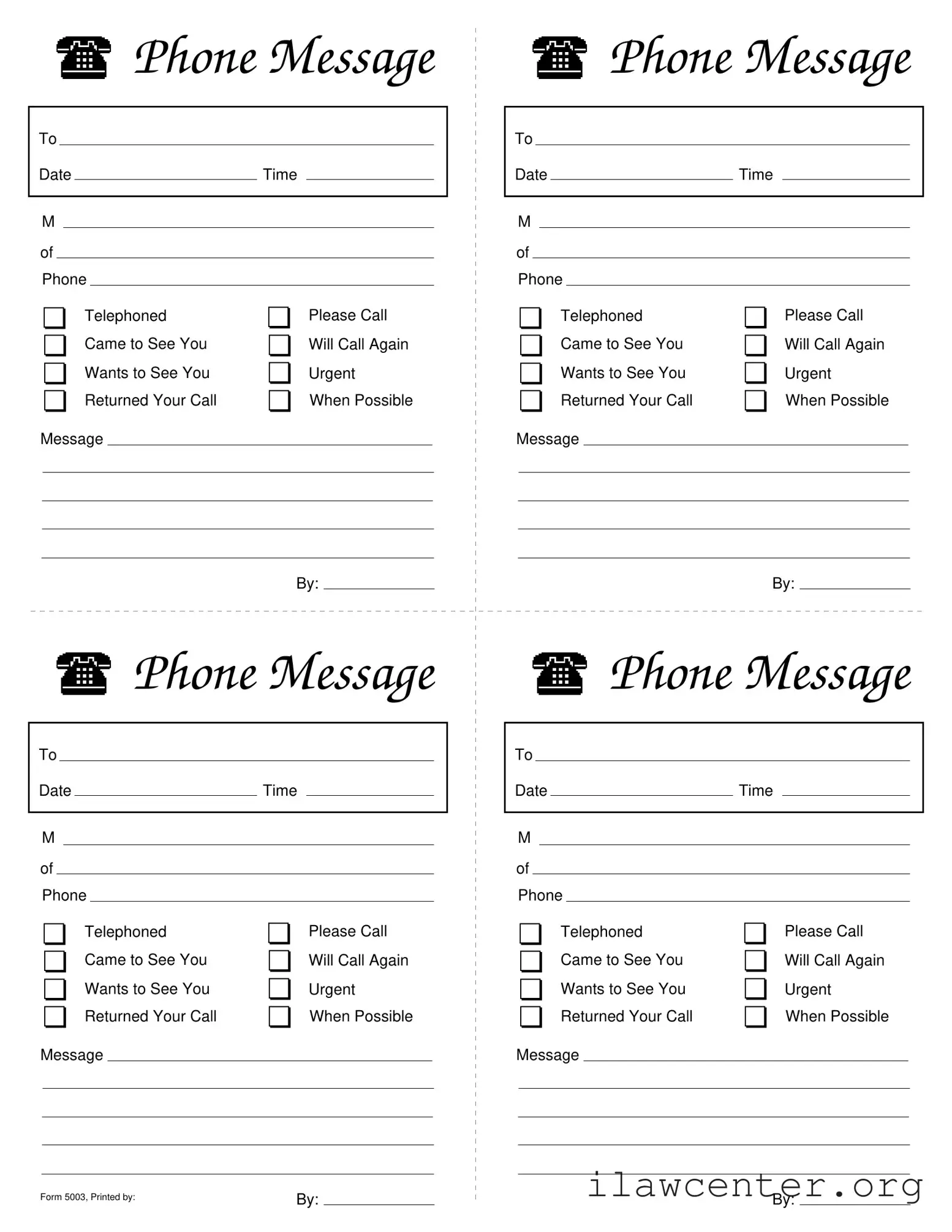
The Phone Message Slips form serves as a communication tool to document important messages received via phone or in person. It allows individuals to record essential details, such as the date, time, and nature of the call or visit. This ensures that messages are not forgotten and can be easily referenced later. The form is particularly useful in professional settings where tracking communications is crucial for effective follow-up and customer service.
What information should be included on the Phone Message Slips form?
Each Phone Message Slip should include several key pieces of information. First, the date and time of the call or visit must be recorded. Next, the method of communication should be indicated, such as whether the person telephoned, came to see you, or will call again. Additionally, it’s important to note the urgency of the message, if applicable. Finally, the message itself should be clearly written to ensure the recipient understands the context and action required.
How should the Phone Message Slips form be used in a professional setting?
In a professional environment, the Phone Message Slips form should be used consistently to maintain clear records of communications. When receiving a message, fill out the form immediately to capture accurate details. After completing the form, it should be delivered to the intended recipient promptly. This practice helps ensure that important messages are acted upon in a timely manner and reduces the risk of miscommunication.
Can the Phone Message Slips form be customized for specific needs?
Yes, the Phone Message Slips form can be customized to better fit the needs of your organization. While the basic structure is designed to capture essential information, additional fields can be added to include specific details relevant to your industry. For example, you might want to include a section for the caller's contact information or a follow-up deadline. Customization can enhance the form's effectiveness and ensure it meets your operational requirements.